How to Read a Cam Card: A Simple Guide for Beginners
Reading a cam card can seem hard at first. It’s like trying to decode a secret language, but for your car’s engine. Don’t worry, many people feel the same way! This guide on How to Read a Cam Card: Simple Guide breaks it all down in easy steps. We’ll explore what each number and letter on the card means. Get ready to learn about your engine’s heartbeat, with a straightforward method you can easily grasp.
What is a Cam Card and Why Read It?
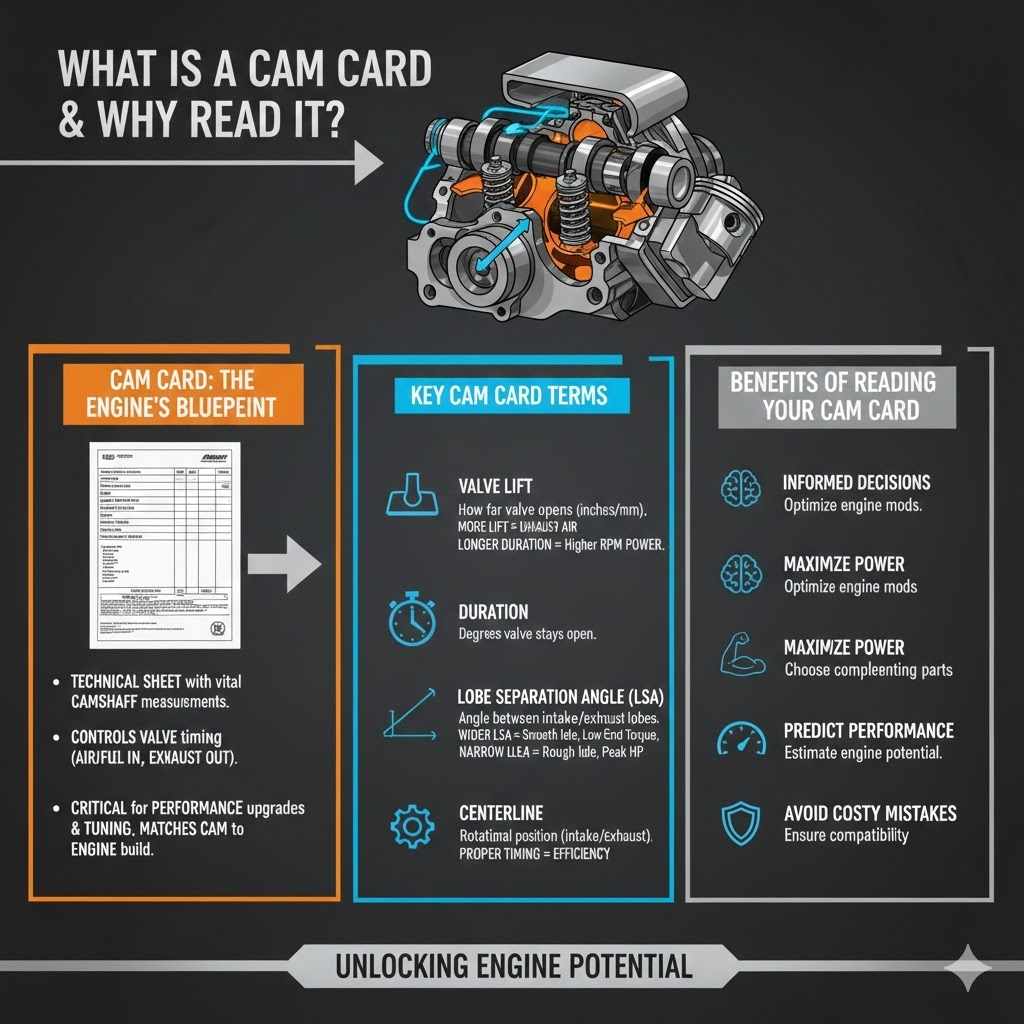
A cam card is a vital document for anyone interested in engine performance. It’s a technical sheet that provides all the important measurements of a camshaft, a key part of your engine. The camshaft controls the opening and closing of your engine’s valves, which determines how air and fuel get in, and how exhaust gets out.
Every camshaft has a cam card that describes its key characteristics. You’ll encounter a cam card if you want to swap out a stock camshaft for a more aggressive racing or higher-performance camshaft. You can also acquire a cam card after buying a new camshaft from a reputable manufacturer. Each cam card holds the blueprint, or specification, of a specific cam.
The card tells you the exact specifications of the camshaft. This is critical because these specs greatly affect how your engine performs. A cam card typically lists details like valve lift, duration, lobe separation angle, and more. Without knowing these specifications, you would be unable to make informed decisions about your engine modifications, or how it functions.
With a cam card, you can get a good estimate of an engine’s potential performance. You can choose parts that complement each other and maximize power output. This information helps match a cam to a specific application or engine build.
Key Cam Card Terms You Need to Know
To fully grasp How to Read a Cam Card: Simple Guide, you need to be familiar with some key terms. These terms are the building blocks of understanding the camshaft specifications. Knowing what each term represents is essential to unlocking the information on the card.
Valve Lift: This is how far the valve opens from its seat. It’s usually measured in inches or millimeters. Lift is very important for air flow. Higher lift values usually mean more air and fuel enter the cylinder. More air and fuel generally lead to more power. Manufacturers list both the intake and exhaust valve lift.
Engine builders select camshafts with appropriate lift for their application. The valve lift is measured at the valve, from its closed position to its maximum open position. Many factors impact valve lift, including the cam’s design and rocker arm ratio.
Duration: Duration is the number of degrees the valve stays open. It’s measured at a specific valve lift, typically .050 inches. This measurement describes how long the valve stays open during each cycle. Duration significantly impacts engine power output. Longer duration increases the RPM range where the engine makes power.
Camshaft duration determines how long the valve stays open during the engine cycle. The longer the duration, the more air and fuel can enter and exit the cylinder. This can increase horsepower and torque at higher engine speeds, and affect idle characteristics.
Lobe Separation Angle (LSA): LSA is the angle in degrees between the centerlines of the intake and exhaust lobes. This is critical in determining the engine’s power band. A wider LSA makes for a smoother idle and better low-end torque. A narrower LSA often gives a rougher idle, with more peak horsepower.
The Lobe Separation Angle is measured in degrees, determining the relationship between the intake and exhaust lobes. The angle can influence where the engine’s power band occurs. A larger LSA often results in a smoother idle, while a smaller angle tends to shift power toward higher RPMs.
Centerline: Centerlines specify the rotational position of the camshaft. The intake centerline specifies the position of the intake lobe. The exhaust centerline indicates the position of the exhaust lobe. This data helps properly time the valves.
Centerlines are crucial because they dictate the optimal valve timing. Intake and exhaust centerlines specify when the valves open and close relative to the piston’s position. Proper alignment with the crank is very important for efficiency.
Overlap: This is the amount of time in degrees when both the intake and exhaust valves are open at the same time. Overlap can affect idle quality and engine performance. More overlap can make the engine more responsive at high RPM, but can make the idle rougher.
Overlap has a significant effect on engine characteristics. It occurs when both the intake and exhaust valves are open simultaneously. The overlap period impacts the engine’s idle quality and performance. A larger overlap generally translates into a rougher idle but potentially more power at higher speeds. Conversely, less overlap tends to provide a smoother idle. Overlap is another important measurement when you learn How to Read a Cam Card: Simple Guide.
Deciphering the Numbers: Lift, Duration, and More
Now, let’s explore the numbers that fill up a cam card. We will explore how to interpret the crucial specifications. You’ll learn how they relate to your engine’s performance. The card is packed with important data. Let’s break down the most essential pieces of information on how to read a cam card.
Lift, duration, and lobe separation angle are all tied together. By understanding them, you can choose a cam that suits your performance goals. With these details, you can make informed decisions when matching a cam to an engine build.
Decoding Valve Lift and Duration
The first figures you see on a cam card are usually valve lift and duration. Valve lift directly affects how much air and fuel get into the cylinder. Duration determines how long the valve stays open. The higher the lift and longer the duration, the more the engine breathes.
Understanding Valve Lift: Valve lift on the card provides the maximum distance the valve opens. This measurement allows you to assess the valve’s potential airflow. Lift is often listed as “gross lift.” This value does not take into account rocker arm ratios.
Valve lift is the maximum distance the valve opens. It’s measured at the valve itself. A larger lift often means more air and fuel can enter the cylinder. You can achieve greater combustion potential. More lift does not always mean more power, as other factors come into play. A cam card provides lift for both intake and exhaust valves.
Analyzing Duration Numbers: Duration is the number of degrees the cam keeps the valve open. The longer the duration, the more time the valve is open. This can increase peak horsepower at higher engine speeds. This can also affect idle quality.
Duration is measured in degrees of crankshaft rotation. A cam with longer duration keeps the valves open longer. This allows for more air and fuel to enter the cylinder. This can increase horsepower at high RPM. Duration is critical in influencing an engine’s power band. Knowing the correct cam duration is key when learning How to Read a Cam Card: Simple Guide.
0.050″ Lift: Duration is often listed at 0.050” lift. This number specifies how long the valve remains open when it reaches .050″ lift. This helps when comparing cams with different lift profiles. This is a common industry standard.
Duration is often listed at .050″ lift. This standard provides a consistent method of comparison. It helps to easily compare different cam profiles. A longer duration at .050″ lift often means a cam with a more aggressive profile.
The Importance of Lobe Separation Angle and Centerlines
Lobe Separation Angle (LSA) and centerlines provide the full picture of the camshaft’s characteristics. These details affect the power band. It is also important in determining the idle quality. LSA and centerlines give a detailed view of how the cam controls valve timing.
Lobe Separation Angle (LSA) in Detail: The LSA directly influences where the engine produces peak power. A smaller LSA generally moves the power band to the higher RPM range. A larger LSA shifts the power curve to lower RPMs. The angle affects how the intake and exhaust lobes interact.
The LSA affects both engine performance and idle characteristics. It is the angle between the intake and exhaust lobe centerlines. This angle dictates the relationship between the opening and closing of the intake and exhaust valves. The LSA will change the engine’s power band.
Understanding Centerlines: Centerlines are the reference points for valve timing. They show the exact position of the lobes in relation to the crankshaft. Proper valve timing is key for optimal engine performance.
Centerlines define the precise timing of valve events. These measurements are in relation to the crankshaft’s rotation. Knowing the centerline allows you to verify that the cam is installed correctly. You can confirm that the valve timing is set up according to your engine’s needs.
Impact on Performance: The LSA and centerlines work together. They affect the engine’s power delivery, idle quality, and overall performance. When considering How to Read a Cam Card: Simple Guide, always consider these factors.
When selecting a camshaft, consider the LSA and centerlines. Both must be chosen to match your goals. These parameters greatly impact an engine’s ability to create power. You can use the information to achieve specific performance goals, such as more torque or peak horsepower.
Putting It All Together: A Step-by-Step Guide
Now, let’s explore how to use the information on a cam card. We will go through the steps needed to interpret its figures. This guide includes a step-by-step breakdown. You’ll understand how to apply the data to your engine project.
By following these steps, you’ll be able to compare cam specifications. You can see how they match your performance goals. The process helps you select the best camshaft for your engine build. The next process will help you apply the details on your cam card.
Step 1: Identify the Cam Card’s Information
The first step is to locate the cam card. Note the manufacturer and part number. This step makes sure you have the right card for the right cam. The information on the card will only apply to that specific camshaft.
Find the Manufacturer and Part Number: The cam card has a manufacturer and part number. Use this data to verify the cam. This will help with the correct installation of your new camshaft.
Make sure the cam card matches the camshaft you have. The manufacturer and part number confirm that you have the right card for your cam. The card’s information applies only to that particular camshaft. A mismatch will cause problems during installation and operation.
Check the Application: Cam cards also include the engine type and application the cam is designed for. This part will give you the recommended engine build details. Consider all of the suggestions carefully.
The card will list what engines the cam is designed for. This may be for a specific engine size or vehicle type. Confirming the application ensures the cam is suitable for your project. Improper fitment will affect performance and could cause damage.
Gather the Right Tools: When ready, gather your tools and have them ready. Your cam card should be easily accessed. Have any notes or manuals ready for quick reference. Proper planning will ensure success.
Preparing the correct tools will ensure a smooth process. Having these tools ready when you read the cam card will make it easier to interpret. Your experience will be enhanced by proper preparation.
Step 2: Understand the Valve Lift, Duration, and LSA
Once you’ve identified the cam, you can look at the main specifications. We discussed valve lift, duration, and lobe separation angle. Understanding these figures provides the foundations for camshaft selection. These values help determine the engine’s performance characteristics.
Evaluate Valve Lift: Assess the intake and exhaust valve lift. Higher lift numbers mean more airflow potential. Consider the intended use of the engine. Choose a cam with an appropriate lift to meet your goals.
Valve lift directly impacts engine airflow. Assess the intake and exhaust valve lift figures. Higher lift allows more air and fuel into the cylinders. This can increase engine power output. If your project emphasizes airflow, look for a cam with higher lift values.
Determine Duration at .050″ Lift: Consider the duration at .050″ lift. This number helps to compare cams. It is a consistent metric to assess the valve-open time.
The duration at .050″ lift is a key metric. This value describes the amount of time the valve stays open. Use this to compare different camshafts. A higher duration value often means the cam profile is more aggressive. However, you should consider all specs when selecting a cam.
Look at LSA for Performance Goals: The LSA will change the engine’s power band. This specification greatly impacts an engine’s operating characteristics. Evaluate the LSA to optimize the engine for the power delivery you desire.
The LSA affects how the engine delivers power. A smaller LSA will shift the power band higher in the RPM range. A larger LSA can offer improved low-end torque. You can fine-tune the engine’s responsiveness. Selecting the right LSA is a key to How to Read a Cam Card: Simple Guide.
Step 3: Calculate the Overlap and Centerlines
Next, calculate overlap and analyze the centerline. This helps you get a complete picture of the camshaft’s characteristics. These details affect the engine’s performance and idle quality. Using the combined details helps you make informed choices.
Calculate Overlap: Calculate the overlap to understand the engine’s idle quality. The overlap also tells you the performance characteristics. Consider the design of the engine.
Calculating the overlap is a helpful step. Overlap occurs when both intake and exhaust valves are open. It’s an essential factor in setting idle quality. More overlap will lead to a rougher idle. A little overlap can improve high-RPM performance.
Review Intake and Exhaust Centerlines: Check the intake and exhaust centerlines. This step is a check for the right valve timing. Make sure the installation is correct for optimal performance.
The centerlines show you the precise timing of the valves. These measurements are crucial for optimal engine operation. Proper valve timing is essential for maximizing engine efficiency. This information helps confirm the valve timing is set correctly.
Use Calculations: Use these specifications for your engine. Make sure the data matches the type of engine. Use this information to choose the cam that fits your engine build.
Use the data to compare cams and select the right one. You can use the values to evaluate camshafts for their suitability. Match the values to your engine. With the information, you can match a cam to your project.
Examples and Scenarios
Let’s consider some practical examples. We’ll look at the differences between cam cards. These examples help you apply your knowledge.
These scenarios illustrate how to use a cam card. They’ll also demonstrate the effects of different cam specifications. Understanding these examples will make it easier to How to Read a Cam Card: Simple Guide.
-
- Example 1: Street Performance Car. You want a cam that gives a nice blend of power and smooth driving. You want to install the cam in a small block Chevy. You compare two different cam cards. One cam card has a relatively mild duration. The other cam card has more aggressive numbers. Both have similar lift and LSA. You choose the cam with the milder duration. This will have a smoother idle and better low-end torque.
In this example, you are prioritizing drivability and daily use. You want a balance between performance and street manners. The milder cam delivers better low-end torque. It will provide a better overall driving experience.
-
- Example 2: Drag Racing Application. You want to build a drag racing engine. You are looking to maximize high-RPM horsepower. You study two different cam cards. One card has high lift and long duration numbers. The other card has similar values, but also has a narrower LSA. You choose the second cam card. It will deliver more peak horsepower at higher engine speeds.
In this case, you are selecting a cam that is for all-out performance. The narrower LSA and higher lift will allow for more aggressive valve timing. This design is geared towards drag racing.
-
- Example 3: Towing Setup. You are building a truck for towing. You compare cam cards, looking for increased low-end torque. You focus on cams with a wider LSA and a moderate duration. This will deliver more torque at lower RPMs. This cam will make the truck easier to drive with a heavy load.
In this scenario, you value low-end torque and towing capability. The choice of a wider LSA and moderate duration values shows this. The engine will perform well under load.
Comparison Table: Cam Card Specifications
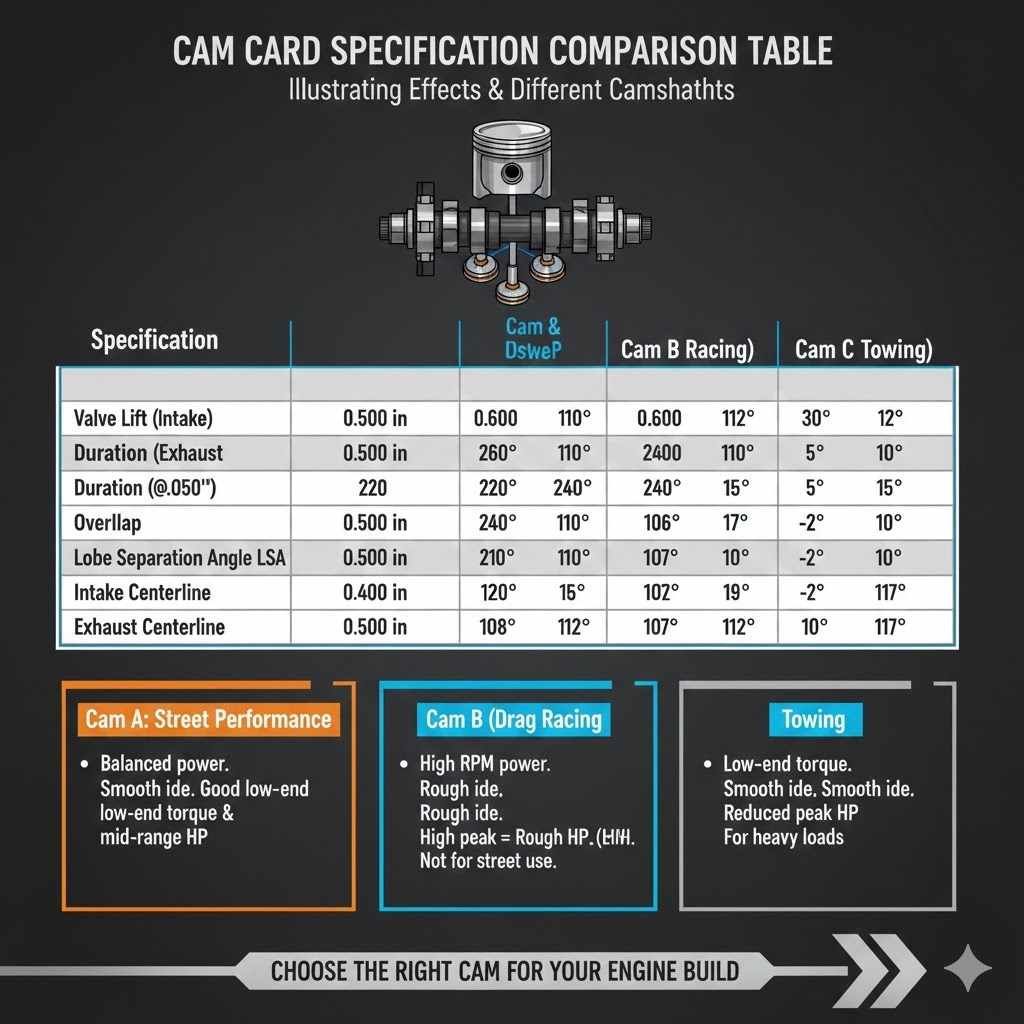
Consider the table below. The table displays a comparison of cam specifications. The chart can help illustrate the effects of different specifications.
| Specification | Cam A (Street Performance) | Cam B (Drag Racing) | Cam C (Towing) |
|---|---|---|---|
| Valve Lift (Intake) | 0.500 in | 0.600 in | 0.450 in |
| Valve Lift (Exhaust) | 0.500 in | 0.600 in | 0.450 in |
| Duration (@.050″) | 220° | 240° | 210° |
| Lobe Separation Angle | 110° | 106° | 112° |
| Overlap | 5° | 15° | -2° |
| Intake Centerline | 108° | 102° | 107° |
| Exhaust Centerline | 112° | 110° | 117° |
Analyzing this table, you can see the different cam characteristics. Cam A offers a balance. Cam B is for higher horsepower. Cam C is specifically designed for towing. By comparing these values, you can clearly see the differences. These specifications result in different engine performance characteristics.
Frequently Asked Questions
Question: What happens if I don’t follow the cam card instructions?
Answer: If you don’t follow the cam card instructions, your engine’s performance may be impacted. You could face poor idle quality, reduced power, or even engine damage. The card provides critical timing specifications that are important.
Question: Can I use any cam card for any engine?
Answer: No, you can’t use just any cam card for any engine. The specifications are engineered for specific engine types. Each engine needs a camshaft profile designed for its configuration. This design will take into account the engine’s size, intended use, and other performance goals.
Question: Is it possible to change the LSA after installing the cam?
Answer: No, the LSA is built into the camshaft design. You cannot change the LSA once the camshaft is installed in the engine. It is a fixed angle that the manufacturer sets.
Question: How do I know if my cam card is accurate?
Answer: Verify that the cam card matches your camshaft’s part number and manufacturer. You may need to have your cam checked on a cam analyzer. This can confirm the cam specs on the card.
Question: What tool do I need to read a cam card?
Answer: All you need to read a cam card is the card itself and a basic knowledge of engine terms. You may want a digital calculator to help with any computations. Any tools that can measure degree of rotation will assist you.
Final Thoughts
Learning How to Read a Cam Card: Simple Guide is essential for anyone interested in engine performance. It empowers you to make informed decisions about your engine. By breaking down the specifications, you can compare different camshafts. You can select one that fits your engine’s purpose. The main things to consider are valve lift, duration, LSA, and centerlines. These specifications are key in optimizing the engine’s performance.
Reading a cam card is not hard. When you know the terms, it’s like learning a new language. You can fine-tune your engine for better power. Get started by identifying the manufacturer and application. Then, explore lift, duration, and LSA. Use the examples and scenarios to practice. Take the time to understand the data. Your engine building knowledge will get a boost. The next time you’re faced with a cam card, you’ll be ready. Get started on the road to power!