How to Sell a Car in Florida for Cash: An Essential Guide
To sell a car in Florida for cash, you must first gather your title, prepare the vehicle, and set a fair price. Then, complete the “Transfer of Title by Seller” section on the Florida title, create a Bill of Sale, and submit a Notice of Sale (Form HSMV 82101) to the state to release your liability.
Selling your car can feel like a huge task. You have to figure out the right price, deal with paperwork, and meet with strangers. It’s easy to feel overwhelmed. Many people worry about getting a fair price or making a mistake on the forms. It’s a common feeling, but I’m here to help.
Don’t worry! I’ve broken down the entire process into simple, easy-to-follow steps. This guide will walk you through everything you need to know to sell your car in Florida for cash, safely and confidently. We’ll cover everything from getting your car ready to handling the final paperwork like a pro.
Part 1: Preparing Your Car for a Successful Sale
First impressions matter, especially when selling a car. A little preparation can make a big difference in how much cash you get and how quickly you sell it. Let’s start with the basics.
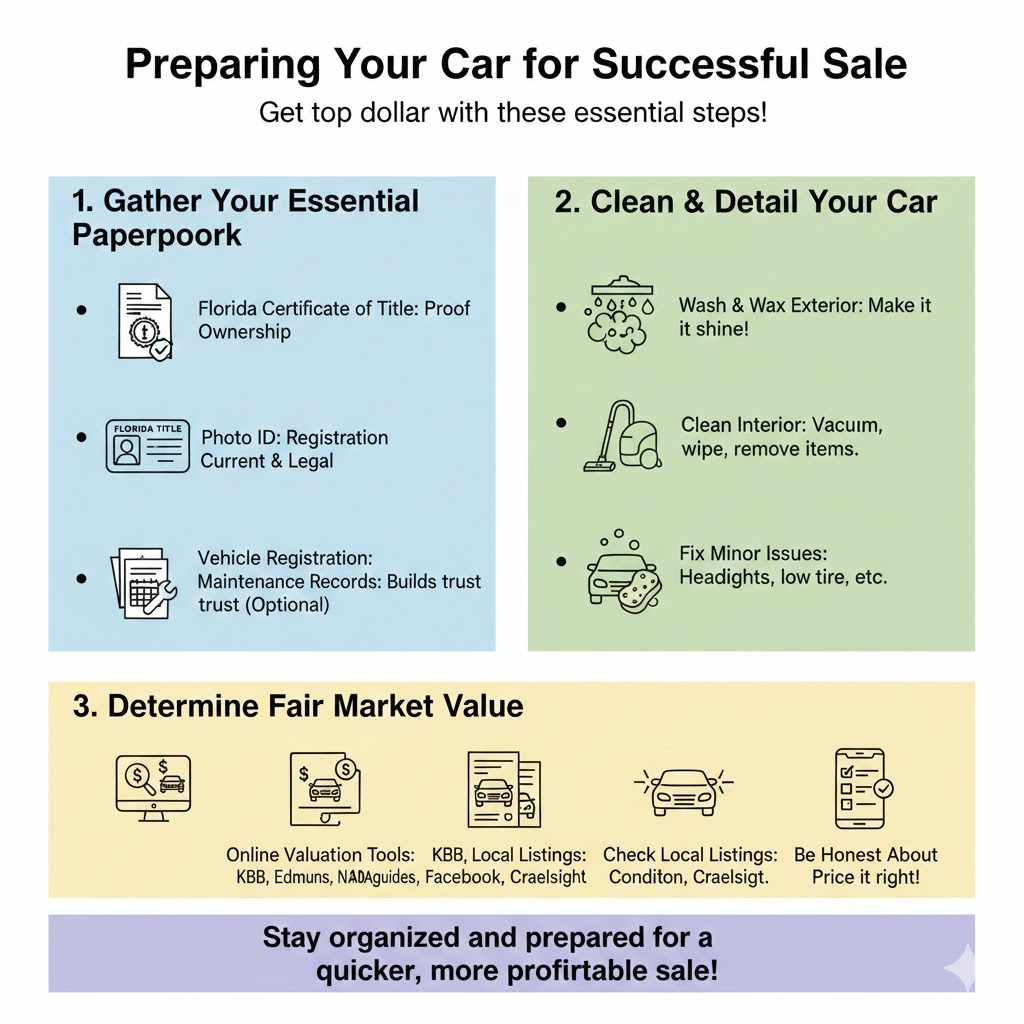
Gather Your Essential Paperwork
Having your documents in order shows buyers you’re a serious and organized seller. It builds trust right away. Before you do anything else, find these items:
- Florida Certificate of Title: This is the most important document. It proves you own the car. Make sure it’s in your name and you don’t have a lien on it (a loan you still owe). If you have a loan, you’ll need to pay it off to get a clean title from the lender.
- Photo Identification: You’ll need your valid driver’s license or another form of government-issued photo ID. The buyer will want to confirm you are the person listed on the title.
- Vehicle Registration: While not always required for the sale itself, having your current registration shows the car is legally registered in Florida.
- Maintenance Records (Optional but Recommended): If you have records of oil changes, tire rotations, and other repairs, gather them. This is a huge bonus for buyers and can help you get a better price.
Clean and Detail Your Car
A clean car looks like a well-maintained car. You don’t need to pay for a professional detailer, but spending a few hours cleaning it yourself can add hundreds of dollars to your selling price. Focus on these areas:
- Wash and Wax the Exterior: Give the car a thorough wash. A coat of wax will make the paint shine and look great in photos. Don’t forget to clean the wheels and tires.
- Clean the Interior Thoroughly: Vacuum the seats, carpets, and floor mats. Wipe down all surfaces like the dashboard, door panels, and center console. Use a glass cleaner on the inside of the windows.
- Remove All Personal Items: Make sure to clear out the glove box, trunk, and any other storage compartments. The car should feel new to the next owner.
- Consider Minor Fixes: A burnt-out headlight or a low tire can make a buyer nervous. Fixing small, cheap things shows you care about the car.
Determine Your Car’s Fair Market Value
Pricing your car correctly is key. Price it too high, and no one will call. Price it too low, and you leave money on the table. Here’s how to find the sweet spot:
- Use Online Valuation Tools: Websites like Kelley Blue Book (KBB), Edmunds, and NADAguides are excellent resources. Enter your car’s year, make, model, mileage, and condition to get a value range.
- Check Local Listings: Look at what similar cars are selling for in your area on Facebook Marketplace, Craigslist, or Autotrader. This gives you a real-world idea of the market.
- Be Honest About Condition: Online tools will ask for the car’s condition (e.g., Excellent, Good, Fair). Be realistic. A few scratches or a worn interior means it’s not in “Excellent” condition.
Several factors will impact your car’s final price. Understanding them can help you set realistic expectations.
| Factor | Impact on Price | Why It Matters |
|---|---|---|
| Mileage | High | Lower mileage generally means less wear and tear, making the car more valuable. |
| Condition | High | A car with no mechanical issues, a clean interior, and no body damage will fetch a higher price. |
| Service History | Medium | A documented history of regular maintenance shows the car has been well cared for. |
| Color | Low | Neutral colors like black, white, and silver are more popular and can be easier to sell. |
| Location | Medium | Demand for certain vehicles can vary by region. For example, convertibles are more popular in Florida. |
Part 2: Choosing How You’ll Sell Your Car
In Florida, you have a few good options for selling your car for cash. Each has its own pros and cons. Let’s look at the most common methods so you can decide which is best for you.
Option 1: Selling Privately
This means you handle the entire sale yourself, from listing the car to finalizing the paperwork with the buyer. It often gets you the most money, but it also requires the most work.
- Pros: Highest potential profit. You control the price and the process.
- Cons: Takes more time and effort. You have to create listings, answer questions, meet with strangers, and handle all the paperwork. There are also safety risks to consider.
Option 2: Selling to a Dealership
You can sell your car directly to a new or used car dealership for cash, even if you aren’t buying another car from them. This is often called “selling outright.”
- Pros: Fast, easy, and secure. You can often complete the sale in an hour or two. The dealership handles all the paperwork.
- Cons: You will almost always get less money than in a private sale. The dealer needs to buy it at a wholesale price so they can make a profit when they resell it.
Option 3: Selling to an Instant Cash Offer Company
Companies like CarMax, Carvana, and Vroom specialize in buying used cars from the public. You can usually get an offer online in minutes by entering your car’s information.
- Pros: Extremely convenient and fast. The process is transparent, and the offer is usually valid for several days. They handle pickup and paperwork.
- Cons: The offer may be lower than a private sale price and sometimes even lower than a traditional dealership. Their business model is built on convenience.
Here is a table to help you compare your options at a glance:
| Feature | Private Sale | Dealership Sale | Instant Offer Company |
|---|---|---|---|
| Sale Price | Highest | Lowest | Medium |
| Speed of Sale | Slow (Days to Weeks) | Fast (Same Day) | Very Fast (1-3 Days) |
| Effort Required | High | Low | Very Low |
| Convenience | Low | High | Very High |
| Safety | Lower (Meeting Strangers) | High | High |
Part 3: The Selling Process: A Step-by-Step Guide
Once you’ve prepared your car and chosen your sales method, it’s time to get down to business. If you’re selling privately, this section is for you. If you’re selling to a dealer, they’ll handle most of this for you.
Step 1: Create a Compelling Listing
A great online ad attracts serious buyers. Your listing should be honest, detailed, and easy to read.
- Write a Clear Title: Include the year, make, model, trim, and mileage. For example: “2018 Honda Civic EX – 45,000 Miles – Clean Title.
- Be Honest in the Description: List all the key features (automatic transmission, leather seats, new tires). Also, mention any known issues, like a scratch on the bumper or A/C that needs a recharge. Honesty builds trust.
- Take Lots of High-Quality Photos: Photos are the most important part of your ad. Take pictures in good daylight after washing the car. Capture all angles: front, back, both sides, all four corners, the dashboard, front and back seats, the odometer (showing the mileage), the engine, and the trunk.
Step 2: Screen Potential Buyers Safely
Once your ad is live, you’ll start getting calls, texts, or emails. It’s important to be safe when communicating with strangers.
- Talk on the Phone: A brief phone call can help you get a feel for the person. Serious buyers are usually happy to talk.
- Trust Your Gut: If someone seems suspicious, pushy, or offers a complicated payment plan, it’s okay to say no and move on.
- Avoid Scams: Be wary of anyone offering to pay more than your asking price or who wants to pay with a complicated method like a wire transfer without seeing the car. Cash or a cashier’s check at a bank is best.
Step 3: Handle the Test Drive Like a Pro
The test drive is a critical step. It’s the buyer’s chance to see if they like the car, and your chance to ensure everything goes smoothly and safely.
- Meet in a Public Place: Never have a stranger come to your home. Meet in a busy, public location during the day, like the parking lot of a police station, a supermarket, or a bank.
- Bring a Friend: It’s always safer to have someone with you.
- Check Their Driver’s License: Before you hand over the keys, ask to see their valid driver’s license. Take a quick photo of it with your phone for your records.
- Go With Them: Don’t let a buyer take your car for a test drive alone. Ride along in the passenger seat.
Step 4: Negotiate the Price
Most buyers will want to negotiate. Be prepared for it.
- Set Your Price High (But Fair): When you set your asking price, leave a little room for negotiation. If you want $10,000, you might list it for $10,800.
- Know Your Bottom Line: Decide on the lowest price you’re willing to accept before you start talking to buyers. Don’t go below this number.
- Stay Calm and Polite: Negotiation doesn’t have to be a battle. Be friendly and firm. If a buyer makes a very low offer, you can simply say, “Thank you for the offer, but that’s too low for me.”
Step 5: Finalize the Florida Paperwork
This is the most important part of selling a car in Florida. Filling out the paperwork correctly protects you from any future liability for the vehicle. The main location for information is the Florida Highway Safety and Motor Vehicles (FLHSMV) website.
The Certificate of Title
On the front of your Florida title, there is a section called “Transfer of Title by Seller.” You and the buyer must fill this out together.
- Buyer’s Information: Fill in the buyer’s full name and address.
- Odometer Reading: Write down the exact mileage at the time of sale. Don’t use tenths of a mile.
- Sale Date: Enter the date of the sale.
- Selling Price: Write the final agreed-upon price.
- Signatures: Both you (the seller) and the buyer must sign and print your names. Make sure you sign exactly as your name appears on the front of the title.
Important: Do not use white-out or cross anything out. If you make a mistake, you may need to apply for a duplicate title, which causes delays.
Bill of Sale
While not legally required in every private sale in Florida, a Bill of Sale is highly recommended. It’s a simple receipt that serves as proof of the transaction for both you and the buyer. It should include:
- Your Name and Address
- The Buyer’s Name and Address
- Vehicle Information (Year, Make, Model, VIN)
- The Odometer Reading
- The Final Sale Price
- The Date of Sale
- A statement that the vehicle is being sold “as-is”
- Signatures of both the seller and the buyer
Notice of Sale (Form HSMV 82101)
This is a crucial step! After you sell the car, you must notify the FLHSMV that you no longer own it. This removes your liability, so you won’t be responsible if the new owner gets parking tickets, runs a red light, or is involved in an accident. You can file a Notice of Sale online or by mail using Form HSMV 82101.
Remove Your License Plate
In Florida, the license plate belongs to you, not the car. Do not let the buyer drive away with your license plate. Remove it from the vehicle after the sale is complete. You can either transfer it to another car you own or surrender it to a driver license and motor vehicle service center.
Part 4: Getting Paid Safely
When you sell a car for cash, the final step is the payment. It’s important to handle this transaction securely to avoid scams or problems.
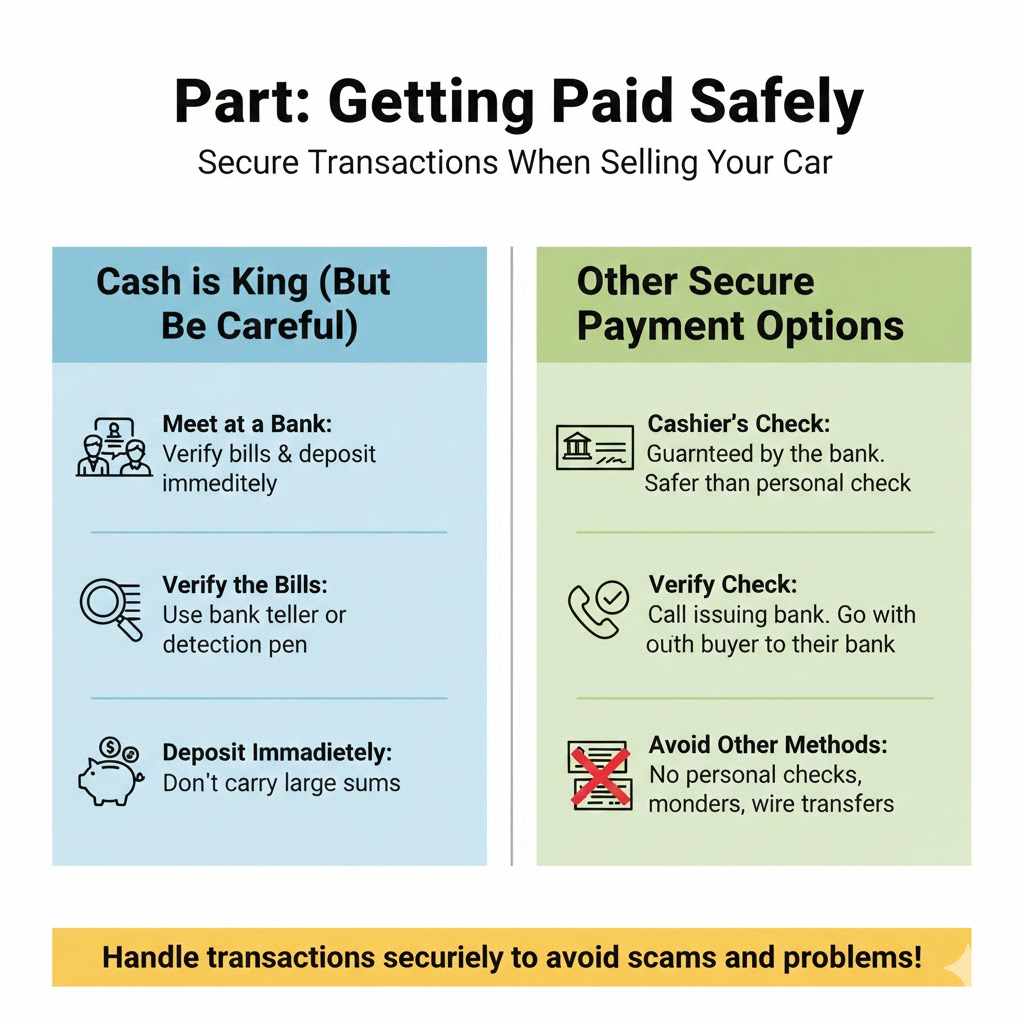
Cash is King (But Be Careful)
Physical cash is the simplest and most direct way to get paid. There’s no risk of a check bouncing. However, you need to be careful when dealing with a large sum of money.
- Meet at a Bank: The safest place to complete a cash transaction is at your bank or the buyer’s bank.
- Verify the Bills: Bank tellers can quickly check the bills to ensure they are not counterfeit. You can also buy a counterfeit detection pen at any office supply store for extra peace of mind.
- Deposit it Immediately: Once you receive the cash, deposit it directly into your account. Don’t carry a large amount of cash around with you.
Other Secure Payment Options
If you or the buyer are not comfortable with a large cash transaction, a cashier’s check is the next best option.
- Cashier’s Check: This is a check guaranteed by the bank itself, not an individual’s account. It’s much safer than a personal check.
- Verify the Check: To be safe, go with the buyer to their bank to watch the cashier’s check being printed. If they bring it to you, call the issuing bank (using a phone number you look up yourself, not one on the check) to verify its authenticity before you hand over the title.
- Avoid Other Methods: Do not accept personal checks, money orders, or wire transfers from people you don’t know. These are common methods used in scams.
Frequently Asked Questions (FAQ)
Do I really need a Bill of Sale in Florida?
While Florida law doesn’t require a Bill of Sale for every transaction, it is strongly recommended for a private sale. It acts as a legal receipt for both you and the buyer, protecting you by documenting the sale price, date, and “as-is” condition of the vehicle.
What do I do with my license plates after I sell the car?
You must remove your license plates from the car. In Florida, plates stay with the owner. You can either transfer them to a new vehicle you purchase within 30 days or surrender them to your local county tax collector’s office to avoid any registration-related penalties.
Can I sell a car in Florida if I lost the title?
No, you cannot legally sell a car without the title. If your title is lost or damaged, you must apply for a duplicate title from the FLHSMV before you can sell the vehicle. You can do this online, by mail, or in person at a service center.
How do I report the sale to the FLHSMV?
You must file a Notice of Sale. This is officially done by completing Form HSMV 82101, which can be submitted online or mailed in. This is the most important step to protect yourself from liability after the car is sold.
What if there is a lien on my title?
If you still owe money on your car loan, there is a “lien” on your title, and the lender is the legal lienholder. You must pay off the loan in full. Once paid, the lender will release the lien, and you will receive a clean title that you can then transfer to the new owner.
Is it better to sell my car to a dealer or privately?
It depends on your priority. If you want the most money possible and don’t mind putting in some time and effort, a private sale is better. If you prioritize speed, safety, and convenience and are willing to accept a lower price, selling to a dealership or an instant offer company is the best choice.
How can I tell if cash is fake?
The easiest way for a beginner is to meet at a bank and have a teller count and verify the money. You can also look for security features on modern bills, such as a security thread, a watermark, and color-shifting ink. A counterfeit detection pen, which marks fake bills with a dark line, is a cheap and effective tool.
Putting It All Together
Selling your car in Florida for cash might seem like a lot of steps, but it’s completely manageable when you take it one piece at a time. By preparing your car properly, choosing the right sales method for your needs, and carefully handling the paperwork, you can have a smooth and successful sale.
Remember, the keys to success are being organized, honest, and safe. Gather your documents, clean your car, and set a fair price. When you meet buyers, do so in a public place. Most importantly, fill out the Florida title and file the Notice of Sale correctly to protect yourself. You’ve got this!