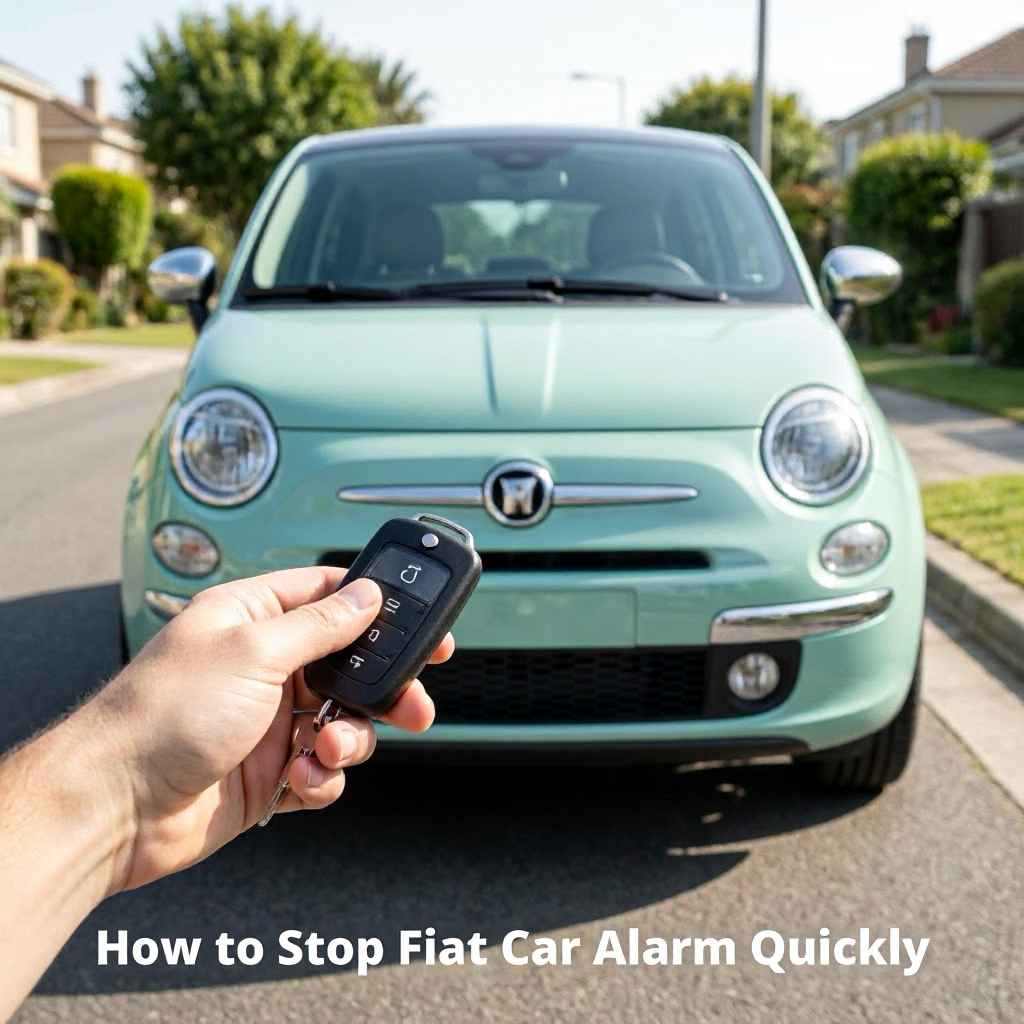
How to Stop Fiat Car Alarm Quickly
Sometimes your Fiat car alarm can start going off unexpectedly, and it can be a bit confusing to figure out how to stop it, especially if you’re new to dealing with car troubles. You might wonder if there’s a simple fix or if you need a mechanic. Don’t worry!
This guide will show you the easy steps to get that alarm silenced. We’ll cover the most common reasons your alarm might activate and the straightforward ways to turn it off quickly so you can get back to your day.
Understanding Your Fiat Car Alarm System
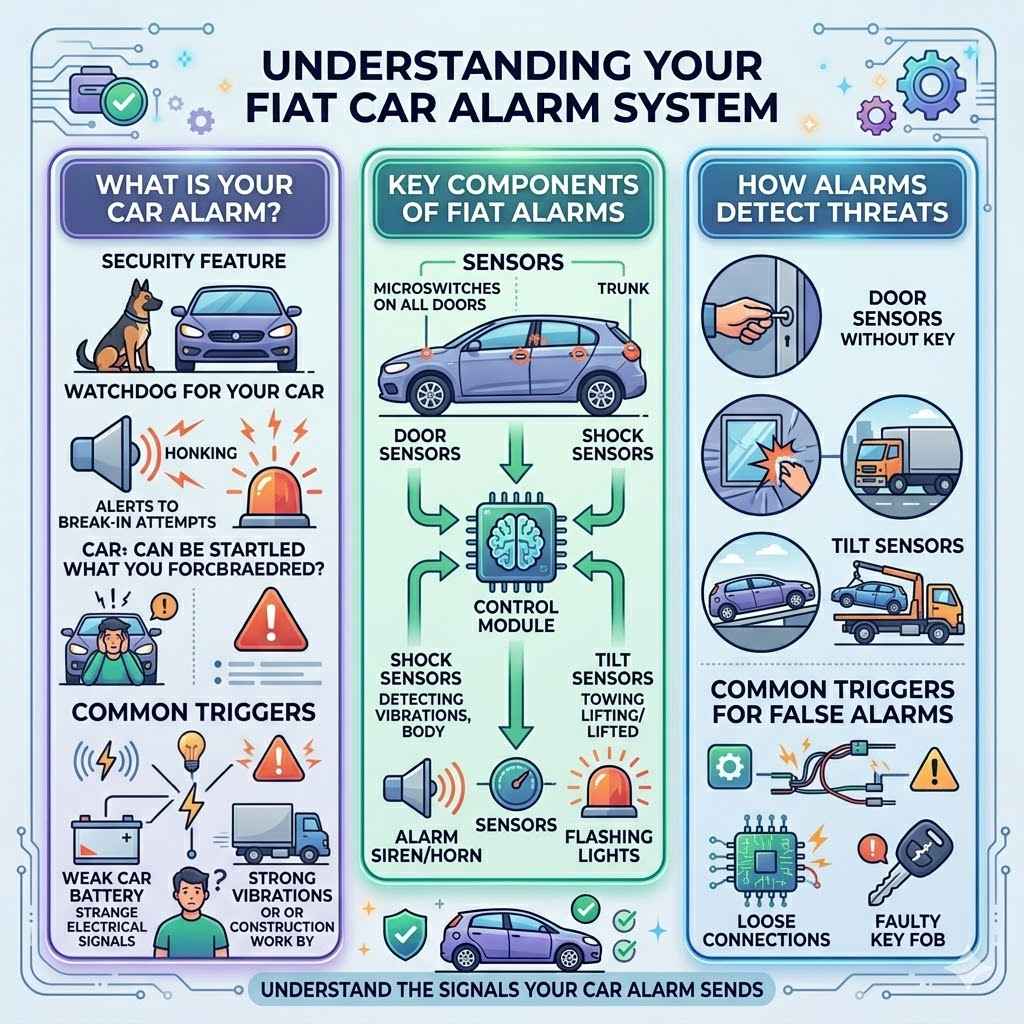
Your Fiat car alarm is a security feature designed to alert you and others if someone tries to break into your vehicle. It’s like a watchdog for your car. When the alarm triggers, it usually involves loud honking and flashing lights. There are different types of alarms, and they work by sensing disturbances.
These systems can be sensitive. Sometimes, a strong gust of wind, a heavy truck driving by, or even an animal brushing against your car can set it off by mistake. For new car owners, the sudden noise and blinking lights can be startling. Figuring out the exact cause can be puzzling.
This section will explore how these systems are built and why they might go off. We’ll look at the basic parts and how they communicate. Knowing this will help you understand why a simple fix might work. It’s all about understanding the signals your car’s alarm is sending.
Key Components of Fiat Alarms
A car alarm system has several important parts that work together. These include sensors, a control module, and the alarm’s siren or horn. Each piece plays a role in keeping your car safe and letting you know if something is wrong.
Sensors are like the car’s eyes and ears. They detect if a door is opened without the key, if the car is tilted or moved too much, or if there’s a sudden shock to the vehicle. These sensors send signals to the main brain of the alarm system.
The control module is the brain. It receives information from the sensors and decides if it’s a real threat or a false alarm. If it thinks there’s a problem, it tells the siren or horn to sound. The siren is the loud noise you hear, and the flashing lights are also part of the alert.
How Alarms Detect Threats
Fiat car alarms use various sensors to detect potential break-ins or unauthorized movement. The most common ones are door sensors, which are usually microswitches that detect if a door is opened. When a door is unlatched, this sensor sends a signal.
Another type is the shock sensor. This device can feel vibrations or impacts on the car’s body. If someone tries to break a window or hit the car, the shock sensor picks up the vibration.
Some advanced systems also have tilt sensors. These are important for preventing car theft where thieves try to tow the car away. If the car is lifted or tilted significantly, the tilt sensor will activate the alarm.
Common Triggers for False Alarms
False alarms are a common issue with car alarms. These are times when the alarm goes off, but there’s no actual danger. Understanding these triggers can help you prevent them.
One frequent cause is a weak car battery. When a car battery is low, it can cause electrical systems, including the alarm, to act strangely. This can lead to the alarm activating randomly.
Strong vibrations from nearby traffic or construction can also trick the shock sensors. If a large truck rumbles by, the vibrations might be strong enough to make the sensor think someone is tampering with the car.
Loose connections in the alarm system or even a faulty key fob can also cause false alarms. Sometimes, a button on the fob might get stuck, or a wire might be loose, sending incorrect signals to the alarm module.
Steps to Turn Off Your Fiat Car Alarm
When your Fiat car alarm starts blaring, your first instinct is to stop the noise. Fortunately, there are usually simple steps you can take right away. These methods are designed to be easy for anyone to follow.
The most direct way to silence the alarm is usually by using your car’s key fob. Pressing the unlock button on the fob typically disarms the alarm. If that doesn’t work, the key in the driver’s door lock is another common method.
Sometimes, the car might need to be restarted. This can reset the alarm system. If these quick fixes don’t help, checking the car’s battery might be the next step. We’ll cover these in detail.
Using Your Key Fob
Your key fob is the primary tool for controlling your Fiat’s alarm. It communicates wirelessly with your car to lock, unlock, and arm or disarm the security system.
The unlock button is usually the one you need. Pressing it once typically disarms the alarm and unlocks the doors. If the alarm is already sounding, pressing the unlock button should stop the siren and turn off the flashing lights.
Sometimes, you might need to press and hold the unlock button for a few seconds. If your fob has a panic button (often marked with a red button or an SOS symbol), accidentally pressing this can also set off the alarm. Pressing it again or holding it down should turn it off.
Troubleshooting a Key Fob
If your key fob isn’t stopping the alarm, there could be a reason. The battery inside the fob might be dead or weak. A common statistic shows that around 40% of key fob issues are due to a low battery.
You can try replacing the battery in your key fob. Most Fiat fobs use standard coin-cell batteries, like a CR2032. You can often find instructions online or in your car’s manual for how to open the fob and change the battery.
Another issue could be the range. If you’re too far from your car, the fob might not be able to send the signal effectively. Try moving closer to the vehicle. If it still doesn’t work, the fob itself might be damaged, or there could be interference from other electronic devices.
Using the Physical Key in the Door
If your key fob isn’t working, or you can’t find it, using the physical key in the driver’s door lock is a reliable backup. This is a manual way to tell the car’s security system that you are the owner.
Insert the key into the driver’s side door lock. Turn the key to the unlock position. Most Fiat models are designed so that turning the key in the door lock will disarm the alarm system.
You might need to hold the key in the unlocked position for a few seconds. This gives the car’s computer enough time to register the command and shut off the alarm. This method works even if the key fob battery is dead or the fob is lost.
When the Key Doesn’t Work
If turning the key in the door doesn’t stop the alarm, there might be a deeper issue with the car’s security system or its electrical connections. This could mean the alarm module itself is malfunctioning, or there’s a problem with the door lock mechanism’s signal to the alarm.
In some cases, the alarm might have a manual override switch or a specific sequence required to reset it. This is less common for basic alarms but can be found in more advanced aftermarket systems. Your car’s owner’s manual might provide details about any specific procedures for your model.
If the manual key and fob both fail, it’s often a sign that the issue isn’t a simple trigger but something requiring professional diagnosis. This could involve checking fuses or looking at the wiring harness connected to the alarm.
Restarting the Engine
Restarting your Fiat’s engine is another common method to reset the alarm system and stop it from sounding. This action can often interrupt the alarm’s cycle and bring the car back to its normal operating state.
With the car alarm sounding, get inside and the dashboard lights come on, but don’t start the engine yet.
Then, turn the key to start the engine. Once the engine is running, the alarm should automatically disarm. If the alarm continues to sound, try turning off the engine and then starting it again. Sometimes, a second attempt is needed.
Why Restarting Works
When you start the engine, the car’s main computer system reboots and re-establishes communication with all its components, including the alarm system. This process can often clear temporary glitches or error codes that might be causing the alarm to stay active.
Think of it like restarting a computer when it freezes. The process clears out temporary memory issues and allows the system to start fresh. For a car alarm, this can effectively reset any confused signals that triggered the alarm in the first place.
This method is particularly useful if the alarm was triggered by a brief electrical surge or a minor system hiccup that isn’t a persistent problem. It’s a quick way to attempt a reset before looking into more complex solutions.
Checking Fuses Related to the Alarm
Car fuses are small safety devices that protect electrical circuits from damage. If a fuse related to the alarm system blows, it can cause the alarm to malfunction, either by not working at all or by going off randomly.
Locate your Fiat’s fuse box. This is usually found under the dashboard on the driver’s side, or sometimes in the engine bay. Your owner’s manual will show you the exact location and a diagram of the fuse layout.
Identify the fuses related to the alarm system or central locking. The diagram will label them. Carefully remove the suspect fuse using a fuse puller or a pair of pliers and inspect it. If the metal wire inside the fuse is broken, the fuse needs to be replaced.
Replacing a Blown Fuse
When you find a blown fuse, it’s important to
You can buy replacement fuses at any auto parts store. They are inexpensive and come in various amperages. Once you have the correct replacement fuse, simply insert it into the empty slot in the fuse box.
After replacing the fuse, try to disarm the alarm using your key fob or the physical key. If the fuse was the cause, the alarm should now be deactivated. If the new fuse blows immediately, it indicates a more serious electrical problem that needs professional attention.
Troubleshooting Common Fiat Alarm Issues
Sometimes, your Fiat’s alarm might not be a simple case of accidental triggering. There can be recurring problems that need a bit more investigation. Understanding these common issues can save you time and money.
One of the most frequent culprits behind persistent or random alarms is a faulty door sensor. These sensors can wear out over time or get damaged. If one sensor isn’t working right, it might send signals that trick the alarm into thinking a door is open when it’s actually closed.
Another common problem is related to the car’s battery. A battery that is getting old or is not holding a charge well can cause all sorts of electrical gremlins, including alarm system malfunctions. This can lead to the alarm going off at odd times.
This section will guide you through checking these common issues. We’ll explain how to identify if a sensor is the problem and what to do about a weakening battery.
Faulty Door Sensors
Door sensors are small switches that tell the car’s computer when a door is opened or closed. When a door is closed, the sensor completes a circuit, sending a signal that everything is secure. If the sensor is faulty, it might not complete the circuit properly, or it might send a false signal that a door is open.
To check a door sensor, you can try opening and closing each door while observing the car’s dashboard or the alarm system’s response. For instance, if your car has an interior light that turns on when a door is opened, see if it turns on consistently for each door when you open it.
If the interior light doesn’t come on for a specific door, or if it flickers, that door’s sensor might be the issue. A common statistic is that around 30% of persistent false alarms are linked to a faulty door sensor.
Testing Door Pin Switches
Many Fiat models use what are called “pin switches” for their door sensors. These are little spring-loaded buttons that are pushed in when the door is closed. You can often find them on the door frame or the body of the car where the door seals.
To test these, you can visually inspect them to see if they are stuck or damaged. You can also try manually pressing and releasing the switch with your finger while the door is open. Listen for a click, and see if the dashboard indicator for the door changes.
If you suspect a faulty pin switch, you might be able to temporarily disable it by unplugging its connector or, in some cases, by carefully removing the switch itself. However, this is usually a temporary fix, and the switch will need to be replaced to properly solve the alarm problem.
Issues with the Battery and Alternator
A weak or failing car battery is a very common cause of electrical problems, including false car alarms. When the battery voltage drops too low, the car’s computer systems can behave erratically. This can lead to the alarm activating without any reason.
If your Fiat has been having trouble starting, or if the headlights seem dim, it’s a strong sign that the battery is weak. You can have your battery tested at most auto parts stores for free. They can tell you if it’s holding a proper charge.
The alternator is another critical component. It’s responsible for recharging the battery while the engine is running. If the alternator is not working correctly, the battery won’t get enough charge, leading to low voltage issues. A quick test for the alternator involves checking the battery voltage while the engine is running. It should be around 13.5 to 14.5 volts.
Signs of a Weak Battery
A weak car battery can show several signs that go beyond just the alarm. You might notice that the engine cranks slower than usual when you try to start it. The dashboard lights might dim when you turn on the headlights or the radio.
Sometimes, you might even hear clicking sounds when you turn the key, which means the battery doesn’t have enough power to engage the starter motor fully. Another indicator is if your car battery is several years old, as batteries have a limited lifespan.
If you’re experiencing any of these symptoms, it’s best to get your battery checked and likely replaced. A healthy battery is crucial for all of your car’s electrical systems, including the reliable operation of your alarm. About 50% of car battery issues arise after three to five years of use.
Problems with the Key Fob Receiver
The key fob receiver is a component within your car that listens for signals from your key fob. If this receiver is faulty or has a loose connection, it might not be picking up your fob’s signals correctly. This can lead to situations where you can’t disarm the alarm with the fob, or the alarm acts as if it’s not receiving a proper lock/unlock command.
Interference can also affect the receiver. Other electronic devices operating on similar frequencies, or even being too far away, can prevent the fob from communicating with the car.
If you’ve tried new fob batteries and are still having trouble, the receiver itself might be the issue. This is something that would likely require a mechanic to diagnose and repair, as it involves accessing the car’s internal electronics.
Interference and Range Issues
Radio frequency interference can be a common problem, especially in urban areas with many electronic devices. Microwaves, certain wireless communication systems, and even strong radio towers can emit signals that disrupt your key fob’s communication with the car.
If you find that your key fob only works when you’re very close to the car, or if it works sometimes and not others, it could be a range issue. This might be due to a weak fob battery, but it can also be caused by interference or a problem with the car’s receiving antenna.
To test for interference, try using your key fob in a different location, away from potential sources of disruption. If the fob works perfectly in a new spot, then interference is likely the culprit. If the problem persists, it points more towards an issue with the fob itself or the car’s receiver.
Advanced Fiat Car Alarm Troubleshooting
When the basic steps haven’t solved the problem, it’s time to look into more advanced troubleshooting methods. These might involve checking specific components or understanding how the alarm system interacts with other parts of your Fiat.
One area to consider is the alarm control module itself. This is the central computer for the alarm system. If it’s malfunctioning, it can cause all sorts of unpredictable behavior. Diagnosing this often requires specialized tools.
Another possibility is related to the wiring harness. The wires connecting the sensors, module, and siren can become damaged, corroded, or loose over time. A break or short in the wiring can easily trigger or prevent the alarm from functioning correctly.
This section will touch on these more technical aspects. We’ll explain what the control module does and why wiring problems are a concern.
The Alarm Control Module
The alarm control module, sometimes called the body control module (BCM) or an integrated security module, is the brain of your Fiat’s security system. It processes all the signals from the various sensors and decides whether to activate the alarm. It also manages the locking and unlocking functions.
If this module is faulty, it can cause a wide range of issues. It might trigger the alarm randomly, fail to disarm the alarm, or even cause other electrical systems in the car to malfunction. Diagnosing a bad control module often requires diagnostic scan tools that can read error codes from the car’s computer.
In some cases, a faulty module might need to be reprogrammed by a dealer or a specialist. In more severe cases, it might need to be replaced entirely.
Symptoms of a Bad Control Module
A malfunctioning control module can manifest in many ways. You might experience intermittent issues where the alarm goes off for no reason, or it fails to arm when you try to lock the car. You could also notice other electrical problems, like power windows not working, interior lights staying on, or dashboard warning lights illuminating without a clear cause.
Sometimes, you might get lucky and find a blown fuse or a loose wire related to the module. However, if all the external components seem fine, the module itself is the most likely suspect. A mechanic would typically use a diagnostic tool to communicate with the module and check its internal status.
It’s worth noting that modern cars have complex integrated systems. A fault in one module can sometimes affect others, making diagnosis challenging. This is why professional help is often recommended for control module issues.
Wiring Harness and Connections
The wiring harness is a bundle of wires that carries electrical signals throughout your Fiat. It connects the battery, engine, lights, sensors, and the alarm system. Over time, these wires can be damaged by moisture, heat, vibration, or physical impact.
Corrosion is a common enemy of electrical connections. It can form on wire terminals and connectors, creating resistance and preventing signals from passing through properly. This can lead to intermittent problems or complete failure of components, including the alarm system.
Loose connections are another frequent issue. A wire that comes loose from its terminal can cause all sorts of unpredictable electrical behavior. This is why it’s important to ensure all connections are secure.
Identifying Wiring Issues
Finding wiring issues can be tricky. It often involves a process of elimination and careful inspection. You might need to trace wires from the alarm module to the sensors and the siren, looking for any signs of damage, fraying, or corrosion.
A continuity test using a multimeter can help determine if a wire is broken. This involves testing if an electrical current can flow through the wire from one end to the other. If the multimeter shows no continuity, the wire is broken.
Visual inspection is key. Look for areas where wires might be pinched, rubbed through, or exposed to moisture. Pay special attention to areas where the wiring harness passes through body panels or is exposed to the elements. About 25% of electrical faults in vehicles are attributed to issues within the wiring harness.
When to Call a Professional
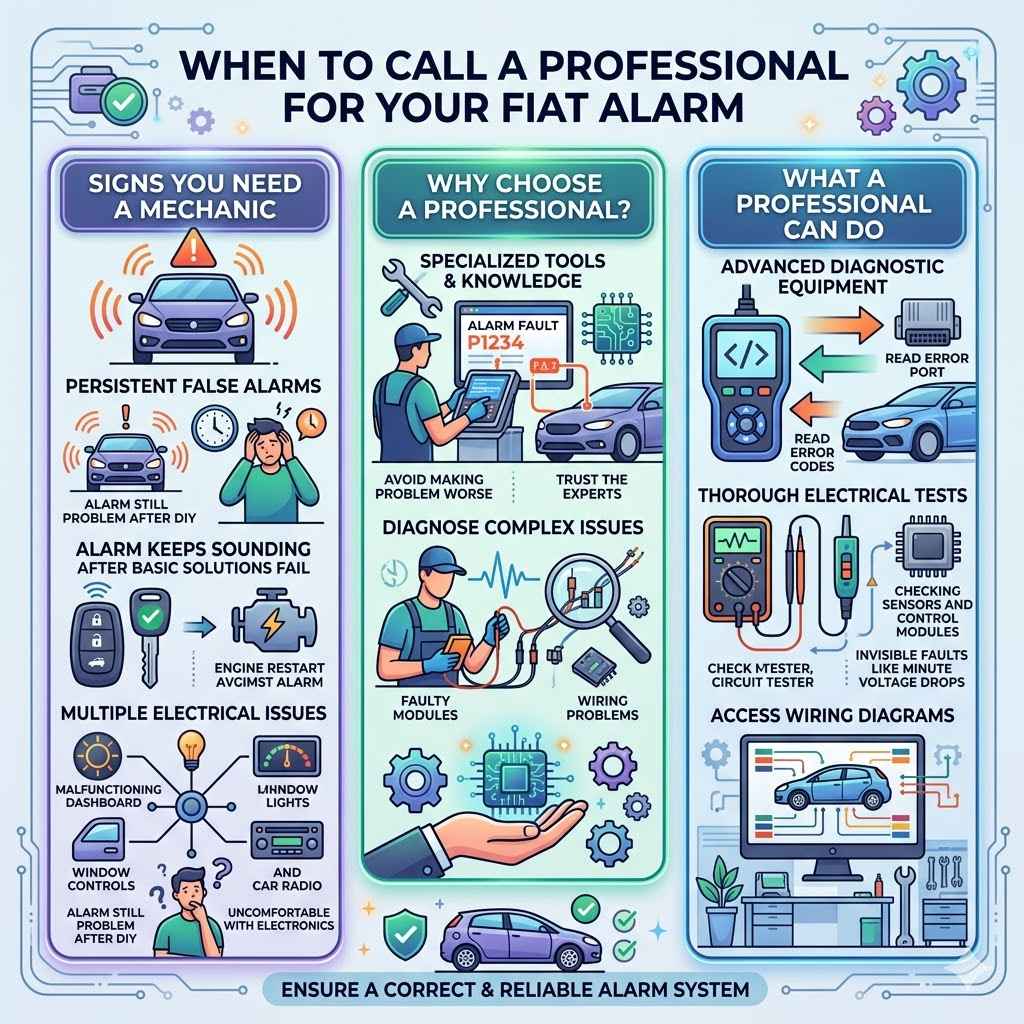
While many car alarm issues can be resolved with simple DIY steps, there are times when it’s best to call in the experts. If you’ve tried all the troubleshooting steps and the alarm is still a problem, or if you’re uncomfortable working with car electronics, professional help is the way to go.
Mechanics and auto electricians have the specialized tools and knowledge to diagnose complex electrical problems. They can accurately pinpoint the cause of the alarm issue, whether it’s a faulty module, a wiring problem, or a more obscure fault.
Trying to fix advanced electrical issues without the right tools or knowledge can sometimes make the problem worse. It’s better to trust the professionals to get your Fiat’s alarm system working correctly and reliably.
Signs You Need a Mechanic
If your Fiat’s alarm continues to sound after you’ve tried all the basic solutions like using the key fob, the physical key, and restarting the engine, it’s a strong indication that you need professional help. Persistent false alarms, especially if they happen frequently and without any apparent cause, warrant a mechanic’s attention.
Another sign is if multiple electrical systems in your car start malfunctioning simultaneously. This could point to a problem with a central control module or a major wiring issue that a professional can diagnose.
If you’re not comfortable or experienced with car electrical systems, attempting to diagnose complex issues yourself can be risky. You could accidentally damage components or create new problems. It’s always better to err on the side of caution.
What a Professional Can Do
A qualified auto electrician or mechanic has access to advanced diagnostic equipment, such as code readers and multimeters, that can communicate with your car’s computer systems. They can read error codes that pinpoint specific issues within the alarm system or related modules.
They can also perform thorough electrical tests on wiring harnesses, sensors, and control modules to identify faults that might be invisible to the untrained eye. For example, they can check for minute voltage drops or intermittent signal failures that are hard to detect without specialized gear.
Furthermore, they have access to wiring diagrams specific to your Fiat model, which are essential for tracing circuits and understanding how everything is connected. This knowledge allows them to efficiently and accurately diagnose and repair the problem.
Frequently Asked Questions
Question: How do I stop my Fiat 500 alarm from going off randomly?
Answer: If your Fiat 500 alarm is going off randomly, first try unlocking it with your key fob or by using the physical key in the driver’s door. Restarting the engine can also help. If the problem continues, check for faulty door sensors or a weak car battery.
Question: What does it mean if my Fiat alarm flashes but doesn’t sound?
Answer: If your Fiat alarm is flashing but not sounding, it usually indicates that the alarm system is armed but hasn’t been triggered by a sensor. It could also mean the siren itself has failed or there’s a wiring issue preventing the siren from activating.
Question: Can a low car battery cause my Fiat alarm to sound?
Answer: Yes, a low or weak car battery is a very common cause of false alarms in Fiat vehicles. The erratic voltage can make the alarm system behave unexpectedly. It’s a good first thing to check.
Question: Is there a manual override switch for Fiat alarms?
Answer: Most standard Fiat alarms do not have a readily accessible manual override switch for general use. However, there are specific sequences or procedures that technicians can use to disable or reset the system if needed.
Question: How do I reset my Fiat alarm if it won’t turn off?
Answer: To reset a Fiat alarm that won’t turn off, try using the key fob to unlock the doors, then insert the key into the ignition and start the engine. If that doesn’t work, disconnecting the car battery for a few minutes can sometimes reset the system, but consult your owner’s manual first.
Conclusion
Learning how to stop your Fiat car alarm quickly is achievable with these straightforward steps. You can often silence an unexpected alarm using your key fob, the physical key, or by restarting the engine. If problems persist, checking simple things like door sensors and your car’s battery can resolve many issues. Don’t hesitate to seek professional help if the alarm problem is complex or you’re unsure how to proceed.