Why Won’t My Trunk Open in Freezing Weather?
A trunk that will not open in freezing weather is usually frozen at the seal, latch, actuator, or a weak battery; find which one is stuck before you force anything. Forcing the lid can tear weatherstripping, break trim clips, or hide a real electrical fault. This guide shows how to tell a frozen seal from a jammed latch, dead actuator, or power problem, and what to do safely next.
This guide is part of our Winter Car Care: The Complete Cold-Weather Guide series.
Why is my trunk stuck shut?

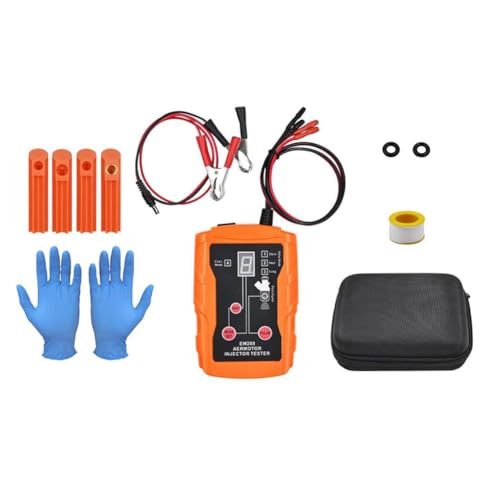
- Checks batteries across cars, trucks, RVs, and golf carts
- Includes alternator testing for charging-system checks
- Compact case with heavy-duty clamps
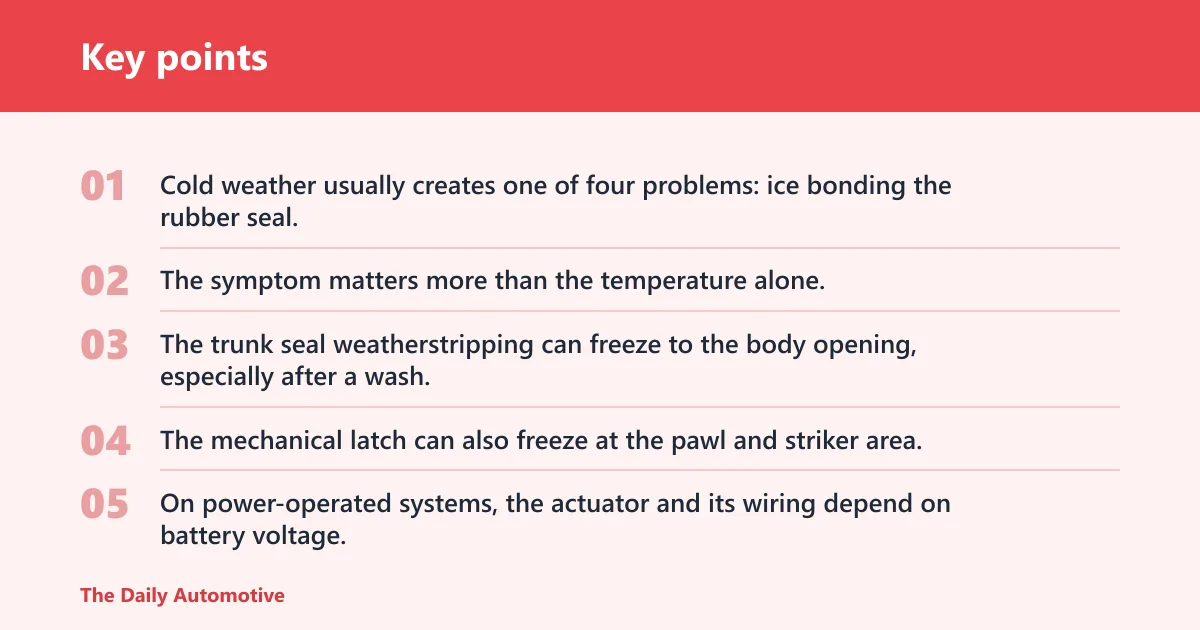
Cold weather usually creates one of four problems: ice bonding the rubber seal, a latch packed with frozen moisture, a release cable or linkage that has stiffened or corroded, or an actuator that has no usable power. The symptom matters more than the temperature alone, because a trunk that unlatches but will not lift points to a different fault than one that never releases.
The four likely failure points
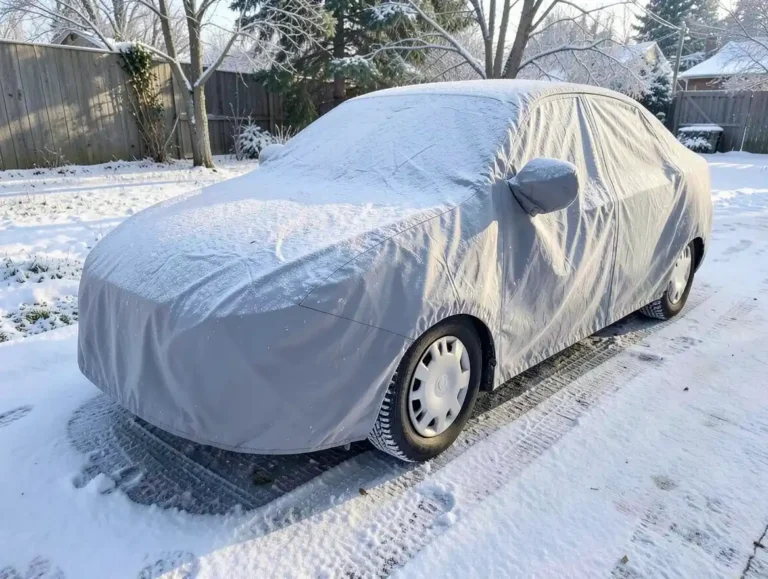
The trunk seal weatherstripping can freeze to the body opening, especially after a wash, slush splash, or overnight thaw-refreeze cycle. The mechanical latch can also freeze at the pawl and striker area, where moisture sits in a small recess. On power-operated systems, the actuator and its wiring depend on battery voltage.
The release cable or linkage can fail in a different way. It may stretch, bind, or corrode, so the handle, key, or switch moves but the latch does not. That is why a safe diagnosis should start with the visible ice and end with the release system, not the other way around.
What the symptom tells you first
If the trunk pops slightly and then sticks, the seal is often the main problem. If the key fob or interior switch makes no click at all, the issue may be electrical, a weak coin-cell battery in the remote, or low vehicle voltage. If you hear a click but get no release, suspect the latch, cable, or actuator.
Frozen trunk troubleshooting table
Use the symptom first, then check the safest likely cause. The table below separates sedan trunks from hatchbacks and SUV liftgates, because their seals, release points, and lift behavior differ.
| Symptom | Likely cause | Safe test | Next step | Sedan, hatchback, SUV note |
|---|---|---|---|---|
| Trunk will not budge, edges feel stuck | Seal ice bonding | Look for ice at the perimeter and press gently near the seam | Thaw the seal, then try again | Sedans usually bind at the lower and side seal; hatchbacks and SUVs often bind along the upper arc too |
| Release makes a click but lid stays shut | Latch freeze or weak latch movement | Listen for latch motion while a helper presses the lid lightly | Warm the latch area and test release again | Liftgates can also stick at the striker area near the top edge |
| Key fob works on doors, trunk still dead | Trunk actuator, cable, or wiring fault | Try the interior switch and manual release if fitted | Check battery voltage and actuator operation | Power liftgates often need more voltage than a simple mechanical trunk |
| No response from fob or interior switch | Low remote battery, low car battery voltage, or circuit fault | Check other power functions and dash warnings | Replace the coin cell, then test the 12V battery | Modern SUVs may disable the liftgate release under low-voltage conditions |
| Handle moves but nothing releases | Broken or sticking cable/linkage | Feel for unusual slack or stiffness | Inspect the cable path and latch connection | Common on older sedan trunks and some manual liftgates |
Yes/no decision path
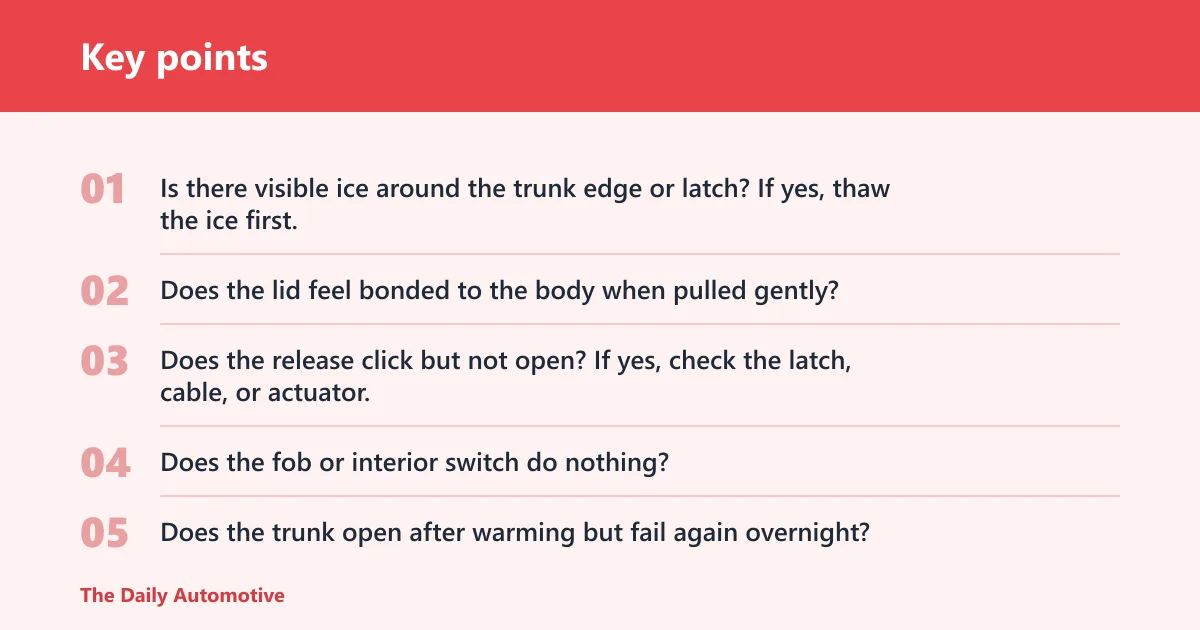
- Is there visible ice around the trunk edge or latch? If yes, thaw the ice first.
- Does the lid feel bonded to the body when pulled gently? If yes, the seal is likely freezing shut.
- Does the release click but not open? If yes, check the latch, cable, or actuator.
- Does the fob or interior switch do nothing? If yes, check the remote battery and car battery voltage.
- Does the trunk open after warming but fail again overnight? If yes, treat the seal and inspect for moisture entry.
How do you unfreeze it safely?
Use gentle heat, a lock-safe de-icer where the mechanism is exposed, and careful prying only at the edge of the seal. The goal is to melt the ice bond or break it free without twisting the lid, snapping clips, or tearing rubber. If the trunk opens with very little effort after thawing, the freeze point was probably the seal or latch, not a hard mechanical failure.
Gentle thaw methods that limit damage
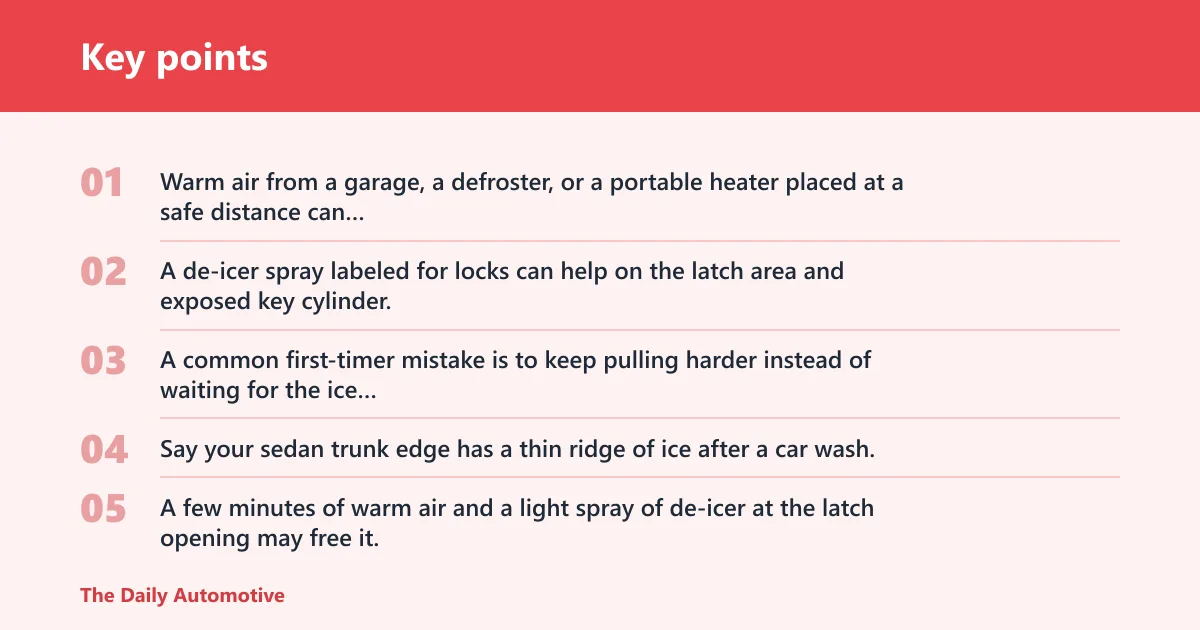
Warm air from a garage, a defroster, or a portable heater placed at a safe distance can soften ice around the opening. A de-icer spray labeled for locks can help on the latch area and exposed key cylinder, but it should not soak rubber weatherstripping. A common first-timer mistake is to keep pulling harder instead of waiting for the ice bond to release.
Say your sedan trunk edge has a thin ridge of ice after a car wash. A few minutes of warm air and a light spray of de-icer at the latch opening may free it, while forcing the lid upward can tear the seal and bend the striker area.
Using a plastic tool without marring trim
A plastic trim tool or ice scraper can help at frozen edges, but it should only lift loose surface ice. Keep metal screwdrivers, knives, and pry bars out of the opening. Use short, light motions near the seal line, not deep pressure against painted trim or plastic panels.
Where de-icer belongs and where it does not
Use de-icer spray on metal latch parts, exposed lock areas, and the area where ice appears to be blocking movement. Do not flood rubber seals with harsh solvent. For rubber weatherstripping, silicone lubricant is generally considered a safer choice because it can help water bead off and reduce sticking without being as hard on the rubber as petroleum grease may be.
Trunk seal and latch care
Rubber seals and metal latches need different care. The seal needs a rubber-safe treatment that reduces water bonding. The latch needs light lubrication at the moving parts, plus moisture control so water does not sit in the mechanism and freeze again. If the same spot freezes repeatedly, treat it as a maintenance problem, not a weather fluke.
Rubber seal treatment with silicone lubricant
Apply a thin coat of silicone-safe treatment to clean weatherstripping on the trunk perimeter. Wipe off excess so it does not collect dust or road grit. Silicone is intended for rubber seals, not for packing a latch. It is best used after cleaning away salt and grime from the seal and surrounding body flange.
Latch lubrication and moisture control
The trunk latch has freeze-prone points around the pawl, striker, and release mechanism. A light lubricant made for latches can help, but heavy grease can hold dirt and moisture if applied too generously. If the latch area stays wet after a wash or snow event, drying it before parking overnight can prevent a repeat freeze.
How to reduce seal bonding after a wash
After a wash, open the trunk and dry the perimeter seal, the lower corners, and the latch opening. Pay attention to the hidden channel where water collects. Road salt mixed with meltwater can leave a film that holds moisture and makes the seal stick again when temperatures drop below freezing.
Why the key fob works but the trunk won’t
When the key fob works on other doors but not the trunk, the problem may be local to the trunk release circuit. A weak coin-cell battery can reduce range in cold weather, but that alone does not explain every failure. If the trunk release still fails with the interior switch, the fault is more likely in the actuator, cable, latch, or vehicle voltage.
Remote battery weakness in cold weather
Coin-cell batteries lose output as temperatures fall, so the fob may work only at close range or only after the battery warms. If the doors respond but the trunk does not, replace the remote battery if it is near its service interval. Many remotes use CR2032 cells, though the exact type can vary by vehicle.
Car battery voltage and power-latch faults
Low 12V battery voltage can sometimes mimic a frozen trunk on vehicles with power latches or a powered liftgate. Central locking may sound slow, the dash may dim, or the release may click once and stop. Cold cranking loads battery output, so a battery that seems borderline in mild weather can fail under winter load.
Suppose an SUV liftgate opens normally in a warm garage but refuses in the driveway after an overnight freeze. If the cabin lights are dim and the power locks sound weak, the 12V battery may be part of the problem, even if the seal is also cold.
When the actuator or linkage is the issue
If the fob and interior switch both send a command but the latch never moves, the trunk release actuator may have failed or the linkage may be stuck. A broken cable, corroded connector, or stretched linkage can produce the same symptom. That is a different repair from thawing ice, and repeated freezing after a proper thaw points toward a mechanical fault.
Hatchback and SUV liftgate checks
Hatchback liftgates and SUV liftgates freeze differently from sedan trunks because they use upper seals, taller openings, and often gas struts or power struts. The top-hinged design can trap ice near the upper perimeter and make the panel feel stuck even when the lower latch is not the only issue. Check the full seal path, not just the latch.
Upper seal freeze points
The upper seal, side seals, and roofline edge can bond to ice after snowfall or a freeze-thaw cycle. If the liftgate releases but will not rise, the struts may still be fighting ice at the seal. Look for frozen gaps around the top corners and the spoiler area on SUVs and crossovers.
Liftgate struts and release behavior
A liftgate may unlatch and then stop because the struts cannot overcome seal ice or because the powered assist sees too much resistance. Do not pull hard on the glass or spoiler. Open only as much as the system allows once the freeze has been softened, then inspect the seal for water tracks or worn compression.
What differs from a sedan trunk
A sedan trunk often fails at the lower seal and latch area, while a hatchback or SUV liftgate can freeze at the top edge, along the sides, or around the release handle. The release strategy should match the design. Treating every rear opening the same can lead to trim damage and a missed actuator fault.
How can you prevent repeat freezing?
Prevent repeat freezing by removing moisture before overnight cold, cleaning road salt from the seal and latch area, and treating the rubber and metal parts with the right product. If the same opening sticks more than once after a normal thaw, inspect for worn weatherstripping, a sticky cable, or a weak battery that is making the release system unreliable.
Post-wash drying and seal inspection
After a wash or slushy drive, dry the trunk perimeter, latch opening, and any hinge area that traps water. Inspect the rubber seal for cracks, flattening, or dirt buildup. A damaged seal lets water sit in the same place every night, which makes freezing much more likely.
Road salt cleanup before overnight cold
Road salt should be rinsed off the latch area and lower body seams before temperatures drop. Salt does not stop freezing by itself. It often leaves a damp residue that keeps moisture near the seal and latch, then freezes hard when the car sits outside overnight.
Cold-weather product matrix
| Product | Safe on rubber seal? | Safe on latch metal? | Use case | Notes |
|---|---|---|---|---|
| Silicone lubricant | Yes | No, not as the main latch lube | Weatherstripping and perimeter seal | Rubber-safe; helps water bead and reduces sticking |
| Lock-safe de-icer spray | Limited use only | Yes | Exposed latch, lock cylinder, frozen release point | Use sparingly; follow label compatibility cautions |
| 12V battery check | Not a product | Not a product | Power-latch or liftgate diagnosis | Useful when remote, switch, and central locking all act weak |
Frequently asked questions
Why won’t my trunk open when it’s freezing outside?
Freezing weather can bind the seal, jam the latch, stiffen the cable, or expose a weak actuator or battery. Start with visible ice and the feel of the seal. If the trunk resists after a light thaw, the problem may be mechanical or electrical rather than simple icing.
Can cold weather make a trunk latch freeze shut?
Yes. Moisture can freeze around the pawl, striker, and release points inside the latch, especially after a wash or slushy drive. A frozen latch often clicks but does not release cleanly. Gentle heat and a small amount of lock-safe de-icer are safer than hard pulling.
How do I unfreeze a car trunk without damaging it?
Warm the area first, then use de-icer only where metal parts are exposed. If needed, lift loose ice with a plastic trim tool or ice scraper, not metal tools. Do not pry hard at the panel gap; that can tear weatherstripping or break clips.
Why does my key fob work but the trunk still won’t open in winter?
The fob may be sending a signal, but the trunk actuator, cable, latch, or vehicle voltage may still be failing. Cold weakens coin-cell batteries and can reduce range, while a low 12V battery can keep a power latch from moving. A click without release points past the remote battery.
Can a weak car battery cause the trunk release to fail in cold weather?
Yes. Low voltage can make a power latch or liftgate act dead, especially when cold cranking already reduces available output. If the locks sound weak, the dash dims, or several electrical functions act slow, test the 12V battery before assuming the trunk is only frozen.
Can the trunk latch or release cable freeze?
Yes. The latch can freeze at the pawl or striker, and the cable can stiffen if moisture gets into the housing or if corrosion is already present. If the handle moves but nothing happens at the latch, a stuck cable or linkage is a strong possibility.
Products related to this article
Sponsored / affiliate links. As an Amazon Associate I earn from qualifying purchases. I may earn additional commission from eligible campaigns.