Full Body Kits for Cars: What They Cost and Include
A full body kit usually runs $1,000 to $3,000 for the parts alone, with paint and professional installation adding another $2,000 to $8,000 on top of that.
The set typically swaps out the front and rear bumper covers and adds side skirts, with a spoiler, fender flares, or a new hood on some kits. Only vehicle-specific kits actually replace those factory panels edge to edge, though. A lot of the “body kits” sold online are really universal lip-and-skirt add-ons that bolt onto your existing bumper rather than replacing it, so it pays to know the difference before you spend the money. Amazon does carry genuine vehicle-specific full body kits for models like the Jeep Grand Cherokee SRT and BMW X5, priced well into four figures, alongside cheaper universal kits that only mimic the look.
What a Full Body Kit Actually Includes
A complete kit is built around the front bumper cover, rear bumper cover, and a pair of side skirts, since those three pieces change a car’s outline the most. Many kits add a rear spoiler or wing, and some vehicle-specific kits throw in fender flares or a vented hood to widen the stance and help the engine bay breathe. Parts are molded from polyurethane, fiberglass, or ABS plastic on most kits, with carbon fiber reserved for lighter, pricier pieces. Polyurethane flexes on a minor impact instead of cracking, fiberglass is stiffer and less expensive, and carbon fiber cuts the most weight at the highest cost per panel.
Vehicle-Specific Kits vs. Universal Add-On Kits
A true full body kit is molded around one specific make, model, and year, so it lines up with the factory mounting points and replaces the OEM bumper covers completely. That precision is why a vehicle-specific kit for a Jeep Grand Cherokee SRT or BMW X5 can run $1,000 to $4,000 or more before paint. A properly engineered version of one of these kits can also lower aerodynamic drag and add a little downforce at speed, which is a real handling benefit, not just a styling one.
Universal kits work differently. They are designed with adjustable splitter rods, trimmable edges, or stretchable panels so one part number can fit a wide range of cars. That flexibility keeps the price down (often under $100), but it means the kit clips onto your existing bumper rather than replacing it, and most universal kits are built for looks rather than airflow. Independent testing has found that many universal add-ons actually increase drag instead of reducing it. If a listing says “universal” or lists dozens of compatible vehicles, treat it as a bolt-on styling add-on, not a full-body replacement. For more background on how these parts are classified, see our guide on what a body kit for cars actually is, and if budget is the priority, our roundup of cheap body kits for cars covers the lower-cost universal options in more depth.
Full Front and Rear Body Kit for Jeep Grand Cherokee SRT (2014-2021)
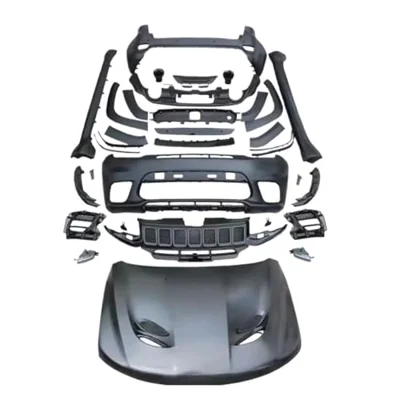
This is a genuine vehicle-specific full body kit built to fit the 2014-2021 Jeep Grand Cherokee SRT only, and it is priced at $4,112.60 at the time of writing. It is molded in plastic and steel and replaces the front bumper, rear bumper, side skirts, front fenders, and hood as one matched set rather than a handful of universal add-ons.
Pros:
- True OEM-style replacement that swaps the entire bumper, not just an add-on lip.
- Modular design so a single damaged panel can be replaced without buying the whole kit again.
- Steel-reinforced sections for durability on parts that take the most stress.
Cons:
- Premium price that puts it well above universal kits and most other vehicle-specific options.
- Made-to-order shipping of roughly 5 to 6 days rather than same-week delivery.
Because this is a fitted replacement rather than a bolt-on extension, expect to budget for paint-matching and professional installation on top of the parts price, the same way you would with a factory collision repair.
Check current pricing and ship time for the Jeep-specific kit here.
Full Body Kit Conversion for BMW X5 F15 (2014-2018)
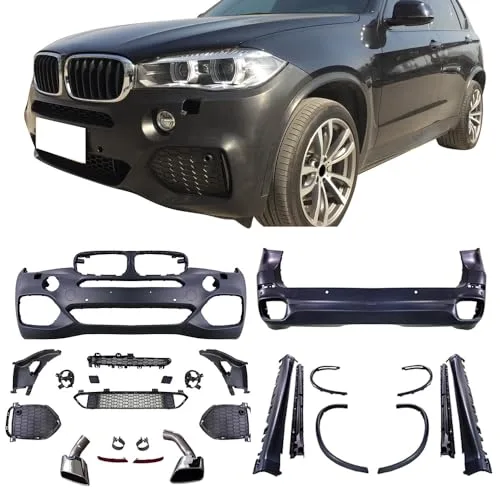
This is a second genuine vehicle-specific option, built for the 2014-2018 BMW X5 F15 and currently listed at $1,399.99. It ships unpainted in black so it can be color-matched to your car, and the set covers the front bumper, rear bumper, side skirts, and fender flares needed for a wide-body style conversion.
Pros:
- Lower entry price than the Jeep kit while still being a true vehicle-specific replacement.
- Fender flares included, which most universal kits do not offer at all.
- Unpainted finish gives you full control over the final color.
Cons:
- Paint and clear coat are a separate cost since the kit ships unpainted.
- Limited stock, so availability and lead time can shift model to model.
See today’s price and stock for the BMW X5 kit here.
Universal Front Lip, Side Skirt and Rear Diffuser Add-On Kit
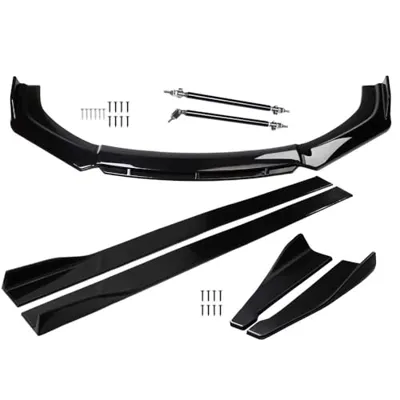
To be clear about what this product actually is: this is a universal add-on kit, not a full body kit. It bolts onto your existing front bumper rather than replacing it, and it is priced at $96.99. The set includes a 71.26-inch front lip spoiler with adjustable splitter rods, a 78.74-inch side skirt extension, and an 18.9-inch rear lip. It is a reasonable way to change a car’s look on a budget, but it will not give you the fitted, edge-to-edge finish of a vehicle-specific kit like the two above.
Pros:
- Fits a wide range of car models instead of one specific vehicle.
- Adjustable splitter rods let you fine-tune the lip’s fit and stance.
- Low price compared to any vehicle-specific full body kit.
Cons:
- Add-on only, since it clips onto the stock bumper instead of replacing it.
- May need trimming for a clean fit on some models.
- Installation tools not included in the package.
View the current price for the universal lip and skirt kit here.
How Much Do Full Body Kits Cost?
Price depends almost entirely on whether a kit is a true vehicle-specific replacement or a universal add-on, and whether the parts price includes paint and installation.
| Kit Type | Parts Cost | Installed and Painted |
|---|---|---|
| Universal lip and skirt add-on | $90-$300 | $300-$800 |
| Polyurethane or fiberglass full kit | $600-$1,500 | $2,500-$5,000 |
| Vehicle-specific fitted full kit | $1,000-$4,500+ | $3,500-$10,000+ |
| Widebody conversion | $5,000+ | $8,000-$15,000+ |
The sticker price of the kit is usually only 40 to 60 percent of the total project cost. Paint-matching, clear-coat protection, and professional fitting can easily double what you pay for the parts alone.
Frequently Asked Questions
What Are Full Body Kits for Cars?
A full body kit is a set of exterior panels, usually a front bumper, rear bumper, and side skirts, plus a spoiler or fender flares on some kits, that replaces or adds onto your car’s factory bodywork. Amazon sells genuine vehicle-specific kits for models like the Jeep Grand Cherokee SRT and BMW X5, plus cheaper universal kits meant to fit a range of vehicles.
How To Choose the Right Car Body Kit?
Start with your exact make, model, and year, since a true full body kit is molded to one vehicle’s mounting points and will not bolt onto another. Compare materials, since polyurethane flexes on impact, fiberglass is stiffer and cheaper, and carbon fiber is the lightest and most expensive option. Read fitment reviews and factor in paint and installation cost before you buy. Choose a kit that complements your car’s design for the best aesthetic appeal.
Do Body Kits Improve Car Performance?
A properly engineered vehicle-specific kit can lower drag and add a little downforce at highway speed, which helps stability. Most universal add-on kits, however, are built mainly for looks and can actually increase drag rather than reduce it, so only expect a performance gain from a kit that was specifically designed and tested for your car.
Are Full Body Kits Easy To Install?
Installation difficulty depends on the kit and the vehicle. Universal lip and skirt kits are largely bolt-on jobs a DIYer can finish in an afternoon. Vehicle-specific kits that replace the entire bumper cover usually take 10 to 15 hours and often need paint-matching, so most owners have them installed and painted by a body shop.
Are Body Kits Compatible With All Vehicles?
No. Genuine full body kits, like the ones made for the Jeep Grand Cherokee SRT or BMW X5, are molded for that specific model and will not fit a different vehicle. Universal kits are adjustable enough to fit many cars, but they usually need trimming or spacers to close gaps, since they were never engineered around one exact body shape.
Does Amazon Actually Sell Genuine Full Body Kits?
Yes, but not every listing labeled “body kit” is a true one. Amazon carries genuine vehicle-specific kits, such as a $4,112 Jeep Grand Cherokee SRT kit and a $1,399 BMW X5 kit, that replace the factory bumpers and add fender flares and side skirts. It also carries far cheaper universal kits, like a $97 lip-and-skirt set, that only bolt onto your existing bumper rather than replacing it, so check the product description carefully before assuming you are getting a full replacement.
Conclusion
Choosing a full body kit can transform your car’s appearance and performance, but it is worth knowing which type you are buying first. A vehicle-specific kit, like the ones built for the Jeep Grand Cherokee SRT or BMW X5, replaces the factory bumpers outright. A universal kit, like the Evargc lip and skirt set, only adds onto what is already there.
Both approaches have a place. The front-end and side panels change how your car looks and, on a properly engineered kit, how it handles too. If your budget favors a bolt-on option over a fitted replacement, our list of cheap body kits for cars is a better starting point than a vehicle-specific kit priced in the thousands.
Whichever route you take, price out paint and installation before you buy, not just the parts. That is where most of the total cost actually lands, and it is the easiest number to underestimate. With the right kit and a matching set of tires, your car can stand out and perform better.
Products related to this article
Sponsored / affiliate links. As an Amazon Associate I earn from qualifying purchases. I may earn additional commission from eligible campaigns.