Is Leaving Your Car On While Pumping Gas Bad: Essential Facts
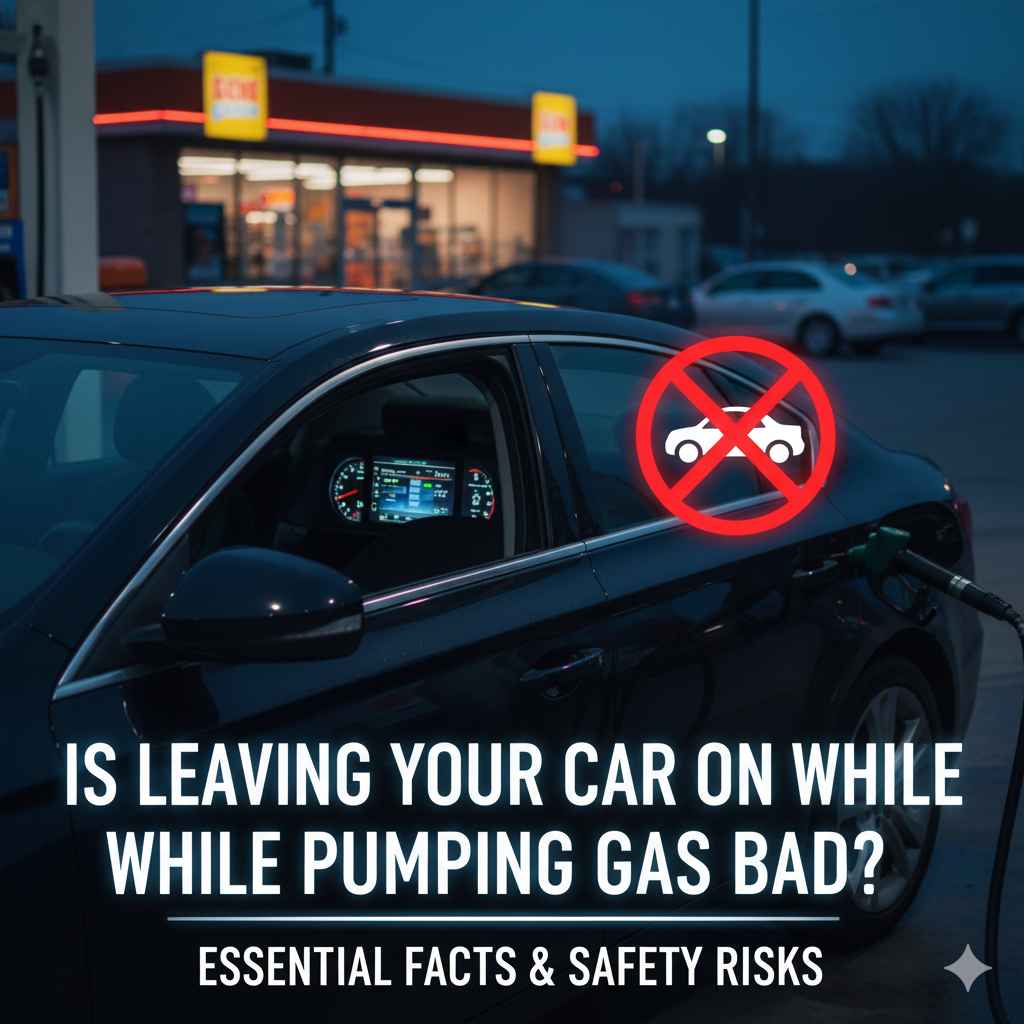
Is leaving your car on while pumping gas bad? No, in most modern vehicles, it’s generally not a significant fire hazard and is permitted by law. However, it’s a waste of fuel and can contribute to air pollution. For optimal safety and awareness, turning off your engine at the pump is the recommended practice.
Ever stood at the gas pump, feeling a bit unsure about whether to keep your car running or turn it off? You’re not alone! It’s a question many drivers ponder, and the confusion often stems from old tales and safety warnings. Some say it’s a major fire risk, while others just leave it running to save a minute. Today, we’re going to clear up this common car care mystery, Md Meraj style. We’ll dive into the facts, separate myth from reality, and give you straightforward advice so you can feel confident the next time you pull up to the pump. Let’s get your car care questions answered simply and practically!
The Great Gas Pump Debate: Engine On or Off?
For decades, the idea of leaving your car engine running while refueling has been a hot topic. Many of us grew up hearing stern warnings about static electricity, spark plugs, and potential explosions. But is this age-old caution still relevant for today’s vehicles?
The short answer is: it’s complicated, but mostly no longer a significant concern for modern cars. However, understanding why the warning existed and what the current recommendations are is key to being a smart and safe driver.
Historical Concerns: Why the Warning Began
The fear of leaving a car engine running while pumping gas originated from a time when vehicle technology was quite different. The primary concern revolved around a few factors:
- Static Electricity: Older vehicles, especially in dry conditions, could build up static electricity. If this charge discharged at the wrong moment while near gasoline fumes, it could potentially ignite them. Think of it like a tiny spark that could cause a big problem.
- Ignition Sources: Car engines have various electrical components that create sparks. The thought was that a running engine provided closer and more numerous potential ignition sources near the highly flammable gasoline vapors escaping from the fill pipe.
- Fuel System Design: Older fuel systems were not as sealed as they are today, meaning more fuel vapors could escape into the surrounding air, increasing the risk if an ignition source were present.
These concerns were valid for the vehicles of yesteryear. However, automotive engineering has come a long way. Modern cars are designed with improved safety features and sealed fuel systems that significantly reduce the risks associated with static discharge and fuel vapor ignition.
Modern Vehicle Safety Features
Today’s cars are equipped with a range of technologies that make leaving the engine running during refueling a much less risky proposition:
- Sealed Fuel Systems: Modern cars have highly efficient, sealed fuel systems that minimize the escape of gasoline vapors. This means there are far fewer flammable fumes lingering around the pump.
- Vapor Recovery Systems: Gas stations themselves are equipped with vapor recovery systems designed to capture gasoline vapors that are displaced during refueling. This not only reduces pollution but also helps keep the air around the pump cleaner and less flammable. Many states legally require these systems. You can explore the Environmental Protection Agency’s (EPA) regulations on Gasoline Vapor Recovery Systems to understand how they work.
- Reduced Static Tendencies: While static electricity can still form, modern car designs and materials tend to dissipate it more effectively. Furthermore, the anti-static measures in fuel nozzles and pumps play a crucial role in preventing dangerous discharges.
Is It Illegal to Leave Your Car On While Pumping Gas?
This is a common question, and the answer varies by location. While it’s not universally illegal, many states and local jurisdictions have specific rules or advisories against it. These laws are often put in place for safety reasons, even if the direct risk from a running engine is minimal on modern cars.
Why would it be allowed in some places and not others if modern cars are safer? It often comes down to a precautionary principle. The cumulative risk associated with thousands of vehicles at gas stations, coupled with the fact that not all vehicles are the latest models, leads some areas to enforce a ‘better safe than sorry’ approach.
Common Regulations and Advisories
Here’s a general idea of what you might encounter:
- Prohibitions: Some states, like California and New York, have explicit laws or regulations that prohibit leaving a vehicle unattended or operating its engine while refueling. These are often posted with signs at the gas station.
- Advisories: Many other places might not have strict laws but will actively advise drivers, through signage or educational campaigns, to turn off their engines. This is for general safety and to minimize any potential risk, however small.
- Station Policies: Individual gas station chains might also have their own policies regarding engine operation during refueling, regardless of local laws.
It’s always a good idea to observe the signage at your local gas station and be aware of any posted rules in your area. You can often find specific state regulations by searching your state’s Department of Transportation or Fire Marshal’s website.
The Environmental and Economic Impact of a Running Engine
Beyond the debate about safety, there are clear reasons why turning off your engine is the better choice for your wallet and the planet, regardless of the law.
Wasted Fuel
When your car is idling, it’s still consuming gasoline. Even though modern engines are more efficient at idle than older ones, they are still burning fuel. If you consider the time it takes to refuel (usually just a few minutes), the amount of fuel wasted might seem small. However, over time, this adds up.
Let’s do a quick calculation to illustrate:
| Scenario | Fuel Consumption (per minute) | Time to Refuel (minutes) | Total Fuel Wasted |
|---|---|---|---|
| Modern Car Idle | 0.03 gallons | 5 | 0.15 gallons |
| Older Car Idle | 0.05 gallons | 5 | 0.25 gallons |
Assuming an average fuel price of $3.50 per gallon and refueling once a week:
- Modern Car: 0.15 gallons/week $3.50/gallon = $0.525 per week. Over a year, that’s about $27.30 wasted.
- Older Car: 0.25 gallons/week $3.50/gallon = $0.875 per week. Over a year, that’s about $45.50 wasted.
While $27-$45 might not sound like a fortune, every little bit saved counts, especially when it’s completely unnecessary waste!
Air Pollution
An idling car releases emissions into the atmosphere, contributing to air pollution and greenhouse gas effects. These emissions include carbon dioxide (CO2), nitrogen oxides (NOx), and particulate matter, all of which have negative impacts on air quality and public health. Reducing unnecessary idling is a simple yet effective way for each of us to contribute to cleaner air.
The U.S. Department of Energy provides resources on reducing fuel consumption and emissions through smart driving habits, which include minimizing idling. You can find more tips on their drivingsmart.gov website.
The Step-by-Step Guide to Safe Refueling
Now that we understand the why’s and why not’s, let’s walk through the best practice for refueling your car safely and efficiently. It’s really straightforward!
Step 1: Park and Engage
- Pull up to the gas pump, making sure to position your car so the fuel door is on the correct side.
- Once parked, engage your parking brake. This is a crucial safety step to prevent your car from rolling.
- Turn off your engine. This is the key step for safety and efficiency.
- Turn off all accessories that draw power, such as headlights, interior lights, and the radio, if possible. This further reduces any electrical activity.
Step 2: Open Fuel Door and Prepare Nozzle
- Open your car’s fuel door.
- Remove the gas cap if your car has one (most modern cars have a capless system).
- Pick up the fuel nozzle. Many nozzles have a handle lock that allows you to set it and walk away during fueling, but it’s generally a good idea to stay close and supervise.
- Follow the instructions on the pump, which usually involve inserting the nozzle firmly into the vehicle’s fuel filler neck and squeezing the trigger to begin pumping.
Step 3: Fueling and Finishing
- Once fueling is complete, the pump will usually shut off automatically.
- Remove the nozzle carefully. You might hear a click as it detaches.
- Return the nozzle to its holder on the pump. This is important for safety and for the pump’s vapor recovery system to function correctly.
- Replace your car’s gas cap if it has one.
- Close your fuel door.
- Proceed to pay at the cashier or via the pump if it’s equipped for payment.
Step 4: Drive Away Safely
- Once payment is handled, carefully drive away from the pump, checking for pedestrians and other vehicles.
Common Misconceptions and What They Really Mean
Let’s address some persistent myths about refueling that might still be circulating:
Myth 1: Static electricity will cause a gas station explosion if your engine is on.
Reality: While static discharge is a known ignition source, modern cars have significantly reduced risks. Gas station pumps and nozzles have grounding mechanisms and anti-static designs. Furthermore, the increased proximity of a running engine in a modern, sealed vehicle doesn’t drastically increase the risk compared to other potential ignition sources. Turning off the engine is still good practice, but the explosion risk is often exaggerated for modern vehicles.
Myth 2: You can get a ticket for leaving your car on while pumping gas.
Reality: In some places, yes, this is true. As mentioned, laws vary by state and local jurisdiction. Always check local signage and regulations. In many areas, it’s not strictly illegal but strongly discouraged for safety and environmental reasons.
Myth 3: Modern cars don’t need you to turn off the engine because they are designed for it.
Reality: While modern cars are safer, they are not specifically designed to have their engines running while refueling. The safety improvements are general enhancements. The primary reason to turn off the engine remains to avoid wasting fuel and reduce emissions. Relying on cars being “designed for it” is a risky assumption.
When Turning Off Your Engine Might Be More Critical
While less common, there are specific scenarios where turning off your engine is absolutely essential:
- Older Vehicles: If you have a classic car or a vehicle from the 1980s or earlier, the risk of static discharge or electrical sparks is significantly higher. Always turn off the engine for these vehicles.
- High Static Conditions: In extremely dry weather, especially in arid regions or during winter months, static electricity can build up more easily. In such conditions, extra caution is warranted, and turning off the engine is advisable even for newer cars.
- Leaky Fuel Systems: If you notice any fuel leaks from your vehicle or smell strong gasoline fumes around your car before you even start pumping, do not refuel. Move the vehicle safely away from the pump and have it inspected by a mechanic immediately.
- Fueling in Non-Designated Areas: Never refuel in an area not designated for it, or if you are not using a proper, functioning pump and nozzle.
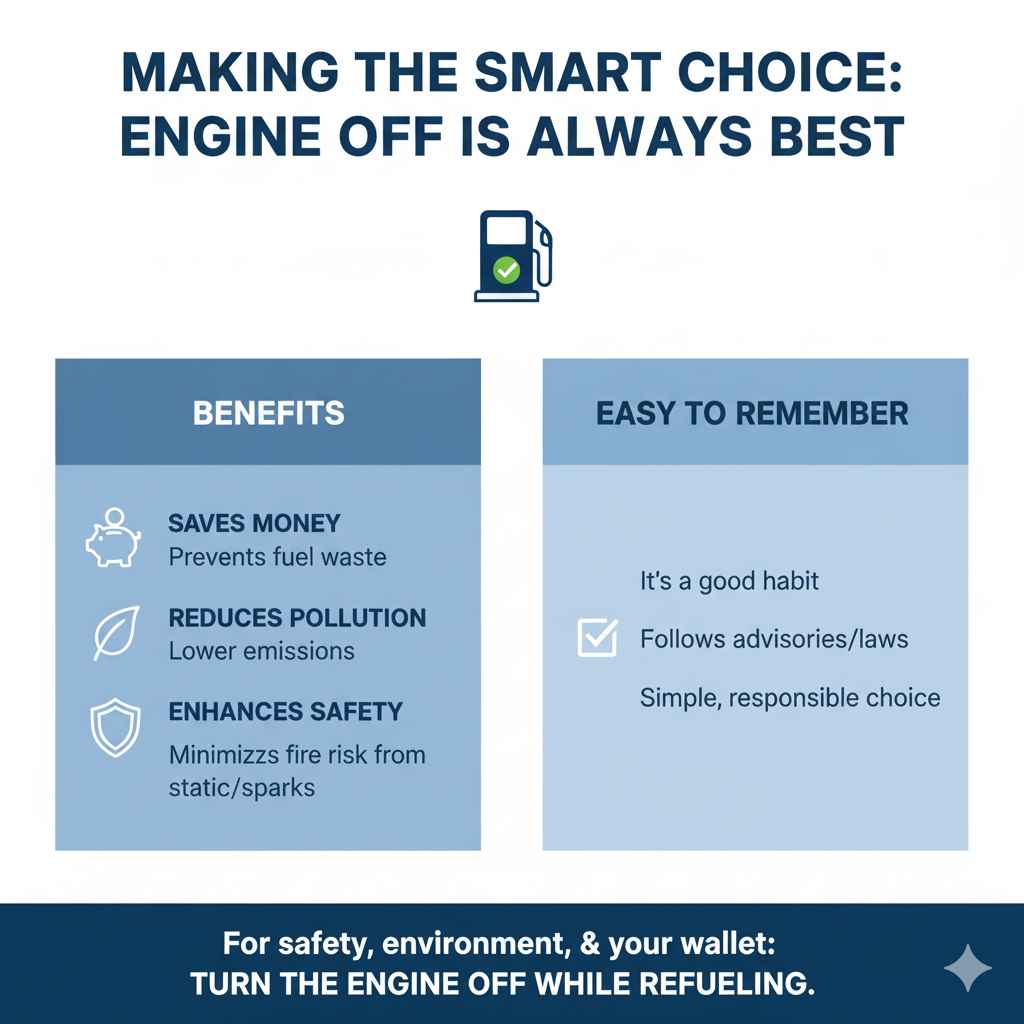
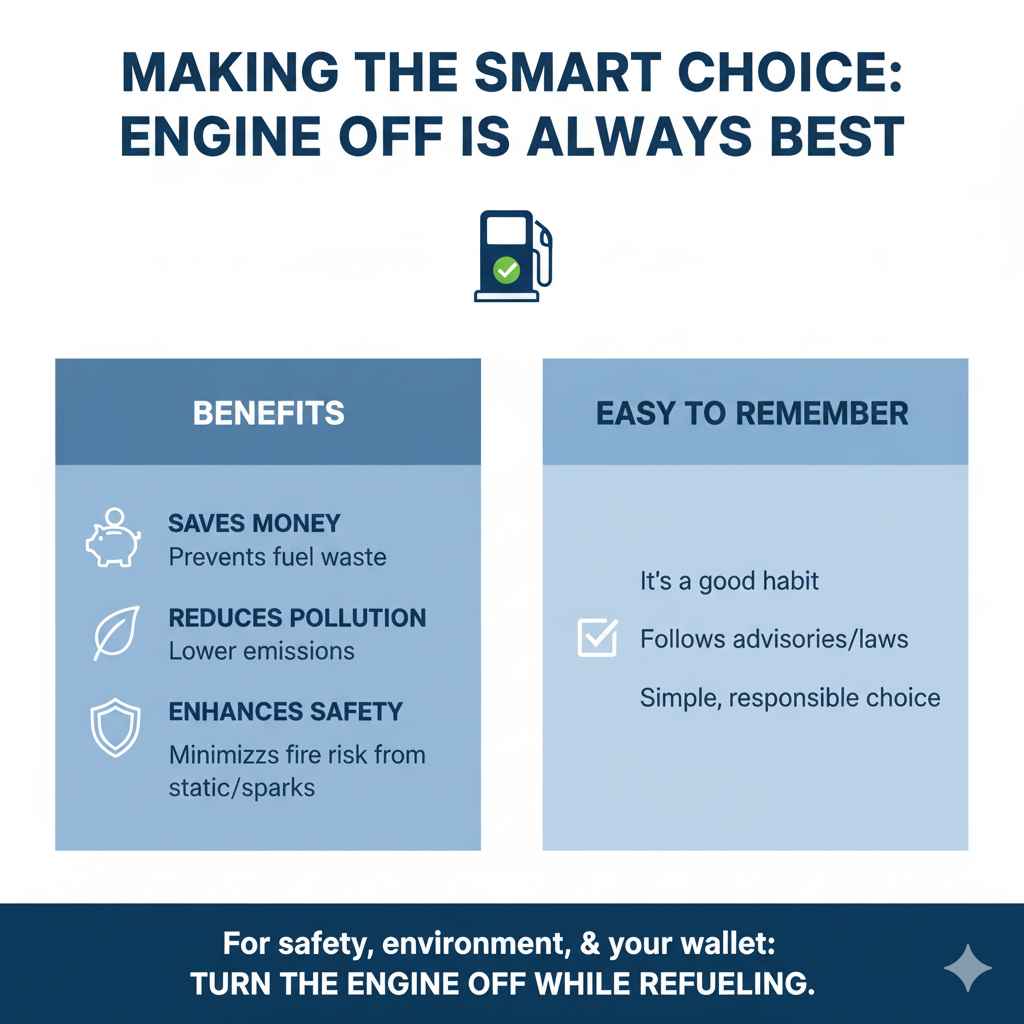
Making the Smart Choice: Engine Off is Always Best
So, to tie it all together, is leaving your car on while pumping gas bad? For most modern vehicles, the direct fire risk is very low, and it’s often not illegal. However, it’s still a wasteful practice from both an economic and environmental perspective.
Turning off your engine:
- Saves you money by preventing fuel waste.
- Helps reduce air pollution and greenhouse gas emissions.
- Adheres to safety advisories and potential laws in many areas.
- Is a simple habit that minimizes any potential, however small, concerning static electricity or spark ignition.
It’s the responsible choice that benefits your wallet, the environment, and ensures you’re following best practices for vehicle safety and operation.
Frequently Asked Questions (FAQ)
Q1: How long does it take for a car to heat up if I turn it off at the pump?
A1: Modern cars don’t need long to warm up. Turning off your engine while refueling, which usually takes 3-5 minutes, won’t significantly affect the cabin temperature or engine performance. The engine is computer-controlled and designed to run efficiently, so restarting it after a short break is perfectly fine.
Q2: What should I do if I see someone pumping gas with their engine running?
A2: If you are concerned about safety or see it happening where it might be against local regulations, you could discreetly inform the station attendant. However, in most cases, it is not necessary to intervene directly, as modern vehicles present a low risk. It’s generally best to focus on your own safe refueling practices.
Q3: Does my car’s fuel door need to be open for the vapor recovery system to work?
A3: No. The vapor recovery system at the gas station is designed to capture vapors from the fuel filler neck as you insert the nozzle. Your car’s fuel door serves to protect the filler neck when it’s not in use. The system works regardless of whether your engine is on or off, but your car’s door should be open to allow access for fueling.
Q4: Are charging electric vehicles (EVs) at a station a different safety concern than gasoline cars?
A4: Yes, EVs do not have internal combustion engines and thus do not produce exhaust or have the same spark-related risks associated with gasoline. However, safety protocols at charging stations are still important, focusing on electrical safety, proper equipment handling, and ensuring charging cables are not damaged or creating tripping hazards.
Q5: What kind of gasoline should I use? Does it matter if my car is off?
A5: The type of gasoline to use is determined by your car manufacturer, not whether your engine is on or off. Check your owner’s manual or the sticker inside your fuel filler door for the recommended octane rating (e.g., regular, mid-grade, premium). Using the wrong octane can affect performance and potentially lead to engine issues over time.
Q6: How can I reduce static electricity at the gas pump?
A6: To reduce static buildup, touch a metal surface of your car (away from the fuel filler area) with your bare hand before you touch the fuel nozzle. This discharges any static electricity you may have accumulated. Also, avoid getting back into your vehicle while the pump is still running, as this can re-accumulate static charge.
Conclusion: A Simple Habit for a Smarter Drive
Navigating car care can sometimes feel like a maze of conflicting advice. But when it comes to refueling your vehicle, the path forward is clear and straightforward. While the direct fire hazard from leaving your modern car’s engine running at the pump is significantly lower than it once was, it’s still a practice that contributes to wasted fuel and unnecessary emissions. By adopting the simple habit of turning off your engine each time you refuel, you’re not only saving a little money and doing your part for the environment, but you’re also adhering to safety guidelines and best practices that have evolved with automotive technology.
So, on your next visit to the gas station, confidently turn off that engine. It’s a small action that makes a smart difference. Remember, with a little knowledge and a few key habits, you can keep your car running well and make informed decisions that benefit both your wallet and the world around you. Happy and safe driving!