
How to Rent My Car on Turo: Step-by-Step Host Setup (2026)
To rent my car on Turo, you confirm you qualify, check that the car meets Turo’s age, mileage, title and value limits, build a listing with photos, a price and an earnings plan, and finish a required host orientation webinar. This guide follows Turo’s own help pages in order, with the exact limits, fees and deadlines, and flags where older host guides have gone stale. For a deeper look at fees and coverage, see our Turo requirements, fees and insurance breakdown.
How to Rent My Car on Turo, Step by Step
Best Lockbox for Key Handoff
 |
Master Lock 5-Key Combination Safe 5401D, $38.69 on Oct 12, 2026 A wall-mount, resettable 4-digit combination box. Turo says a lockbox host should change the code before every trip, so a box you can reset yourself is the feature that matters here.
|
As an Amazon Associate we earn from qualifying purchases. Price from Amazon on Oct 12, 2026 and can change.
Every row below comes from Turo’s US help center or host pages, which I read on October 12, 2026. Turo changes these pages, and limits vary by state, country and vehicle, so treat the table as a checklist and confirm each line in the Turo app before you list.
| Step | What Turo requires | Note |
|---|---|---|
| 1. Confirm you qualify | You must be at least 21 to list a vehicle in the US, and have valid car insurance | Review your lease or financing paperwork for permission to list on a car sharing platform |
| 2. Check the vehicle | Not more than 12 years old, under 130,000 miles, clean title, working odometer, never a total loss, value no greater than $200,000 | Classic or specialty vehicles can be exceptions; New York cars need an inspection sticker valid through at least the next month |
| 3. Start the listing | Create a Turo account, then choose Become a host in the app or on the website | The vehicle must be registered to you or to an owner who authorized you to list it |
| 4. Enter details and photos | Plate number, make, model, year, clear well-lit high-resolution photos, an accurate feature list | Turo says successful hosts have at least 10 photos; keep your phone number, address and social links out of the listing |
| 5. Price, plan, availability | You set a price, choose an earnings plan, and set availability and trip preferences | Discounts, delivery and Extras are optional |
| 6. Confirm settings | Complete required inspections; set pickup and return hours, advance notice, trip buffers and trip duration | These limit which trips you receive |
| 7. Host orientation | A brief virtual webinar is required before your listing goes live | Turo lists it as the last step of the listing process |
| 8. Tracking policy | Acknowledge Turo’s vehicle tracking and technology policy before listing | Vehicles worth $125,000 or more need an activated OEM tracker |
The step most guides skip is the lease check. If you finance or lease the car, the agreement can restrict car sharing, and that is a contract question Turo cannot answer for you.
Turo Requirements to Rent Your Car
The vehicle limits are the part that decides whether you can list at all. Turo’s help page says the car must be located in the US with permanent, temporary or similar plates (dealer and trader plates are not allowed), and meet all state legal requirements.
- Age: no more than 12 years old, and as the car ages you must keep meeting Turo’s maintenance and safety standards.
- Mileage: under 130,000 miles to list. A car that passes 130,000 after listing can stay listed if it is in excellent condition and still meets legal, safety and mechanical standards.
- Title: clean, not branded or salvage, and the car can never have been declared a total loss. Turo says you are responsible for knowing the title history.
- Value: fair market value no greater than $200,000, which is also the cap on Turo’s damage reimbursement.
- Not eligible: limousines, off-road vehicles, motorcycles, RVs, tow trucks, most three-wheelers, vehicles needing a commercial license, and vehicles seating 16 or more.
Safety is yours to manage. Turo requires hosts to keep the car maintained, so have a qualified mechanic inspect brakes, tires, lights and anything you are unsure about before the first trip, and take the car off the calendar if a warning light or a safety problem appears. Do not list a car you would not hand to a family member.

Choose an Earnings Plan: What You Keep and What You Owe
Turo’s US host page lists three earnings plans, and the plan applies by the date a trip is booked. Trips booked before January 7 keep the plan in place at booking, which is why older guides that list five plans or a 60% share are out of date for new trips.
| Plan | You earn | Damage responsibility per trip | Third-party liability |
|---|---|---|---|
| More peace of mind | 70% of trip price | $250 | Up to $750,000 |
| Balanced | 80% of trip price | $1,500 | Up to $750,000 |
| More earnings | 90% of trip price | $2,750 | Up to $750,000 |
The liability limit is $750,000 on all three plans except in some states and at some airports that require additional coverage, and New York has its own state-minimum arrangement. Turo also says it is not an insurance company and does not have insurance for physical damage to your vehicle: the damage reimbursement is a contractual arrangement, up to the car’s actual cash value or $200,000, whichever is less.
The break-even most guides never show
Each step up the ladder gives you 10 more points of trip price and adds $1,250 of damage responsibility ($250 to $1,500, then $1,500 to $2,750). Dividing $1,250 by 10 percent gives $12,500. Put simply, one eligible damage claim costs you as much as the extra 10 points earn on $12,500 of trip price, so a higher share only pays off if your car is booked a lot and has few claims. This is arithmetic on Turo’s published numbers, not a forecast of what any car will earn.
Turo’s own worked example: with $250 damage responsibility and an eligible repair cost of $750, you pay the first $250 and Turo pays the other $500; on a $100 repair you pay all of it. Wear and tear, meaning dings, dents, cracks or scratches three inches in diameter or less, is not reimbursed at all.
Check your own insurance before you list
Turo says you still need your own personal car insurance, that your personal policy likely has an exclusion that voids coverage while the car is on a trip, and that Turo’s plans only apply to trips booked on Turo. Whether your insurer allows car sharing, and what your state requires, differs by policy and state. Ask your insurer in writing, and check your state’s car-sharing rules before the first booking. Nothing here is legal or insurance advice. For the broader picture, our guide to every way to rent out your car compares the other routes.
Hand Over the Keys Without Meeting Every Guest
Turo’s host page names two ways to give guests access without meeting in person: remote-unlock technology through a manufacturer or third-party app, or a lockbox. Even with remote unlock, Turo requires you to provide a physical key, kept out of sight in an RF-blocking pouch so the car stays locked and only the verified guest gets in.
- Choose a lockbox from a highly rated provider, and put fob-style keys in an RF pouch inside it.
- Change the combination before every trip and never reuse a code across reservations.
- Confirm the guest’s identity first, then send the code through Turo messaging, not a scheduled message.
- Never leave a key on a wheel or tire top, in a gas cap or charging port area, under a wiper, on the exterior, under a doormat or planter, or inside an unlocked car (cup holder, ignition, seat).
The stakes are real: Turo says that if you hide a key in one of those places and the car is stolen or damaged, it will not cover the claim, and hosts who do not transfer keys securely risk losing their plan and claim eligibility. One site-specific detail: the LAX Budget Lot does not allow lockboxes, so hosts there must use manufacturer remote unlock.
Cameras and trackers
Hosts may use GPS and cameras, but Turo requires explicit, written consent through Turo messaging before you turn on any device that records the interior or audio, including an aftermarket dash cam. Turo may review your account if you do not, and may remove you from the platform. Turo also prohibits AirTags as an active tracker.
Cleaning, Fuel and Mileage: What You Can Charge
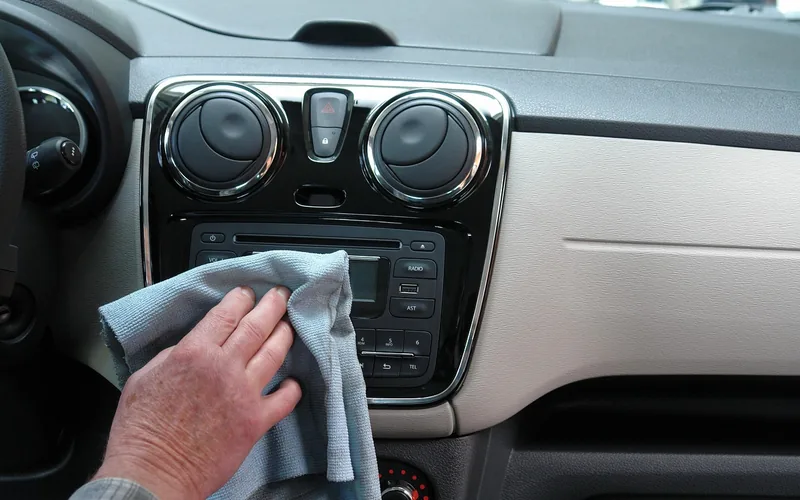
Day-to-day hosting is mostly this table. Turo requires you to clean the car before every trip, and it also sets what you can bill guests for.
| Item | What the Turo help page says | Note |
|---|---|---|
| Cleaning before trips | Required; if a guest cancels at check-in over cleanliness, Turo cancels as a host cancellation with a $50 fee and no earnings | Snooze or unlist the car if you cannot meet the standard |
| Guest cleaning violation | $150 plus a 3% Turo administrative fee in the US, with photo evidence | Eligible: biowaste, major stains needing steam cleaning, extreme caked-on mud, significant pet hair |
| Not billable | Crumbs and wrappers, dirt a car wash removes, minor spills, water stains, odors including smoke odor | Smoking evidence is reported under the No Smoking policy instead |
| Missing fuel | Value of the missing fuel plus a $10 fee for gas and hybrid cars | Needs gauge photos with metadata and a receipt dated within 72 hours of trip end |
| Extra distance | Cost per mile is your daily price divided by your daily distance, set at booking | You receive your plan’s host share; use odometer photos with metadata |

When and How Turo Pays You
A common line in older host guides is that Turo pays within three days. Turo’s US payout page is more specific: you must enter bank information in Stripe, and Stripe typically starts the payout three business days after your first completed trip, but three hours after later trips. Trips longer than a week get a partial payout every seven days. Once started, your bank needs another three to five business days to process the direct deposit, and Turo says it cannot change Stripe’s or your bank’s timing.
Taxes on Turo Income: The Basics
Turo says you are responsible for declaring all taxable income and should ask a licensed tax professional what applies, including any local rental or tourism taxes. On Form 1099-K, Turo’s help page says you receive one if you submit your tax information by its deadline, are a US person, and have gross earnings of $20,000 with 200 transactions, or live in a state with a lower threshold. The deadlines on that page are for the prior tax year, so check the current date.
The IRS page on Form 1099-K says car sharing platforms are among the marketplaces that report, that you may get a form even below the threshold, and that you must report all income from services on your tax return regardless of the amount reported. Keep your own trip records.
What Older Turo Host Guides Get Wrong
| Common claim | What Turo’s pages say now |
|---|---|
| Pick a plan paying 60% to 85% | Three US plans: 70%, 80% and 90% for trips booked on or after January 7 |
| Turo pays within three days | Three business days after the first trip, three hours after later trips, plus bank time |
| Personal insurance probably covers it | Turo says your personal policy likely has an exclusion while on a trip |
| Anyone can run a dash cam | Interior or audio recording needs the guest’s written consent in Turo messaging |
If you are weighing whether renting is worth it at all, our Turo review from the renter side shows the other half of the marketplace your guests see.
Frequently Asked Questions
How do I rent my car on Turo?
Check that you are 21 or older and that your vehicle meets Turo’s age, mileage, title and value limits, create an account and tap Become a host, enter your vehicle details and photos, set a price, choose an earnings plan and availability, then finish the required host orientation webinar before the listing goes live.
What are Turo’s requirements to rent your car?
Per Turo’s US help page (updated July 13, 2026), the vehicle can be no more than 12 years old with exceptions for classic or specialty vehicles, must have under 130,000 miles, a clean title, a working odometer, never have been a total loss, and have a fair market value no greater than $200,000. US hosts must be at least 21 and carry valid car insurance.
Does my personal car insurance cover Turo rentals?
Turo says your personal insurance likely has an exclusion that voids coverage while the car is on a trip, and that you still need your own personal insurance for the car. Ask your insurer in writing whether car sharing is allowed under your policy, and check your state’s rules before you list.
How fast does Turo pay hosts?
Per Turo’s US payout page, Stripe typically starts the payout three business days after your first completed trip, and three hours after later trips. Your bank then needs three to five business days to process the direct deposit.
Do I have to report Turo income on my taxes?
Per the IRS, you must report all income from selling goods or providing services whether or not you receive a Form 1099-K. Turo says it issues a 1099-K only if you submit tax information, are a US person, and meet its earnings threshold, so ask a licensed tax professional how your trips are taxed.
Conclusion
To rent my car on Turo, qualify first (age 21 or older, a car under 12 years and 130,000 miles with a clean title), then build the listing, choose an earnings plan with its damage responsibility in mind, set up a secure key handoff, and ask your insurer and a tax professional before the first booking. Re-check Turo’s pages before you publish, because the numbers above are as of October 12, 2026.
Products related to this article
Sponsored / affiliate links. As an Amazon Associate I earn from qualifying purchases. I may earn additional commission from eligible campaigns.

![TAPMEI Car Phone Holder [2026 Updated] Fit for iPhone 17 Pro Max, Black](https://m.media-amazon.com/images/I/41Jo3OxikiL._SL500_.jpg)