Metallic Purple Car: Essential Stunning Ride
A metallic purple car is an awesome way to stand out safely. Achieving this stunning look involves choosing the right paint type (like basecoat/clearcoat or specialized wraps), proper surface prep, and routine care to keep that vibrant, deep shimmer looking brand new.
Have you ever seen a car painted metallic purple just glide by, catching the light in a way that makes you stop and stare? It’s a truly head-turning color. But maybe you think getting that deep, shimmering finish is too complicated or only for professional custom shops. That is simply not true! Whether you are considering a full repaint, a professional vinyl wrap, or just want to maintain a factory purple finish, the look is completely achievable.
As your trusted automotive guide, I’m here to break down exactly what goes into making your metallic purple car an essential, stunning ride, keeping things simple and safe every step of the way. We will cover the color options, the application process basics, and the easy maintenance secrets.
Why Metallic Purple is the Ultimate Statement Color
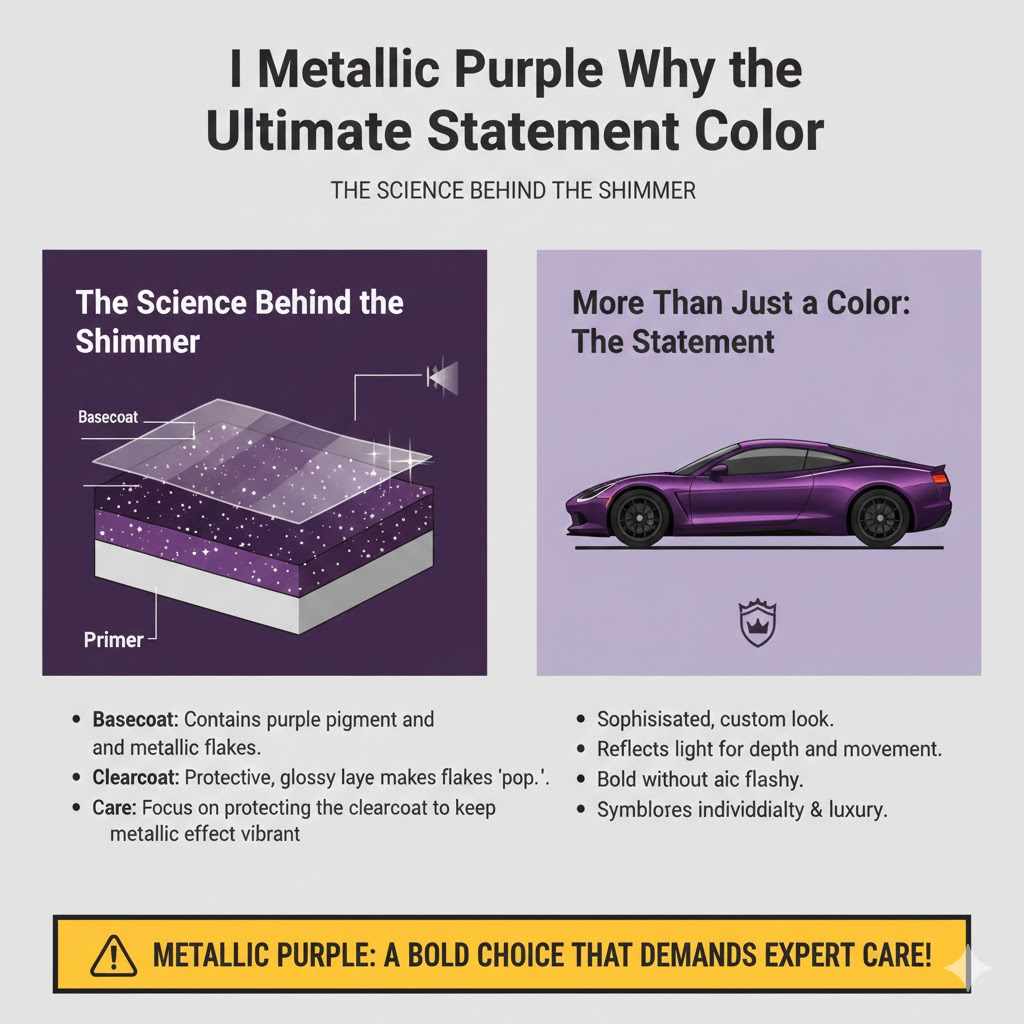
Metallic paints are special because they contain tiny flakes—usually aluminum or mica—that reflect light. When you add that effect to purple, you get incredible depth and movement. It’s bold without being too flashy, offering a sophisticated, custom look right off the factory floor or after a professional upgrade.
The Science Behind the Shimmer
Understanding the shimmer helps you care for it better. Standard, non-metallic paint looks flat when light hits it. Metallic paint, however, uses those reflective particles suspended in the clear coat.
- Basecoat: This layer contains the actual purple pigment and the metallic flakes.
- Clearcoat: This is a protective, glossy layer placed over the basecoat. It’s what makes the metallic flakes “pop” by smoothing the light refraction.
When cleaning or polishing, you are working primarily on protecting this clearcoat, which keeps the metallic effect vibrant.
Option 1: Factory Metallic Purple Paint vs. Custom Paint Jobs
If you are buying a new or used car, it likely has factory paint. If you are customizing, you have more choices. Each path has pros and cons for your wallet and effort level.
Factory Finishes: Reliable and Consistent
Modern car manufacturers offer amazing pre-mixed metallic colors. These are engineered for durability and long-term protection under harsh UV rays.
Pros of Factory Paint:
- Excellent factory warranty coverage for paint defects.
- Consistent color matching if repairs are ever needed.
- Generally higher durability against the elements than cheap aftermarket jobs.
Cons of Factory Paint:
- Limited color selection; you must choose from what they offer that year.
- Touch-up paint can sometimes be tricky to blend perfectly later on.
Custom Paint: Unlocking True Uniqueness
When you go custom, you enter the world of deep pearls, candy coats, and truly unique metallic mixes. This is where you get that “show car” look, but it requires more investment.
| Paint Type | Key Characteristic | Cost Factor (Relative) | Maintenance Difficulty |
|---|---|---|---|
| Single Stage (Rarely used for deep metallic) | Color and shine mixed; less durable. | $$ | Medium |
| Basecoat/Clearcoat (Most common custom) | Deep color separated by a thick, glossy protective layer. | $$$ | Low to Medium |
| Candy/Pearl Coat | Extreme depth achieved with transparent color over a metallic base. | $$$$ | High (Sensitive to harsh washing) |
Md Meraj’s Tip: If you opt for a highly custom deep purple, look into professional paint protection film (PPF) installation afterward. It’s an investment that pays off by protecting that expensive, stunning finish from rock chips and swirl marks.
Option 2: The Beginner-Friendly Alternative – Vinyl Wrapping
For many beginners who want a stunning metallic purple car without the commitment or cost of a full repaint, vinyl wrapping is the perfect solution. Modern vinyl wraps look incredibly realistic and offer paint protection underneath.
What is a Vehicle Wrap?
A wrap is essentially a large, high-quality sticker made of durable vinyl that adheres temporarily to your car’s surface. High-end metallic purple wraps look almost identical to real paint.
Key Advantages of Wrapping:
- Removable: When you get bored of the purple in a few years, you can peel it off, revealing the original, protected paint underneath.
- Cost-Effective: Generally less expensive than a high-quality, multi-stage paint job.
- Instant Transformation: A wrap is much faster to apply than paint drying and curing times.
If you decide to tackle a wrap yourself (which I recommend leaving to professionals for a perfect metallic finish), preparation is crucial. You must ensure the underlying paint is perfectly clean—no wax, grease, or debris can be present, as the vinyl will stick right over it, making any imperfection permanent. You can learn more about proper surface prep from automotive coating experts, such as guidelines published by organizations focused on vehicle care standards.
Step-by-Step Guide: Achieving the Perfect Metallic Purple Finish (The Painting Process Basics)
While I always encourage using professional painters for a full custom job, understanding the steps builds confidence for future touch-ups or maintenance discussions. This is a simplified look at what a professional shop does to achieve that flawless shine.
Phase 1: Surface Preparation (The Most Important Part)
If the surface isn’t perfect, the paint will look bad. Period. This phase takes the longest in any quality paint job.
- Deep Cleaning: Wash the entire vehicle thoroughly to remove dirt and surface contaminants.
- Decontamination: Use a clay bar to pull embedded contaminants (like brake dust or road tar) out of the clear coat. This ensures the primer adheres perfectly.
- Sanding/Stripping: Existing paint must be sanded down. For a color change like going to metallic purple, the old paint needs to be dulled (scuffed) so the new primer can grip the surface well.
- Masking: Every area you don’t want painted—windows, trim, lights—must be taped off meticulously.
Phase 2: Priming and Sealing
Primer helps the expensive basecoat stick evenly and fills in minor imperfections left from sanding.
- Apply specialized automotive primer, often in multiple light coats.
- Once cured, the primer surface is often wet-sanded very lightly (this is called “block sanding”) to ensure absolute flatness.
- Apply a sealer coat to lock down the primer before the color goes on.
Phase 3: Applying the Metallic Purple Basecoat
This is where the magic starts. Metallic paint needs careful application to avoid “striping” or uneven flake distribution.
The painter uses specialized spray guns and must apply the color coat in thin, overlapping passes.
- The technician must maintain a consistent distance and speed to ensure the metallic flakes lay flat in the same direction across every panel.
- Several coats are applied until the desired depth and opacity of the purple are achieved.
Phase 4: The Clearcoat Application
The clearcoat protects the color and provides the depth. This step is critical for that “wet look.”
- Once the basecoat is dry to the touch, the clearcoat is applied heavily.
- Good clearcoats are usually applied in two or three wet coats to ensure a smooth, glass-like finish when it cures.
Safety Note: Professional painting requires a contaminant-free spray booth and proper respirators due to harmful fumes. Do not attempt this phase without professional equipment and safety gear.
Maintenance Secrets: Keeping Your Metallic Purple Shine Brilliant
The joy of a metallic purple car is its stunning appearance. Protecting that investment against fading, swirl marks, and dullness is easier than you think if you follow a few simple rules.
Washing Techniques for Maximum Pop
Washing too aggressively is the number one killer of automotive finishes. Metallic paint shows swirl marks easily because the reflective flakes magnify imperfections.
Best Practices for Washing:
- Rinse First: Always use a strong stream of water to blast off loose dirt and grit before touching the car with a mitt.
- Use the Two-Bucket Method: Keep one bucket for soapy water and one bucket filled only with clean rinse water for your wash mitt. This prevents transferring grit back onto your paint. (Check out resources from organizations like the American Automobile Association (AAA) for general safe washing techniques.)
- Use pH-Neutral Soap: Harsh detergents strip waxes and sealants designed to protect your metallic finish. A pH-neutral car wash soap is your best friend.
- Drying Safely: Never let metallic purple air dry; water spots can etch the clearcoat. Use a soft, clean microfiber drying towel or a dedicated car blower.
Protection Products: Sealing in the Sparkle
Once clean, you need a protective barrier. This barrier reflects light better than the clearcoat itself and sacrifices itself instead of your paint.
Product Choices Explained:
- Waxes (Carnauba): Offer incredible depth and warmth but usually last only 4–8 weeks. Great for enhancing the deep purple tone temporarily.
- Paint Sealants: Synthetic protection that bonds better than wax. They offer durability, often lasting 4–6 months.
- Ceramic Coatings: The longest-lasting option (years, not months). They create a hard, hydrophobic layer that makes the purple look glassier and makes cleaning incredibly easy. This is highly recommended for expensive custom paint jobs.
Dealing with Fading and Oxidation
Purple is a naturally deep color, but UV rays can attack the pigments over time, leading to a dull, chalky appearance (oxidation).
If your purple looks dull, you likely need to correct the clearcoat before protecting it:
- Assess the Damage: If the fading is minor, a good polish with a mild abrasive can remove the oxidized top layer.
- Polishing: Using a dual-action (DA) polisher with a foam pad and a fine polish removes microscopic layers of damaged clearcoat, revealing fresh paint underneath. This requires careful technique to avoid burning through the clearcoat, especially on edges.
- Seal Immediately: After polishing, you MUST apply a sealant or ceramic coating, as the paint surface is now completely unprotected.
The Role of Light: How to Make Metallic Purple Look Its Best
The defining feature of a metallic purple car is how it interacts with light. If you want it to stun, you need to understand light sources.
Sunlight vs. Indoor Lighting
In Direct Sunlight: The metallic flakes will explode with shimmer and contrast. This is when the depth of the purple is most apparent, often showing subtle secondary colors (like blues or reds) depending on the pigment used.
Under Fluorescent or Shop Lighting: This type of lighting tends to highlight surface imperfections, like fine scratches or inconsistent application of the metallic flakes (if the paint job wasn’t perfect).
The Importance of “Flop”
In automotive paint terminology, “flop” refers to the change in color appearance when viewed from different angles. High-quality metallic and pearl paints are designed to “flop”—looking dark purple when viewed straight on, but flashing bright blue or pink/red when viewed from an acute angle. Getting this effect right is a hallmark of expert painting.
Common Pitfalls to Avoid with Your Purple Ride
Even the most stunning color needs careful handling. Here are a few easy mistakes beginners make that can ruin that perfect metallic look quickly.
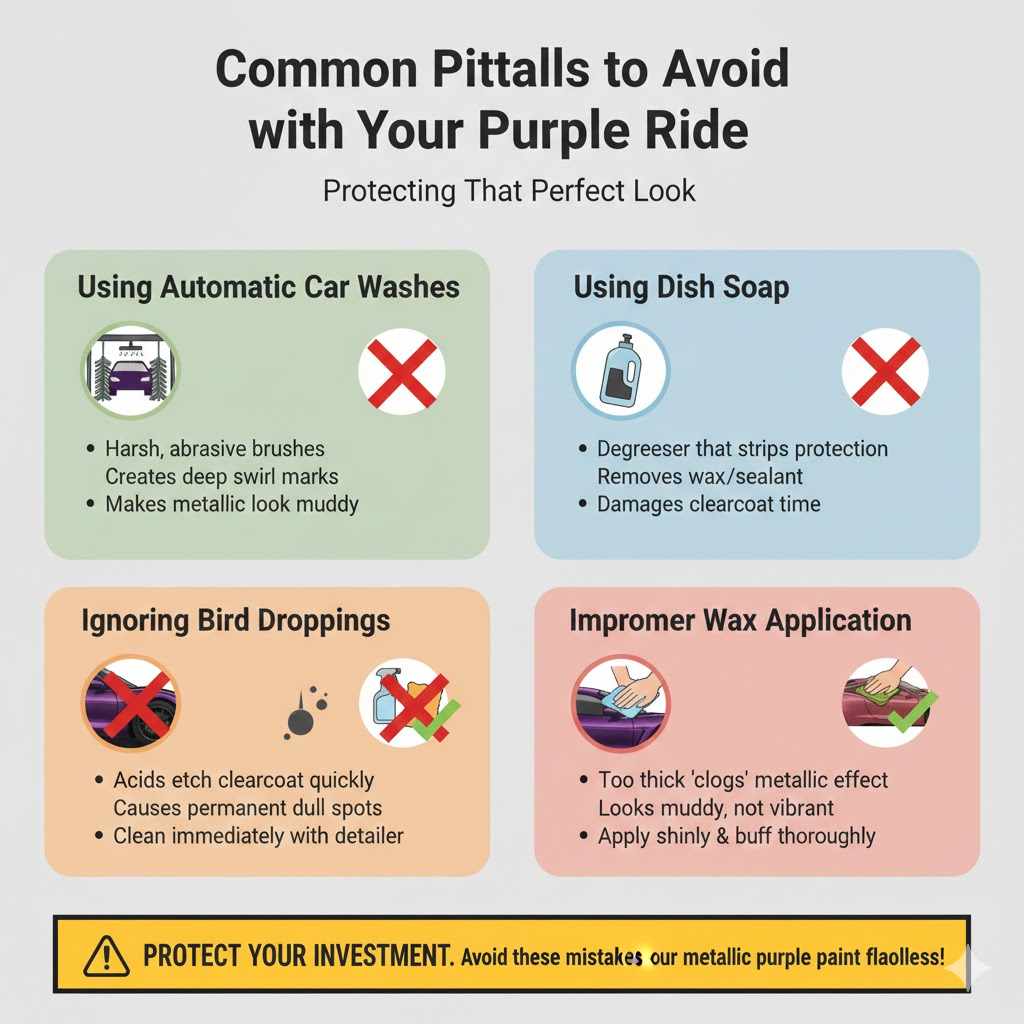
- Using Automatic Car Washes: The harsh, abrasive brushes in automatic washes are guaranteed to create deep swirl marks in your clearcoat, making the metallic effect look muddy.
- Using Dish Soap: Dish soaps (like Dawn) are degreasers designed to strip everything off a surface—including the protection layer you just applied. Stick to dedicated car wash soap.
- Ignoring Bird Droppings: Acids in bird droppings and bug guts etch clearcoats very quickly, especially on dark colors like purple. Clean them off immediately with a quick detailer spray and a soft microfiber towel.
- Improper Wax Application on Heavily Flaked Paint: If you have a very heavy, deep metallic, sometimes applying wax too thickly can “clog” the metallic effect. Always work thinly and buff thoroughly.
FAQ: Beginner Questions About Metallic Purple Cars
Q1: Is metallic purple paint harder to maintain than black or silver paint?
A: Not necessarily harder, but it shows imperfections more easily than silver. Dark colors, including metallic purple, easily show swirl marks. Using gentle washing techniques and consistent protection (like a ceramic coating) is key.
Q2: How long does a metallic purple vinyl wrap typically last?
A: High-quality automotive vinyl wraps generally last between 5 to 7 years when parked indoors most of the time and washed carefully. Extreme heat or harsh chemicals can shorten this lifespan.
Q3: Can I use regular wax on my factory metallic purple car?
A: Yes, you can use carnauba wax or synthetic sealants. However, avoid any abrasive “cleaning” waxes, as these contain mild grit that can damage the factory clearcoat over time. Always use a dedicated car wash soap first.
Q4: What is the most common cause of metallic paint looking dull or flat?
A: The most common cause is oxidation (UV damage) or the clearcoat being damaged by swirl marks. A good polish followed by fresh protection (sealant or ceramic coat) usually brings the deep shine back.
Q5: If I get a small scratch on my metallic purple paint, can I use a simple touch-up pen?
A: For small chips, yes. But remember that most touch-up pens only contain basecoat color, not the protective clearcoat. You must apply a small amount of clearcoat over the purple touch-up paint once it dries to seal it and prevent moisture intrusion.
Q6: Are metallic purple cars more expensive to insure or buy used?
A: Generally, no. Once the car leaves the factory, the color itself does not significantly impact insurance premiums unless it’s a very rare, exotic factory color. When buying used, ensure the paint finish is uniform, as mismatched custom paint can sometimes signal prior poor repair work.
Conclusion: Driving Confidence in Your Unique Purple Ride
Owning a metallic purple car means you’ve chosen more than just transportation; you’ve chosen an expression of style. Whether you achieved this look through precise factory ordering, an intensive custom repaint, or the modern flexibility of a vinyl wrap, the secret to maintaining that stunning effect is consistency and care. You don’t need to be a professional mechanic to keep that deep, shimmering purple looking wet and vibrant.
By adopting gentle washing habits, applying quality protection regularly, and understanding the basics of what makes that metallic flake pop, you ensure your unique ride continues to turn heads for years to come. Drive confidently, knowing you have the knowledge to protect your stunning automotive investment!