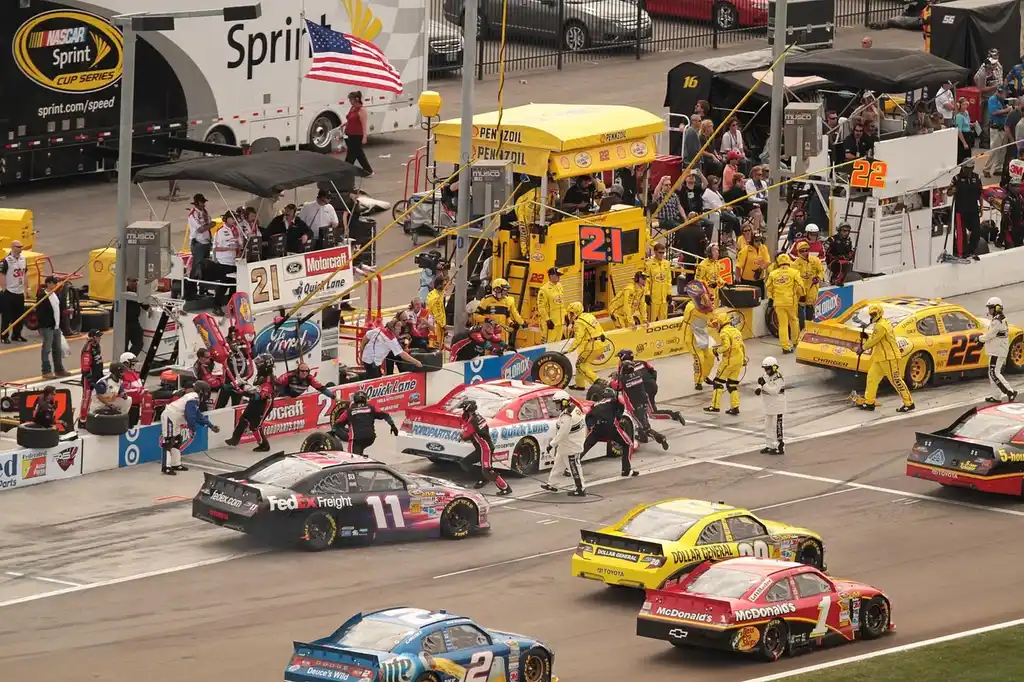
NASCAR Cup Car vs Xfinity Car
NASCAR Cup cars are faster, heavier, and more aero-sensitive than Xfinity cars, while Xfinity cars are simpler, looser in traffic, and easier to recover when the setup is off. Get that wrong and you miss why drivers pass, slide, and save tires differently in each series. This guide covers grip, shifting, crash repair, and how those differences read from the stands and on TV.
| Decision factor | Cup Car | Xfinity Car | Winner |
|---|---|---|---|
| Speed on track | 670 horsepower target on most tracks, with the Next Gen package built for close-quarters racing | 650 horsepower and a lighter, older-spec platform | Cup Car |
| Driving feel | More precise, more aero-sensitive, and less forgiving when the balance is off | More mechanical and more forgiving in traffic and on entry | Xfinity Car |
| Repairability | More modular in some areas, but still expensive and tightly packaged | Simpler construction and generally easier to sort after contact | Xfinity Car |
| Viewer value | Best when you want the premier series and the most advanced car | Best when you want cleaner mechanical racing and less aero dependence | Tie |
How Next Gen aero shifts the Cup vs Xfinity trade-off
The core trade-off is simple: Cup Car is the newer, more technical package, while Xfinity Car is the more traditional one that often lets drivers recover a bad setup more easily. Since the Cup Series moved into the Next Gen era in 2022, the gap has become more about how the cars behave than about one series being dramatically faster in every situation.
That matters because the same track can create different problems in each series. In Cup, small aero changes can alter how hard the driver attacks corner entry. In Xfinity, the car gives more feedback through the steering and rear axle, so driver input matters in a different way.
What you can actually see and feel
| Spec difference | On-track effect | Where it matters most |
|---|---|---|
| 110-inch wheelbase in Cup Car vs 105-inch wheelbase in Xfinity Car | Cup Car tends to feel a little more stable in long corners and under heavy aero load, while Xfinity Car can feel more eager to rotate | Short track, road course |
| 18-inch aluminum wheels vs 15-inch steel wheels | Cup Car uses a larger, lower-profile package that changes steering response and tire behavior; Xfinity Car keeps a more traditional feel | Short track, superspeedway, road course |
| Single lug nut vs five lug nuts | Cup pit stops are built around one wheel nut per corner, while Xfinity uses a more traditional five-nut pattern | Race-day service, pit road |
| 5-speed sequential transmission vs 4-speed transmission | Cup shifting is more push-button and repeatable; Xfinity requires a more old-school rhythm in gear changes | Road course, restarts |
| Independent rear suspension vs solid rear axle | Cup keeps the rear tires more controlled over bumps and curbing; Xfinity often feels less refined but more direct to the driver | Road course, short track |
| 670 horsepower target vs 650 horsepower | Cup has a small power edge, but the bigger difference is how that power is managed with aero grip and tire wear | Superspeedway, road course, long green-flag runs |
Wheelbase and suspension
The 110-inch wheelbase in Cup Car and the 105-inch wheelbase in Xfinity Car matter more in transitions than in simple straight-line speed. Cup’s independent rear suspension also changes how the rear tires stay planted over bumps, curbs, and trail-braking moments. Xfinity’s solid rear axle gives the car a more mechanical feel, which many fans read as a more traditional stock-car response.
Say your favorite short track has a tight hairpin and a bumpy entry. Cup Car will usually feel more planted but less willing to forgive a sloppy entry, while Xfinity Car may rotate more readily and ask more from the driver’s hands and feet.
Wheel and lug-nut setup
Cup Car’s 18-inch aluminum wheels and single lug nut are part of the Next Gen package. Xfinity Car runs 15-inch steel wheels with five lug nuts. That difference changes the visual look, but it also changes service style and the way the tire package sits under the car.
For fans, the easiest tell on TV is the wheel shape itself. The larger Cup wheel fills the fender differently, and the one-nut center-lock style stands out once you know to look for it.
Transmission and shifting
Cup Car uses a 5-speed sequential shifter. Xfinity Car uses a 4-speed transmission. The Cup setup gives the driver a more modern shifting process, while Xfinity keeps a more traditional pattern that can matter on road courses and in pit cycles where gear choice is part of the lap.
The practical effect is not just “more gears versus fewer gears.” It is rhythm. Cup’s sequential box supports more repeatable shifts under pressure, while Xfinity’s gearbox can make gear selection feel more hands-on when the race gets messy.
Horsepower and pace
Cup Car targets 670 horsepower on most tracks. Xfinity Car is at 650 horsepower. That is not a giant gap by itself, which is why the Next Gen era narrowed the visual difference between the two series. Even so, Cup still has the premier package and usually the edge in overall pace.
The smaller horsepower spread is part of why you should not compare these cars by straight-line speed alone. Tire grip, aero drag, and how the car settles in traffic often matter more than the raw number on the spec sheet.
What is the difference between a NASCAR Cup car and Xfinity car?
The difference is in how they race, not just how they are listed on paper. Cup Car is the premier NASCAR national-series car, introduced in its Next Gen form in 2022, and it uses a more advanced chassis package with a modern wheel, tire, and suspension setup. Xfinity Car, which debuted in 2010, is older in design and more mechanical in feel.
That is why drivers often describe Cup as more sensitive to aero balance and Xfinity as more forgiving when the setup is a little off. Cup punishes mistakes faster. Xfinity often gives the driver a wider window to recover.
Why do Cup and Xfinity cars look different?
They look different because each series uses its own body family. Cup runs the Chevrolet Camaro ZL1, Ford Mustang, and Toyota Camry. Xfinity runs the Chevrolet Camaro, Ford Mustang, and Toyota Supra. The nose, tail, and roofline cues are close enough to read as stock cars, but they are not the same body shells.
That difference is easy to spot at the track. Cup Car tends to look more tightly integrated with the Next Gen body rules, while Xfinity Car often reads as a more familiar, traditional stock-car shape from the stands and on broadcasts.
Spotting them on TV or at the track
- Look at the wheels first: 18-inch aluminum on Cup, 15-inch steel on Xfinity.
- Check the center of the wheel: single lug nut on Cup, five lug nuts on Xfinity.
- Watch the body shape: Cup uses the Camaro ZL1, Camaro, Mustang, and Camry bodies; Xfinity uses the Camaro, Mustang, and Supra bodies.
- Notice the pace in traffic: Cup usually looks more aero-sensitive and harder to free up once a driver loses balance.
- Listen for gear changes on road courses: Cup’s 5-speed sequential shift pattern is easier to identify than Xfinity’s 4-speed setup.
Is a cup car faster than an xfinity car?
Yes, Cup Car is generally faster, but the gap is not enormous in the current era. The 670-horsepower Cup package has the edge over Xfinity’s 650-horsepower setup, and the Next Gen chassis is the more advanced of the two. Still, the racing difference depends heavily on track type and setup.
On a fast oval, the Cup Car’s speed advantage is usually clearer in clean air. In traffic, however, the difference can shrink because both cars are limited by grip, dirty air, and tire management. On some weekends, Xfinity can look closer than fans expect.
Short tracks, superspeedways, and road courses
On short tracks, Xfinity often feels more forgiving and more willing to rotate, which can make the racing look more aggressive. Cup’s aero sensitivity and more refined suspension can make tiny setup mistakes more obvious. That is why the cars can look close in lap time but still behave very differently in traffic.
On superspeedways, the visual difference is smaller than many fans expect. Drafting compresses the field, and the race often becomes a matter of handling, positioning, and survival rather than raw horsepower alone. Cup still has the premier package, but the race may not look like a huge speed gap from the grandstands.
On road courses, the transmission and suspension differences stand out most. Cup’s sequential gearbox and independent rear suspension give drivers a more modern toolset. Xfinity’s 4-speed and solid rear axle can make the car feel more physical and more dependent on smooth inputs.
How do the cars feel to drivers?
Cup Car usually feels more precise, but also less forgiving. Xfinity Car often feels more mechanical and more willing to talk back through the seat and steering wheel. That difference shows up in braking, rotation, and how a driver saves a car when the rear end starts to step out.
Suppose a driver enters a short track corner a little too hot. In Cup, the car may snap tighter if the aero balance goes away. In Xfinity, the rear axle and smaller wheel package can make the slip feel more manageable, which is why the driver may catch it with less drama.
Braking and rotation
Cup Car’s modern package can be more stable under braking, but that stability is not free. If the setup is wrong, the car can feel reluctant to turn until the driver asks for a lot more steering angle. Xfinity Car often rotates with less effort, which can help on corner entry and on late-race restarts.
Tire wear and traffic
Cup Car’s aero sensitivity means the tires and body platform are tied closely together. Lose a little front grip, and the car can push harder or feel harder to place in dirty air. Xfinity Car usually allows a broader operating window, so a driver may be able to keep pace longer even with a less-than-perfect setup.
That is a big reason fans often describe Xfinity racing as looser and more chaotic. The cars can slide more, but that sliding does not always turn into instant failure.
Repairability and cost pressure
Xfinity Car is generally easier to recover after contact because the package is simpler and older in design. Cup Car’s Next Gen structure is more advanced, but it also carries more cost pressure and a tighter technical envelope. Neither series is cheap, but the Cup car’s complexity is the harder part to ignore.
That matters to teams on race day. A bent panel or a damaged corner can be handled in both series, but the Xfinity platform is usually the one fans see getting patched up with fewer consequences for the rest of the race.
Choose Cup Car if… / Choose Xfinity Car if…
Choose Cup Car if you want the premier NASCAR product, the most advanced hardware, and the cleanest read on how modern aero, grip, and setup interact. Pick Cup if you care most about the Next Gen era, road-course execution, and how top-level teams manage a car that is less forgiving of mistakes.
Choose Xfinity Car if you want a more mechanical driving style, a looser car in traffic, and a package that is easier to understand from a fan’s seat. Pick Xfinity if you like watching drivers recover slides, work around setup problems, and race a car that still feels closer to older stock-car behavior.
For pure race-watching, the better choice depends on what you value most. Cup Car is the sharper tool. Xfinity Car is the more readable one when the race turns messy.
Frequently asked questions
Nascar cup car vs xfinity car specs
Nascar cup vs xfinity cars
Both are NASCAR stock cars and both race on many of the same tracks, but Cup Car is the premier national-series machine and Xfinity Car is the second-highest national series car. The Cup platform is newer and more advanced, while Xfinity keeps a more traditional feel and easier-to-read driver inputs.
What is the difference between a nascar cup car and xfinity car: the biggest difference is how?
The biggest difference is how they behave on track. Cup Car is more aero-sensitive, more modern, and more precise. Xfinity Car is simpler, looser in traffic, and usually easier to recover when the setup is not perfect. The body, transmission, suspension, and wheel package also differ.
Why do cup and xfinity cars look different: they use different body families?
They use different body families. Cup Car runs the Chevrolet Camaro ZL1, Ford Mustang, and Toyota Camry. Xfinity Car runs the Chevrolet Camaro, Ford Mustang, and Toyota Supra. The wheels also differ, which makes the visual contrast easier to spot on TV and at the track.
What are the wheel and transmission differences between cup and xfinity cars?
Cup Car uses 18-inch aluminum wheels and a single lug nut, plus a 5-speed sequential transmission. Xfinity Car uses 15-inch steel wheels, five lug nuts, and a 4-speed transmission. Those differences affect pit service, shifting rhythm, and how the cars feel in road-course and restart situations.
Products related to this article
Sponsored / affiliate links. As an Amazon Associate I earn from qualifying purchases. I may earn additional commission from eligible campaigns.