Dark Grey Touch-Up Paint for Cars: 3 Top-Rated Picks
For dark grey touch-up paint, choose the format by damage: paint pens for chips and hairline scratches, brush bottles for curb rash, and aerosol kits for larger panel repairs. Use the wrong format and you get obvious color mismatch, raised edges, or a repair that peels faster than the scratch disappears. This guide gives you a repair-path matrix for chips, scratches, rim rash, and larger panels, then narrows the field to three top-rated dark grey touch-up picks.
Quick picks by repair type


The best overall choice is the format that matches the damage, not the brand name on the bottle. A paint pen is the cleanest pick for small chips and tight scratches; spray paint fits broader body panels; a rim repair kit belongs on curb rash and wheel-only damage.
| Repair need | Best format | Best-fit detail | Common drawback |
|---|---|---|---|
| Chips and hairline scratches | Touch-up paint pen | Fine-tip application for pinpoint spots; some versions add a brush applicator | Can leave a raised dot if applied too heavily |
| Small scratches and nicks on body panels | 2-in-1 pen and brush | Lets you switch between a tip and broader brush coverage | Harder to keep the edge invisible on sun-aged paint |
| Larger body-panel coverage | Spray paint | Needs masking, but can lay down more even coverage faster than pens | Overspray and a visible blend edge if masking is rushed |
| Curb rash and wheel damage | Rim repair kit | Built for alloy wheels and rims, often with prep items included | Finish mismatch if the wheel coating is glossy or metallic and the repair is matte |
Best dark grey touch-up paint options
The three picks below cover the three repair paths readers actually face: pinpoint chip repair, broader panel coverage, and wheel-only damage. Dark grey works only when the finish and paint code line up closely enough to hide the repair.
Touch-up paint pen for chips and small scratches
A touch-up paint pen is the cleanest choice for stone chips, parking-lot nicks, and thin scratches because the fine tip keeps paint inside the damaged area. A brush applicator can help on slightly wider marks, and quick-dry formulas help when you need a short repair window.
One Tesla-specific example is Qnofuit Stealth Grey Touch Up Paint, a 0.4 fl oz 2-in-1 pen in Stealth Grey PN01. It is described as a Tesla-specific color match, and the listing claims fast drying in about 10 minutes. Another listing position for the same shade, SYOAUTO Stealth Grey PN01, shows it for Tesla Model Y/3/X/S.
Use this format when the damage is small enough that a broad spray pattern would waste paint or leave a larger blend area than needed. It is also the better option for trim edges, bumper corners, and narrow scratches where control matters more than speed.
Spray paint for larger body-panel coverage
Spray paint belongs on wider body-panel repairs, especially when the damaged area is too broad for a pen to blend cleanly. It can create more even coverage than a point applicator, and it covers faster than a pen when the panel needs a larger repair zone.
Rust-Oleum Matte Silver Gray comes in an 11 oz spray can and dries to the touch in about 20 minutes. AGS Rust Solutions Matte Grey comes in a 14 oz rust spray, which makes it a better fit for sealing exposed areas where rust resistance matters as much as color.
Spray is the wrong tool for a tiny chip. It is the right tool when you need a larger fade-out area, but it also demands masking and a steadier prep routine. If the panel is sun-faded or the clear coat around the damage is failing, expect the final blend to stay visible unless the whole section is refinished.
Rim repair kit for curb rash and wheel damage
A rim repair kit is the practical choice for curb rash on alloy wheels and rims. It is built around wheel-specific damage, where the repair must follow the wheel contour and finish, not body-panel paint logic.
Amiss Full Matte Gray Rim Repair Kit includes sandpaper, wipes, gloves, and masking tape. That makes it a stronger wheel-first package than a simple paint bottle, especially when the edge damage needs shaping before color goes on. Wheel Scratch Fix Dark Grey Pen is positioned for wheel rims with curb rash, which makes it useful for tighter wheel marks that do not need a full kit.
Use a rim kit when the damage is confined to the wheel and the finish must stay consistent after cure. Matte grey wheels and trim are unforgiving; if the repaired patch dries glossier than the rest of the wheel, the fix stands out from a few feet away.
How do you match a grey paint code?
Match the paint code on the car first, then pick the applicator that fits the damage. OEM or factory-match shades reduce visible repair lines, but they do not solve finish mismatch, metallic flake mismatch, or sun fade on their own. For dark grey, those details matter as much as the code.
Find the OEM code on the car
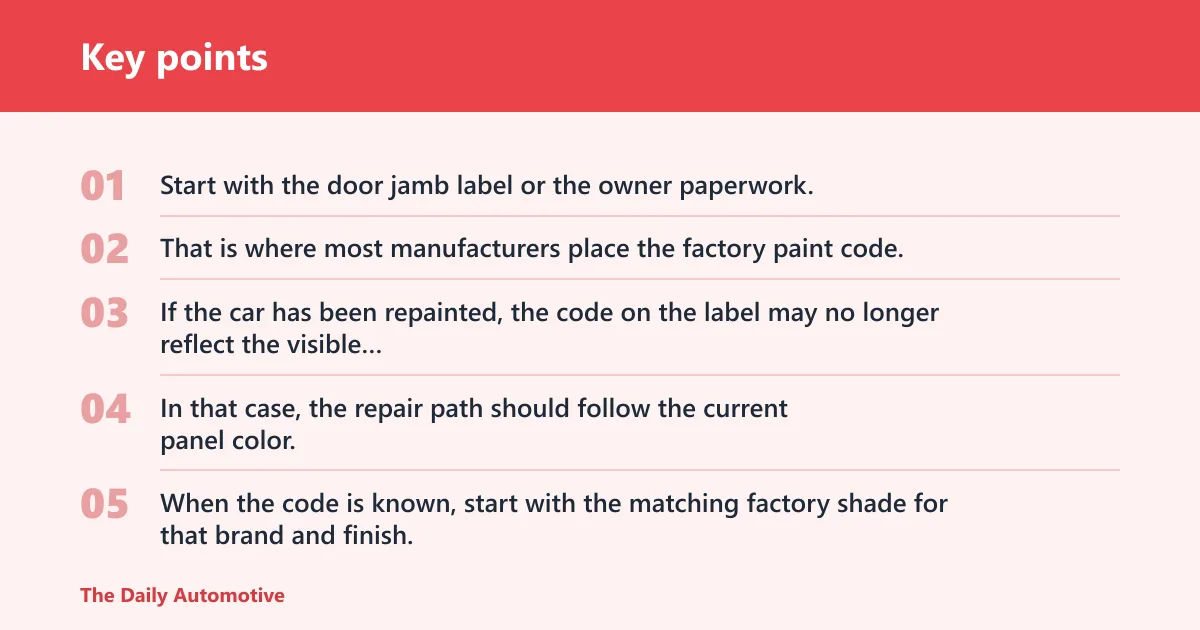
Start with the door jamb label or the owner paperwork. That is where most manufacturers place the factory paint code, and that code is the safest way to avoid a near-match that still looks wrong in daylight.
If the car has been repainted, the code on the label may no longer reflect the visible finish. In that case, the repair path should follow the current panel color, not the original build sheet.
Choose brand-specific shades when the code is known
When the code is known, start with the matching factory shade for that brand and finish. Examples include Tesla Stealth Grey PN01, BMW Brooklyn Grey Metallic (C4P), and Toyota Predawn Grey Mica 1H1. A Honda-specific grey should be treated the same way: code first, product second.
Toyota Genuine Predawn Grey Mica 1H1 is a Toyota-specific touch-up paint for small chip and scratch repair. BMW Brooklyn Grey Metallic (C4P) is a metallic grey repair shade, which means metallic flake alignment becomes part of the match, not an afterthought.
Watch metallic flake, gloss, and sun fade
Dark grey is the wrong choice when the surrounding paint has heavy metallic flake, a different gloss level, or visible sun aging. A factory-match grey can still fail on a panel that has faded a shade lighter or flatter than the rest of the car.
Suppose the rear door has a fresh chip, but the front door has been in the sun for years. A code-correct repair on the rear door may still look darker than the older panel beside it. In that case, a small repair may still be acceptable, but a larger panel blend or respray is the cleaner path.
Grey touch-up repair matrix
This matrix turns the buying choice into a repair path. It ties together damage type, surface, finish, coverage, prep, and failure mode so you can choose the right applicator before you open the bottle.
| Damage type | Surface type | Finish match | Best applicator format | Estimated coverage | Prep steps | Common failure mode |
|---|---|---|---|---|---|---|
| Stone chip | Painted body panel | Gloss, satin, or metallic if code matches closely | Fine-tip paint pen | One chip to a few chips; about a few square centimeters | Clean, dry, remove wax, test on a hidden spot | Raised dot or color halo around the chip |
| Hairline scratch | Painted body panel | Best on non-metallic or low-flake grey | Paint pen or 2-in-1 pen and brush | Short scratch line; roughly a hand-length or less | Wash, degrease, let dry, mask nearby trim if needed | Paint sits in the scratch but looks shiny beside faded paint |
| Broad scuff | Body panel or bumper plastic | Finish must match after cure | Spray paint | Several square inches to a larger patch | Mask, scuff lightly if the product calls for it, spray in thin passes | Overspray, edge line, or poor adhesion on plastic |
| Curb rash | Alloy wheel or rim | Matte grey, satin grey, or wheel-specific finish | Rim repair kit or wheel pen | One wheel edge or a small section of rim | Sand, wipe, glove up, mask the tire bead area | Patch looks flatter or glossier than the rest of the wheel |
| Exposed metal | Body panel, edge, or wheel lip | Finish matters after corrosion is sealed | Rust-resistant automotive paint | Any spot where metal shows through | Remove loose rust, clean, dry, then seal the area | Rust returns under the repair if prep is incomplete |
Is a paint pen or spray better for dark grey touch-up repairs?
A paint pen is better for chips and hairline scratches because it limits paint to the damaged area. Spray is better for larger body panels because it lays down a more even field and covers faster than a pen. A 2-in-1 applicator sits in the middle when the repair is neither tiny nor broad.
When a pen or brush is the cleaner choice
Choose a pen when the scratch is narrow, the chip is shallow, or the repair sits near a body line that would make overspray obvious. A brush bottle can help when the mark is wider than a pen tip but still too small for spray.
A common first-timer mistake is using spray on a coin-sized chip. That creates more masking work than the repair needs and can leave a patch that is larger than the damage itself.
When spray gives better coverage
Choose spray when the panel area is large enough that a pen would leave a dot-by-dot pattern. Spray also makes sense when the visible area needs a more even color field, especially on flat body sections with little contour.
That said, spray is less forgiving on trim plastic and textured surfaces. Adhesion can vary there, so the manufacturer’s surface prep instructions matter more than the shade name.
When a 2-in-1 applicator is the safer middle ground
A 2-in-1 design combines a pen tip with a brush, so one product can handle pinpoint repairs and broader touch-ups. That is why it appears so often across competitor products, including Tesla-specific grey listings.
This format is useful when you do not know whether the damage will need a tight tip or a wider pass until you clean it. It is not a substitute for spray on large panels, but it is more flexible than a single-tip pen.
Will dark grey touch-up paint stop rust?
Rust-resistant automotive paint can help seal exposed metal and reduce water intrusion, but it is not a cure for active corrosion. If rust is already present, the loose material has to come off before the touch-up goes on, or the repair can fail under the paint.
Why exposed metal needs rust-resistant paint
When metal shows through, the repair should do two jobs: restore color and block moisture. That is where rust-resistant automotive paint earns its keep. Some products also claim waterproof protection, which usually means the cured finish is meant to resist moisture, not survive ignored rust underneath.
What waterproof claims can and cannot mean
“Waterproof” on a touch-up listing usually means the dried finish resists water exposure better than bare metal. It does not mean the area can be left unprepped, nor does it mean the finish will survive chips from road debris without care.
If the scratch cuts through the clear coat only, the rust risk is lower than with a full break to bare steel. If the scratch reaches metal, rust protection moves from optional to necessary.
How do you avoid a visible repair line?
Keep the repair small, clean, and thin. The most visible touch-up failures come from dirty paint, heavy coats, and poor finish matching on panels that have faded or on wheels that need a matte result after cure.
Prep, clean, and dry the surface first
Wash the area, remove wax or road film, and let it dry fully before applying paint. For wheel work, use the wipes and tape from a rim kit so dust and tire residue do not contaminate the repair.
If the panel has clear-coat damage or peeling, do not paint over loose edges and expect a hidden repair. The loose material must be removed first, or the new paint will track the old failure line.
Use thin coats and let each layer cure
Apply thin coats rather than one heavy pass. That reduces ridges and helps the finish level out as it dries. A quick-dry product may be ready sooner to the touch, but it still needs proper cure time before washing or polishing.
For example, a 10-minute dry time can help shorten the repair window, but it does not mean the finish is ready for abrasion. The same goes for a 20-minute dry-to-touch spray; handling and full cure are not the same step.
Mask adjacent areas for spray work and wheel repairs
Masking protects body lines, trim, and tire sidewalls from overspray. On wheels, masking is part of the repair itself because the edge needs to stay clean while the face is refinished.
Trim plastic, bumper plastic, and textured surfaces need extra care. If the coating cannot bond well there, the visible line may be less of a problem than early peeling.
What tools do you need to apply car touch-up paint cleanly?
At minimum, you need cleaning supplies, a way to control the paint, and protection for the surrounding area. For wheel damage, a kit with sandpaper, wipes, gloves, and masking tape saves time and reduces the chance of contaminating the repair.
- Wash and dry the damaged area.
- Degrease the spot so paint can bond.
- Mask nearby trim, tires, or adjacent panels.
- Shake the bottle or can as directed.
- Apply thin coats and pause between coats.
- Let the finish cure before washing or polishing.
Choose the tool set by surface. Body panels want control and code match. Wheels want contour work and finish consistency. Plastic bumpers often need more careful prep because adhesion can differ from painted metal.
Frequently asked questions
What is the best dark grey touch-up paint for cars?
The best dark grey touch-up paint is the one that matches the repair size and the factory code. Pens fit chips and scratches, spray fits larger panels, and rim kits fit curb rash. Brand-specific shades such as Tesla PN01, BMW C4P, and Toyota 1H1 are the safer starting point than universal grey.
How do I match dark grey touch-up paint to my car’s paint code?
Find the OEM code on the door jamb label or in owner paperwork, then buy the closest factory-match shade. Check whether the panel is metallic, glossy, or sun-faded before ordering. A code match that ignores finish can still look wrong in daylight.
How long does dark grey touch-up paint take to dry?
Dry time depends on the product. One listed Tesla-specific option claims drying in about 10 minutes, while Rust-Oleum Matte Silver Gray dries to the touch in about 20 minutes. Dry to the touch is not full cure, so do not rush washing or polishing.
Will dark grey touch-up paint protect against rust?
Rust-resistant automotive paint can help seal exposed metal and block moisture, which helps slow corrosion. It does not remove rust already in the panel. If metal is exposed, clean the area first and treat it as a corrosion-control repair, not just a color fix.
When should I choose a rim repair kit instead of a standard paint pen?
Choose a rim repair kit for curb rash, edge scuffs, and wheel-only damage, especially on alloy wheels. The kit’s sandpaper, wipes, gloves, and masking tape are built for that job. A paint pen is better only when the wheel damage is tiny and shallow.
Products related to this article
Sponsored / affiliate links. As an Amazon Associate I earn from qualifying purchases. I may earn additional commission from eligible campaigns.