Wire Spoke Wheels for Cars: Lowrider Style & Care Guide
Wire spoke wheels for lowriders should match bolt pattern, brake clearance, offset, and load rating first; the common period look is often 13- or 14-inch wheels, but the right fit beats size every time. Get that wrong and you can ruin stance, rub fenders, stress hubs, or make the car unsafe on the road. This guide covers fitment rules, stance tradeoffs, buying checks, and upkeep so the wheels look period-correct and stay usable.
What wire spoke wheels
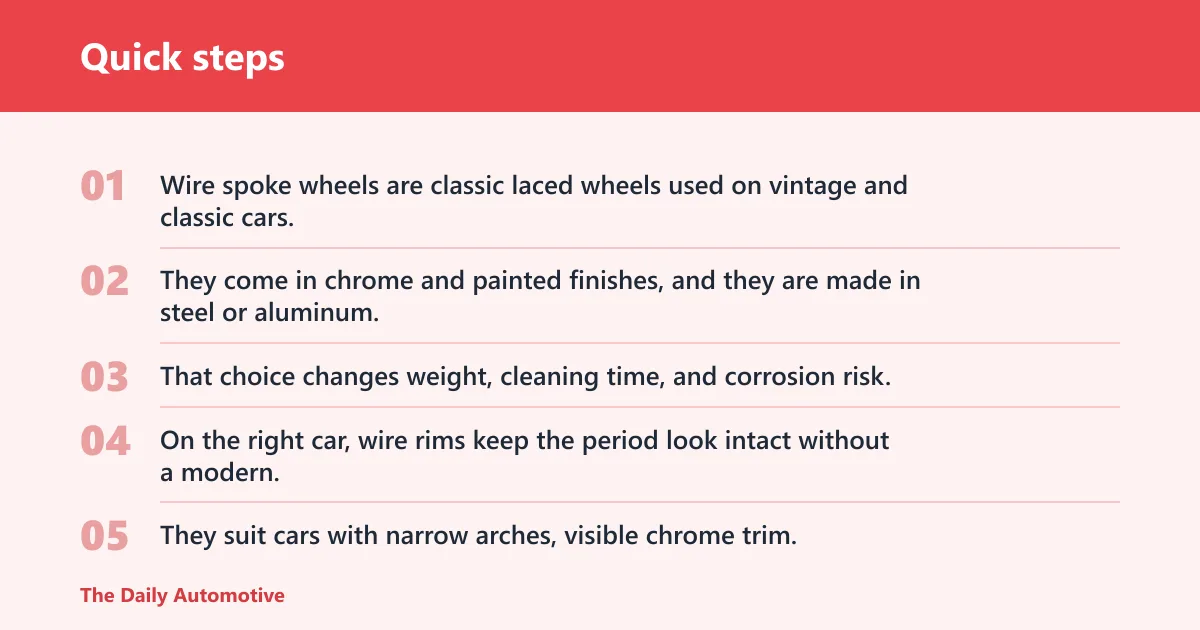


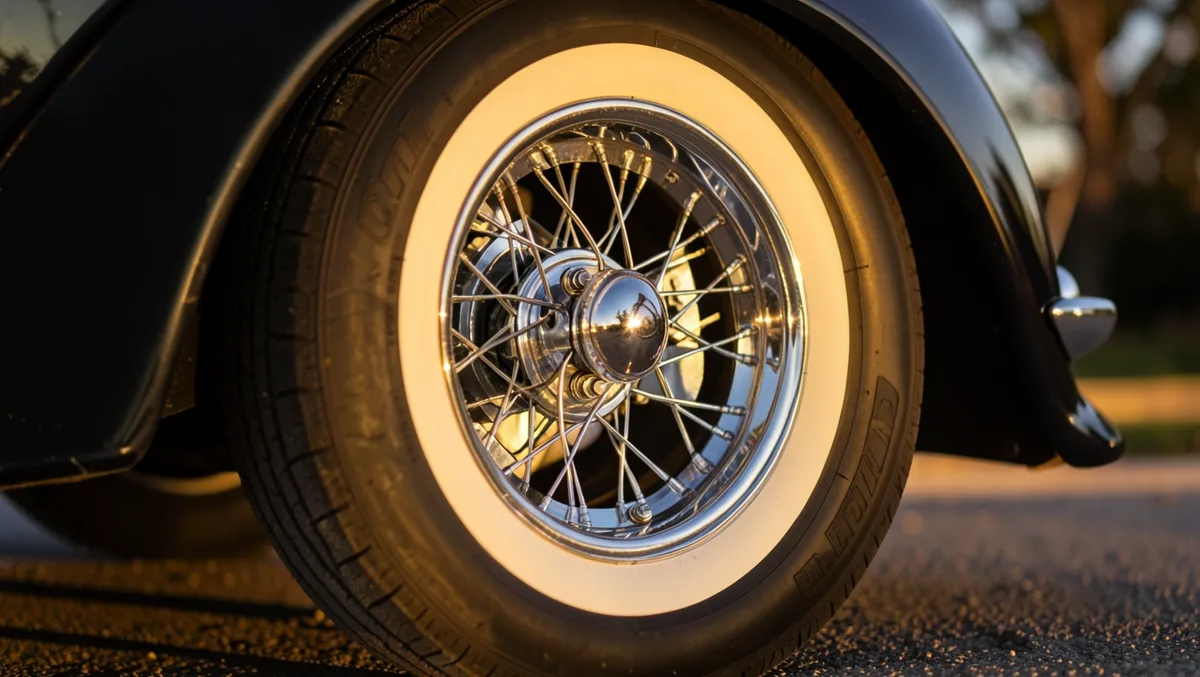
Wire spoke wheels are classic laced wheels used on vintage and classic cars. They come in chrome and painted finishes, and they are made in steel or aluminum. That choice changes weight, cleaning time, and corrosion risk.
Why they still fit classic and vintage builds
On the right car, wire rims keep the period look intact without a modern, oversized wheel design. They suit cars with narrow arches, visible chrome trim, and a style that benefits from a lighter visual touch. The catch is simple: looks only matter after fitment and road use are sorted out.
Where lowrider style enters the picture
Lowrider rims sit in a custom-car style segment, and lowrider cars are modified to sit closer to the ground. That lower stance makes wheel choice more sensitive. The wheel has to clear suspension parts, avoid rubbing, and still support the car’s real use, whether that is boulevard cruising or frequent driving.
Are wire spoke wheels good for lowriders?
Wire spoke wheels can suit a lowrider well, but only if stance, clearance, and road use are considered together. A wheel that looks perfect at a show can still rub, bottom out, or bend too easily on rough pavement. Strength and reliability still matter on a car that sits closer to the ground.
Stance, clearance, and wheel size
Wire spoke wheels often help complete the low, period-correct look, but wheel size must support the suspension travel left in the car. Smaller diameters can help preserve sidewall height and keep the look closer to older builds. Oversized fitments can affect ride comfort, and the lower the car sits, the less room there is for error.
Say your coupe runs a 14-inch wire wheel with the correct bolt pattern, but the offset pushes the tire too far outward. The car may look right from ten feet away, yet the front tire can kiss the fender lip at full lock or over bumps. That is a fitment failure, not a styling detail.
Road use versus show use
If the car is a true weekend cruiser, a careful wire-wheel setup can work well. If the car sees potholes, freeway expansion joints, and daily parking-lot abuse, the maintenance and damage risk climb fast. Wire wheels are more forgiving when the roads are clean and predictable; they are far less forgiving when the pavement is rough.
Strength and reliability still matter
Lowrider style does not cancel basic wheel math. Load support, spoke condition, hub fit, and brake clearance all need to be right. A flashy finish cannot make up for a wheel that flexes too much, fits loosely at the hub, or leaves too little room for the brake hardware.
Wire wheel fitment basics
Correct wheel size affects performance. Larger rims can improve handling and braking, but oversized wheels can affect ride comfort. Fitment usually starts with the vehicle’s bolt pattern, then moves to hub fit, offset, backspacing, and brake clearance. Miss one of those and the wheel may bolt up but still be wrong.
Bolt pattern and hub fit
The wheel must match the car’s bolt pattern exactly. Hub fit matters too, because the center bore or adapter must sit correctly on the hub without forcing the wheel off-center. A wheel that relies on sloppy adaptation can vibrate, load the studs unevenly, and create long-term wear.
Offset, backspacing, and brake clearance
Offset and backspacing control where the tire sits in the wheelwell. Too much inward movement can contact suspension parts or brakes. Too much outward movement can hit fenders and trim. Brake clearance is especially important on upgraded brakes, where a wheel may clear the hub but still foul the caliper or drum hardware.
Size choices that preserve comfort and control
Smaller wire wheels often suit period builds because they preserve sidewall height and keep the ride from turning harsh. That does not mean smaller is always better. The correct size depends on the car’s brakes, suspension, and intended use. A fitment guide from the wheel maker should be treated as the starting point, not a guess.
Wire wheel ownership checklist
This checklist helps separate a good-looking choice from a workable one. Use it before you buy, and again before you install. If more than one red flag appears, step back and recheck the car’s manual, brake package, and intended use.
| Decision point | Yes/no | Red flag |
|---|---|---|
| Vehicle use case fits wire wheels | Yes / No | Daily rough-road use, heavy potholes, or curb exposure |
| Bolt pattern matches exactly | Yes / No | “Close enough” pattern match or adapter guesswork |
| Hub fit is correct | Yes / No | Wheel rocks on the hub or centers only by stud tension |
| Wheel size clears brakes and fenders | Yes / No | Tight caliper gap, rubbed sidewall, or contact at full lock |
| Offset suits stance and steering geometry | Yes / No | Wheel sits too far out or too far in |
| Load rating suits the vehicle | Yes / No | No published load support for the car’s weight |
| Finish choice fits the upkeep level you want | Yes / No | Chrome chosen for a car that lives outdoors |
| Spoke count and style fit the build | Yes / No | Style conflicts with brake access or cleaning access |
| Knock-off compatibility is correct if used | Yes / No | Locking center system does not match the wheel |
| Cleaning frequency is realistic | Yes / No | No plan for frequent spoke cleaning |
| Rust inspection is part of regular upkeep | Yes / No | Corrosion already visible around nipples or rim edges |
| There is a clear reason not to use wire wheels | Yes / No | High-mileage commuting, winter salt, or rough-road duty |
- Confirm the vehicle use case: show car, weekend cruiser, or regular driver.
- Verify the bolt pattern and hub fit before choosing style.
- Check brake clearance with the intended wheel size and offset.
- Decide whether chrome or painted finish matches your upkeep level.
- Inspect the spoke count, center locking setup, and cleaning access.
- Plan a cleaning routine before the wheels go on the car.
- Reject the setup if any red flag appears during fitment or inspection.
Chrome or painted finish?
Chrome and painted wire rims both have a place. Chrome gives a brighter, more reflective look, while painted finishes can be easier to live with on some cars. The better choice depends on how often the car is driven, where it is parked, and how much cleaning time you are willing to spend.
Appearance differences
Chrome stands out against body color and trim, which is one reason it stays popular on custom builds. Painted wire wheels can look more restrained and can match the car rather than steal the eye. Neither finish is automatically better; the car’s overall style should decide that.
Cleaning effort and corrosion risk
Chrome usually demands more attention because water spots, brake dust, and grime can show quickly around the spokes. Painted wheels can hide some dirt better, but they still need care because grime collects at the same tight spoke junctions. Finish choice should reflect how often the car gets washed, not only how the wheel looks in photos.
Which finish suits a driven car?
A driven car often benefits from the finish that is easiest to maintain, not the one that looks brightest on day one. If the vehicle spends time outdoors or near wet roads, choose the finish you can clean regularly without cutting corners. That is especially important on wire wheels, where dirt gathers in more places than on a simple five-spoke wheel.
Wire rim cleaning should be frequent to avoid dirt and grime around spokes. Use a soft brush, avoid harsh chemicals, and plan on reaching into the spoke field, around the hub area, and near the rim edges. Cleaning is part of ownership, not a once-in-a-while detail.
Safe tools to use
A soft brush, mild wheel cleaner approved for the finish, clean microfiber towels, and rinse water are the baseline tools. Avoid abrasive pads and harsh chemicals, especially on chrome or painted finishes that can be marked by aggressive products. A wheel that is hard to reach should be cleaned with patience, not force.
Finish-specific cleaning steps
For chrome, rinse loose grit first, then clean in small sections so residue does not dry in the spoke valleys. For painted wheels, use a gentler approach and keep the brush light to avoid dulling the finish. Either way, work from the outer rim toward the hub so grime is pushed out, not deeper into the wheel.
Suppose a car returns from a short drive with brake dust in the inner spoke area. A soft brush and mild cleaner can remove most of it before it sticks. Wait a week, and the same dust may need more scrubbing, which raises the risk of scratching the finish or missing corrosion starting points.
How to inspect spokes after washing
After cleaning, inspect the wheel for loose spokes, rust, curb rash, and bent sections. Look closely where the spokes meet the rim and hub, because those junctions show damage first. If a spoke sounds different from the others or the wheel shows wobble, stop and have it checked before more driving.
When wire wheels are the wrong choice
Wire wheels are a poor fit for some daily drivers and for cars that live on rough roads. They demand more care than many other wheel designs, and they can punish you with cleaning work, vibration, or damage if the vehicle is used hard. In the wrong setting, they are a styling compromise with too many tradeoffs.
Daily-driving and rough-road limits
If the car sees long commutes, winter roads, construction zones, or frequent curb contact, wire wheels may become more maintenance than they are worth. The spoke design traps dirt, and the added exposure around the wheel can make road grime harder to remove than on a simpler wheel style. For some cars, a different wheel design is the better long-term choice.
Bent rims, loose spokes, and rust
Failure signs are usually visible if you know where to look. Rust around the spoke ends, a loose spoke feel, curb rash, or a bent rim edge should generally not be ignored. Those problems can move from cosmetic to unsafe quickly, especially on a low car that already has less margin for impact.
When to stop driving
Stop driving if the wheel is visibly bent, a spoke is loose enough to rattle, or the car starts to wobble at speed after a curb strike. A damaged wire wheel is not something to “watch for a while.” It needs inspection and likely repair or replacement before more road time.
Frequently asked questions
What are wire spoke wheels for cars?
Wire spoke wheels are spoke-built wheels commonly used on vintage and classic cars, and they remain popular because the design suits older body styles. They are available in chrome and painted finishes, and they can be steel or aluminum. Their appeal is visual, but their fitment and upkeep still matter.
How do I clean wire spoke wheels without damaging them?
Use a soft brush, mild cleaner, and plenty of rinse water. Avoid harsh chemicals and abrasive pads. Clean the spokes, hub area, and rim edge in sections so grime does not dry in place. Chrome and painted finishes both need gentle handling, but chrome usually shows neglect faster.
What size wire wheels should I buy for my car?
Buy the size that clears the brakes, matches the bolt pattern, and preserves the stance you want without hurting comfort. Correct wheel size affects performance, and larger rims can improve handling and braking, but oversized wheels can affect ride comfort. Fitment guides should come before appearance guesses.
What is the difference between wire rims and knock-off rims?
Wire rims describe the spoke wheel design. Knock-off rims use a central locking mechanism and were originally used on racing cars. The knock-off system changes how the wheel attaches and detaches, which is why it appeals to enthusiasts who like quick appearance changes and period-style hardware.
Do wire spoke wheels affect ride comfort and handling?
Yes. Wheel size, offset, and material all change how the car feels. Larger rims can improve handling and braking, while oversized wheels can affect ride comfort. Steel is heavier and stronger, aluminum is lighter and potentially better for fuel economy, and each choice changes how the car responds on the road.
How do I keep wire wheels from getting dirty around the spokes?
There is no way to stop it completely, so the answer is frequent cleaning. Dirt and grime collect around the spokes and hub area, especially after wet or dusty driving. Clean them often with a soft brush, avoid harsh chemicals, and inspect the spoke junctions while the wheel is already clean.
Products related to this article
Sponsored / affiliate links. As an Amazon Associate I earn from qualifying purchases. I may earn additional commission from eligible campaigns.