Plastic Filler for Car Bumpers: Rigid vs. Flexible Guide
Most factory bumper covers are made from flexible plastic, so a filler that hardens rock-solid can crack the first time the bumper flexes.
J-B Weld 8237 PlasticWeld, J-B Weld BumperWeld, and TouchUpDirect Scratch & Chip Putty are three of the most common plastic fillers people reach for on a damaged bumper, but they are not interchangeable. One is a rigid epoxy putty built for trim and housings, one is formulated to stay flexible on an actual bumper cover, and one is a cosmetic putty for shallow scratches and chips.
This guide breaks down what each product is actually for, so you pick the right one for the damage in front of you instead of guessing.
Rigid vs. Flexible Filler: Which Does Your Bumper Need?
Most modern bumper covers are made from thermoplastic olefin (TPO) or polypropylene, which are designed to flex slightly on minor impacts instead of shattering. A rigid two-part epoxy putty bonds very strongly, but once it cures hard it can’t flex with the panel – if the repair sits at a flex point like a bumper corner or a mounting tab, the surrounding plastic can crack again around the patch.
The practical rule most body shops follow: use a rigid epoxy putty on stationary trim, mirror housings, and interior panels that don’t flex; use a flexible bumper-specific adhesive on an actual bumper cover crack or hole; and use a cosmetic putty only for shallow scratches or chips that never went through the plastic.
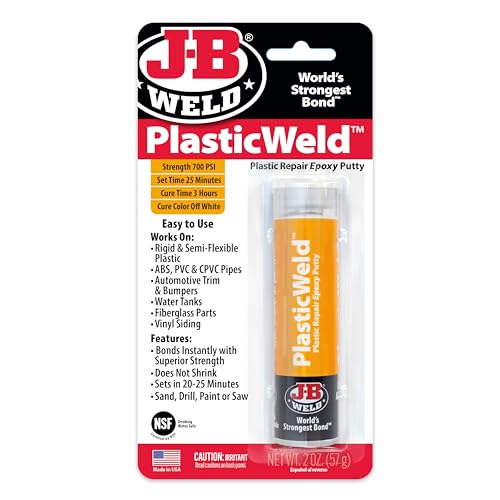
J-B Weld 8237 PlasticWeld Plastic Repair Epoxy Putty
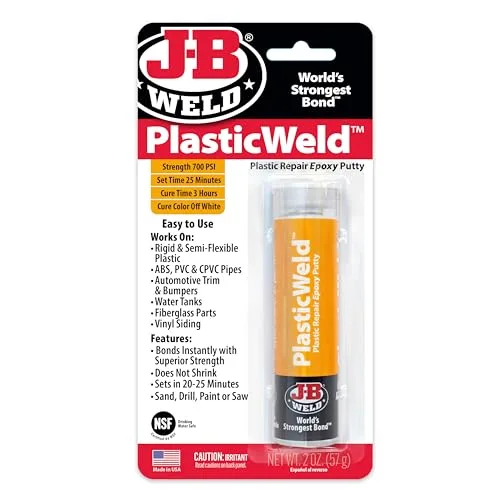
The J-B Weld 8237 PlasticWeld Plastic Repair Epoxy Putty is best suited for rigid and semi-flexible plastic parts – cracked mirror housings, interior trim, ABS and PVC pipe, and similar pieces that don’t flex the way a bumper cover does. DIY enthusiasts, homeowners, and automotive hobbyists will find it useful for general plastic repairs, not just bumpers.
Pros:
- Strong bonding capability for plastics.
- Easy to mold and apply.
- Quick curing time, roughly 25 minutes to set.
- Off-white color blends well with most plastic materials.
Cons:
- Cures rigid, so it’s not ideal on bumper flex points that need to move.
- Requires proper surface preparation for optimal results.
The putty’s strong bonding capability makes it a solid pick for repairing cracked or broken rigid plastic. It’s easy to mold into shape for a custom fit, and the roughly 25-minute set time means the repair is ready to sand not long after you apply it. The off-white cured color blends reasonably well with light-colored plastic before painting.
Keep in mind it cures hard rather than flexible, so on a bumper cover it’s better used for a stationary bracket or mounting tab than for a crack that sits right where the bumper flexes. Surface prep – cleaning and lightly roughing the plastic – still matters for a solid bond either way.
To buy this product, click here.
J-B Weld BumperWeld
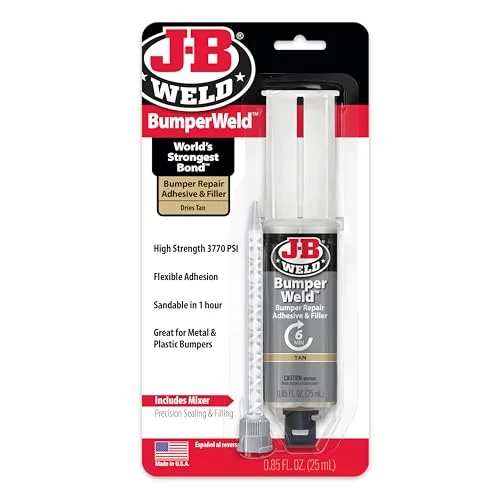
The J-B Weld BumperWeld is the product in this lineup actually formulated for bumper covers themselves. Car enthusiasts, professional mechanics, and DIY hobbyists dealing with a cracked or torn bumper cover – not just rigid trim – will get the most out of it.
Pros:
- Easy to use with the included static mixer syringe.
- Flexible once cured, built to move with a bumper instead of cracking.
- Sandable within about an hour.
- Rated for both metal and plastic bumpers.
Cons:
- Only available in tan, so painting over it is usually necessary.
- Still needs surface prep – sanding and cleaning – for a lasting bond.
The syringe with a built-in static mixer blends the two-part adhesive automatically as you push it out, so there’s no separate mixing cup or guesswork on ratios. That makes it easier to get a consistent bond even if you haven’t used a two-part epoxy before.
Because it’s rated at 3,770 PSI and formulated to stay flexible after curing, BumperWeld is the better choice of the three when the crack or hole is actually in the bumper cover itself rather than in a rigid trim piece. It’s sandable in about an hour, and while it’s marketed for bumpers, the same properties make it useful on other flexible automotive plastics too.
To buy this product, click here.
TouchUpDirect Scratch & Chip Putty – Automotive Repair Filler
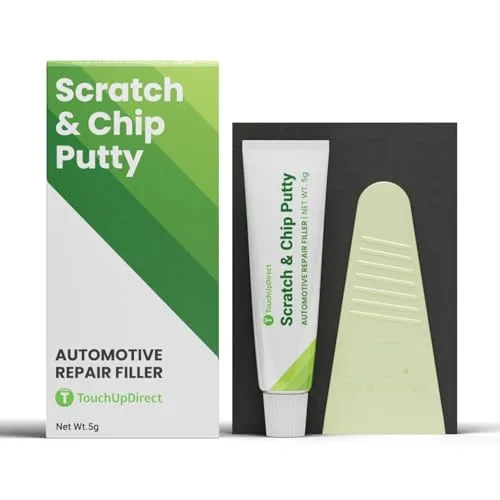
The TouchUpDirect Scratch & Chip Putty is a cosmetic filler, not a structural epoxy. It’s aimed at car owners who want to smooth out shallow scratches and chips themselves without a trip to the body shop.
Pros:
- Ready-mixed, so there’s no measuring or blending required.
- Ships with a spreader for a smoother, more even finish.
- Compact 5g tube that’s easy to store and reuse for small touch-ups.
Cons:
- Gray only, so it still needs paint to fully disappear on most colors.
- Not a structural filler – a scratch or chip that’s gone through the plastic needs an epoxy filler underneath it first.
Because it’s ready-mixed straight out of the tube, there’s no waiting for a two-part epoxy to set up before you can apply it. The included spreader makes it easier to level the putty flush with the surrounding paint, and the small size means it’s easy to keep in the glove box for the next chip that shows up.
Treat it as a finishing product for surface-level damage rather than a repair for a crack or hole – for anything that’s gone all the way through the plastic, BumperWeld or PlasticWeld should go on first.
To buy this product, click here.
Frequently Asked Questions
What Is J-B Weld PlasticWeld Used For?
J-B Weld 8237 PlasticWeld is a two-part epoxy putty for repairing rigid and semi-flexible plastic. It bonds well to ABS, PVC, fiberglass, and most automotive trim, and it can be sanded, drilled, or painted once cured. It works best on stationary trim pieces and cracked plastic housings rather than on a bumper cover’s flex points, where a rigid patch is more likely to crack again.
How Does BumperWeld Syringe Work?
BumperWeld ships in a dual-barrel syringe with a static mixer tip, so the resin and hardener blend automatically as you dispense it – there is no separate mixing step. It cures tan, sands smooth within about an hour, and stays flexible enough to move with a bumper cover instead of cracking at the repair line.
Is TouchUpDirect Putty Easy to Use?
Yes. TouchUpDirect Scratch & Chip Putty is a ready-mixed gray filler that comes with a spreader, so there is no measuring or mixing involved. Press it into a shallow scratch or chip, level it with the spreader, and sand once it sets. It is built for cosmetic surface damage, not for filling holes or structural cracks.
Can These Products Fix Deep Scratches?
J-B Weld PlasticWeld and BumperWeld can both fill deeper gouges and cracked sections because they are structural epoxies, not just surface putty. TouchUpDirect’s putty is rated for deep scratches and chips too, but it is a thin cosmetic layer – a scratch that has gone all the way through the plastic still needs an epoxy filler underneath before the surface finish goes on.
Are These Fillers Weather-Resistant?
Yes. Once fully cured, all three products resist rain, UV exposure, and normal temperature swings without softening or breaking down. Curing time matters here – give each product the full cure window on the label before exposing the repair to a car wash or extended rain.
Conclusion
The right plastic filler for your bumper depends on where the damage is, not just how big it is. J-B Weld 8237 PlasticWeld is a strong, easy-to-mold epoxy for rigid trim and housings, but it isn’t the best pick for a spot that needs to flex.
J-B Weld BumperWeld is the one built specifically for bumper covers – its syringe applicator and flexible cure make it the right call for an actual crack or hole in the bumper plastic itself. TouchUpDirect Scratch & Chip Putty is best reserved for shallow scratches and chips, giving you a smooth cosmetic finish without touching a structural repair.
Check whether your damage is a shallow surface mark or an actual crack through the plastic before you buy, and match rigid vs. flexible filler to where on the bumper the repair sits. Once the filler is cured and sanded smooth, most repairs still need to be primed and repainted to blend in – see our guide on how to repaint a car bumper for that next step, and check out what the plastic screws in car bumpers are called if you also need to reattach any hardware while you’re in there.
Products related to this article
Sponsored / affiliate links. As an Amazon Associate I earn from qualifying purchases. I may earn additional commission from eligible campaigns.