Best Video Surveillance Cameras for Cars: We Compared 2 Picks
The best video surveillance cameras for cars usually split into two jobs: a 360-degree parking-monitoring dash cam for perimeter coverage, and a cloud-connected camera for remote access. Pick the one that matches your main failure mode. Miss that choice, and you may miss the plate, the impact, or the alert that could support a claim. This guide compares two picks by evidence they actually capture, so you can choose the right protection for parking and hit-and-run cases.
Quick comparison
| Product | Badge | Best for | Price | ||
|---|---|---|---|---|---|
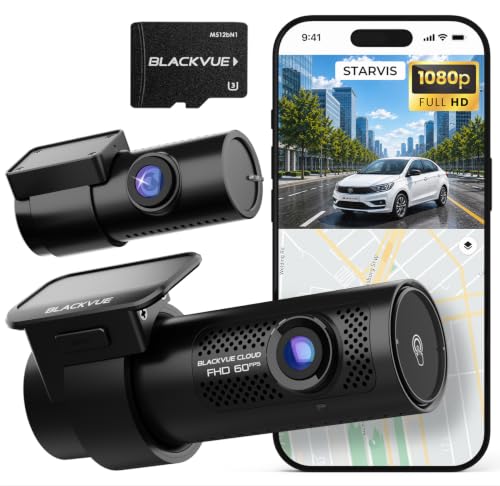 |
BlackVue DR770X II, 1080P+1080P Dash Cam Front and Rear,Blackvue | Our pick | 1080P+1080P · STARVIS · 24H Parking Mode | $347.99
Price as of 23 Oct 2026
|
View |
 |
Garmin Dash Cam™ Mini 3, Ultracompact 1080p HD Dash Cam |Garmin | Budget pick | 1080p · Ultracompact · Voice Control | $99.99
Price as of 23 Oct 2026
|
View |
 |
Garmin Constant Power Cable, Compatible with Garmin DashGarmin | Also great | $49.75
Price as of 23 Oct 2026
|
View | |
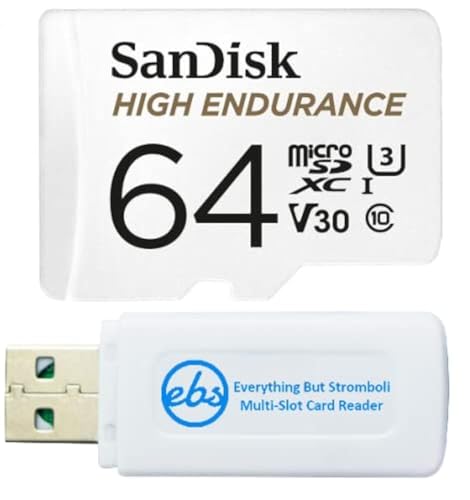 |
SanDisk 64GB High Endurance MicroSD Card Works with WyzeEverything But Stromboli | Also great | $37.86
Price as of 23 Oct 2026
|
View |
These two picks solve different problems. One watches more of the car at once. The other stays discreet and easy to live with on the windshield.
How we chose
We focused on evidence quality first: low-light readability, glare control, and whether the footage is likely to preserve a plate or an impact. Coverage came next, because side hits and blind-spot scrapes are where single-view cameras fail.
Then we looked at parking mode and power design, including hardwire support, heat tolerance, and whether the setup can stay active when the car is off. Storage and connectivity rounded out the comparison: loop recording, high-endurance cards, Wi-Fi, and whether the camera can support remote access.
Which camera survives your worst-case scenario?
| Worst-case scenario | BlackVue DR770X II | Garmin Dash Cam Mini 3 | Recommendation |
|---|---|---|---|
| Parking lot side-swipe | Strong coverage for front and rear; better if your concern is proof from two directions. | Weaker for side impacts because it is a single front-facing camera. | Choose the BlackVue if you want broader evidence after a sideswipe. |
| Overnight vandalism | Better fit because parking mode and dual-channel capture increase the chance of catching approach and exit footage. | Can record parked events, but the limited view leaves more gaps. | BlackVue is the safer bet for unattended protection. |
| Hot-climate parking | Better suited when paired with hardwire parking use and a heat-tolerant power design in the overall install plan. | Compact size helps, but it does not change cabin heat risk by itself. | BlackVue has the more complete parking setup. |
| Apartment garage | More useful if you need proof from front and rear around tight parking spaces. | Easier to hide and less noticeable in shared parking. | Choose BlackVue for evidence, Garmin for discretion. |
| Street parking | Better if you need the wider paper trail: two-channel footage, parking mode, and Wi-Fi review. | Good for a low-profile windshield install, but less complete for a street-side strike. | BlackVue is the stronger evidence tool. |
| Rideshare use | Useful if you want front/rear evidence plus cloud access and GPS in one package. | Best when you want a small camera that stays out of the way of passengers. | Pick Garmin for minimal cabin presence; BlackVue for fuller incident coverage. |
The table above is the short version. The longer read is simpler: perimeter coverage matters most when the damage happens off-camera, while remote access matters most when you need to react before the evidence disappears.
Say your car gets clipped in a grocery lot and the other driver leaves a paint transfer on the rear quarter panel. A front-only camera may record the drive away, but not the actual side impact. A dual-channel or multi-channel setup gives you a better shot at matching the damage to a moment in time.
Suppose you park in a shared apartment garage and notice a broken mirror the next morning. If the camera has parking mode, hardwire support, and a card sized for long loop recording, you are more likely to recover the approach, contact, and exit than with a basic windshield camera alone.
BlackVue DR770X II: best for perimeter coverage
The BlackVue DR770X II is the stronger fit when your main problem is proof from more than one direction. Based on the published product details, it records Dual Full HD front and rear video, includes a hardwire cable, supports up to 1TB micro SD, and uses Sony STARVIS sensors for low-noise footage.
It also lines up with the evidence needs that matter in parking disputes: parking mode, Wi-Fi, GPS, app control, and cloud connectivity. That mix makes it easier to keep an eye on the car and recover a clip when the issue is a hit-and-run, scrape, or staged “I never touched it” dispute.
The drawback is the obvious one: a two-channel system is more involved than a tiny single-camera install, and parking surveillance still depends on proper hardwiring. It also asks more from storage planning than a front-only camera, because dual-channel loop recording fills cards faster.
Front, rear, and night clarity
For night recording, sensor quality matters more than headline resolution alone. Sony STARVIS 2 is widely recommended for low-light performance, and many premium 4K models pair it with HDR or WDR to control headlight glare and recover shadow detail.
That matters because plates often fail in the same way: bright lamps wash out reflective surfaces, then shadows bury the rest. HDR/WDR helps keep the plate readable long enough to matter, even if the incident happens under bad lighting.
Parking mode, storage, and install burden
Parking mode is not a magic switch. Time-lapse, motion/event detection, and buffered recording all help, but true unattended protection requires a hardwire kit. A competitor specifically notes that parking mode requires a hardwire kit connected to the fuse box or OBD-II port.
Storage planning matters too. Multi-channel recording burns through cards quickly, so high-endurance microSD media is the right category for continuous overwrite use. U3/V30 class ratings matter because loop recording and repeated writes are the real workload, not the marketing number on the label.
Garmin Dash Cam Mini 3: best for remote convenience
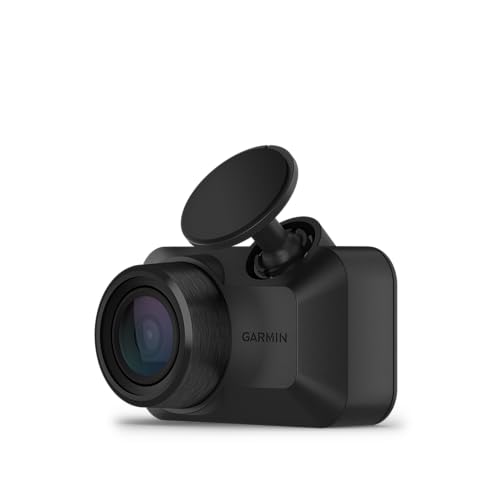
The Garmin Dash Cam Mini 3 is the better fit when you want a camera that stays visually quiet and easy to live with. Its key-sized body makes it far less noticeable on the windshield, and the published specs call out 1080p HD video, a 140-degree field of view, voice control, and a built-in polarizer for glare reduction.
That makes it a clean choice for drivers who care about discretion, quick hands-free control, and a smaller front-view footprint. It is also easier to place in a cabin where you do not want a large unit drawing attention from passengers or from outside the car.
The drawback is coverage. A single front camera cannot match a front-rear or 4-channel system for side impacts, parking lot contact, or rear-end disputes. If your main concern is full perimeter evidence, this is the weaker protection style.
When a small camera is enough
If your parking risk is modest and you mainly want proof of what happens in front of the vehicle, a compact camera like this can be enough. It is also a sensible pick if you value a clean install over broader incident coverage.
For family use, a smaller camera can be less distracting. For rideshare, that can matter as much as video quality, because passengers notice bulky gear more than many drivers expect.
What it does not solve
A front-only unit does not give you the same odds of catching a side-swipe, door ding, or rear-corner bump. It also does not substitute for hardwired parking surveillance, which remains the standard for unattended protection.
If your vehicle spends nights on the street, in a garage, or under apartment lighting, the question is not whether you want video. It is whether the camera can capture the part of the car that actually gets hit.
Garmin constant power cable: best for parked power
The Garmin Constant Power Cable is not a camera, but it matters because parking mode depends on power when the ignition is off. Garmin lists it as compatible with Garmin dash cams and says it fits the vehicle’s OBD-II port for power even when parked and turned off.
That makes it useful for drivers who want an easier power path than a full fuse-box install. It can be a practical middle step for parked-car monitoring, especially if the goal is to keep a compact camera active without using the cabin outlet.
The drawback is that this is still a power accessory, not a complete surveillance system. It does not add side coverage, remote access, or better night imaging on its own, and it still needs the right camera to make the footage worth keeping.
Where it fits in a parking setup
Use a cable like this when the camera supports parked recording and you want a tidy install path. True 24/7 parking surveillance still depends on the rest of the system: the camera’s parking mode, the storage card, and the camera’s heat tolerance.
It is helpful, but it is not the headline feature. The footage still lives or dies on sensor quality, coverage, and how well the system survives the car’s temperature swings.
SanDisk 64GB High Endurance MicroSD Card: best for loop recording reliability
The SanDisk 64GB High Endurance MicroSD Card belongs in the conversation because multi-channel parking systems need storage built for continuous overwrite use. That is especially true when loop recording is active and the camera is writing over old files every day.
For a compact single-channel dash cam, 64GB may be enough for shorter retention. For dual-channel or 4-channel systems, the same capacity disappears fast, so card sizing should follow hours of retention rather than the number printed on the package.
The drawback is obvious: 64GB is not generous for 24/7 parking surveillance, especially if you want multiple channels and longer retention. It is a useful minimum-class accessory, not a final answer for heavy recording loads.
How to think about storage
Start with the camera count, not the sticker capacity. A 4-channel dash cam creates more files than a front-only unit, and parking mode can be active for long stretches while the vehicle sits still.
That is why high-endurance cards matter. A microSD card made for surveillance-style writing is better suited to constant overwriting than a generic card bought for phones or cameras.
Do you need a 2-channel or 4-channel dash cam?
If you mainly want front-and-rear proof, a 2-channel camera is often enough. If you need side coverage for parking lot scrapes, apartment-garage contact, or curbside door impacts, a 4-channel dash cam gives you a better chance of seeing the actual failure point.
When front and rear are enough
Choose 2-channel if your car is usually parked in monitored lots, if you want simpler wiring, or if your budget favors the basics first. Front and rear coverage already solves many rear-end and tailgating disputes.
It is also easier to manage. Fewer channels mean less wiring, less storage use, and less time spent sorting clips after a false trigger.
When side coverage is worth it
A 4-channel dash cam is the better fit when your car lives in a parking lot, tight garage, or street spot where side impacts are common. One competitor even describes 4-channel setups as a full 360-degree security net, and the practical reason is simple: the side is often where the damage starts.
That is exactly the kind of layout that helps when a scrape starts at the mirror or quarter panel instead of the bumper.
How apartment parking and street parking change the answer
Apartment garages and street parking push you toward broader coverage because the car is unattended and vulnerable from more angles. A front-only camera can miss the moment that matters. A 4-channel layout reduces blind spots, even if it asks more from storage and install time.
For a daily commuter, the trade-off is practical rather than theoretical: more channels mean more evidence, but also more wiring, more clip management, and a larger card requirement.
Choose BlackVue DR770X II if… / Choose Garmin Dash Cam Mini 3 if…
Choose BlackVue DR770X II if you want the stronger parked-car evidence package, you park on the street or in an apartment garage, or you care more about front-and-rear proof than minimal cabin presence. It also fits better if you want Wi-Fi, GPS, app control, and cloud connectivity in one system.
Choose Garmin Dash Cam Mini 3 if you want a small windshield footprint, your concern is mainly front-view incidents, or you value a lower-profile install over broader perimeter coverage. It is the cleaner pick for discreet daily use, but it is not the stronger answer for side-impact evidence.
Which one should you buy?
If your top priority is evidence quality after parking damage, buy the BlackVue DR770X II. Its dual-channel layout, STARVIS sensors, parking mode support, and cloud-capable feature set match the failure mode that causes the most frustration: the incident happens, but the camera misses the key angle.
If your top priority is a small, simple camera that stays out of sight, the Garmin Dash Cam Mini 3 is the better alternative. It is the easier choice for drivers who mainly want front-facing coverage and do not need a full perimeter system.
For parked-car protection, do not stop at the camera. Add a hardwire plan, size the microSD card for loop recording, and decide whether Wi-Fi review is enough or whether you actually need cellular access.
Frequently asked questions
What is the best video surveillance camera for my car?
The best choice depends on the failure mode you are trying to catch. For parked-car damage and hit-and-run evidence, a 4-channel dash cam is the stronger option. For discreet daily use, a compact front camera may be enough. The right answer is the one that matches where your risk actually shows up.
Do I need a 2-channel or 4-channel dash cam for parking lot protection?
Use 2-channel if you mainly want front and rear evidence. Move to 4-channel if side impacts, mirror strikes, and door dings are your bigger concern. Parking lots create angled damage all the time, and that is where side coverage earns its keep.
Is STARVIS 2 worth it for night recording?
Yes, if night readability matters. Sony STARVIS 2 is widely associated with better low-light performance, especially when paired with HDR or WDR. Resolution alone cannot fix glare from headlights or a shadow-heavy scene, but a better sensor gives the footage a much better starting point.
Do I need a hardwire kit for parking mode?
Yes for true unattended protection. Parking mode can use time-lapse, motion detection, or buffered recording, but it needs power when the ignition is off. A hardwire kit is the standard path because it keeps the camera active without relying on the cigarette outlet.
What is the difference between Wi-Fi and 4G LTE car surveillance cameras?
Wi-Fi is mainly for quick clip downloads, app control, and evidence sharing when you are near the car. 4G LTE adds cellular alerts, remote live view, and cloud backup when Wi-Fi is not available. LTE also brings data cost, coverage, and privacy tradeoffs that Wi-Fi does not.
Can a supercapacitor handle hot car interiors better than a battery?
Yes. Supercapacitors are the safer choice for parked cars in hot climates because they tolerate heat better and usually last longer than lithium batteries. A parked cabin can reach 140°F in summer, so heat tolerance matters more than a tiny backup-power advantage.
How much storage do I need for 24/7 parking surveillance?
More than most buyers expect. Multi-channel recording fills cards quickly, so size storage by retention time, not by marketing capacity. High-endurance microSD cards with U3/V30 support are the right class for continuous overwrite use and loop recording reliability.
Which dash cam is best for rideshare or family monitoring?
For rideshare, a discreet camera is often the better fit because it stays out of passengers’ way. For family monitoring, a front-rear or multi-channel setup is more useful when you need a clearer record of what happened inside and around the car. The right choice depends on whether visibility or coverage matters more.
Products related to this article
Sponsored / affiliate links. As an Amazon Associate I earn from qualifying purchases. I may earn additional commission from eligible campaigns.