Respirator for Painting Cars: What Type Actually Protects You
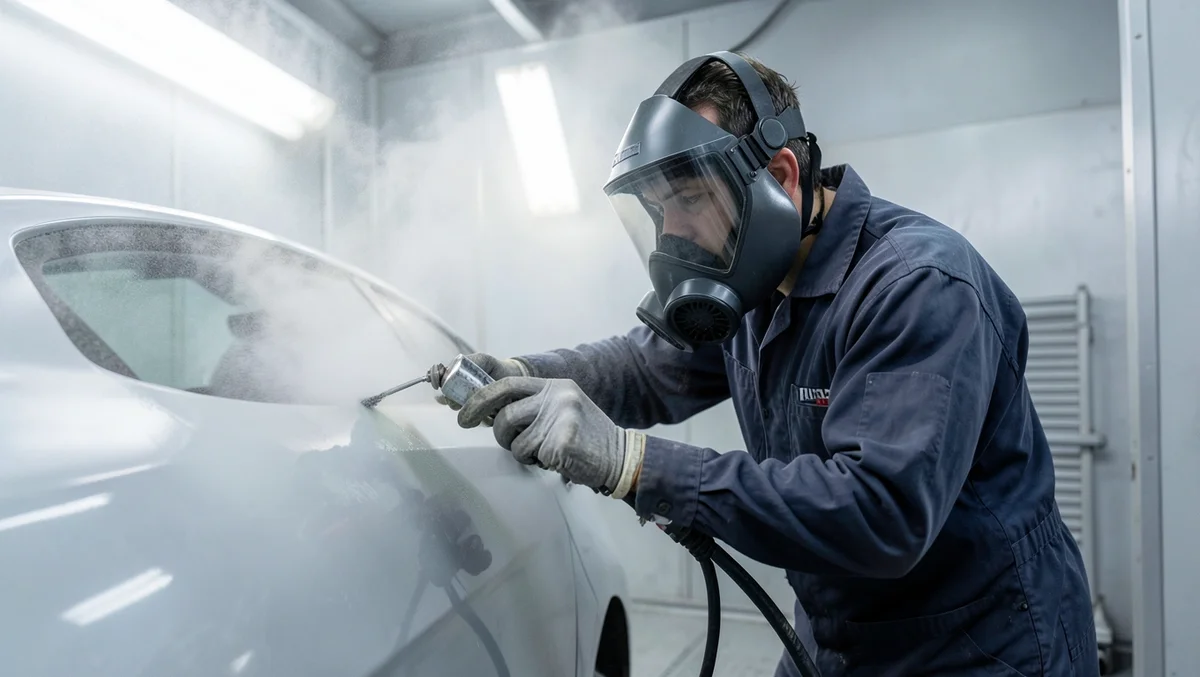
A P95/OV cartridge respirator is not automatically “the” respirator for painting cars – it depends entirely on what you’re spraying. Sanding, masking, and brushing on a non-isocyanate paint are one category of risk. Spraying a modern 2K urethane basecoat or clearcoat is a different category entirely, and OSHA is explicit that a standard cartridge respirator, even a good one, is not enough for that job.
Most automotive clearcoats sold today, along with many basecoats and primers, cure using an isocyanate hardener (the “2K” or two-component urethane systems). Isocyanates are a recognized respiratory sensitizer with poor odor warning properties, and once they’re aerosolized by a spray gun, negative-pressure air-purifying respirators – including full-face ones with organic vapor and P100 cartridges – do not reliably keep them out. This guide walks through which respirator is actually correct for each stage of a car paint job, not just the stage most shops post pictures of.
Quick Answer: A basic P95/OV cartridge respirator is fine for sanding, masking, or brushing on a non-isocyanate paint – but most automotive clearcoats and many basecoats and primers contain isocyanate hardeners, and OSHA guidance is clear that spraying them requires a positive-pressure supplied-air respirator or a NIOSH-approved isocyanate-rated PAPR, not a cartridge mask of any kind.
What Respirator Do You Actually Need for Painting a Car?
FOR SANDING & MASKING TASKS
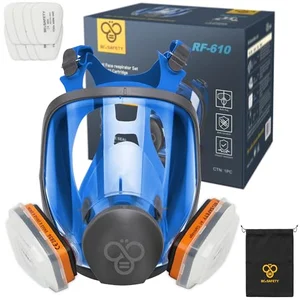 |
BEESAFETY RF-610 Full Face Respirator – $69.99 A full-face cartridge respirator like this covers sanding dust, masking, and non-isocyanate touch-up work – but it is not a substitute for supplied air when you are spraying a 2K clearcoat.
|
The short version: match the respirator to the task, not to whatever mask happens to be marketed as a “paint respirator.” Dry sanding, masking, mixing, and brushing on a non-isocyanate paint can be handled with a good dust mask or a cartridge respirator. Spraying any product that contains an isocyanate hardener – which includes the overwhelming majority of automotive clearcoats – cannot.
Why a Basic P95/OV Respirator Isn’t Enough for Spraying Isocyanate Clearcoat
OSHA has issued multiple standard interpretation letters directly on this question, and the answer hasn’t changed: “Positive pressure air-line respirators are the only NIOSH-approved respirators for employees engaged in spray operations and who are exposed to isocyanates.” A full facepiece is required as well, because isocyanates irritate and sensitize the eyes, not just the lungs. The concern with a negative-pressure cartridge respirator during spraying isn’t only that the sorbent might not adsorb isocyanate vapor efficiently – it’s that the facepiece seal itself can leak under the pressure differential a spray booth creates, letting the aerosolized mist bypass the filter entirely.
This is why a P95/OV respirator like the ones sold as “paint project” respirators can honestly say “use for professional paint spraying” on the box and still not be the right tool for spraying a 2K clearcoat – that claim is accurate for non-isocyanate spray products (some lacquers, some single-stage enamels), but automotive clearcoat almost never falls into that category anymore.
What Respirator You Need, By Task
Use this as a quick reference for which category your next step falls into. When in doubt about whether a specific product contains isocyanates, check the safety data sheet (SDS) for the hardener – not just the base paint.
| Task | Typical Hazard | Respirator Required |
|---|---|---|
| Dry sanding filler, primer, or clearcoat | Nuisance dust | N95 or P100 disposable dust mask |
| Masking, mixing, general shop work | Low-level solvent odor | Organic vapor half-face cartridge respirator (helpful, not always mandatory) |
| Brushing/rolling a non-isocyanate paint (some single-stage enamels, waterborne coats without an isocyanate hardener) | Low airborne mist | NIOSH-approved organic vapor + P100 cartridge respirator, half or full face |
| Spraying ANY 2K/urethane primer, basecoat, or clearcoat with an isocyanate hardener | Aerosolized isocyanate mist | Positive-pressure supplied-air respirator (SAR), or a NIOSH-approved isocyanate-rated PAPR – full face, cartridge respirators not acceptable |
Supplied Air vs. PAPR: Your Two Real Options for Spraying Isocyanate Clearcoat
Supplied-air respirator (SAR). A full facepiece connected by a hose to a remote breathing-air source (a dedicated breathing-air compressor or filtered cylinder, not just your shop’s regular air line) under positive pressure. This is OSHA’s default recommendation for isocyanate spray work, and it’s what most professional body shops run in their spray booths.
Isocyanate-rated PAPR. A battery-powered blower pushes filtered air into a full-face hood, which keeps the wearer under slight positive pressure without a hose tethering them to a wall. The key word is “isocyanate-rated”: 3M’s Versaflo TR-800 series is a real, NIOSH-approved example built specifically for paint spray booths and marketed to painters exposed to isocyanates daily. It is intrinsically safe for booth use and provides an OSHA-recognized assigned protection factor, but it is priced and sold as professional shop equipment, not a casual weekend-project purchase.
A generic imported PAPR marketed for “welding and painting” is not automatically in this category. Unless the listing specifically states NIOSH approval for isocyanate protection, treat it the same as any other cartridge respirator and don’t rely on it for spraying 2K clearcoat.
Other Respirator Options Worth Knowing
These are the same reusable half-face and full-face cartridge respirators covered above – genuinely useful for sanding, masking, and non-isocyanate work, but subject to the same isocyanate-spraying limit as any cartridge respirator.
3M P95/OV Paint Project Reusable Respirator 6211 (Medium)
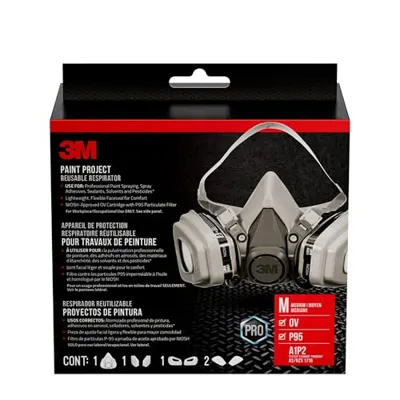
A lightweight, medium-size half-face respirator with a thermoplastic faceseal. Good for sanding, masking, and non-isocyanate spray or brush work; not a substitute for supplied air when spraying 2K clearcoat. Check current price on Amazon.
3M P95/Organic Vapor Paint Project Reusable Respirator 6311 (Large)
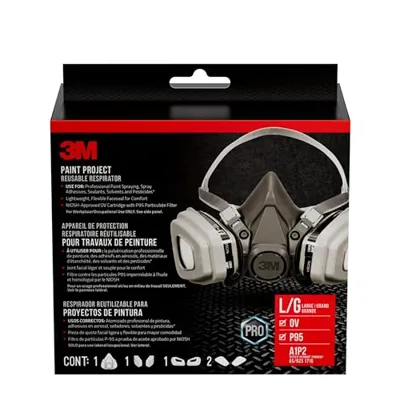
Same protection profile as the 6211 above in a large-size faceseal for a bigger fit. Check current price on Amazon.
QIFUTT Reusable Full Face Respirator Mask
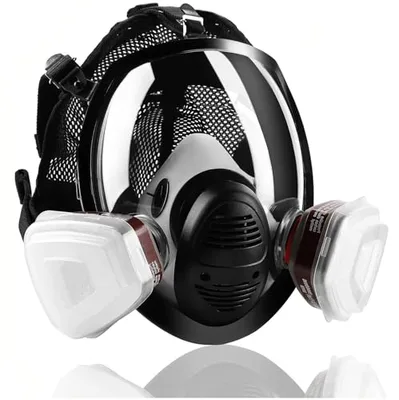
A full-face option with an anti-fog visor, which adds eye protection that a half-face respirator lacks. It still uses the same style of organic vapor/particulate cartridges, so the same isocyanate-spraying limit applies. Check current price on Amazon.
Fit, Seal, and Filter Maintenance Tips
- A respirator only protects you if the seal actually contacts your skin – facial hair along the seal line breaks the fit, even on an otherwise correctly sized mask.
- Do a simple positive/negative pressure fit check every time you put a cartridge respirator on: cover the exhalation valve and exhale gently (it should puff out, not leak), then cover the cartridge inlets and inhale gently (the mask should collapse slightly against your face).
- Store cartridge respirators in a sealed bag between uses so the organic vapor cartridge doesn’t keep absorbing shop-air odors when it isn’t in use.
- Log the date you open a new organic vapor cartridge – most manufacturers rate service life as much by calendar time as by hours of use.
Frequently Asked Questions
Is a P95/OV Respirator Enough to Spray Automotive Clearcoat?
No. Most automotive clearcoats and many basecoats and primers are 2K urethane products that use an isocyanate hardener. OSHA’s own standard interpretations state that negative-pressure cartridge respirators, including P95/OV combinations, do not reliably protect against isocyanate vapor once paint is aerosolized by spraying – largely because of facepiece seal leakage and the poor odor-warning properties of isocyanates. A P95/OV respirator is fine for sanding dust or brushing on a non-isocyanate paint, but not for spray-applying a 2K clearcoat.
What Respirator Do You Need for Spraying Isocyanate Automotive Paint?
A positive-pressure supplied-air respirator (SAR) with a full facepiece is OSHA’s standard recommendation for spray operations involving isocyanates. The only real alternative is a NIOSH-approved powered air-purifying respirator (PAPR) that is specifically certified for isocyanate protection, such as 3M’s Versaflo TR-800 painter’s kits. A standard air-purifying cartridge respirator, even a full-face one, does not meet this bar.
Can You Use a Half-Face Respirator to Paint a Car?
Only for tasks that don’t involve spraying isocyanate paint, such as sanding filler or primer, masking off panels, or brushing on a single-stage non-isocyanate paint. A half-face respirator also leaves your eyes exposed to isocyanate mist and vapor, which is part of why OSHA requires a full facepiece for isocyanate spray work. Once you switch to spraying a 2K basecoat or clearcoat, move up to supplied air or an isocyanate-rated PAPR.
Do Powered Air-Purifying Respirators (PAPRs) Protect Against Isocyanate Paint?
Only if that specific PAPR model is NIOSH-approved for isocyanate protection. Most inexpensive imported PAPR kits sold for general welding and painting use are not tested or certified for isocyanates and shouldn’t be relied on for that job. 3M’s Versaflo TR-800 series is a real example of a NIOSH-approved, intrinsically safe PAPR rated for isocyanate spray booths, but it’s built for professional shop use, not occasional home projects, and it’s priced and sold accordingly.
How Often Should Respirator Filters Be Replaced?
Replace organic vapor cartridges when you can smell solvent through the mask, notice increased breathing resistance, or once you reach the manufacturer’s stated service life – whichever comes first. Replace particulate filters (P95 or P100) when breathing becomes noticeably harder, since that means they’re loaded with debris. Filters used around isocyanate paint should generally be treated as more limited-use than the same filters used only for sanding dust.
Is a Basic Dust Mask Enough for Sanding Auto Body Filler or Primer?
A well-fitted N95 or P100 disposable dust mask is adequate for dry-sanding cured filler, primer, or clearcoat, since the hazard there is nuisance dust, not solvent vapor. It is not adequate once you’re mixing, spraying, or working around wet paint or hardener – those steps release vapors that a dust-only mask does nothing to filter.
The Bottom Line
Match your respirator to the actual step you’re doing, not to a single all-purpose mask. A half-face or full-face P95/OV cartridge respirator, like the 3M and BEESAFETY options above, is genuinely good gear for sanding, masking, and non-isocyanate touch-up work. But once you’re spraying a 2K basecoat or clearcoat – which is what most automotive paint jobs actually end with – OSHA’s guidance is unambiguous: you need a positive-pressure supplied-air respirator or a NIOSH-approved isocyanate-rated PAPR, full face, every time.
Products related to this article
Sponsored / affiliate links. As an Amazon Associate I earn from qualifying purchases. I may earn additional commission from eligible campaigns.