Plastic Car Cover for Painting: What It Is Actually For
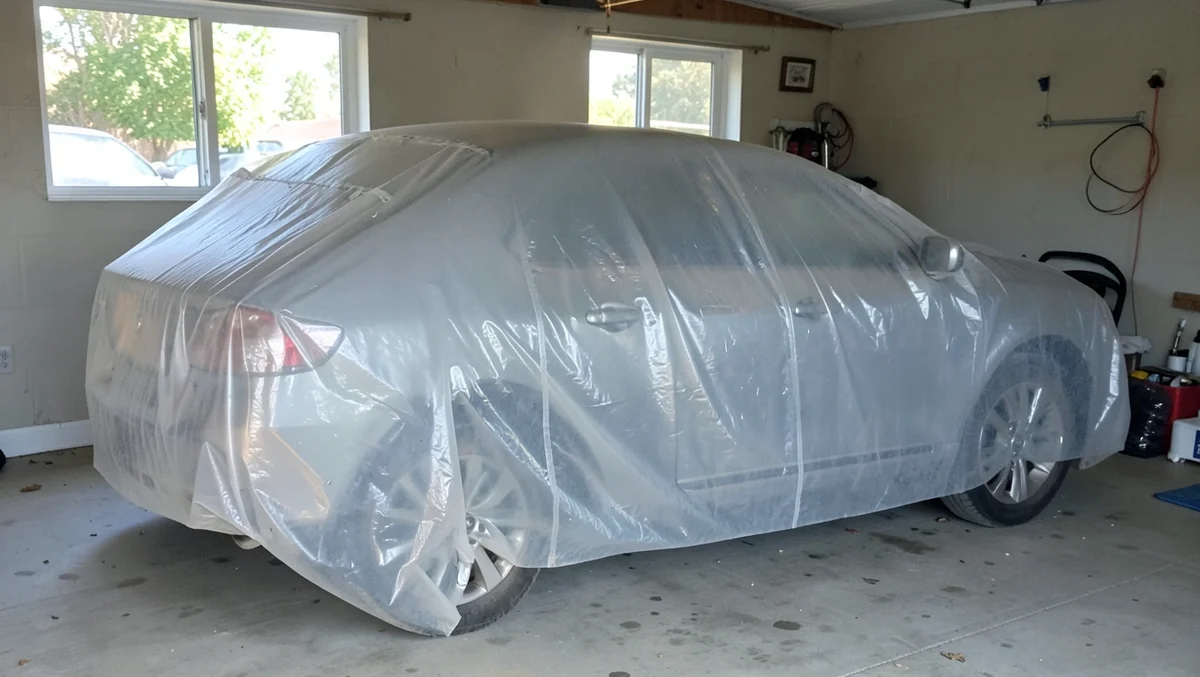
A plastic car cover for painting is a lightweight, elastic-hem disposable sheet that keeps overspray, dust, and debris off a parked car while nearby bodywork, spray painting, or garage projects are underway. It is not meant to be worn while you paint the car itself – it is worn by a car that needs to stay clean while paint is happening somewhere close by.
That distinction trips a lot of people up when they search for this product, so it is worth clearing up before you buy one. Below is what these covers actually do, how to put one on correctly, what separates a good one from a flimsy one, and the safety rules most listings bury in the fine print.
What a Plastic Car Cover for Painting Actually Protects Against
These covers are built for two closely related jobs, and knowing which one you need changes what you should buy:
- Protecting a nearby vehicle from someone else’s paint job. If you are spray-painting a fence, a project car, furniture, or doing bodywork in a shared garage or driveway, a full-body plastic cover keeps drifting overspray, sanding dust, and primer mist off any other car parked close by. This is the use case almost every disposable plastic car cover on the market is designed for.
- General dust, sap, and weather protection. The same clear plastic covers double as a cheap short-term shield against tree sap, bird droppings, pollen, and light rain when a car is parked outside or sitting in storage.
- What it will not do: if you are painting the car underneath the cover itself, a full-body sheet is the wrong tool. For masking off glass, trim, wheels, and badges on the car being painted, you need automotive masking film and tape, applied piece by piece – not a single draped cover.
How to Use a Plastic Car Cover the Right Way
- Start at the windshield or hood. Unfold the cover and drape it over the highest point of the car first, then work the plastic down and back over the roof, trunk, and sides.
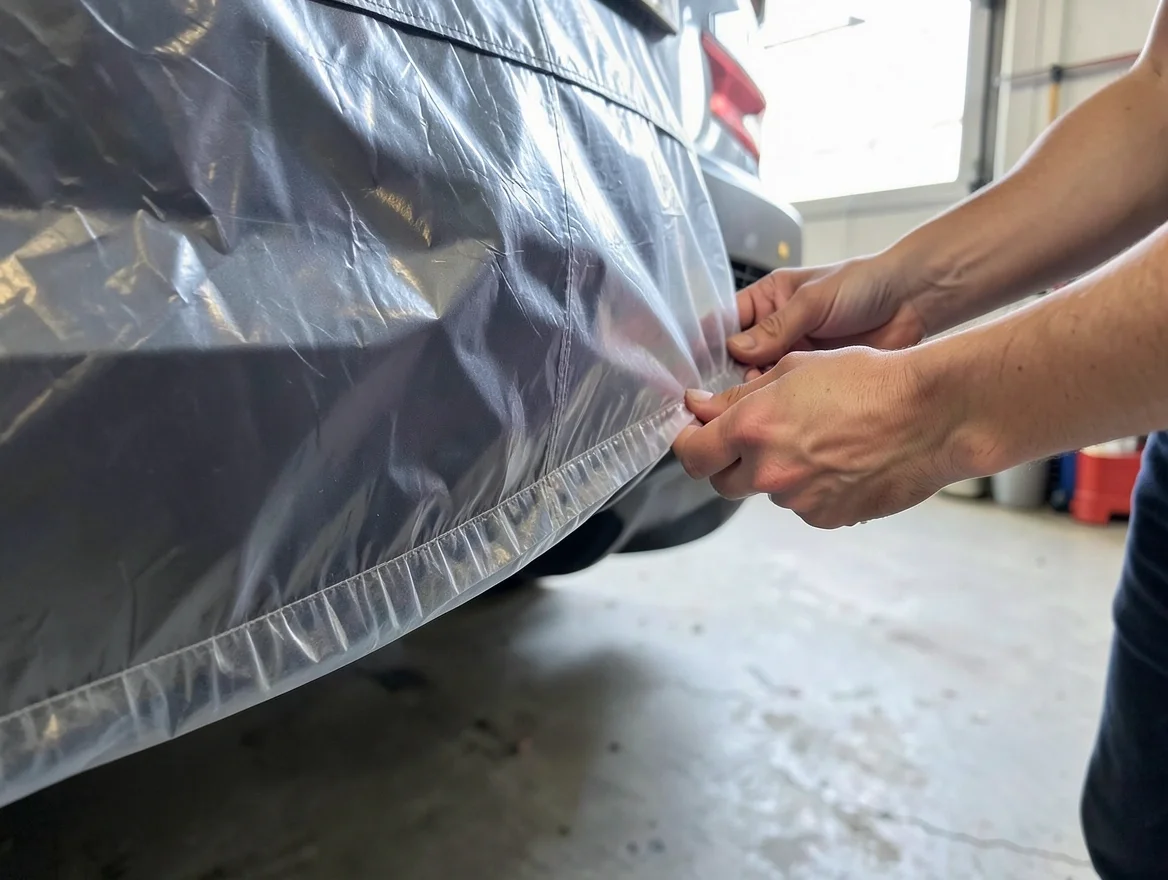
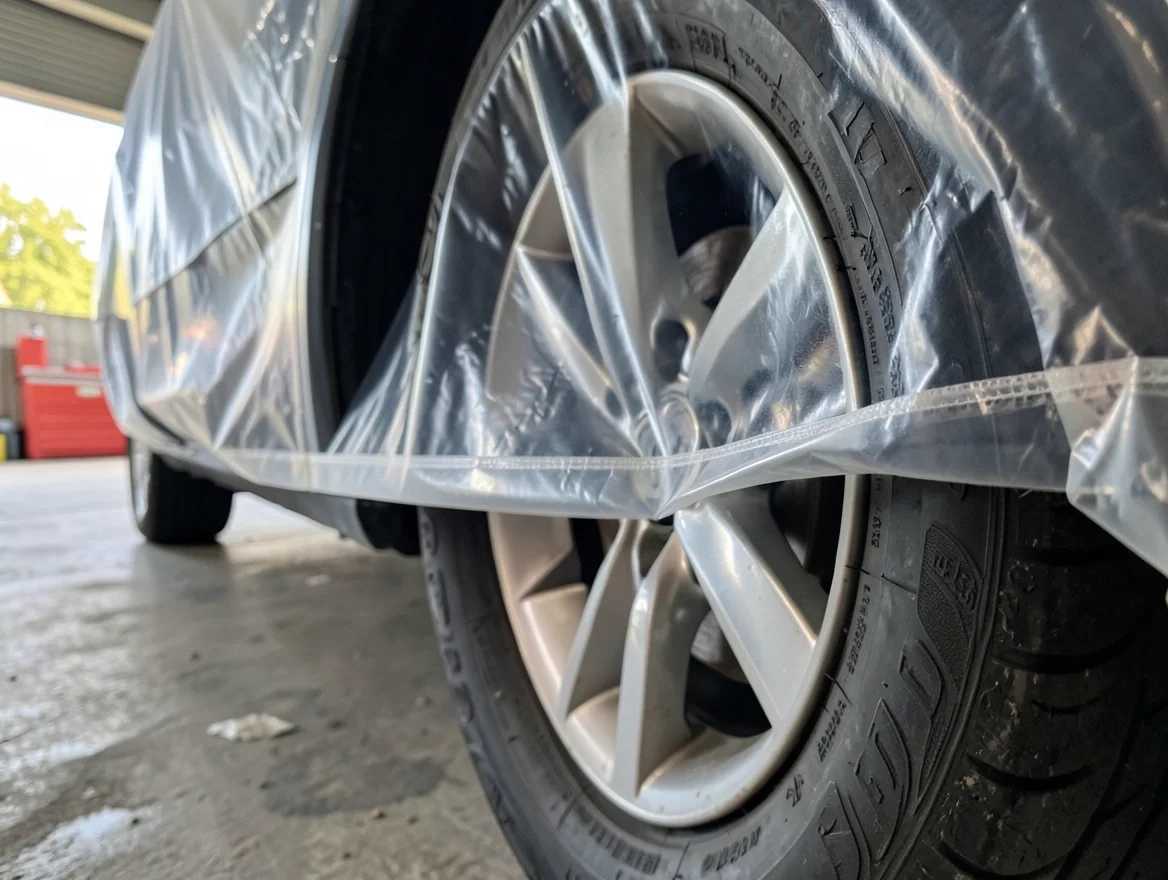
- Pull the elastic hem snug around the lower body. Tuck it under the bumpers, rocker panels, and wheel wells so wind or overspray cannot lift a gap open at the bottom edge.
- Add a couple of magnets or tie-downs in exposed areas. If the car is outdoors and any wind is expected, magnets on the roof and hood keep the sheet from ballooning or tearing loose.
- Check the mirrors and antenna. Make sure the plastic is pulled taut around side mirrors and any roof-mounted accessories rather than just draped loosely over them, since loose plastic is what usually tears first.
- Remove it once the paint job is done and dust has settled. Most of these covers are single-use – peel it off carefully rather than dragging it across the paint, since any grit trapped underneath can scratch the finish on the way off.
4-Pack With Elastic Hem
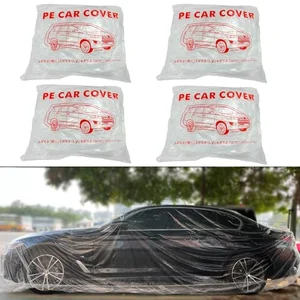 |
Bocarmo 4 Pack Disposable Clear Plastic Car Cover – $21.83 A 12.4 ft x 21.6 ft clear cover with a stretch elastic hem, sized for most sedans and mid-size SUVs, with four covers in the pack so a torn or overspray-caked one is never the last one you have.
|
What to Look for When Buying One
- Size. Covers are sold by rough dimensions like 12.4 ft x 21.6 ft or 22 ft x 12 ft. Measure your car’s length and height before buying – a cover sized for a compact sedan will not stretch enough to fully close around a full-size SUV or truck.
- Elastic hem vs. plain edge. An elastic hem cinches under the body on its own and stays put far better than a plain plastic edge, which tends to flap loose in any breeze.
- Clear vs. tinted plastic. Clear covers let you (and anyone else in the garage) see the car’s outline underneath, which matters if the vehicle needs to be moved or checked on during a multi-day project. Tinted or opaque covers offer a bit more UV blocking but hide the car completely.
- Pack size. Buying a 3-pack or 4-pack instead of a single cover is usually cheap insurance – overspray, wind tears, and general wear mean one cover rarely lasts more than a job or two.
Safety Rules Most Listings Do Not Mention
- Skip it in high heat. Manufacturers generally warn against leaving a plastic cover on a car in temperatures above roughly 90°F, since trapped heat under the plastic can cause its own paint or trim damage.
- Give fresh paint time to cure first. If the car under the cover was painted recently, most manufacturers recommend waiting at least 30 days before covering it, so the new paint can fully off-gas and cure instead of trapping solvent vapor against the surface.
- Wind is the real enemy outdoors. These covers have no weight to them, so a loose cover in open, breezy conditions can tear or blow off entirely. They perform far more reliably inside a closed garage than outdoors.
Frequently Asked Questions
What is a plastic car cover for painting used for?
It shields a parked car from paint overspray, sanding dust, and debris while a paint job or bodywork happens nearby – it is worn by the car that needs to stay clean, not by the car actually being painted.
Can I use a plastic car cover to mask the car I am painting?
Not for the whole car. To mask glass, trim, wheels, and badges on a vehicle you are actually spraying, use dedicated automotive masking film and tape applied section by section, since a single draped cover cannot seal tightly enough around those areas.
Are plastic car covers reusable?
Most are designed for one or two uses. The plastic is thin enough to tear with repeated handling, and once it is caked with overspray it is usually easier to replace than clean.
Is it safe to leave a plastic car cover on in the sun?
Only for short periods and not in high heat. Most manufacturers advise against leaving one on above roughly 90°F, since heat can build up underneath the plastic and affect the paint or trim below it.
How soon after painting a car can I cover it?
Wait at least 30 days on freshly painted panels. Covering paint before it has fully cured can trap solvent vapor against the surface and interfere with the cure.
Bottom Line
A plastic car cover for painting is cheap insurance for whatever vehicle is not the one getting painted. Buy a cover sized to your car, look for an elastic hem, keep a few spares on hand since they tend to be one-job-and-done, and use it inside a garage whenever possible – wind outdoors is what tears these apart faster than anything else.
Products related to this article
Sponsored / affiliate links. As an Amazon Associate I earn from qualifying purchases. I may earn additional commission from eligible campaigns.