Car AC Climate Control Repair Price Breakdown by Fix
Car AC repair price can often run roughly $150 to $1,200+, but a simple recharge is often about $100 to $250 while a compressor or control-module repair can exceed about $1,000. A small refrigerant leak can turn into a larger HVAC bill, with weak cooling, fogged windows, and higher labor costs. This guide breaks down price ranges by failure type so you can judge a recharge, a diagnostic visit, or a larger climate control repair.
What drives car AC repair cost
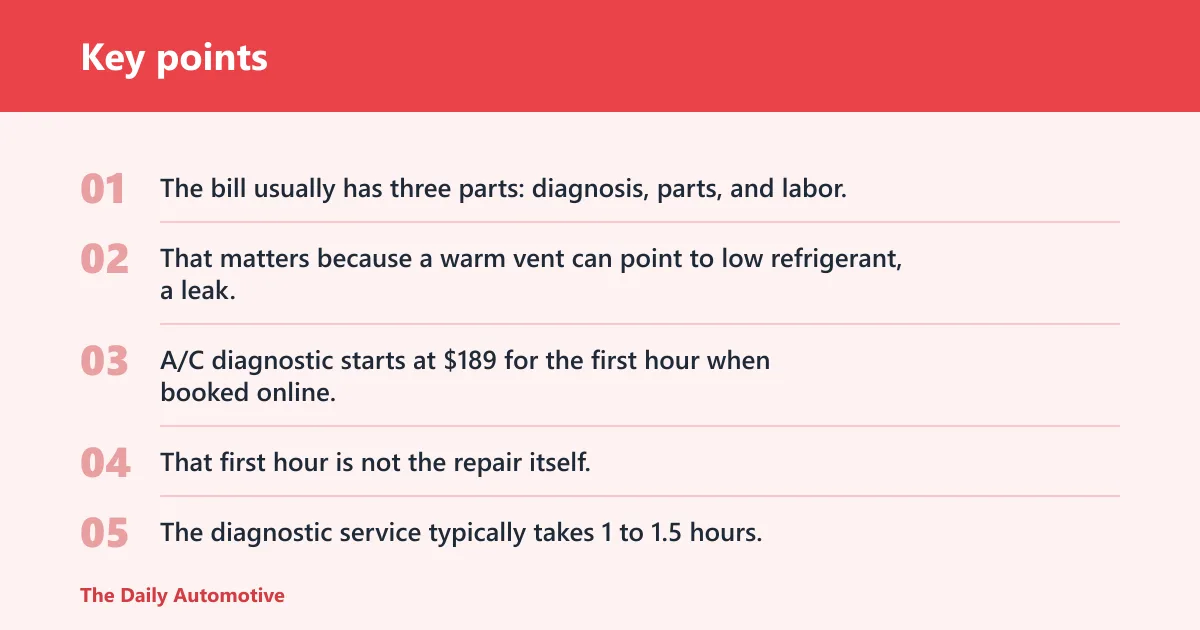


The bill usually has three parts: diagnosis, parts, and labor. That matters because a warm vent can point to low refrigerant, a leak, or a failed compressor, and each one changes the total in a different way.
A/C diagnostic starts at $189 for the first hour when booked online. That first hour is not the repair itself; it is the testing window that helps identify low refrigerant, a leak, a failed electrical component, or a part that no longer moves air or cools air properly. The diagnostic service typically takes 1 to 1.5 hours.
Parts can stay modest or move the estimate quickly. Cabin air filter replacement starts at $49.89 in Texas and $57.52 in California, while some climate control modules listed for Chevrolet, GMC, and Cadillac fall under $130 before installation. A compressor, by contrast, is a major repair item and often turns a small bill into a large one.
Repair cost by symptom
| Symptom | Likely repair path | Cost driver |
|---|---|---|
| Warm air | First paid service is usually A/C diagnosis, then refrigerant check, then recharge or leak repair | Low refrigerant, leak detection, or compressor failure can change the estimate fast |
| Weak airflow | Cabin air filter replacement, blower inspection, then HVAC diagnosis if flow stays poor | Filter restriction is cheap; blower or duct work takes more labor |
| One side hot, one side cold | Diagnostic scan of blend door, actuator, or climate control module | Interior HVAC control parts and vehicle-specific fitment raise labor and parts cost |
| Clicking or no response from controls | Electrical diagnosis, then panel or module replacement | Manual versus automatic control hardware changes the part and labor path |
| Bad smell | Cabin filter service, evaporator inspection, and possible cleaning | Filter price stays low; odor from mold or drain issues can add labor |
| Recurring low refrigerant | Leak diagnosis, leak repair, then recharge | Recharge alone is temporary if the leak is not fixed |
How much is an AC diagnostic?
An A/C diagnostic starts at $189 for the first hour when booked online, and the usual test window is 1 to 1.5 hours. That fee covers the first round of pressure checks, visual inspection, and troubleshooting that helps separate low refrigerant from a leak or a failed component.
Diagnostic work often begins with pressure readings on the high and low side, followed by a visual check for oily residue, damaged lines, loose fittings, or a compressor clutch issue. If the system has power but poor output, the shop may move into electrical diagnosis for relays, fuses, switches, actuators, or the climate control panel.
That is why a diagnostic bill can be a smart first spend. It tells you what to fix before money goes into refrigerant, a part, or labor that may miss the real fault.
- Check vent temperature and airflow strength.
- Measure system pressures.
- Inspect hoses, fittings, condenser, and compressor area for leak clues.
- Test controls, relays, and related electrical circuits if the compressor or panel does not respond.
- Decide whether the next paid step is recharge, leak repair, filter replacement, or a larger HVAC repair.
Say your sedan blows warm air on a hot afternoon, but the airflow is strong. The likely path is not a cabin filter first; it is usually diagnostic testing, then a refrigerant decision, then leak repair if the charge is low again soon after. That sequence keeps the estimate tied to the actual failure.
Recharge or repair?

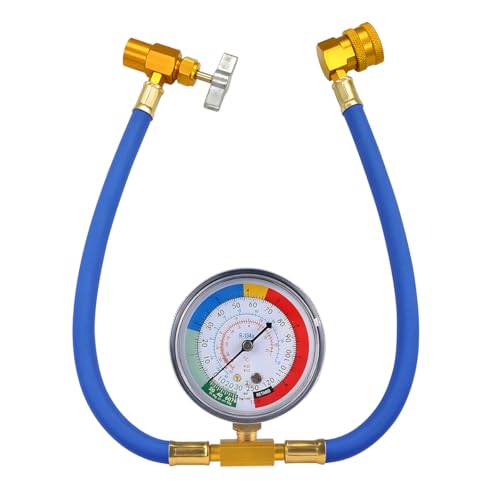
An evacuate-and-recharge service is a common next step when the system is low on refrigerant, but it is not a fix for a leak. R134a evacuate-and-recharge pricing starts at $226.36 in Texas and $301.76 in California, while R-1234yf recharge pricing starts at $359.50 in Texas and $394.44 in California.
The refrigerant type matters because R-1234yf usually costs more, and state or local labor pricing can move the total even when the service looks similar on paper. These services typically take about 60 to 90 minutes, and the bill can rise if the shop finds a leak that needs its own repair.
Car AC recharge work is often paired with leak diagnosis because a refill alone may restore cold air for a while and then fail again. Low refrigerant means there is a loss somewhere in the system. If refrigerant keeps dropping, the repair cost is really in leak tracing and fixing the point where the system lost charge.
Suppose a crossover needs cold air before a road trip and the system is low enough to lose cooling. A recharge may restore performance for the trip, but if the dye check or pressure test points to a leaking hose or condenser, the real bill includes the leak repair first and the recharge after that.
Why repeat recharges get expensive
Repeat low refrigerant usually means the leak was never fixed. That can turn a service that looks cheap at first into a second or third visit, with the extra cost showing up as diagnosis, leak detection, and the repair itself rather than another refill.
Leak repair price is separate from recharge price because the shop has to find the loss point, replace or seal the failed component, and then evacuate and recharge the system again. That extra labor is the difference between a temporary refill and a lasting fix.
Which parts fail most often?
Several failures sit behind weak cooling. The most common topics are refrigerant loss, compressor problems, airflow restriction, and control-panel or module faults. A car AC system may include a compressor, condenser, evaporator, and blower.
Compressor and clutch-related repairs
The compressor is one of the major failed parts in a car AC system. If it does not engage, or if the clutch-related parts fail, the system may blow air but not cool it. That usually costs far more than a recharge because compressor work includes parts, labor, and often recovery and recharge service.
Cabin air filter restriction
A clogged cabin air filter can make the system feel weak even when refrigerant is fine. Cabin air filter replacement starts at $49.89 in Texas and $57.52 in California, and most cabin air filter replacements are priced at $58 to $86 before the online discount. The service typically takes 10 to 30 minutes.
Some vehicles use two filters. Premium filters can raise the parts cost, but this is still one of the least expensive HVAC fixes when airflow, not cooling, is the problem.
Climate control module or panel problems
Climate control repairs can be cheap when the fault is in the panel or module rather than the AC hardware. Walmart lists an automatic climate control module for Chevy, GMC, and Cadillac at $121.69, and a manual climate control module for Chevrolet, GMC, and Cadillac at $119.99. Fitment matters because the wrong module will not work even if it plugs in.
One-side-hot, one-side-cold complaints often point here, especially in dual-zone systems. Electrical controls, blend doors, or actuator logic can be part of the fix, and that is a different bill from a refrigerant service.
Refrigerant leaks
A refrigerant leak is often the root cause of low cooling and repeat recharge visits. Leak diagnosis may use pressure checks, dye, or other leak detection methods, and the repair is billed separately from the recharge that follows. This is the line item that stops the same problem from coming back.
Can climate control repairs be cheap?
Yes, some can. Basic HVAC repairs can stay under $300 when the problem is a cabin air filter, a simple sensor, a fuse or relay issue, or a module part price that stays modest. The estimate rises when the problem is hidden behind dash labor, specialty refrigerant, or a compressor that needs replacement.
A climate control module can be under $130 for the part itself, but vehicle-specific compatibility and labor can push the total higher. Manual systems are usually simpler than automatic systems, and that difference affects both parts sourcing and the amount of diagnostic work needed to match the correct panel or module.
What pushes the bill above basic service
- R-1234yf instead of R134a
- A leak that needs repair before recharge
- Compressor replacement or clutch work
- Blend door or actuator access behind the dash
- Vehicle-specific module compatibility
- Extra electrical diagnosis when controls do not respond
A common mistake is assuming a stuck blend door automatically means a full AC recharge instead of a climate control repair. A bad filter can choke airflow, a bad module can ignore commands, and a leak can make a fresh recharge disappear. The symptom matters more than the guess.
What changes the estimate?
Vehicle-specific parts and compatibility are a major reason quotes vary. Manual and automatic climate control systems do not use the same hardware, and some vehicles need exact module matching by trim, connector layout, or calibration. The price of the part is only one piece of the bill.
Location also changes the number. Refrigerant pricing in Texas and California differs on both R134a and R-1234yf services, and labor rates vary by shop and market. A job that looks simple may still move higher if the system uses the newer refrigerant or if the part has to be ordered.
Shop time matters too. A service that takes 60 to 90 minutes for a recharge can become a longer visit once leak testing or electrical tracing starts. That is why two cars with the same symptom can land at very different totals.
Frequently asked questions
How much to repair car AC?
Car AC repair price usually runs $150 to $1,200+, depending on whether the issue is a recharge, a leak, a control problem, or a compressor replacement. A diagnostic visit starts at $189 for the first hour when booked online, so the first bill may be testing rather than parts.
How much does it cost to fix car AC?
Fixing car AC can mean a small recharge or a larger hardware repair.
What is the average cost of car air conditioning repair?
There is no single average that fits every failure mode. A recharge can stay in the low hundreds, a filter service can be under $100, and a compressor or module repair can move past $1,000. The better estimate comes from matching the symptom to the repair path.
Why is my car AC repair estimate so high?
High estimates usually come from compressor failure, R-1234yf pricing, dash labor, or a leak that needs repair before recharge. If the system also needs electrical diagnosis or a climate control module, the total can rise fast because the quote includes testing, parts, refrigerant, and labor.
What does a car AC diagnostic include?
A car AC diagnostic usually includes pressure checks, a visual inspection, and leak detection, with electrical testing added if controls or compressor response look wrong. The first hour starts at $189 when booked online, and the typical service time is 1 to 1.5 hours.
What car AC repairs can be done for under $300?
Under $300, the most realistic fixes are a cabin air filter, some refrigerant services on certain systems, or a minor electrical issue such as a relay or control fault. That price range is less likely for compressor replacement or a leak repair that requires substantial labor.
Products related to this article
Sponsored / affiliate links. As an Amazon Associate I earn from qualifying purchases. I may earn additional commission from eligible campaigns.