Why Is There Water on the Floor of My Car in Winter?
Water on your car’s floor in winter usually comes from snow tracked in, a drain that is clogged or frozen, or a true leak. If the carpet stays wet after a dry day, it is usually treated as a repair. Ignoring it can fog windows, grow mold, corrode metal, and trigger electrical faults. This guide shows how to sort snowmelt, drain overflow, and cabin leaks fast.
Winter cabin water triage table


Start with the pattern, not the trim panels. Winter shifts the odds: snowmelt carry-in and blocked drains are often more likely than a damaged glass seal, but coolant leaks still need quick attention because they point to the heater core.
| Symptom pattern | Likely source | First check | When to stop driving |
|---|---|---|---|
| Clear water after snow, slush, or boots | Snowmelt carried in on shoes, mats, or clothing | Lift mats, blot the carpet, and check whether the wet area lines up with foot traffic | Usually no stop-driving issue unless the water reaches wiring or pedals |
| Wet passenger carpet after A/C use | Blocked A/C evaporator drain | Look under the car for a drip after the A/C runs for a few minutes | Stop if water keeps collecting and reaches electrical connectors |
| Sweet smell, slippery feel, fogged glass, and lower coolant level | Heater core leak | Check coolant level only when the engine is cool | Limit or stop driving if coolant is low or the windshield fogs repeatedly |
| Water after rain, melting snow, or a car wash | Weatherstripping, sunroof drains, cowl drains, windshield seal, or door vapor barrier | Compare where the water appears with doors, glass, and the cowl area | Stop if the leak reaches wiring, fuse panels, or modules |
| Wet carpet returns after the visible puddle is gone | Carpet padding holding moisture or hidden underfloor water | Press the carpet and check for trapped moisture beneath it | Limit driving until the area is dried and the source is fixed |
Why is there water in my car floor in winter?
Winter floor water usually comes from three sources: snowmelt carried in from outside, a drain that cannot empty fast enough, or a real leak from the body or HVAC system. Timing is the key. If the floor gets wet after snow entry, after a car wash, or after A/C use, the source narrows fast.
Snowmelt and slush carry-in
Clear water on the mat after a snowy drive often comes from boots, pant cuffs, umbrellas, or packed snow on floor mats. Melted slush can pool under rubber mats and soak carpet even when the cabin itself is dry. Check the driver’s side and rear footwells first, since tracked-in water often follows the person who entered last.
Blocked drains after freeze-thaw
Freeze-thaw cycles can plug drains with ice, dirt, or slush. Cowl area drains at the base of the windshield can be blocked by leaves and debris, and the water can be routed into the cabin. On vehicles with a sunroof, blocked sunroof drains can dump water down the A-pillars and onto the carpet.
Exterior leaks that show up in cold weather
Weatherstripping can harden, crack, or compress in cold weather, and that can let rain or meltwater into the cabin. Door vapor barriers, windshield seals, and hatch or tailgate seals can also leak after age, rust, or poor previous repair. A common winter clue is wetness that appears after a storm or after a wash, then returns every time the body gets soaked.
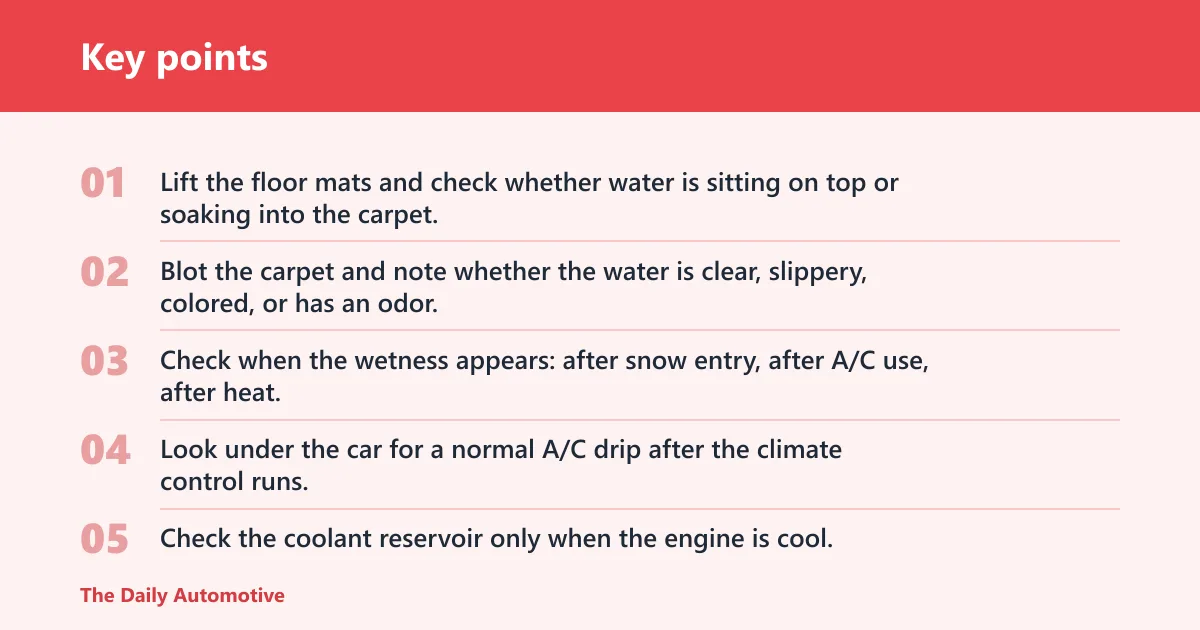
- Lift the floor mats and check whether water is sitting on top or soaking into the carpet.
- Blot the carpet and note whether the water is clear, slippery, colored, or has an odor.
- Check when the wetness appears: after snow entry, after A/C use, after heat, or after rain.
- Look under the car for a normal A/C drip after the climate control runs.
- Check the coolant reservoir only when the engine is cool.
How do you tell water from coolant?
Plain water and coolant do not behave the same. Water is usually clear and has little smell. Coolant often leaves a sweet smell and a slippery feel, and it can lower the coolant level. If the windshield fogs while the passenger carpet is wet, the heater core moves higher on the list.
Smell, color, and feel
Coolant leaks can create a sweet smell and a slippery feel. The liquid may look green, orange, pink, or yellow depending on the formula, but color alone is not enough to identify it. Plain water from snowmelt or A/C condensation is usually clear and does not feel slick. If the floor is wet but there is no smell, coolant is less likely, though not ruled out.
Fogging and coolant loss
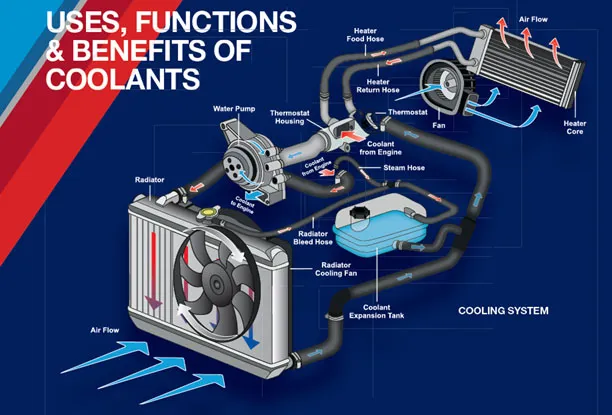
A heater core leak can fog windows and lower the coolant level. It often wets the passenger carpet first because the heater core sits inside the HVAC case behind the dash. If the windshield keeps fogging, the inside of the glass feels oily, and the coolant reservoir drops, stop treating it like simple water intrusion.
A/C drain and heater core leaks
These two faults are easy to confuse because both can wet the passenger side first. The difference is simple: the A/C system should make water that exits under the vehicle, while the heater core carries engine coolant. One is a drainage problem. The other is a cooling-system leak.
A/C evaporator drain blockage
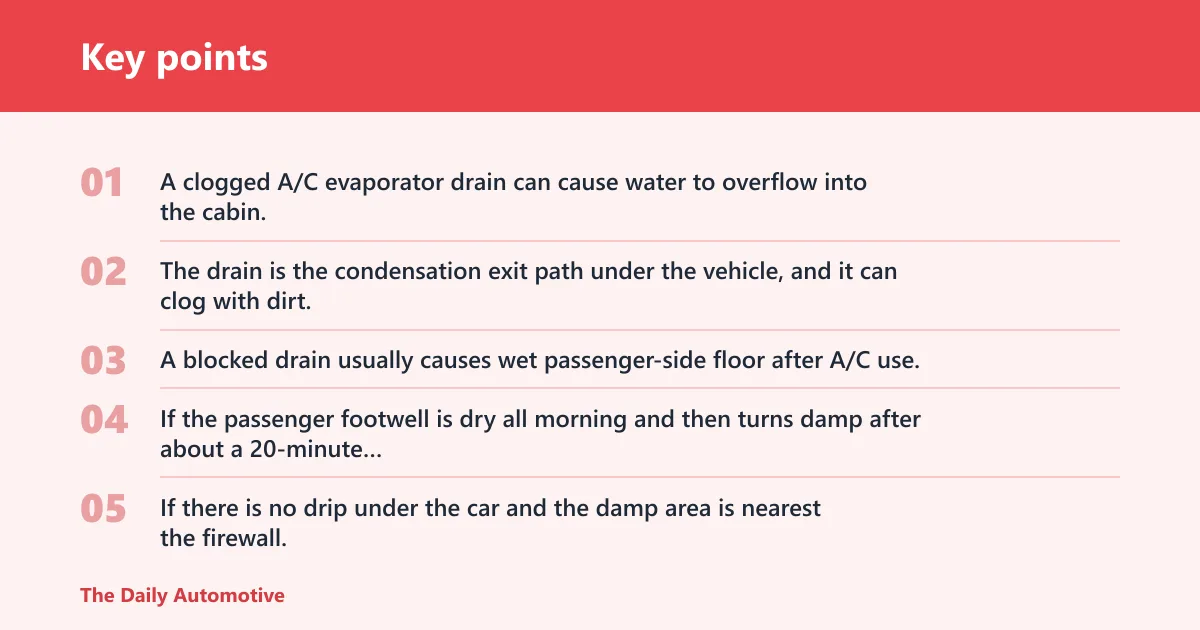
A clogged A/C evaporator drain can cause water to overflow into the cabin. The drain is the condensation exit path under the vehicle, and it can clog with dirt, debris, mold, or insects. A blocked drain usually causes wet passenger-side floor after A/C use, especially if the under-car drip should have appeared after running the A/C for a few minutes and did not.
If the passenger footwell is dry all morning and then turns damp after about a 20-minute drive with the defroster and A/C running, that can suggest a blocked drain. If there is no drip under the car and the damp area is nearest the firewall, the drain becomes a strong suspect before any trim comes apart.
Heater core leak signs
The heater core uses engine coolant, not water. When it leaks, the carpet can feel wet, but the odor is often sweet, and the glass may fog again and again. A heater core leak can also leave a slippery film on the windshield or a greasy residue on the carpet fibers. Check the coolant level only when the engine is cool.
Suppose the passenger carpet is wet and the coolant reservoir is below its normal mark the next morning. That combination points away from snow carry-in and toward a heater core or related hose leak inside the cabin.
Why passenger-side carpet often gets wet first
The passenger side is where the HVAC case sits on many vehicles, so both the evaporator drain and the heater core can reveal themselves there first. That does not mean every passenger-side leak is HVAC-related. Rainwater can still travel through a windshield seal, cowl drain path, or door barrier and show up on the same side.
Why is there water on the passenger floor after I run the heater?
Heat can make a leak easier to notice because warm air dries the surface while hidden moisture stays trapped below. If the passenger floor gets wet after you run the heater, look at HVAC condensation, heater core clues, and any blocked drain near the cowl before assuming the floor pan itself is leaking.
Condensation from the HVAC system
If the A/C compressor or dehumidifying mode has been running with the heater, condensation can build up in the HVAC case and should drain under the car. If that under-car drip is missing, the drain may be clogged or frozen. A blocked evaporator drain can send water into the passenger footwell instead of outside.
Coolant leak clues instead of plain water
If the wetness comes with a sweet smell, a slippery feel, or repeated window fogging, treat it as a coolant problem until proven otherwise. That shifts the focus to the heater core and its connections. Coolant loss is the warning sign that separates this from a simple water leak.
Doors, sunroof, and windshield leak points
When the liquid appears after rain, melting snow, or washing, body seals and body drains move up the list. These faults are common in cold weather because rubber stiffens and debris blocks the paths that should carry water away from the cabin.
Weatherstripping and the door vapor barrier
Weatherstripping is the rubber seals that go around doors, windows and tailgates. It can weaken with temperature and moisture changes. If the seal hardens or compresses, meltwater can enter at a door, window, or hatch. A torn or detached door vapor barrier can mimic a bad window seal and send water into the cabin from inside the door shell.
Parts of disrepair can explain the mystery, but the location matters. Water that shows up at the lower door trim after a wash may point to a vapor barrier instead of the outer weatherstrip. That distinction matters because the repair path is different.
Sunroof drain tubes
If the vehicle has a sunroof, test the drain tubes. They route water down the body and outside, but they can clog or disconnect. Blocked sunroof drains can dump water down the A-pillars and onto the carpet. Water streaks inside a pillar trim panel are a strong clue.
Windshield seal and cowl drains
Rainwater can enter through deteriorated seals or debris in the cowl. A windshield seal can leak after age, rust, or a poor replacement, and the water may track before it appears on the floor. Cowl drains at the base of the windshield are designed to move rainwater away from the HVAC intake, so blockage there can send water into the cabin or into the cabin air filter housing.
A soaked or distorted cabin air filter can signal water entry through the cowl or housing. That is a useful clue because the filter sits close to the route that rainwater should never take.
Wet carpet and hidden damage
Once water gets into carpet padding, the problem can stay hidden long after the top layer looks dry. Carpet padding can hold moisture and hide the true source. Underfloor wiring adds risk because trapped water can lead to mold, corrosion, and electrical faults.
Drying steps after the leak is fixed
Wet carpet padding can hide moisture and needs thorough drying. Pull up floor mats, lift the carpet edge if needed, and dry the padding beneath. If the leak was from coolant, fogged glass or the heater core, the under-carpet area may need more drying than the visible surface suggests. Leaving moisture in place is what turns a small leak into a smell, rust, or an electrical problem.
If water reached wiring, seat connectors, or modules, limit driving until the area is dry and the source is corrected. Water that stays trapped under the carpet can keep causing trouble even after the visible puddle disappears.
Frequently asked questions
How do I tell if the liquid is rainwater or coolant?
Rainwater is usually clear and does not smell sweet. Coolant often has a sweet smell and a slippery feel, and the coolant reservoir may drop. If the windshield fogs repeatedly, coolant becomes more likely. Check the reservoir only when the engine is cool, and do not ignore a falling coolant level.
Can a clogged A/C drain cause water on the floor in winter?
Yes. A clogged A/C evaporator drain can cause water to overflow into the cabin, even in winter if the HVAC system is making condensation. The usual clue is wet passenger-side carpet after A/C or defrost use, along with no drip under the car after the system has run for a few minutes.
What should I check first if the carpet is wet in cold weather?
Check the floor mats, blot the carpet, and note whether the liquid is clear, smelly, or slippery. Then look at the timing: snow entry, A/C use, heat use, or rain. After that, check for under-car A/C drip and inspect the coolant level when the engine is cool. That order saves time.
Why is my car using water?
If the car seems to be “using” water, it is usually losing condensation, snowmelt, or coolant. Clear water that appears after A/C use is often condensation drainage. A sweet smell, fogged windows, and a dropping coolant level point to coolant loss, not plain water. The fix depends on which one it is.
Why is there water on the floor of my car after snow melts?
Snowmelt often comes in on boots, mats, and clothing, then runs to the lowest point of the floor. It can also enter through worn weatherstripping or a blocked drain once snow starts to thaw. If the water returns after every wet drive, check the seals, drains, and floor mats in that order.
Products related to this article
Sponsored / affiliate links. As an Amazon Associate I earn from qualifying purchases. I may earn additional commission from eligible campaigns.