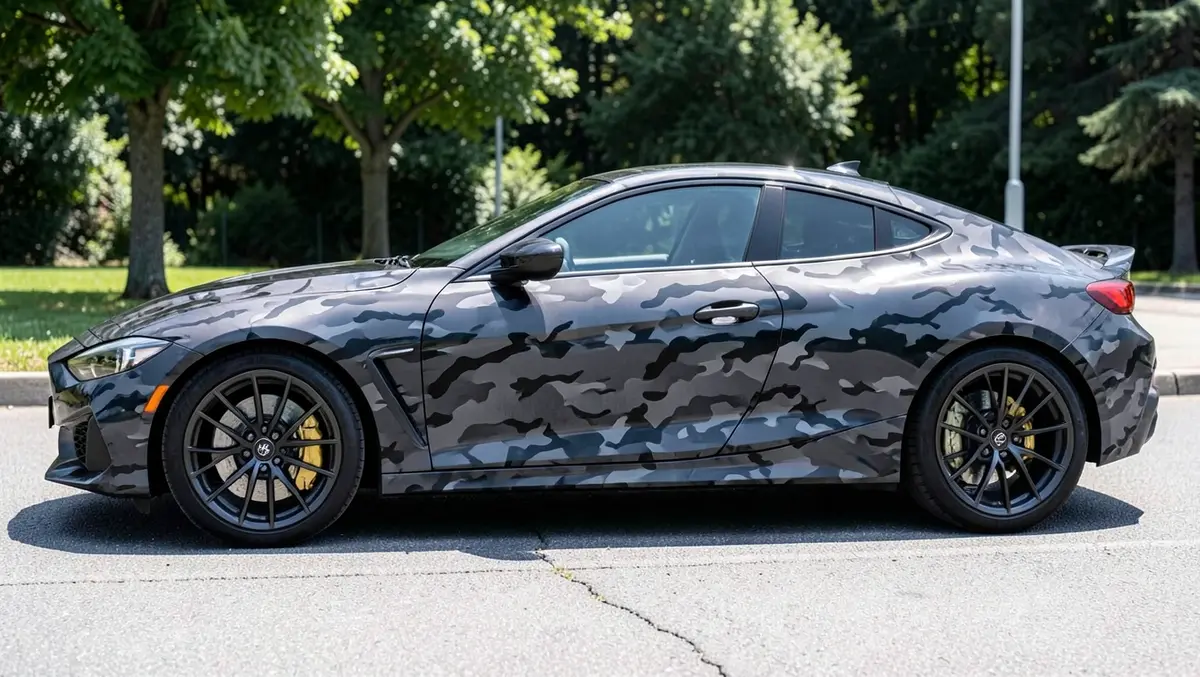
Vinyl Graphics for Cars: Camo Stripes, Side Livery and Panel Wraps
Vinyl graphics are pre-cut adhesive designs — camo panels, side livery stripes, geometric door accents — that stick directly to a car’s painted surface to mimic the look of a partial wrap without the cost of wrapping the whole vehicle.
Unlike a single novelty sticker, vinyl graphics are usually sized to run the length of a door, quarter panel, or rocker panel, so they read as part of the car’s design rather than something stuck on top of it. They’re self-adhesive, waterproof, and made to be removed cleanly later if you change your mind, which makes them one of the cheapest ways to change how a car looks without touching the factory paint.
This guide covers the material differences that actually affect how long a graphic lasts, the most common styles people put on cars, how installation works step by step, and what to expect if you ever need to take one off.
Vinyl Graphics vs. a Full Wrap vs. a Single Decal
“Vinyl graphics” sits in the middle of three related products, and mixing them up is the most common reason people order the wrong thing. A full wrap covers the entire painted body in one continuous vinyl skin, usually installed by a professional shop. A single decal is a standalone image — a mountain silhouette, an animal, a logo — applied once to one panel with no attempt to look like a factory design element. Vinyl graphics fall between the two: pre-cut panel-length pieces (a camo stripe, a hexagon pattern strip, a color-splash side livery) meant to look like a styling accent that could have come from the factory, similar to the racing stripes automakers themselves sell as options.
If what you actually want is one large, single-image decal — a wildlife scene, a mountain range, a specific theme — rather than a stripe or panel-style graphic, our large decals for cars guide compares three picks built for exactly that. And if you’d rather buy a roll of vinyl and cut your own custom shape instead of a pre-made graphic, see our best vinyl for car decals guide to raw material options.
BUDGET-FRIENDLY PICK
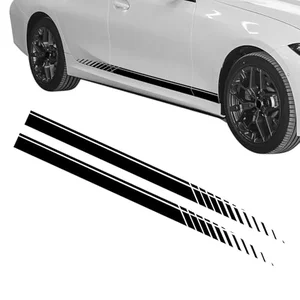 |
Rebvugr 2PCS Sports Racing Stripe Graphic Stickers – $5.74 A simple, low-cost way to try a racing-livery-style vinyl graphic before committing to a larger camo or full side livery kit.
|
Cast Vinyl vs. Calendered Vinyl: Which One Actually Holds Up
Every vinyl graphic is made from one of two material types, and the difference determines how long it will look good on your car. Calendered vinyl is manufactured by pressing the material through rollers to a uniform thickness. It’s thicker, stiffer, and noticeably cheaper, which is why it’s common on budget decal kits. It works fine on flat panels but typically only lasts around 1 to 5 years outdoors before it starts to fade, crack, or curl at the edges.
Cast vinyl is made through a continuous casting process instead, which produces a thinner, more flexible film. It costs more but conforms to curves and body contours far better, and premium cast films (the kind used in professional wraps) are commonly rated for 7 to 12 years of outdoor durability. If a graphic needs to wrap around a fender curve, a mirror, or a door handle recess, cast vinyl is the material that will actually lie flat there instead of lifting at the edges within a season.
Most listings don’t use the words “cast” or “calendered” up front, so check the product description or ask the seller before buying if longevity matters more to you than price. A cheap calendered stripe on a daily driver you plan to trade in within a couple of years is a reasonable trade-off; the same material on a garage-kept show car is likely to disappoint.
Popular Vinyl Graphics Styles for Cars
Camouflage panels. Multi-tone camo stripes and full-panel camo kits are one of the most common vinyl graphic styles, popular on trucks and SUVs for an off-road, rugged look. They typically run the length of a door or rear quarter panel rather than covering the whole side of the car.
Geometric and hexagon patterns. Angular repeating patterns applied to lower door panels or rocker panels give a modern, tech-inspired look and tend to read as more subtle than a bold stripe from a distance.
Side livery and racing stripes. Full-length stripes running from front fender to rear quarter panel, sometimes in a single color and sometimes a color-splash gradient, mimic the factory racing stripe option many performance trims offer. These are usually cut from a single continuous roll rather than assembled from smaller pieces, which keeps the line straight along the car’s body crease.
Checkered and tribal accents. Smaller repeating patterns or flowing tribal-style graphics are usually applied to a single panel — a hood, a trunk lid, or a rear quarter — as an accent rather than a full side treatment.
How to Install Vinyl Graphics on a Car
- Wash and clay the panel. Any dirt, wax, or road film left under the vinyl will show through as a bump or cause the adhesive to fail early. Clean with soap and water, then wipe the panel with isopropyl alcohol so no wax residue remains.
- Dry-fit the graphic first. Use painter’s tape to hold the piece in position on the panel before peeling any backing paper, and step back to check alignment against a body line or the opposite side of the car.
- Peel and apply in sections. Peel back a few inches of the backing paper at a time rather than all at once, pressing the vinyl down as you go so it doesn’t fold onto itself.
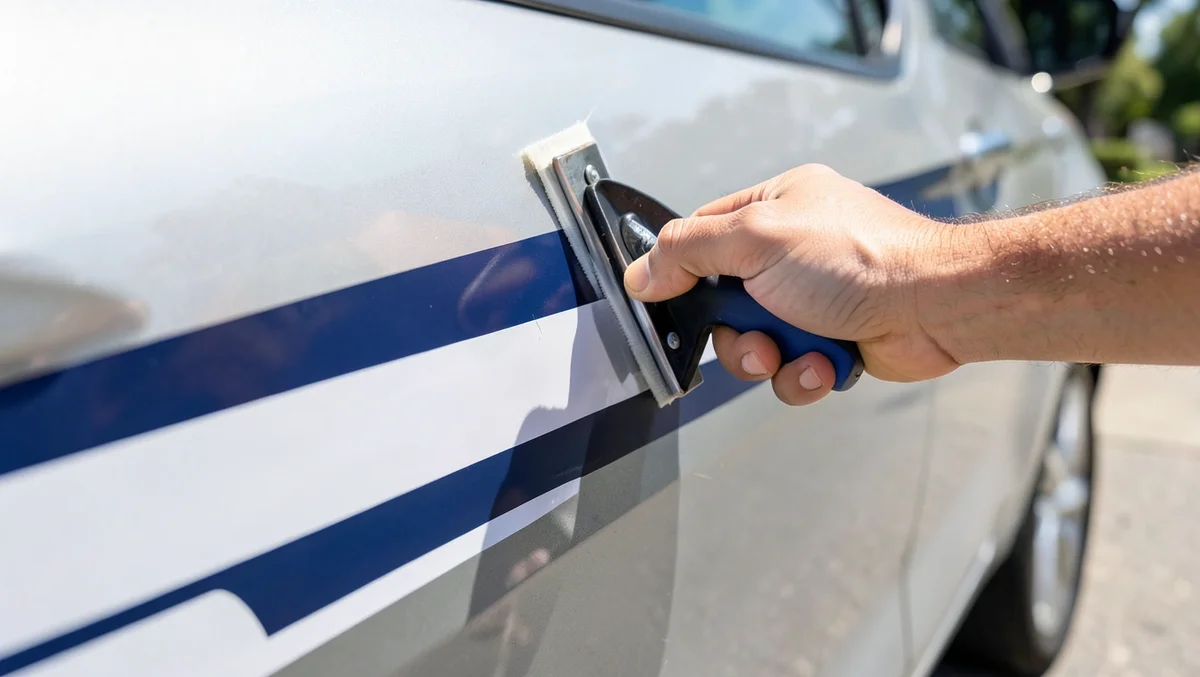
- Squeegee out air bubbles. Work from the center of the graphic outward with a felt-edge squeegee, using overlapping strokes to push trapped air toward the nearest edge.
- Heat and tuck any recessed edges. A heat gun or hairdryer on low softens the vinyl enough to tuck it around door handles, mirrors, or curved edges without cracking.
- Remove the transfer film. If the graphic shipped with a clear application tape over the top, wait a few minutes after installation, then peel it back slowly at a low angle so the vinyl stays on the car instead of lifting with the tape.
Most single-panel graphics, like a door stripe or a hood accent, take a first-timer under an hour. A full side livery running the length of the car is a two-person job and easier to get straight with an extra set of hands holding tension on the far end.
Frequently Asked Questions
What Are Vinyl Graphics for Cars?
Vinyl graphics are pre-cut, self-adhesive vinyl designs sized to run the length of a door, panel, or the side of a vehicle — camo stripes, hexagon patterns, and side livery are common examples. They’re meant to look like a styling accent rather than a standalone sticker, and they’re waterproof and removable without professional installation.
What Is the Difference Between Cast and Calendered Vinyl?
Cast vinyl is thinner, more flexible, and conforms to curves better, with premium versions rated for 7 to 12 years outdoors. Calendered vinyl is thicker, stiffer, and cheaper, but generally only lasts around 1 to 5 years before fading or curling. Cast vinyl is the better choice for anything that needs to wrap around a curve; calendered vinyl is fine for flat panels on a budget.
How Long Do Vinyl Graphics Last on a Car?
It depends on the material: calendered vinyl typically lasts 1 to 5 years outdoors, while cast vinyl can last 7 to 12 years. Garage-kept vehicles and graphics kept out of direct sun and away from frequent automatic car washes will hold up longer than the low end of either range.
Do Vinyl Graphics Damage Car Paint?
Properly applied and removed vinyl graphics do not damage factory paint in good condition. Damage risk comes from applying vinyl over paint that’s already chipped or failing, or from removing old, sun-baked vinyl too quickly without heat, which can pull at weak clear coat. Our does vinyl wrap ruin car paint guide covers this in more depth for larger wrap-style installs.
Can Vinyl Graphics Be Removed Without Leaving Residue?
Yes. Heat the vinyl with a hairdryer or heat gun on low to soften the adhesive, then peel it back slowly at a low angle rather than pulling straight up. Any leftover adhesive residue comes off with an adhesive remover or isopropyl alcohol. Our how to remove a decal from a car guide walks through the full process step by step.
How Much Does It Cost to Add Vinyl Graphics to a Car?
Pre-cut graphic kits themselves typically run about $5 to $150 depending on size and coverage, with a single door stripe at the low end and a full side livery kit at the higher end. Professional installation adds roughly $50 to $400 in labor depending on the shop’s rate and how complex the panel shapes are, though most single-panel graphics are simple enough to install yourself in under an hour.
Conclusion
Vinyl graphics sit in a useful middle ground: bolder and more design-oriented than a single decal, far cheaper and less permanent than a full wrap. The material matters more than the design — cast vinyl costs more up front but holds its color and edges for years longer than calendered vinyl, especially on anything with curves. Whether you go with a camo stripe, a hexagon accent, or a full side livery, clean surface prep and a slow, section-by-section install are what separate a graphic that looks factory-installed from one that looks like it’s peeling by next summer.
Products related to this article
Sponsored / affiliate links. As an Amazon Associate I earn from qualifying purchases. I may earn additional commission from eligible campaigns.