What Does No Cats Mean On A Car? Proven Essential
“No Cats” on a car usually means the catalytic converter has been removed or stolen. This vital component cleans your exhaust gases. Driving without one is illegal, harms the environment, and can cause loud, smelly exhaust fumes. Repairing or replacing the catalytic converter is essential for legal and safe vehicle operation.
If you see the message “No Cats” pop up on your dashboard, or if you hear that your catalytic converter is missing, don’t panic! This phrase might sound like a strange error code, but it points to a very real and important part of your car: the catalytic converter. Many drivers become confused or worried when they realize this essential part is gone. Is the car unsafe? Can you still drive it?
This guide, written just for you, breaks down exactly what “No Cats” means in simple terms. We will explain why this happens, what the immediate effects are, and the proven, safe steps you need to take to fix it. You don’t need to be a master mechanic; we make this easy to understand and simple to solve. Let’s get your ride running right and legally again!
Understanding the Basics: What is a Catalytic Converter?
Before diving into what “No Cats” means, we need a quick chat about the hero of your exhaust system: the catalytic converter. Think of it as your car’s internal air purifier.
What Does the Catalytic Converter Actually Do?
Your car engine burns fuel, which creates exhaust gases. Some of these gases are harmless, but others are toxic pollutants, like carbon monoxide, nitrogen oxides, and unburned hydrocarbons. These are things we definitely do not want floating into the air we breathe.
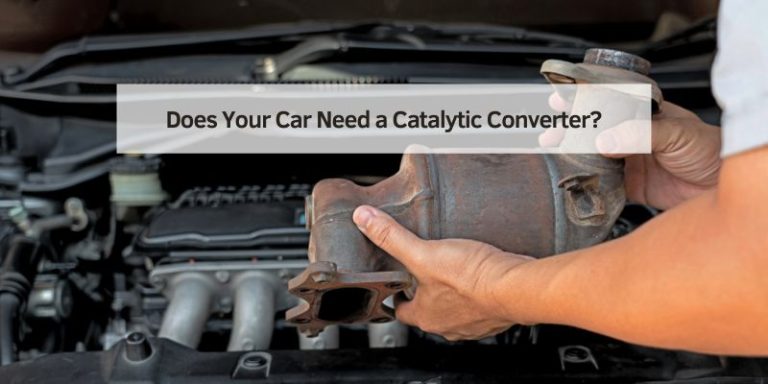
The catalytic converter sits right in your exhaust system, usually under the car in the middle. It contains tiny amounts of precious metals, like platinum, palladium, and rhodium. These metals act as catalysts—agents that speed up chemical reactions without being used up themselves.
When those toxic exhaust gases pass over these hot metals, the converter changes them into less harmful substances:
- Carbon Monoxide (CO) becomes Carbon Dioxide ($text{CO}_2$).
- Hydrocarbons (HC) become Water ($text{H}_2text{O}$) and Carbon Dioxide ($text{CO}_2$).
- Nitrogen Oxides ($text{NO}_{text{x}}$) become Nitrogen ($text{N}_2$) and Oxygen ($text{O}_2$).
In short, it cleans up your car’s emissions before they exit the tailpipe. This is crucial for environmental health and meeting legal standards.
Why You Might See “No Cats”
When you hear the term “No Cats,” it almost always refers to one of two scenarios:
- Catalytic Converter Theft: This is the most common reason a driver says “No Cats.” Thieves target these parts because of the valuable metals inside. They can cut them out surprisingly fast, often while the car is parked anywhere.
- Intentional Removal: Sometimes, owners modify their exhaust systems for performance reasons (often illegally) by removing the converter. This is called “straight piping.”
If a modern car’s computer detects that the efficiency of the catalytic converter is below the threshold (meaning it’s missing or broken), it triggers the Check Engine Light (CEL) and sometimes displays specific diagnostic codes related to efficiency, which can sometimes be interpreted by users as a “No Cats” warning on scan tools.
The Immediate Consequences of Driving with No Cats
Driving without a catalytic converter isn’t just a minor issue; it has immediate, noticeable, and often serious consequences. Knowing these helps you understand why fixing this problem should be your top priority.
1. Legal Trouble and Emissions Testing
This is often the biggest surprise for new drivers. It is illegal in almost every state (and country) to operate a vehicle that has removed or tampered with its emission control devices, which includes the catalytic converter.
Failing Inspection: If your state requires regular emissions or safety inspections, your vehicle will fail immediately without a converter.
Fines: Law enforcement officers can issue tickets if they suspect tampering or notice extreme exhaust issues. Check resources like the Environmental Protection Agency (EPA) guidelines regarding emission tampering for federal standards, although local laws dictate enforcement.
2. Performance and Engine Issues
Your car’s computer (Engine Control Unit or ECU) relies on sensors to ensure the engine is running efficiently.
The Role of Oxygen Sensors (O2 Sensors)
Your exhaust system has O2 sensors located before and after where the catalytic converter should be.
The upstream sensor measures the exhaust before it enters the cat.
The downstream sensor measures the exhaust after it leaves the cat to check how well the converter is working.
If the cat is gone, the downstream sensor reads almost the same as the upstream sensor. The computer gets confused and thinks something is seriously wrong, often putting the car into a “limp mode” to protect the engine.
Symptoms you will notice:
- The Check Engine Light will be on constantly.
- Poor fuel economy (your gas mileage will drop).
- Rough idling or stalling.
- Reduced engine power, especially when accelerating.
3. Health and Environmental Hazards
This is the most important reason to fix it. Without the converter, toxic fumes are pouring directly out of your tailpipe.
Smell: You will immediately notice a strong, noxious, rotten egg smell (if the converter is just clogged) or a very strong, acrid, unburned fuel smell (if it’s completely missing or damaged).
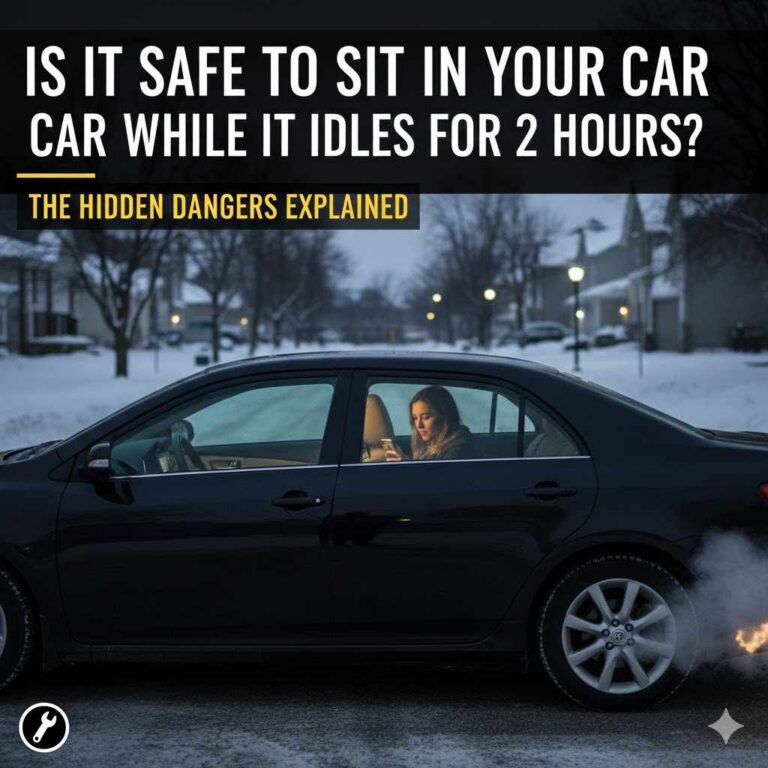
Safety Risk: If you have a leak near the exhaust, these toxic fumes (like carbon monoxide) can enter the cabin of your car, posing a severe health and even fatal risk, especially in enclosed spaces like a garage.
How to Confirm If Your Catalytic Converter Is Missing
If you suspect theft or tampering, you need to confirm it before calling a repair shop. Here are the safe steps a beginner can take.
Step 1: Look for Visual Clues (Safely!)
Safety First: Never work under a car that is not safely supported. If you are unsure, skip directly to Step 2.
If you can safely look underneath your car with a flashlight while it is parked on a flat, level surface, look for the following:
- Missing Component: Trace the exhaust pipe from the engine manifold back toward the rear axle. You should see a large, oval-shaped metal canister—that’s the catalytic converter. If you see a straight piece of pipe where that canister should be, it’s been stolen.
- Fresh Cuts: If it was recently stolen, you might see raw, shiny metal cuts on the exhaust pipes leading into and out of where the converter was, often looking ragged or poorly welded.
- Hanging Parts: Look for wires or sensors hanging loose near the undercarriage—these are likely the disconnected O2 sensors.
Step 2: Listen to the Sound
A car with a functioning catalytic converter has a relatively quiet, muffled exhaust sound.
Loud Noise: If your car suddenly sounds like a race car but you didn’t modify it, the converter is likely gone. The sound will be significantly louder, deeper, and more throaty than normal.
Step 3: Read the Diagnostic Codes (The Computer Confirmation)
Even if you can’t see under the car, the computer tells the story. This is the most reliable method for modern vehicles.
You will need an OBD-II (On-Board Diagnostics) scanner. These are inexpensive and easy to use for beginners. You can often borrow one from a local auto parts store or purchase one for under $30 for a basic model.
1. Locate the OBD-II port (usually under the driver’s side dashboard).
2. Plug in the scanner and turn the ignition to the “ON” position (engine off).
3. Read the codes.
Codes related to “No Cats” performance usually involve the “Catalyst System Efficiency Below Threshold.” The most common codes are:
| Code | Meaning | Severity |
|---|---|---|
| P0420 | Catalyst System Efficiency Below Threshold (Bank 1) | High |
| P0430 | Catalyst System Efficiency Below Threshold (Bank 2) | High |
If you see these codes, it means the system thinks the converter isn’t cleaning the fumes effectively, often due to theft or severe failure.
The Process: Fixing Missing or Broken Catalytic Converters
Once you confirm the issue, the path forward is straightforward, although it can be costly. As your trusted guide, I recommend focusing on the safest, most compliant solution—replacement.
Option 1: Professional Replacement (The Recommended Path)
This is the required route if the converter was stolen or if the old one failed due to age or internal clogging. A certified mechanic will install a new, compliant part.
Steps a Shop Will Take:
- Diagnosis: Confirm the code and visually inspect the theft damage or failure point.
- Pipe Repair: If the theft caused damage to other sections of the exhaust pipe, those sections must be cut out and replaced or welded before the new cat can be installed.
- Installation: The new catalytic converter, which must meet EPA/CARB standards for your region, is bolted or welded into place.
- Sensor Check: The technician will inspect the upstream and downstream O2 sensors to ensure they are working correctly, as bad sensors can sometimes mimic a bad converter.
- Clear Codes: The ECU is reset, and the Check Engine Light is cleared.
What Kind of Converter Do I Need?
You must use a converter that matches your vehicle’s specifications.
Federal (EPA) Compliant: These meet the standard federal emission requirements.
CARB Compliant (California Air Resources Board): If you live in states that follow California emissions standards (like CA, NY, ME, and others), you MUST use a CARB-compliant converter. Using an EPA-only part in a CARB state will still result in a failed inspection. You can verify state requirements through your local Department of Motor Vehicles (DMV) or environmental testing facility, such as those referenced by the EPA’s vehicle standards portal.
Option 2: The “Test Pipe” or Straight Pipe Bypass (Not Recommended & Illegal)
Some performance shops or individuals might suggest installing a “test pipe” or “straight pipe” in place of the catalytic converter. This is essentially a piece of pipe that perfectly replaces the size and shape of the stock converter.
Why People Do It: It’s usually cheaper than a new catalytic converter.
Why You Should Avoid It:
- Illegal Operation: It guarantees you will fail emissions tests and can lead to fines.
- Sensor Manipulation Required: Because the computer detects the missing catalyst, you usually have to install “O2 sensor spacers” or “foulers” to trick the downstream sensor into reading normally. This is a temporary fix that doesn’t solve the pollution problem.
- No Safety Net: You lose all the pollution control your vehicle was designed to have.
For the everyday driver looking for a reliable, stress-free vehicle, professional replacement with a compliant unit is the only proven essential path forward.
Understanding Costs and Prevention
The biggest hurdle for most drivers facing this issue is the unexpected repair bill. Catalytic converters are expensive because of the precious metals they contain.
Typical Cost Breakdown for Replacement
The cost varies hugely based on your vehicle (V6 vs. V8) and regulatory requirements (EPA vs. CARB).
| Component | Estimated Cost Range (Parts Only) | Notes for Beginners |
|---|---|---|
| EPA-Compliant Converter (Part) | $250 – $700 | Usually the cheaper option if legal in your state. |
| CARB-Compliant Converter (Part) | $800 – $2,500+ | Significantly more expensive due to stricter material requirements. |
| Labor (Installation) | $150 – $400 | Depends on how much welding is needed due to theft damage. |
| Total Estimated Repair | $500 – $3,000+ | Always get multiple quotes! |
How to Protect Your Catalytic Converter from Theft
Since theft is the most likely reason for “No Cats” on a used car, prevention is key. Thieves look for easy, quick targets—usually high-clearance vehicles like trucks or SUVs, or any car parked in a darker, unsecured area.
Here are practical, beginner-friendly protection methods:
- Park Smart: Whenever possible, park in a well-lit area or a locked garage. If street parking is necessary, park near security cameras or motion-sensor lights.
- Install a “Cat Shield”: Specialized metal shields or cages can be bolted over the converter. While not impossible to remove, they make the theft significantly harder, louder, and take more time—often enough to discourage a thief looking for a quick job.
- Use Vehicle Alarms: If your alarm system has a shock sensor (or tilt sensor), a thief lifting the car might trigger it.
- Weld Securely: If you need exhaust work done, ask your trusted mechanic to weld the converter in place using security bolts or specialized high-heat weld beads. This makes cutting the pipes much harder.
- Mark Your Parts: Some manufacturers and security programs suggest etching your Vehicle Identification Number (VIN) onto the converter shell. This makes it harder for scrappers to buy and process. Check with local law enforcement for VIN etching programs in your area.
Troubleshooting Common Scenarios Beyond Theft
While theft is common, sometimes the “No Cats” reading isn’t because it’s missing, but because it’s severely damaged internally.
Scenario A: The Converter is Clogged, Not Gone
If you don’t notice a huge exhaust leak or see a missing part, the converter might be clogged. This is often caused by:
Burning excessive oil or coolant in the engine.
Driving for long periods with the Check Engine Light on (which causes raw fuel to enter the exhaust).
Symptoms of a Clogged Cat:
Sluggish acceleration.
The car runs hot.
The car is unusually quiet, sometimes sounding choked.
The Fix: A clogged cat usually needs replacement. Running specialized cleaning fluids is rarely effective once the catalyst material has melted or broken apart internally.
Scenario B: A Bad Downstream O2 Sensor
Sometimes, the P0420 code appears, but the converter is physically fine. This means the downstream O2 sensor is giving inaccurate readings, fooling the computer into thinking the converter isn’t working.
How to Check:
1. Get the codes read professionally (or use your scanner).
2. If the code points specifically to the sensor performance rather than low efficiency, replacement of that single sensor might resolve the “No Cats” warning without replacing the expensive converter. This is often a much cheaper repair. A good mechanic can confirm this by using a live data stream on their diagnostic tool to compare the upstream and downstream sensor readings.

FAQ: Quick Answers for “No Cats” Confusion
Here are some straightforward answers to the questions that often pop up when dealing with this issue.
Q1: Can I legally drive my car if the catalytic converter is missing, even just for a short drive to the shop?
A: Legally, no. Driving without a catalytic converter is tampering with federally mandated emissions equipment. While police might overlook a short trip to the repair shop if you are clearly headed there, you are currently driving an illegally polluting vehicle.
Q2: How long does it take a thief to steal a catalytic converter?
A: A skilled thief using the right tools, like a battery-powered reciprocating saw, can often cut off a converter and be gone in under two minutes. This speed is why parking security is so important.
Q3: Will my car burn more gas if the catalytic converter is missing?
A: Yes. Even if the engine runs, the computer gets confused by the “P0420” or “P0430” error. It often defaults to a safe, rich fuel mixture, meaning you will waste gasoline until the repair is properly completed.
Q4: Is it possible the catalytic converter fell off due to rust?
A: Yes, this is possible, especially on older cars in regions that use road salt heavily. Rust can eat through the exhaust piping supporting the converter, causing it to hang down or fall off entirely. The result is the same as theft—a giant hole in your exhaust that needs professional repair.
Q5: If I replace the catalytic converter, will the Check Engine Light go away by itself?
A: Not usually. While the computer constantly monitors the sensor data, you or your technician will need to manually clear the fault codes using an OBD-II scanner once the repair is verified as complete. Driving for a few cycles might clear it, but clearing it manually confirms the repair in the system.
Conclusion: Reclaiming Your Reliable Ride
Seeing or hearing that your car is missing its catalytic converter—the problem summarized as “No Cats”—is undoubtedly stressful. It represents an unexpected, often expensive repair, coupled with the worry about legality and safety.
Remember this: You are not facing an impossible problem.