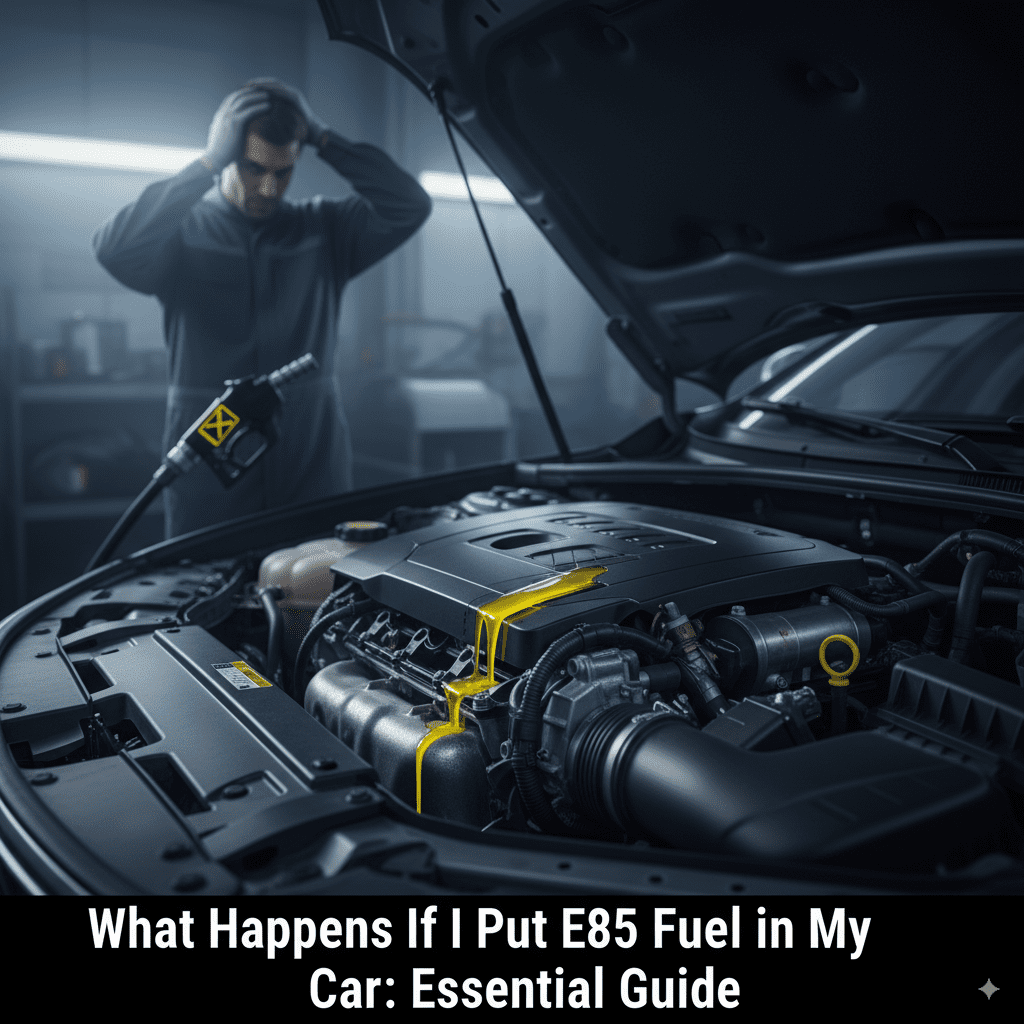
What Happens If I Put E85 Fuel in My Car: Essential Guide
Putting E85 in a non-flex-fuel car can cause serious engine damage, including fuel system corrosion and poor performance. Only vehicles explicitly designed for E85 can safely use it, as standard cars lack the necessary compatible materials. Always check your owner’s manual or fuel door.
Ever glanced at the gas pump and wondered about E85? You’re not alone! Many drivers see the lower price and think “score!” But before you fill ‘er up, it’s super important to know exactly what E85 is and if your car can handle it. Accidentally putting the wrong fuel in your car can lead to some costly and frustrating problems. Don’t worry, though! We’re here to break down exactly what happens if you put E85 fuel in a car that isn’t built for it, and how to avoid this common mistake. Let’s get your car running smoothly and safely!
What Exactly is E85 Fuel?
E85 is a blend of fuel that’s made up of 85% ethanol and 15% gasoline. Ethanol is an alcohol made from renewable resources – think corn, sugarcane, or even wheat! On the other hand, regular gasoline you’re used to is primarily derived from crude oil.
The “E” in E85 stands for ethanol, and the “85” indicates the percentage of ethanol in the blend. This high ethanol content is what makes E85 different from standard gasoline. Most conventional gasoline you’ll find at the pump contains up to 10% ethanol (often labeled as E10).
Because of its high ethanol content, E85 has different properties compared to regular gasoline. For instance, it has a higher octane rating, which can sometimes lead to slightly better performance in compatible engines. However, it also absorbs water more readily and is more corrosive to certain materials.
What is a Flex-Fuel Vehicle (FFV)?
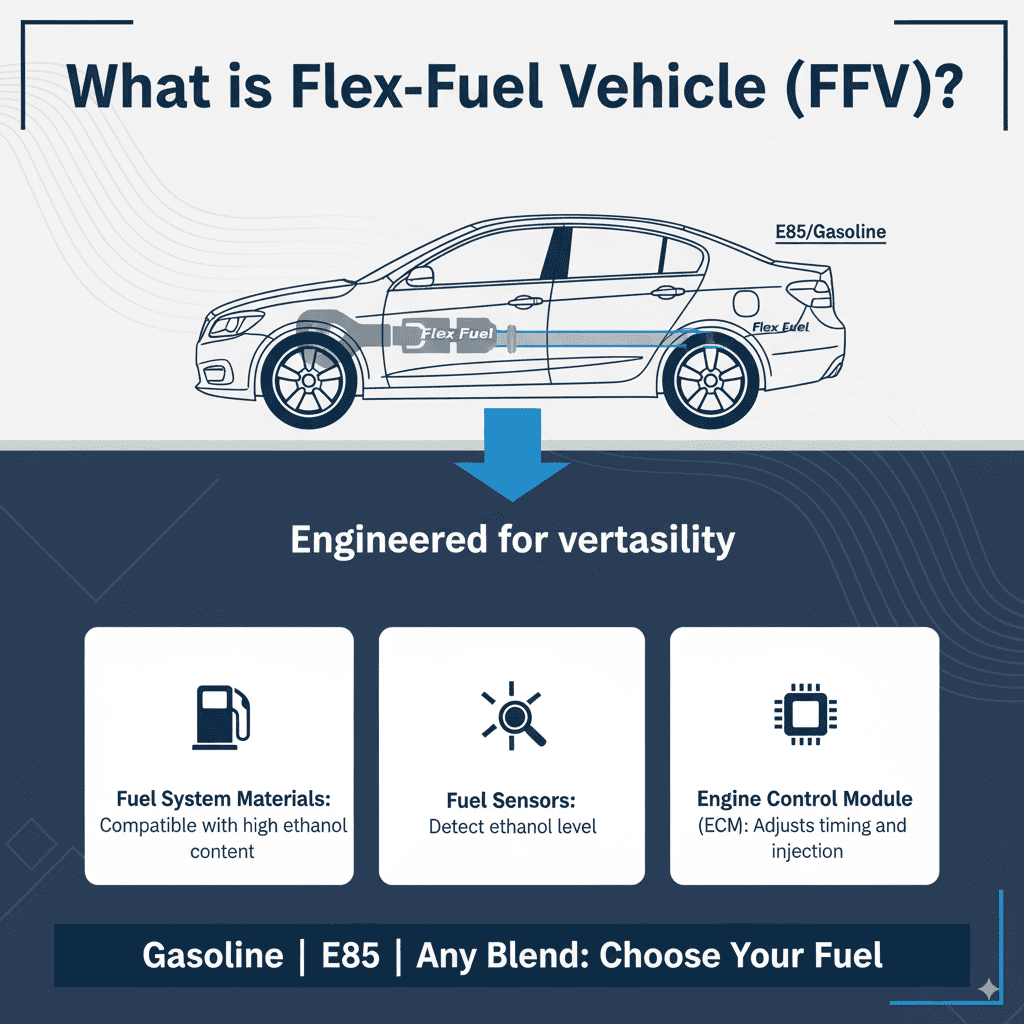
A Flex-Fuel Vehicle, often called an FFV, is the star of the E85 show. These cars are specifically engineered by the manufacturer to run on gasoline, E85, or any blend of the two. Think of them as having a bit of hybrid flexibility built right in!
How do they do it? FFVs have components that are designed to be compatible with the higher ethanol content of E85. This includes things like:
- Fuel system materials: Rubber, plastic, and metal parts in the fuel lines, seals, and fuel tank are made from materials that won’t degrade or corrode when exposed to ethanol.
- Fuel sensors: Special sensors can detect the ethanol content in the fuel and let the car’s computer know what’s being used.
- Engine control module (ECM): The car’s computer can adjust ignition timing and fuel injection based on the detected ethanol level to optimize performance and prevent damage.
You can usually tell if your car is a Flex-Fuel Vehicle by looking for a badge on the back of the car that says “Flex Fuel” or by checking the label inside your fuel filler door. It will typically list the compatible fuel types, including options beyond regular gasoline.
What Happens If I Put E85 Fuel in My Non-Flex-Fuel Car?
This is the million-dollar question, and the answer isn’t pretty. If you mistakenly fill up your regular gasoline car with E85, you’re likely going down a path of potential damage and performance issues. Standard vehicles simply aren’t built to handle that much ethanol.
Here’s a breakdown of what can happen:
1. Fuel System Damage
This is the most significant concern. The higher ethanol content in E85 is much more corrosive than the E10 found in standard gasoline.
- Corrosion of rubber and plastic parts: Many cars‘ fuel lines, seals, gaskets, and O-rings are made from materials that can be degraded by ethanol. Over time, E85 can cause these parts to swell, crack, or break down. This can lead to fuel leaks, which are not only messy but also a serious fire hazard.
- Fuel pump and injector issues: Ethanol can also damage the internal components of your fuel pump and fuel injectors. This can lead to malfunctions, reduced fuel delivery, and eventually, costly replacements.
- Fuel tank degradation: While less common, some older fuel tanks or those made from incompatible materials could also suffer from ethanol exposure, leading to leaks or contamination of the fuel.
2. Poor Engine Performance
Besides the potential for damage, your car’s performance will likely take a nosedive.
- Engine misfires: E85 has a different energy density than gasoline. Your car’s fuel system is calibrated to deliver a precise amount of fuel and air mixture for gasoline. With E85, the engine might not get enough fuel, leading to incomplete combustion and misfires.
- Reduced horsepower and acceleration: You’ll probably notice your car feels sluggish. It won’t have the same power or responsiveness you’re used to.
- Check Engine Light (CEL): The car’s computer will detect that something is wrong with the fuel mixture or emissions. This will almost certainly trigger the Check Engine Light, a universally understood sign that your car needs attention.
- Stalling: In severe cases, the engine might stall, especially at idle or when trying to accelerate.
3. Difficulty Starting
Ethanol has a higher boiling point than gasoline. This means it can be harder for the engine to vaporize and ignite, especially in colder temperatures. If you’ve put E85 in your car, you might find it struggles to start, or won’t start at all.
4. Fuel Contamination
Ethanol is hygroscopic, meaning it attracts and absorbs water. If E85 sits in your fuel tank for a long time, it can absorb moisture from the air. This water can then enter your fuel system, causing further corrosion and performance issues.
5. Potential for Very Expensive Repairs
The cumulative effect of these issues can lead to a repair bill that makes your eyes water. Replacing fuel lines, seals, fuel pumps, injectors, and potentially even dealing with internal engine issues can add up very quickly. It’s much cheaper to be careful about your fuel selection!
How Much E85 Did You Put In? The Severity Matters.
It’s important to note that the severity of the problem often depends on how much E85 you put into your tank and how far you drive it.
- Just a splash or small mix: If you only put a gallon or two of E85 into a nearly full tank of regular gasoline, the overall percentage of ethanol might be low enough that your car can tolerate it without immediate, catastrophic damage. You’ll likely experience some reduced performance or the Check Engine Light coming on. Driving it might cause minor stress, but major damage is less probable.
- Half tank or more: If you fill up a significant portion of your tank with E85, the risk of serious and immediate damage increases dramatically. The corrosive effects and improper fuel-air mixture will put immense strain on your engine and fuel system.
- Driving extensively on E85: The longer you drive a non-compatible car on E85, the more time the ethanol has to wreak havoc on your fuel system materials. This is where the most serious and expensive damage is likely to occur.
What to Do If You Accidentally Put E85 in Your Car
Don’t panic! If you realize your mistake right after fueling or shortly after, here’s a sensible plan of action.
Step 1: Stop Driving Immediately!
As soon as you realize what you’ve done, pull over safely and turn off the engine. The less the engine runs on the wrong fuel, the better. Continuing to drive will only increase the potential for damage.
Step 2: Do Not Start The Engine Again (If Possible)
If you haven’t driven yet, or only a very short distance, do not start the engine. The fuel may still be sitting in the tank and hasn’t yet circulated through the fuel lines and into the engine components.
Step 3: Get Your Fuel Tank Drained
This is the most crucial step. You need to have the E85 removed from your fuel tank. You have a few options:
- Call roadside assistance: If you have a roadside assistance plan (like AAA), they can often tow your vehicle to a repair shop.
- Contact a tow truck: Arrange for a tow truck to take your car to a trusted mechanic.
- Professional fuel system cleaning: A mechanic will likely use specialized equipment to drain the E85 from your tank. They may also need to flush the fuel lines and replace any components that show signs of degradation.
Important Note on DIY Draining: While some might be tempted to drain it themselves, it’s generally not recommended for beginner DIYers due to safety risks (flammability of fuel) and the need for specialized tools. It’s best to leave this to the professionals.
Step 4: Inspect and Repair Fuel System Components
After draining the tank, a mechanic should thoroughly inspect your fuel system. This includes:
- Checking fuel lines for swelling or cracking.
- Inspecting seals and gaskets for signs of damage.
- Testing the fuel pump and injectors for proper function.
- Looking for any signs of corrosion within the fuel tank itself.
Any damaged parts will need to be replaced. The mechanic might also suggest replacing certain rubber or plastic components in the fuel system proactively if there’s any doubt about their integrity, even if no obvious damage is visible yet.
Step 5: Refill with the Correct Fuel
Once the fuel system is drained, inspected, and repaired (if necessary), you can refill your tank with the correct, recommended gasoline for your vehicle. It’s a good idea to use a high-quality Top Tier™ gasoline if available, as these contain detergents that can help clean your fuel system.
Can My Car Safely Use a Mix of E85 and Regular Gas?
If you’ve accidentally put a small amount of E85 into a tank full of regular gasoline, your car might be okay, especially if it’s a Flex-Fuel Vehicle. However, for a non-flex-fuel vehicle, even a mix can be problematic, though less severe than a full tank of E85.
Here’s a simplified look at fuel blends and compatibility:
| Fuel Type | Ethanol Content | Typically Compatible With | Risk for Non-FFV |
|---|---|---|---|
| E0 (Pure Gasoline) | 0% | All gasoline cars | None |
| E10 (Most common) | Up to 10% | All gasoline cars | Minimal to none (approved by manufacturers) |
| E15 | 10% to 15% | Most 2001 and newer gasoline cars (check manual) | Potential for damage in older vehicles or those not rated for E15. |
| E85 | Up to 85% | Flex-Fuel Vehicles (FFVs) ONLY | High risk of severe engine and fuel system damage. |
For non-flex-fuel vehicles (cars not designed for E85), even a small percentage of E85 mixed with regular gasoline could potentially cause issues over time, such as increased wear on fuel system components. The car’s computer is not programmed to account for higher ethanol levels, which can lead to lean conditions (too much air, not enough fuel) and increased engine stress. This can result in the Check Engine Light illuminating or reduced overall engine efficiency.
If you’re unsure about your car’s compatibility with higher ethanol blends like E15, it’s always safest to stick with E10 or lower. Consult your vehicle’s owner’s manual for specific fuel recommendations. The U.S. Department of Energy provides a handy tool to find stations, but always double-check your car’s capabilities!
How to Avoid Putting the Wrong Fuel in Your Car
Preventing mistakes at the pump is all about awareness and a few simple habits:
- Know Your Car: The absolute first step is to know whether your car is a Flex-Fuel Vehicle or not. Check for a “Flex Fuel” badge on the car or look inside your fuel filler door for a label indicating compatible fuel types. If you’re unsure, consult your owner’s manual or the manufacturer’s website.
- Read the Pump Carefully: Gas pumps have multiple handles, often with different fuel types and octane ratings. E85 is usually on its own pump or a distinctly marked handle. Always double-check the label on the handle before you start pumping. Look for “E85” specifically. If you usually use “Regular” or “Unleaded,” ensure you’re selecting that.
- Pay Attention During Refueling: Don’t rush the process. Even if you’re a regular at a specific station, take a moment to confirm you’re selecting the correct fuel. Distractions can lead to costly errors.
- If You Have Multiple Cars: If you drive more than one vehicle, be extra cautious. Make sure you’re grabbing the right fuel for the specific car you’re driving that day.
- Ask for Help: If you’re at a station you don’t recognize or if the pump labels are confusing, don’t hesitate to ask an attendant for clarification. It’s better to ask than to make an expensive mistake.
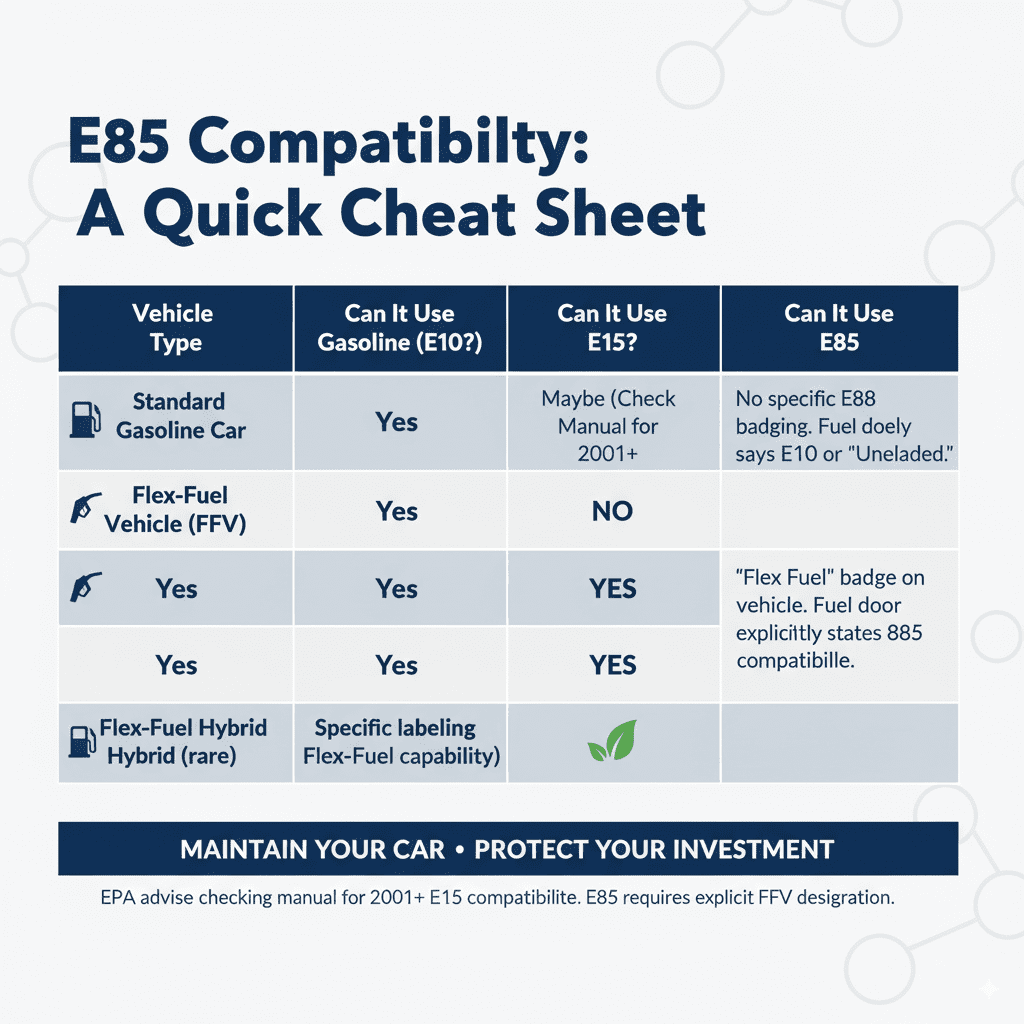
E85 Compatibility: A Quick Cheat Sheet
This table will help you quickly identify whether E85 and higher ethanol blends are likely compatible with your vehicle.
| Vehicle Type | Can It Use Regular Gasoline (E10)? | Can It Use E15? | Can It Use E85? | Key Signs to Look For |
|---|---|---|---|---|
| Standard Gasoline Car | Yes | Maybe (Check Manual for 2001+ models) | NO | No specific E85 badging. Fuel door likely says E10 or “Unleaded Gasoline”. |
| Flex-Fuel Vehicle (FFV) | Yes | Yes | YES | “Flex Fuel” badge on vehicle. Fuel door label will explicitly state compatibility with E85 or higher ethanol blends. |
| Flex-Fuel Hybrid (rare) | Yes | Yes | YES | Specific labeling indicating Flex-Fuel capability. |
The Environmental Protection Agency (EPA) has regulations regarding E15. Most vehicles made since 2001 are considered compatible with E15, but it’s always best to confirm with your owner’s manual. Anything higher than E15, particularly E85, requires explicit Flex-Fuel Vehicle (FFV) designation.
Frequently Asked Questions (FAQ)
Here are some common questions drivers have about E85 fuel:
Q1: Will my car explode if I put E85 in it?
A: No, your car won’t explode. The primary risks are significant damage to the fuel system and engine components over time, poor performance, and potentially stalling. It’s a serious problem, but not typically an immediate catastrophic event like an explosion.
Q2: Can I just mix a little E85 with regular gas to save money?
A: We don’t recommend it for non-flex-fuel vehicles. While a very small amount might not cause immediate harm, it can still put extra wear on your fuel system components. If your car isn’t designed for it, it’s best to stick to the recommended fuel. You risk more in repair costs than you’d save at the pump.
Q3: How can I find out if my car is a Flex-Fuel Vehicle?
A: Look for a “Flex Fuel” or “FFV” badge on the exterior of your car, typically on the back. Also, check the label inside your fuel filler door; it should list compatible fuel types, including E85 if your car can use it. Your owner’s manual or the manufacturer’s website are also reliable sources.