What Happens If You Hit a Cow With Your Car? Who Pays & What to Do
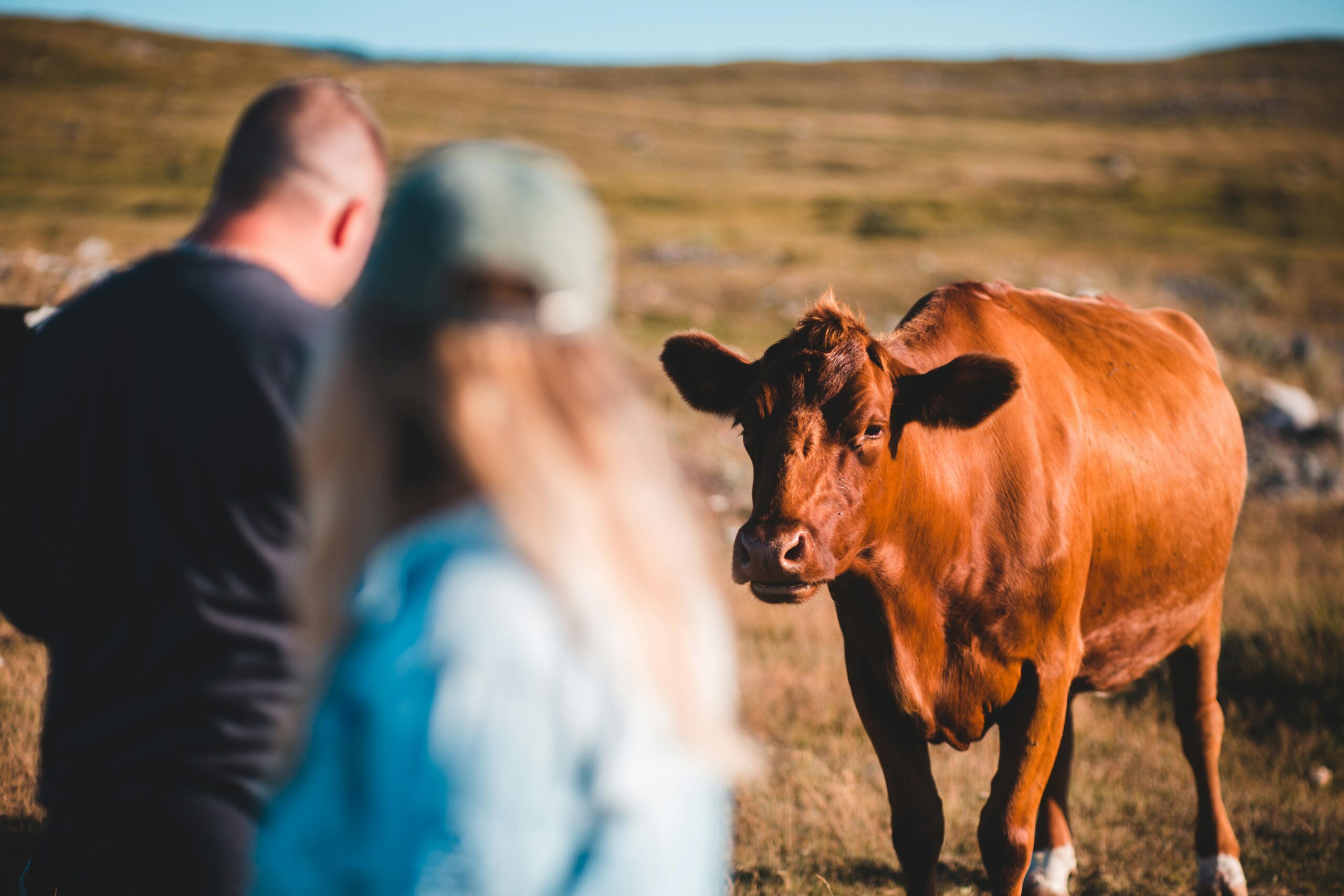
Hitting a cow with your car is usually a no-fault comprehensive insurance claim, not a collision claim — but liability can shift to you in an open-range state. A full-grown cow weighs 1,200 to 1,800 pounds, enough to total a vehicle and cause serious injury on impact. This guide covers the immediate steps to take, who’s liable where you live, and how to file the claim correctly.
Immediate Actions
Stay calm and check yourself and any passengers for injuries first — everything else can wait a few seconds. If anyone is hurt, call 911 immediately and describe the situation clearly so responders know to bring the right equipment for a large-animal collision.
📊 U.S. drivers faced roughly 1-in-139 odds of filing an animal-collision insurance claim during the 2025–2026 study period, with deer accounting for the majority of claims — livestock strikes are rarer but tend to cause far more vehicle damage per incident. — Source: State Farm Newsroom, 2026
Once safety is confirmed, work through these steps in order:
- Pull onto the shoulder if you can move safely: Get your vehicle out of the traffic lane and turn on your hazard lights right away.
- Check yourself and passengers for injuries: Look for pain, bleeding, or signs of shock before doing anything else.
- Call 911: Report the collision even if no one is hurt — in most states, hitting livestock on a public road must be reported.
- Do not approach or try to move the cow: An injured, 1,200-plus-pound animal can panic and kick without warning. Stay in or near your vehicle.
- Increase your visibility: Use hazard lights, interior lights, or road flares so other drivers can see you while you wait, especially at night.
- Wait for law enforcement: An officer’s report is usually required before your insurer will process a comprehensive claim.
Contacting Authorities
After confirming everyone’s safety, call 911 rather than a non-emergency line — dispatchers can route both police and, if needed, medical help immediately. Ask the dispatcher to notify animal control or the county sheriff as well, since they’re typically the ones equipped to handle a loose or injured cow safely.
The responding officer will file an accident report, which becomes the backbone of your insurance claim. If you’re unsure how the reporting process works or what information you’ll need to provide, our guide on how to file a police report for a car accident walks through it step by step.
Best Dash Cam Pick for Documenting a Collision

REDTIGER F7NP 4K Front & Rear Dash Cam
A dual front-and-rear dash cam automatically records the moments before and after a collision — footage that can back up your report if a claim gets disputed.
- Best for: Drivers who want crisp 4K footage of both directions in case a claim is disputed
- Why we picked it: Its low-light sensor captures clear footage at dawn and dusk — exactly when livestock collisions are most common
- Main drawback: Larger unit than minimalist dash cams; the rear camera install takes extra wiring time
Compare more dash cam options
 Option 1 70mai A810 Lite 4K Dash Cam
|
 Option 2 ROVE R2-4K Dual Dash Cam
|
 Option 3 COOAU Dual Dash Cam with GPS
|
As an Amazon Associate we earn from qualifying purchases.
Fence-In vs. Open Range: Who’s Actually Liable?
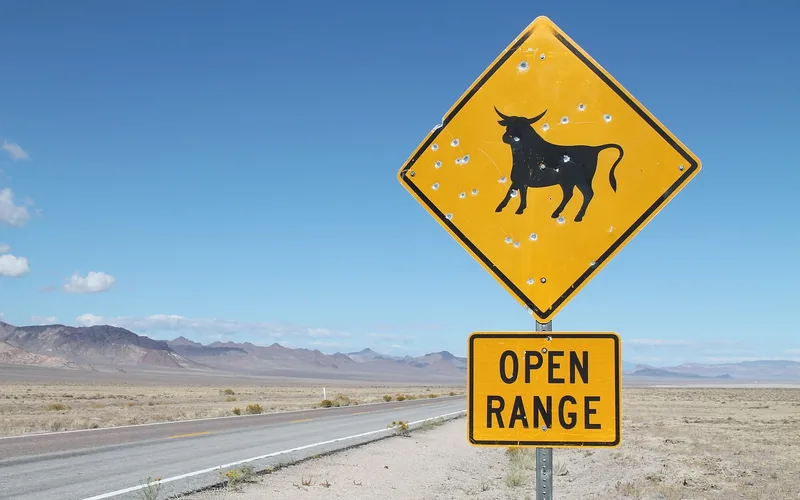
Liability for a cow-versus-car collision depends almost entirely on which fencing framework applies where the crash happened. Most U.S. states follow a fence-in (closed-range) rule: owners are legally required to contain their livestock, and if a cow escapes and causes a crash, the owner is often presumed negligent. Roughly a dozen western and midwestern states allow open range grazing instead, which flips the default — livestock can legally roam onto public roads, and drivers are expected to watch for them.
Open range doesn’t mean the owner is automatically off the hook, though. If the owner knew about a broken fence, let the same animals wander repeatedly, or ignored prior complaints, that can still support a negligence claim. And even in open-range counties, the rules can change by road type — Texas, for example, applies a statewide closed-range rule to U.S. and state highways under the Texas Agriculture Code, even in counties that are otherwise open range. Farm-to-market roads are typically excluded from that exception, so the county’s own status still controls there.
“If a driver hits a cow or other livestock on an open range, the driver is responsible for the damages to their own vehicle and any injuries — unless the owner is shown to have been negligent, such as failing to repair a known broken fence.”
📊 Animal-vehicle collisions killed 210 people nationwide in 2024 — more than double the 89 deaths recorded in 1975 — underscoring why liability and prevention both matter in these crashes. — Source: IIHS Fatality Facts, 2024
Because the rule genuinely changes state by state — and sometimes county by county — don’t assume you know the answer before checking. A quick call to your county clerk or sheriff’s office, or a search of your state’s agricultural extension office, can confirm whether the road you were on falls under open-range or fence-in rules.
Legal Responsibilities
Report the incident to the police as soon as you’re safe, regardless of who you think is at fault. Most states require a report whenever a crash causes injury or a meaningful amount of property damage, and the officer’s report becomes the primary evidence for your insurance claim — and for any negligence claim against the animal’s owner.
Cooperate with law enforcement fully: answer their questions honestly, provide your license and insurance information, and stay calm. Speculating about fault at the scene doesn’t help your claim — stick to the facts of what happened and let the report, your photos, and your insurer sort out liability afterward.
Insurance Procedures
Hitting a cow with your car falls under comprehensive coverage, not collision — insurers classify a direct animal strike as an “other than collision” event, the same category as hail damage or theft. If your policy only carries liability and collision coverage, without comprehensive, this type of damage typically isn’t covered at all. Comprehensive claims are usually treated as not-at-fault, which is different from a claim for what your policy covers for theft or other non-collision losses — worth understanding since both fall under the same part of your policy.
File A Claim
Call your insurance company as soon as possible and explain what happened. Give them your policy number, the police report number if you have one, and a clear, honest account of the collision. They’ll typically ask for photos of the scene and vehicle, plus any documents from responding officers. Following their instructions closely helps process your claim faster and avoids delays caused by missing information. Understanding your deductible ahead of time also helps you know what you’ll actually pay out of pocket.
Document The Scene
Take photos of the scene before anything is moved or cleared. Capture the damage to your vehicle from multiple angles, plus the cow, the road surface, skid marks, and any nearby fencing or warning signs. Write down the location and time, and get contact information from any witnesses — their statements can strengthen your claim if fault is disputed later. This documentation is what separates a smooth comprehensive claim from a drawn-out one.
Does Swerving to Avoid a Cow Count Against You?
Yes — and this is a distinction most drivers miss. If you hit the cow directly, that’s typically a comprehensive claim. But if you swerve to avoid the animal and instead hit a guardrail, a ditch, a tree, or another vehicle, that damage is classified as a collision claim instead. Collision claims usually carry a different deductible than comprehensive, and depending on the circumstances, an insurer may treat the swerve-and-crash scenario differently for fault purposes than a direct animal strike. Safety experts generally advise against swerving for this exact reason: braking firmly and steering straight is safer for you and produces a cleaner, simpler claim than losing control while avoiding the animal.
📊 A single comprehensive claim, like an animal collision, typically raises premiums only modestly — often in the single digits to low double-digit percentage range — compared with an at-fault collision claim, which can push premiums up 40% or more. — Source: CarGurus Research, 2026
Owner Liability
Whether the cow’s owner owes you anything depends on the same fence-in versus open-range framework covered above, plus whether the owner was negligent. In a fence-in state, an escaped cow usually points to owner negligence by default. In an open-range state, you generally have to show the owner knew about a hazard — a broken fence, a habit of animals wandering onto that exact road, or an ignored complaint — before their liability insurance is likely to pay.
Identify The Owner
Finding the cow’s owner is vital if you plan to pursue a claim against them. Look for ear tags, brands, or other markings — cattle in ranching areas are almost always tagged or branded for exactly this reason. Ask nearby farms, ranches, or the county sheriff’s office, who often know which local herds have a history of getting loose. Identifying the owner is also important for the animal’s sake, since it lets rescuers get it proper care faster.
Discuss Damages
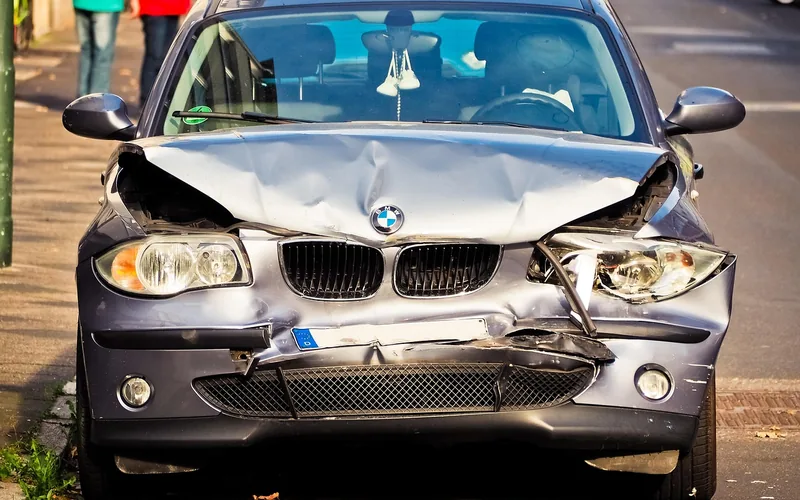
A collision with a full-grown cow can cause serious vehicle damage — a bent frame, a shattered windshield, or damage severe enough that the insurer declares the car a total loss. If your car is totaled, your insurer will base the payout on its pre-crash value; our guide on how to determine the actual cash value of your car explains how that number gets calculated. Livestock itself can also be worth a meaningful amount, particularly registered breeding stock, but in most states the driver isn’t automatically on the hook for the animal’s value unless a court finds the driver at fault.
Open-Range vs. Fence-In States at a Glance
| Legal Question | Open-Range States | Fence-In (Closed-Range) States |
|---|---|---|
| Who’s usually liable? | The driver, unless owner negligence is proven | The owner, if the animal escaped a required fence |
| Where it applies | ~13 mostly western/midwestern states, often by county | Most other U.S. states, as the default rule |
| State/U.S. highways | Often closed-range by statute, even in open-range counties | Closed-range rule applies as normal |
| Farm-to-market/rural roads | Frequently still open-range (owner usually not liable) | Owner liable if the animal escaped containment |
| Your best move | File a comprehensive claim; document the scene thoroughly | File a comprehensive claim and pursue the owner’s liability coverage |
Safety Measures
Once you’ve stopped, make sure your car is in as safe a spot as the road allows and keep your hazard lights on. Check for fluid leaks, sparks, or anything that suggests the vehicle isn’t safe to drive — if it isn’t, call for a tow truck rather than risk driving it further.
Get checked by a doctor even if you feel fine. Adrenaline can mask real injuries, especially soft-tissue and whiplash-type injuries that show up hours later. If you feel any pain at the scene, don’t wait — ask the responding paramedics to check you out.
Preventive Strategies
Driving cautiously through rural areas is the single best way to prevent these crashes. Watch for open range, livestock crossing, or cattle guard signage, and treat them as seriously as a deer-crossing sign — they’re posted because animals are known to cross there. Keep your speed down on unfamiliar rural roads, especially at dawn and dusk, when livestock tend to be most active and hardest to see.
At night, use your high beams whenever there’s no oncoming traffic — they light up eyes and shapes on the shoulder well before your low beams would. Increase your following distance on rural roads so you have room to brake firmly if an animal steps out, and avoid distractions like phone use entirely in areas known for livestock or wildlife.
Emotional Support
Hitting a cow with your car can cause real emotional aftershock — guilt and shock over the animal’s injury are common, even when the crash genuinely wasn’t your fault. Talking about it with friends or family can help, and there’s nothing unusual about needing that conversation after a crash involving a living animal.
If talking to people close to you isn’t enough, professional counseling is a reasonable next step. A counselor can help you work through the stress and anxiety that sometimes follow this kind of accident, and there’s no reason to treat that as a last resort rather than a normal part of recovering.
Common Mistakes to Avoid After Hitting a Cow
- Assuming you’re automatically not at fault: Fault depends on whether you’re in an open-range or fence-in state, and on whether the owner was negligent — it’s never automatic.
- Skipping the police report because “it’s just a cow”: Most states still require a report, and without one your comprehensive claim can be much harder to prove.
- Approaching or trying to move the animal: A panicked, injured 1,200-plus-pound cow can seriously hurt you. Leave it to animal control or the owner.
- Waiting to photograph the scene: Insurers and, if it comes to it, a court want to see the road, the animal, skid marks, and nearby signage before anything is moved.
- Assuming the owner will automatically pay: In many states, the burden is on you to prove the owner was negligent — simply owning the cow isn’t enough on its own.
Frequently Asked Questions
Does Car Insurance Cover Hitting A Cow?
Yes, if your policy includes comprehensive coverage. Insurers treat a direct animal strike as an “other than collision” event, the same category as hail or theft. If you only carry liability and collision coverage without comprehensive, this type of damage usually isn’t covered.
What Should You Do Immediately After Hitting A Cow?
Stop safely, turn on your hazard lights, and check yourself and passengers for injuries. Call 911 to report the crash and request animal control. Don’t approach or try to move the cow, and wait for law enforcement to arrive and file a report before you leave.
Who Is Liable If You Hit A Cow On An Open-Range Road?
In most open-range states, the driver is responsible for their own vehicle damage unless they can show the owner was negligent — for example, by ignoring a known broken fence. Roughly a dozen western and midwestern states follow open-range rules, though the exact roads it applies to can vary by county.
Will You Have To Pay For The Cow?
Usually not, unless a court finds you were driving negligently — speeding, distracted, or ignoring posted livestock warnings, for instance. In most collisions where the animal wandered onto the road unexpectedly, the driver isn’t held financially responsible for the animal’s value.
Does Hitting A Cow Raise Your Insurance Rates?
Usually only slightly, since it’s a comprehensive claim rather than an at-fault collision. Many insurers treat animal strikes as not-at-fault events with a smaller premium impact than a typical at-fault accident, though the exact effect varies by insurer and state.
Do You Have To Call The Police If You Hit A Cow?
In most states, yes — hitting livestock on a public road is a reportable accident, similar to any other collision involving significant property damage. Reporting it also creates the official record your insurer will want before processing a comprehensive claim.
Is Hitting A Cow An At-Fault Accident?
Generally no. Most insurers treat a direct animal collision, including hitting a cow, as a not-at-fault event covered under comprehensive insurance. That changes if you swerved and hit another vehicle or object instead, which shifts the claim into collision coverage.
Conclusion
A collision with a cow can be serious for everyone involved, but knowing the sequence — safety first, then 911, then documentation — keeps the situation manageable. Whether you end up owing anything ultimately comes down to your state’s fence-in or open-range rules and whether the owner was negligent, so don’t assume you know the answer before checking.
Drive cautiously through rural and range areas, especially around dawn and dusk, and keep your comprehensive coverage current if you regularly travel roads where livestock roam.
Products related to this article
Sponsored / affiliate links. As an Amazon Associate I earn from qualifying purchases. I may earn additional commission from eligible campaigns.