What Happens If You Put Gas in Diesel: Urgent Dangers
Putting gasoline in a diesel engine is a serious mistake that can cause immediate engine damage, leading to expensive repairs. Diesel fuel acts as a lubricant for fuel system components, while gasoline is a solvent that dries them out. This difference causes friction, overheating, and eventual failure of the injection pump and injectors. Get it addressed immediately to minimize harm.
It’s a moment of panic many drivers dread: you pull up to the pump, distracted or in a rush, and accidentally fill your diesel vehicle with gasoline. It seems like a small mix-up, but the consequences can be significant and costly. Don’t worry if this has happened to you – we’re here to break down exactly what can happen and what you need to do, step-by-step. Understanding this issue is crucial for keeping your car running smoothly and avoiding surprise repair bills. Let’s dive in and learn how to handle this common, but serious, mistake.
Understanding the Core Difference: Diesel vs. Gasoline
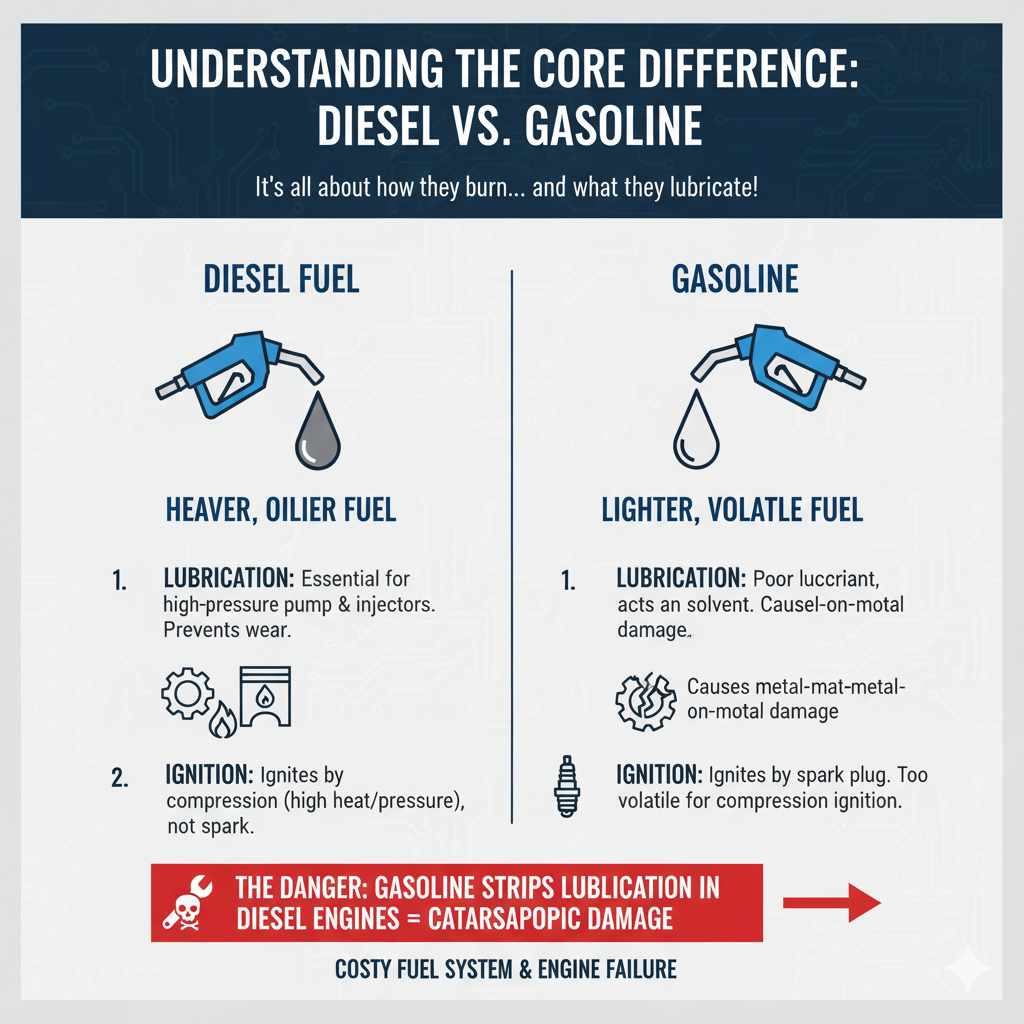
Before we talk about the problems, it’s helpful to know why they’re different. Diesel fuel and gasoline are not interchangeable. They have fundamental differences in how they are made, how they burn, and how they behave within an engine. This is the root cause of why putting the wrong fuel in your car is so damaging.
Diesel Fuel: The Lubricator and Igniter
Diesel fuel is heavier and oilier than gasoline. This oily nature has two key functions:
- Lubrication: Modern diesel engines rely heavily on high-pressure fuel injection systems. Diesel fuel itself provides the necessary lubrication for delicate parts like the fuel pump and injectors. Without this lubrication, these metal parts can grind against each other, leading to wear and tear.
- Ignition: In a diesel engine, fuel is ignited by compression, not a spark plug. Diesel fuel has a higher flash point, meaning it needs more heat and pressure to ignite. This property is essential for the compression-ignition process unique to diesel engines.
Gasoline: The Cleaner, Volatile Fuel
Gasoline, on the other hand, is a much lighter, more volatile fuel. It’s designed to be easily vaporized and ignited by a spark plug in gasoline engines. Because of its lighter composition, gasoline has very little to no lubricating properties. In fact, it can act as a solvent, stripping away any protective lubricating film.
What Happens When Gasoline Enters a Diesel Engine?
So, what’s the immediate impact when gasoline mixes with diesel in your tank and begins to flow through the engine? The problems start almost instantly because the fuel system is starved of its essential lubricant and fed a component that can degrade seals and other parts.
1. Lubrication Failure and Component Damage
This is the most critical and immediate danger. As mentioned, diesel fuel lubricates the high-pressure fuel pump and the injectors. When gasoline replaces diesel, it washes away this protective oil film. Here’s what happens:
- Fuel Pump Damage: The fuel pump, responsible for delivering fuel from the tank to the engine, has many precision-machined metal parts. Without the lubricating properties of diesel, these parts will experience increased friction, heat, and eventually, catastrophic failure.
- Injector Damage: Diesel injectors spray fuel into the combustion chamber at extremely high pressures. These are also precision components that require lubrication. Gasoline will dry them out, causing wear, sticking, or complete failure.
2. Deterioration of Fuel System Seals
Gasoline is a solvent. Many seals and O-rings within the fuel system of a diesel vehicle are made from materials that are resistant to diesel fuel but can be damaged by gasoline. Exposure to gasoline can cause these seals to:
- Harden
- Shrink
- Become brittle
- Degrade and leak
This can lead to fuel leaks, reduced fuel pressure, and further contamination of sensitive components.
3. Ignition Issues and Engine Performance Problems
Diesel engines rely on compression ignition. Gasoline has a much lower flash point and is designed for spark ignition. When gasoline is present:
- Reduced Lubricity Leads to Low Pressure: The compromised fuel pump and injectors can’t maintain the necessary fuel pressure.
- Incorrect Combustion: The fuel-air mixture won’t ignite properly as it would with diesel. The engine may run rough, stumble, hesitate, or simply refuse to start.
- Knocking and Pinging: If the engine does run with a significant amount of gasoline, the different combustion characteristics can lead to abnormal noises like knocking or pinging.
4. Contamination of the Entire Fuel System
Once gasoline enters the system, it doesn’t just stay in the tank. It travels through the fuel lines, fuel filter, fuel pump, and injectors. If the vehicle is driven, even a short distance, this contamination spreads throughout the entire high-pressure fuel system. Cleaning a contaminated system becomes a much larger and more complex task.
The Immediate Steps: What to Do RIGHT NOW
If you realize you’ve put gasoline in your diesel car, stop driving immediately. Continuing to drive, even a short distance, can significantly increase the damage and the cost of repairs. The absolute best thing you can do is prevent the contaminated fuel from circulating through the engine.
- Do NOT Start the Engine (If it’s not running already): If you caught your mistake right after fueling and haven’t started the car yet, your job is much easier. Resist the urge to “just try it.”
- Do NOT Turn On the Ignition (If it’s not running already): Even just turning the key to the “on” position often primes the fuel pump, sending the contaminated fuel into the system.
- Call for a Tow Truck: The safest and most recommended action is to have your vehicle towed directly to a qualified mechanic or a diesel specialist. Do not attempt to drive it.
If you’ve already driven the car, you need to have it towed to a mechanic as well. The extent of the damage increases with every mile driven.
The Repair Process: Draining and Cleaning
Once your vehicle is at the mechanic, they will need to perform a series of steps to rectify the situation. The exact procedure can vary depending on the amount of gasoline and how far the vehicle was driven, but generally, it involves:
1. Draining the Fuel Tank
The first and most crucial step is to completely drain the fuel tank. This removes the mixture of gasoline and diesel. Professionals will have specialized equipment to do this without causing further contamination.
2. Flushing the Fuel Lines
After the tank is drained, the fuel lines connecting the tank to the engine also need to be flushed. This ensures any residual gasoline is removed from the entire pathway.
3. Draining and Inspecting the Fuel Filter
The fuel filter catches impurities. It will likely be contaminated with the fuel mixture and will need to be replaced. The mechanic will drain it and inspect it for damage or debris.
4. Cleaning or Replacing Fuel Pump and Injectors
This is where the costs can escalate. Depending on the damage, the fuel pump and injectors may need to be:
- Cleaned: In some cases, if caught very early and the contamination was minimal, a professional cleaning might be possible.
- Replaced: More commonly, especially if the car was driven, the fuel pump and injectors will have suffered damage due to lack of lubrication and will need to be replaced. These are expensive components.
5. Flushing High-Pressure Fuel System Components
The entire high-pressure fuel system needs to be thoroughly flushed to ensure no traces of gasoline remain that could cause future issues or damage new components.
6. Refilling with Proper Diesel Fuel (and Additives)
Once everything is clean and reassembled, the tank will be refilled with the correct diesel fuel. Sometimes, mechanics will add an additive designed to help lubricate the system after a contamination event, especially if there’s any concern about residual dryness.
7. Testing the System
Finally, the engine will be started and tested to ensure it runs smoothly and all systems are functioning correctly. Diagnostic tools will be used to check for any error codes that might indicate ongoing issues.
Cost of Mistakes: A Look at the Numbers
The financial impact of putting gasoline in a diesel engine can be substantial. It’s not a minor inconvenience; it’s often a major repair. The cost depends heavily on which parts are damaged and need replacement.
Here’s a general breakdown of potential costs:
| Component/Service | Estimated Cost Range (USD) |
|---|---|
| Fuel Tank Draining & Disposal | $150 – $400 |
| Fuel Filter Replacement | $100 – $300 |
| Fuel Pump Replacement | $800 – $2,500+ |
| Injector Replacement (each) | $300 – $1,000+ |
| Labor (Draining, Flushing, Replacing Parts) | $500 – $2,000+ |
| Total Estimated Repair Costs | $1,850 – $6,200+ |
These are estimates, and actual costs can be higher depending on the make and model of your vehicle, as well as your geographic location. For instance, luxury diesel vehicles or heavy-duty trucks can incur significantly higher repair bills. This highlights the importance of preventing the mistake in the first place. You can find more information on diesel system maintenance and common issues on resources like the U.S. Department of Energy’s Energy Saver website, which offers insights into fuel types and vehicle efficiency.
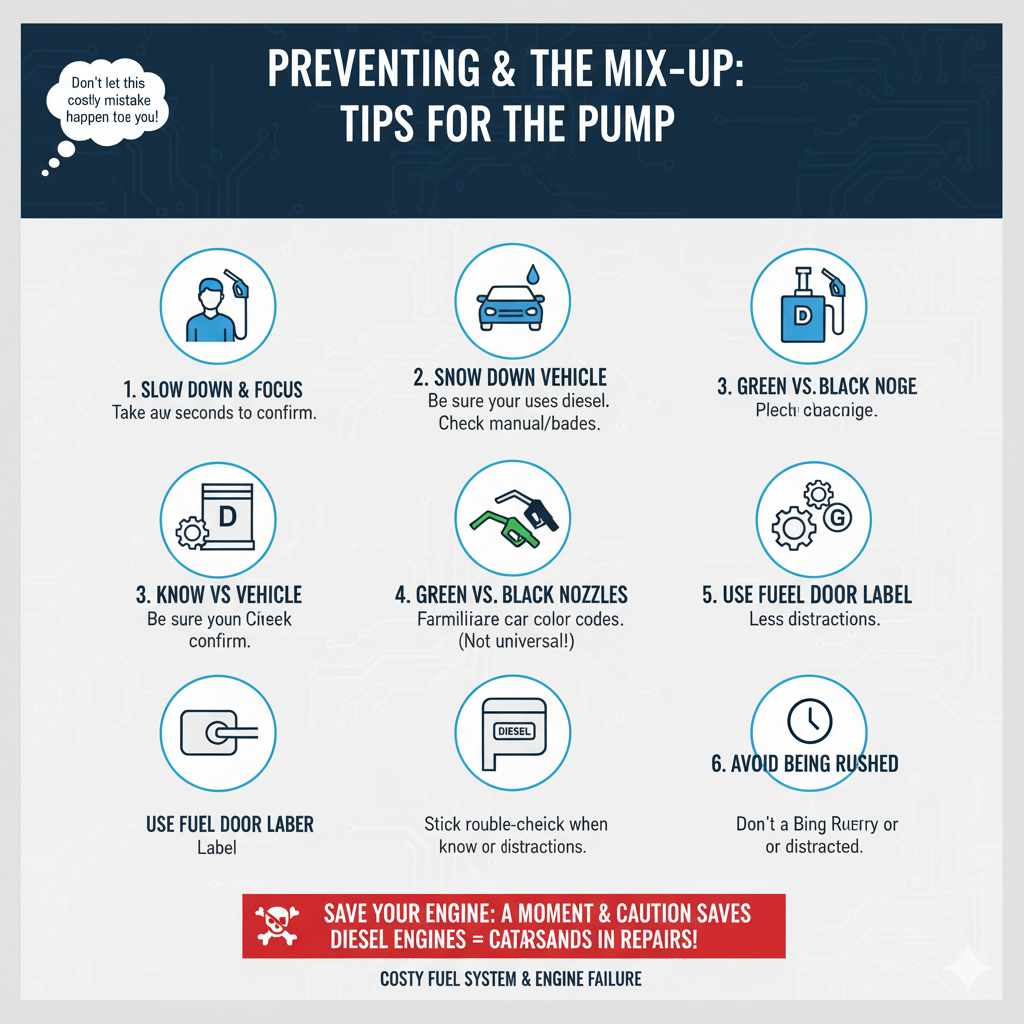
Preventing the Mix-Up: Tips for the Pump
The best defense is a good offense! Preventing this mistake is far easier and cheaper than fixing the damage. Here are a few simple habits that can save you a lot of trouble:
- Slow Down and Focus: Take a deep breath and pay attention when you’re at the gas station. It only takes a few extra seconds to confirm you’re at the right pump and selecting the right fuel.
- Know Your Vehicle: Be certain your car is a diesel. Many vehicles look similar, but only diesel models require diesel fuel. Check your owner’s manual or look for diesel badges on the vehicle.
- Green vs. Black Nozzles: In many regions, diesel pumps have green handles or nozzles, while gasoline pumps are black or other colors. Familiarize yourself with the color coding at your usual stations. However, note that this is not universal.
- Use Your Car’s Fuel Door Label: Most diesel vehicles have a clear label on or around the fuel filler door indicating “Diesel Only” or a specific diesel symbol. Always double-check this.
- Fill Up at Familiar Stations: If you’re less familiar with a particular gas station, be extra vigilant. Sticking to places you know can reduce the novelty and potential for distraction.
- Fill Up When Not Rushed: Avoid filling up when you’re in a hurry, tired, or dealing with distractions like phone calls.
Frequently Asked Questions (FAQ)
Q1: I only put a little bit of gas in my diesel tank. Is it okay?
Even a small amount of gasoline can be harmful. While putting in a gallon or two might not cause immediate catastrophic failure, it still contaminates the fuel and reduces its lubricating properties. It’s best to treat any amount of gasoline as a serious issue and have the tank drained to avoid potential long-term damage to the fuel system components.
Q2: My car stalled after I put gas in it. What do I do?
If your car stalled, it’s likely that the engine has already ingested some of the contaminated fuel. Your immediate action should be to not try restarting it. Call for a tow truck to take it to a diesel mechanic. Driving or attempting to restart could worsen the damage to the fuel pump and injectors.
Q3: Can I just add a diesel additive to fix it?
No, standard diesel additives are designed to improve diesel fuel quality, lubricity, or cetane rating. They cannot counteract the damaging effects of gasoline, which acts as a solvent and lacks necessary lubrication. The only effective fix is to drain the contaminated fuel and clean the system.
Q4: How long does it take to fix a car that had gasoline put in it?
The repair process typically takes anywhere from a few hours to a full day, depending on the complexity and the mechanic’s workload. If parts need to be ordered, it could take longer. A qualified diesel mechanic is your best bet for diagnosis and repair, ensuring thoroughness. You can find certified diesel mechanics through organizations like the DieselNet directory for service providers.
Q5: What if I drive my diesel car with gasoline in it a long distance?
Driving a diesel car with gasoline in the tank for even a short distance significantly increases the likelihood of severe damage. The fuel pump and injectors will be starved of lubrication, leading to overheating and wear. This almost always results in needing to replace these expensive components. The longer you drive, the more extensive the damage and the higher the repair bill will be.
Q6: Is there any difference in damage if it’s a newer vs. older diesel engine?
Modern diesel engines, especially those with common rail injection systems, operate at extremely high pressures and have very tight tolerances. These systems are particularly sensitive to fuel quality and lubrication. Therefore, newer diesel engines may be even more susceptible to rapid and severe damage from gasoline contamination compared to older, less sophisticated diesel engines. However, all diesel engines will suffer ill effects.
Conclusion
Mistakes happen, and putting gasoline in a diesel vehicle is definitely a high-stakes one. The key takeaway is that diesel fuel and gasoline are fundamentally different, and their incompatibility can lead to serious, costly damage to your engine’s fuel system due to a lack of lubrication and the solvent nature of gasoline. If you’ve made this error, remember our advice: stop driving immediately, do not attempt to start the engine, and call for a tow.
Prompt action by a professional diesel mechanic is your best bet to minimize the damage and get your vehicle back on the road safely and reliably. By understanding the risks and practicing simple preventative measures at the pump, you can avoid this common but expensive problem and keep your diesel vehicle running strong for years to come.