What Happens To Your Body After Car Accident: Proven Relief
After a car accident, your body can experience a range of immediate and delayed symptoms due to the forces involved. Understanding these effects and seeking prompt medical attention is crucial for recovery and long-term well-being. Proven relief often involves rest, proper diagnosis, and targeted treatment.
Getting into a car accident can be a jarring and scary experience. Even a seemingly minor fender-bender can have significant effects on your body that you might not feel right away. It’s not uncommon to feel okay immediately after a crash, only to experience pain and discomfort later. This is because the sudden force of impact can jolt your body in ways that have delayed reactions. Wouldn’t it be helpful to know exactly what’s happening inside and how to find relief? This guide will walk you through the common physical responses to a car accident and how you can start feeling better.
Understanding Your Body’s Response to a Car Accident
When your car is in a collision, your body is subjected to rapid acceleration and deceleration forces. This can cause your soft tissues, joints, and even your internal organs to be stretched, compressed, or impacted. The severity of these forces, along with factors like your age, physical condition, and how you were positioned in the vehicle, all play a role in what happens to your body.
Think of it like this: your body is designed to move smoothly. A car accident is like hitting a sudden, unexpected wall. Your tissues, especially muscles and ligaments, are elastic, but there’s a limit to how much they can stretch or twist before they get injured. This is why whiplash, a common injury, occurs – your neck snaps forward and then backward, straining the muscles and ligaments.
The Immediate Aftermath: What You Might Feel
Right after an accident, your body releases adrenaline, which is a natural response to stress. This “fight or flight” hormone can mask pain and make you feel surprisingly alert, even if you’ve sustained injuries. You might notice things like:
- Aches and pains that seem minor at first.
- Stiffness in your neck, shoulders, or back.
- Headaches.
- Nausea or dizziness.
- Bruises or cuts.
It’s important to remember that the absence of immediate severe pain doesn’t mean you’re unharmed. Some injuries, like concussions or torn ligaments, might not show symptoms for hours or even days.
Delayed Symptoms: The Hidden Injuries
The adrenaline rush eventually wears off, and that’s when the real symptoms can begin to surface. These delayed effects are often the most concerning because they can be easily overlooked initially. Common delayed symptoms include:
- Increased pain or stiffness.
- Difficulty moving certain body parts.
- Swelling.
- Fatigue.
- Memory or concentration problems (if a concussion is suspected).
- Emotional distress, such as anxiety or irritability.
These delayed symptoms are your body’s way of telling you that something isn’t right. Prompt medical evaluation is key to identifying and treating these issues before they worsen.
Common Injuries Sustained in Car Accidents
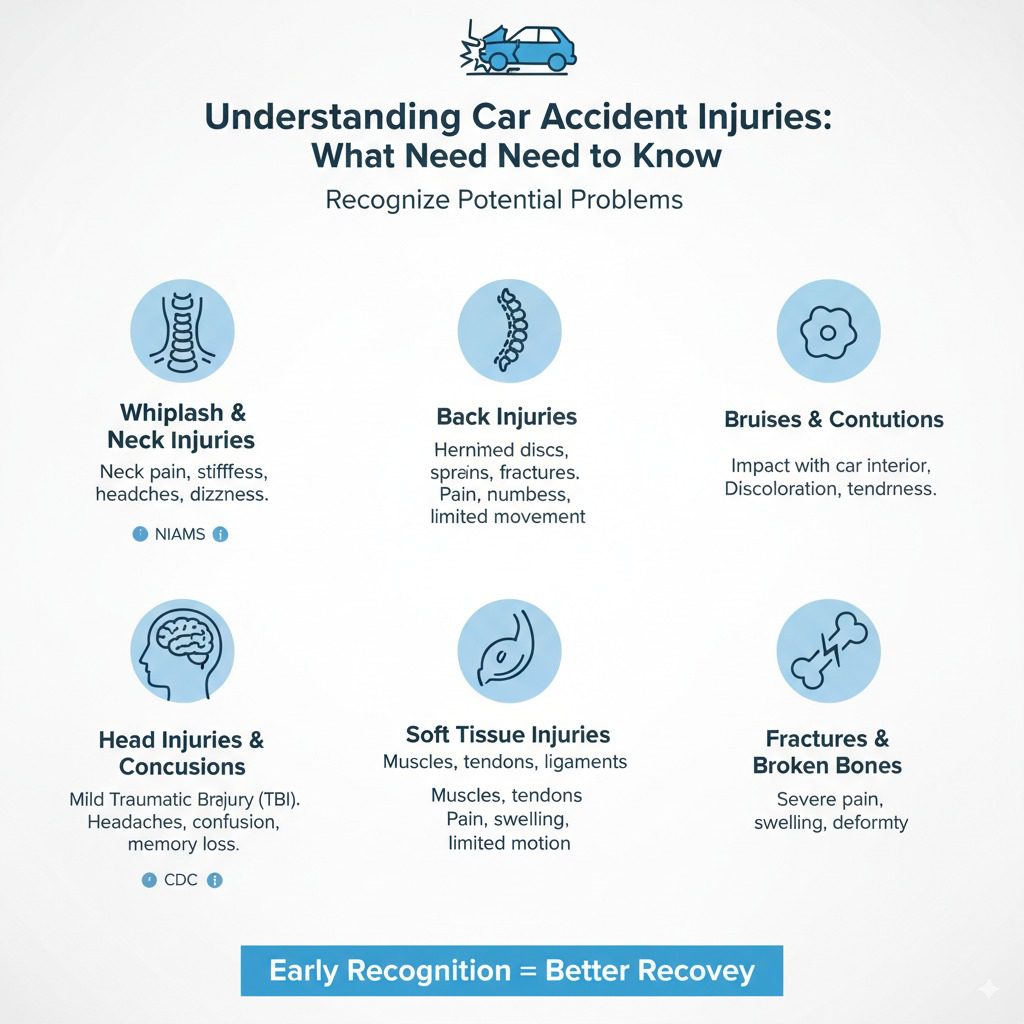
Car accidents can lead to a variety of injuries, ranging from minor strains to severe trauma. Understanding the most frequent types of injuries can help you recognize potential problems.
Whiplash and Neck Injuries
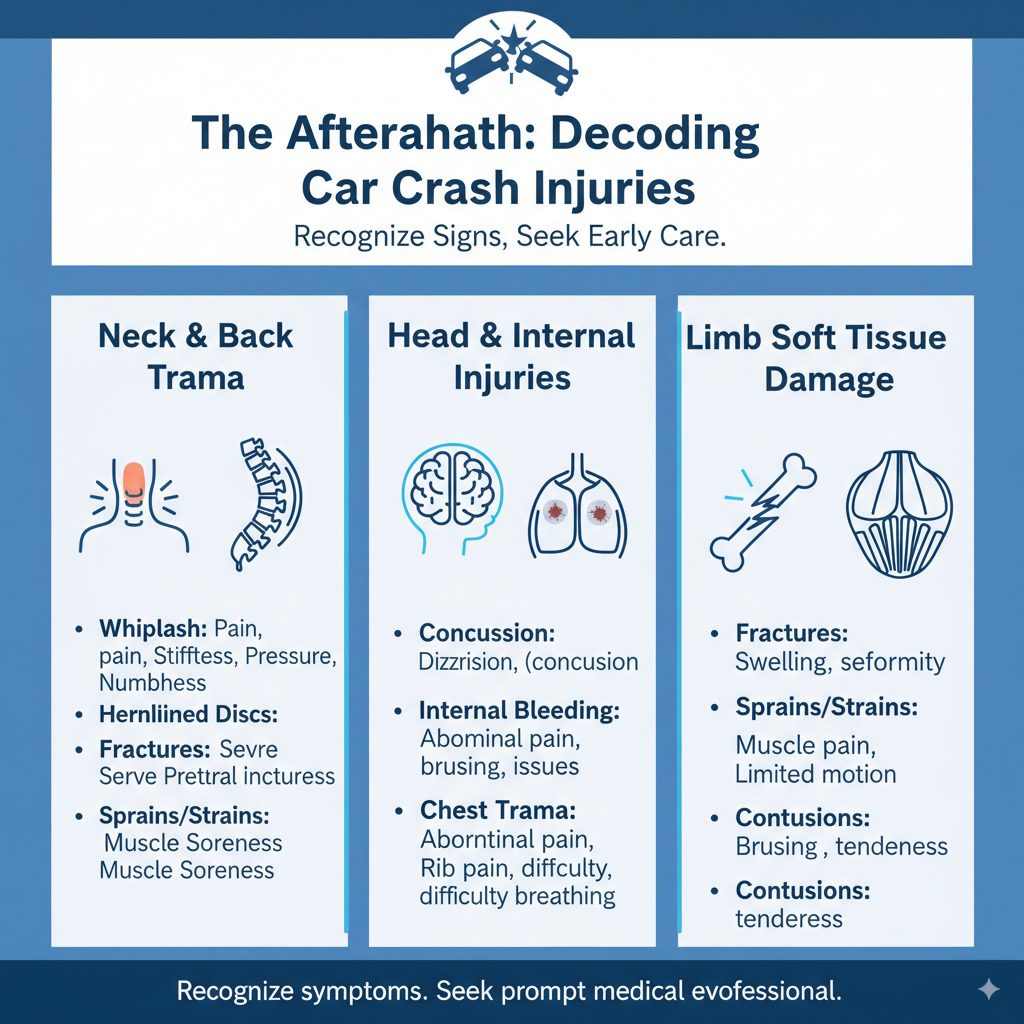
Whiplash is perhaps the most well-known injury from car accidents. It occurs when the head is suddenly forced backward and then forward (or vice versa), causing a sprain or strain to the neck’s muscles and ligaments. Symptoms can include neck pain, stiffness, headaches, dizziness, and pain that radiates into the shoulders or arms.
The cervical spine (your neck) is particularly vulnerable due to its flexibility and the stress it absorbs. Even low-speed collisions can impart enough force to cause whiplash. For more information on preventing and managing soft tissue injuries, resources like the National Institute of Arthritis and Musculoskeletal and Skin Diseases (NIAMS) offer valuable insights.
Back Injuries
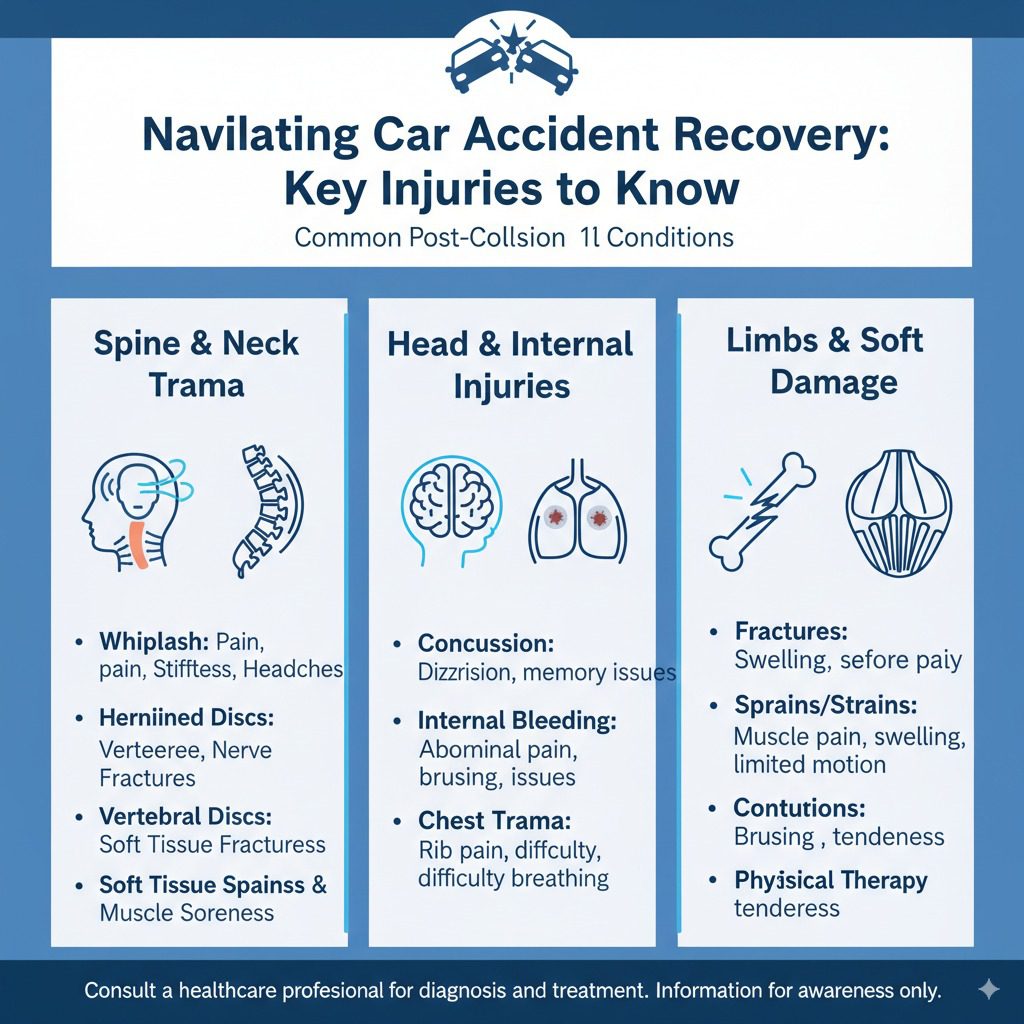
The spine is designed to protect vital nerves but is also susceptible to injury in a crash. Injuries can affect the vertebrae, discs, or the surrounding muscles and ligaments. Common back injuries include:
- Herniated Discs: The soft, jelly-like center of a spinal disc can bulge or rupture, pressing on nerves.
- Sprains and Strains: Overstretching or tearing of muscles and ligaments in the back.
- Fractures: Fractures of the vertebrae can occur in more severe impacts.
Pain, numbness, tingling, and restricted movement are common symptoms associated with back injuries.
Head Injuries and Concussions
Even with seatbelts and airbags, your head can still be jolted or make contact with surfaces during an accident, leading to head injuries. A concussion is a mild traumatic brain injury (TBI) caused by a blow or jolt to the head. Symptoms can vary widely and may include headaches, confusion, memory loss, dizziness, sensitivity to light or sound, and changes in mood or behavior.
It’s crucial to get a medical evaluation for any suspected head injury, as even mild concussions require proper management and rest to prevent long-term complications. The Centers for Disease Control and Prevention (CDC) provides extensive information on traumatic brain injuries.
Bruises and Contusions
Direct impact with the steering wheel, dashboard, seatbelt, or even the car’s interior can cause bruising. Bruises are caused by damage to small blood vessels under the skin, leading to discoloration and tenderness. While typically not serious, large or deep bruises can indicate more significant underlying tissue damage.
Soft Tissue Injuries
Soft tissue injuries encompass damage to muscles, tendons, and ligaments. These can occur anywhere in the body but are particularly common in the neck, back, shoulders, and knees. Symptoms often include pain, swelling, bruising, and limited range of motion. These injuries can take time to heal and may require physical therapy.
Fractures and Broken Bones
In more significant accidents, broken bones are a real risk. Impact with the car’s interior, like the dashboard or door, can lead to fractures in the legs, arms, ribs, or pelvis. Symptoms of a fracture include severe pain, swelling, deformity, inability to move the limb, and sometimes an open wound where the bone has broken through the skin.
The Importance of Seeking Medical Attention
After a car accident, your first priority should be your health. Even if you feel fine, a medical examination is essential for several reasons:
- Accurate Diagnosis: Doctors can identify injuries that aren’t immediately apparent, such as internal bleeding, concussions, or herniated discs.
- Documentation: Medical records serve as crucial documentation for insurance claims and legal proceedings.
- Preventing Complications: Early treatment can prevent minor injuries from becoming chronic or more severe problems.
- Peace of Mind: Knowing that you’ve been checked out by a professional can offer significant peace of mind.
When to Seek Immediate Care
Go to the emergency room or call emergency services immediately if you experience any of the following:
- Severe pain.
- Unconsciousness or difficulty staying awake.
- Suspected head injury with confusion, vomiting, or slurred speech.
- Any sign of a broken bone, especially if there’s deformity or the bone has punctured the skin.
- Significant bleeding that you cannot control.
- Difficulty breathing.
Consulting with Your Primary Care Physician or a Specialist
If your injuries are not life-threatening or are not immediately obvious, schedule an appointment with your primary care physician as soon as possible. They can perform a physical examination, order diagnostic tests like X-rays or MRIs if needed, and refer you to specialists such as orthopedic surgeons, neurologists, or physical therapists.
Proven Relief Strategies for Post-Accident Recovery
Recovering from injuries sustained in a car accident often involves a multi-faceted approach. The goal is to manage pain, restore function, and promote healing. Here are some proven relief strategies:
Rest and Activity Modification
Rest is crucial in the initial stages of recovery, allowing your body to begin the healing process. However, prolonged inactivity can lead to stiffness and muscle weakness. Your doctor will advise you on the appropriate balance between rest and gentle activity.
Listen to your body. Avoid activities that aggravate your pain. Gradually reintroduce movement as your symptoms improve. This might involve simply walking or performing gentle stretches, as recommended by your healthcare provider.
Pain Management Techniques
Managing pain effectively is vital for comfort and recovery. This can include:
- Over-the-Counter Pain Relievers: Non-prescription medications like ibuprofen (Advil, Motrin) or naproxen (Aleve) can help reduce pain and inflammation. Acetaminophen (Tylenol) can also be used for pain relief. Always follow dosage instructions on the packaging.
- Prescription Medications: For more severe pain, a doctor may prescribe stronger pain relievers or muscle relaxants.
-
Cold and Hot Therapy:
- Cold therapy (ice packs): Best for the first 24-72 hours after an injury to reduce swelling and numb pain. Apply for 15-20 minutes at a time, several times a day, with a cloth barrier between the ice and skin.
- Heat therapy (warm compresses, heating pads): Can be used after the initial inflammatory period to relax muscles, increase blood flow, and promote healing. Use on a low to medium setting for 15-20 minutes at a time.
Important Note: Always consult your doctor before taking any new medications or using heat/cold therapy extensively, especially if you have other health conditions.
Physical Therapy and Rehabilitation
Physical therapy is a cornerstone of recovery for many car accident injuries, particularly those involving the neck, back, and joints. A physical therapist will create a personalized plan that may include:
- Stretching Exercises: To improve flexibility and range of motion.
- Strengthening Exercises: To rebuild muscle strength and support injured areas.
- Manual Therapy: Hands-on techniques like massage or joint mobilization to relieve pain and improve mobility.
- Modalities: Such as ultrasound or electrical stimulation to reduce pain and inflammation.
Consistency is key with physical therapy. Follow your therapist’s instructions diligently for the best results.
Diagnostic Tools for Assessing Injury
To pinpoint the exact nature and extent of your injuries, doctors may utilize various diagnostic tools:
| Diagnostic Tool | Purpose | What it Detects |
|---|---|---|
| X-rays | Imaging bones | Fractures, dislocations, bone alignment issues |
| MRI (Magnetic Resonance Imaging) | Imaging soft tissues (muscles, ligaments, tendons, nerves, discs) | Torn ligaments, herniated discs, muscle tears, nerve compression |
| CT Scan (Computed Tomography) | Detailed cross-sectional imaging of bones and some soft tissues | Complex fractures, subtle bone abnormalities, certain internal injuries |
| Nerve Conduction Studies (NCS) / Electromyography (EMG) | Assessing nerve and muscle function | Nerve damage, muscle abnormalities, radiculopathy (pinched nerves) |
These tools help medical professionals make informed decisions about treatment plans.
Lifestyle Adjustments and Self-Care
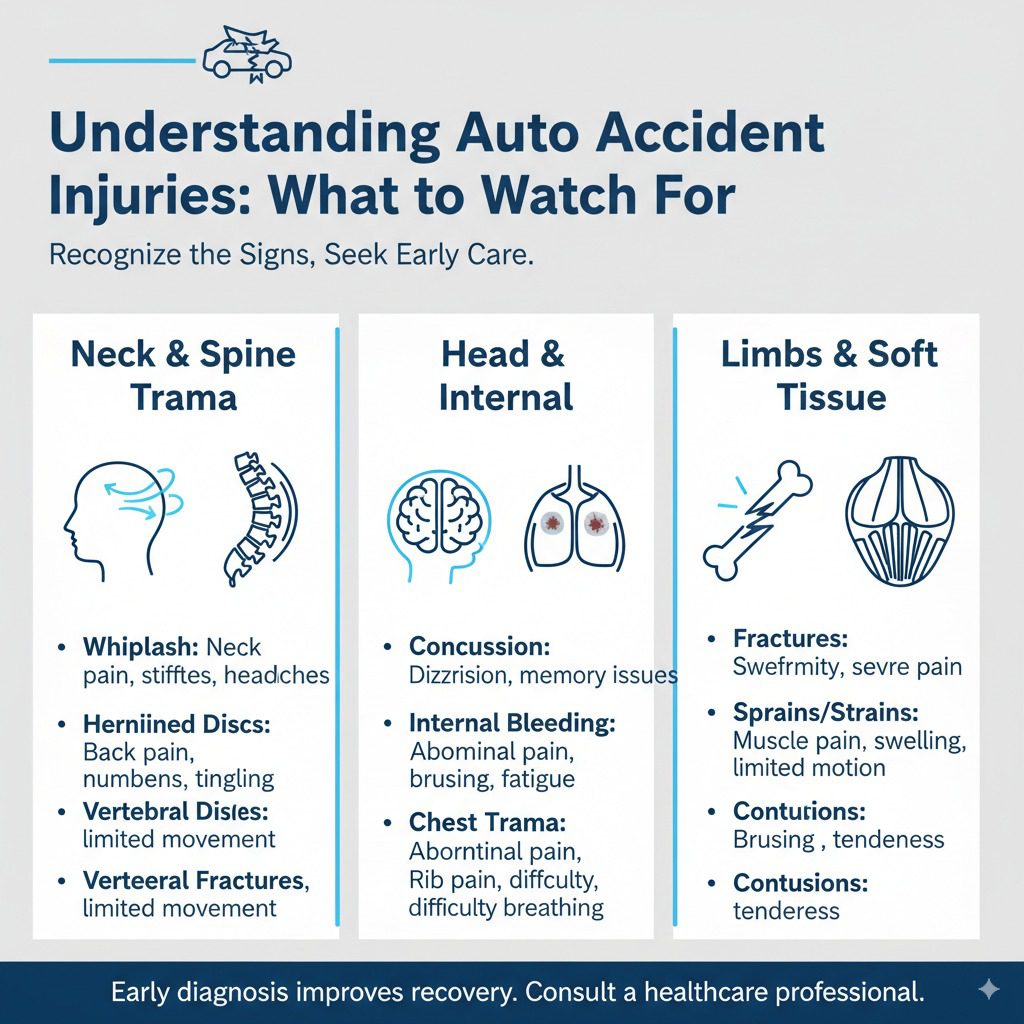
Beyond medical treatments, incorporating healthy habits into your daily routine can significantly aid your recovery:
- Hydration: Drinking plenty of water is essential for overall healing and tissue repair.
- Nutrition: A balanced diet rich in proteins, vitamins, and minerals supports the body’s healing processes.
- Sleep: Aim for 7-9 hours of quality sleep per night. Your body does much of its repair work while you sleep.
- Stress Management: The stress of an accident can hinder recovery. Techniques like deep breathing, meditation, or gentle yoga can be beneficial.
When to Consider Chiropractic Care
Chiropractic care focuses on the relationship between the body’s structure (especially the spine) and its overall function. Many individuals find relief from pain and improved mobility through chiropractic adjustments, particularly for neck and back pain stemming from car accidents.
Chiropractors use hands-on techniques to manipulate the spine and other joints. They may also recommend exercises, proper posture techniques, and lifestyle advice. The safety and effectiveness of chiropractic treatment can depend on the individual and the nature of their injuries. It’s always advisable to discuss chiropractic care with your medical doctor.
Resources like the American Chiropractic Association (ACA) offer more information on the chiropractic profession and its approaches to care.
Navigating Insurance and Legal Aspects
Dealing with the aftermath of a car accident often involves navigating insurance claims and potentially legal considerations. While this guide focuses on your physical well-being, it’s important to be aware of these aspects.
Documenting Everything
Keep meticulous records of:
- The accident scene (photos, police report number).
- Communication with insurance companies.
- All medical appointments, treatments, and bills.
- Any lost wages or property damage.
This documentation is crucial for your medical treatment and any insurance or legal processes.
Understanding Your Insurance Coverage
Familiarize yourself with your auto insurance policy, particularly terms like medical payments (MedPay), personal injury protection (PIP), and bodily injury liability. These coverages can help pay for your medical expenses regardless of who was at fault.
When to Consult a Legal Professional
If your injuries are severe, if fault for the accident is disputed, or if you encounter difficulties with insurance claims, it may be beneficial to consult with a personal injury attorney. They can help ensure you receive fair compensation for your injuries and losses.
FAQs: Your Questions Answered
Q1: How soon after a car accident should I see a doctor?
It’s best to see a doctor as soon as possible after an accident, ideally within 24-72 hours, even if you feel okay. This ensures any injuries are identified early and documented.
Q2: Can I feel pain from a car accident days or weeks later?
Yes, absolutely. Due to adrenaline and the delayed onset of inflammation, many injuries, like whiplash or soft tissue damage, don’t manifest pain for hours, days, or even weeks after the incident.
Q3: What is whiplash and how is it treated?
Whiplash is an injury to the neck caused by a sudden, forceful back-and-forth movement of the head. Treatment often includes rest, pain medication, physical therapy, and sometimes specialized treatments like chiropractic care or injections.
Q4: Do I need an MRI if my X-rays are normal after an accident?
If your X-rays are normal but you’re still experiencing significant pain or neurological symptoms (numbness, tingling), an MRI might be recommended. MRIs provide more detailed images of soft tissues like muscles, ligaments, and discs that X-rays can’t show.
Q5: How long does it typically take to recover from whiplash?
Recovery times vary greatly depending on the severity of the whiplash and the individual. Mild cases might improve in a few weeks, while more severe injuries can take several months or longer to fully recover. Consistent treatment and rehabilitation are key.
Q6: Can I go back to work immediately after a car accident?
This depends entirely on the nature and severity of your injuries. Your doctor will advise you on when it is safe to return to work. For physically demanding jobs, a longer recovery period may be necessary.
Conclusion
A car accident, no matter how minor it may seem, can have a significant impact on your body. Understanding the potential injuries, recognizing delayed symptoms, and prioritizing prompt medical attention are the most crucial steps you can take toward recovery. By working with healthcare professionals, adhering to recommended treatment plans, and practicing self-care, you can effectively manage pain, restore function, and move towards a full and healthy recuperation. Remember, listening to your body and seeking the right kind of help is paramount in navigating the post-accident recovery journey.