What Is A Map Sensor On A Car? Function Explained Simply
You’re driving your car, and suddenly it starts acting weird. Maybe it’s sputtering, losing power, or the check engine light blinks on. It’s frustrating, right?
You start to wonder what could be wrong. One common culprit is a part called the MAP sensor. But what exactly is a MAP sensor, and why is it so important?
A MAP sensor, or Manifold Absolute Pressure sensor, measures the air pressure inside your car’s engine. This helps the car’s computer know how much air is going into the engine. This information is key for the engine to run smoothly, save fuel, and reduce pollution.
What Exactly Is a MAP Sensor?
Let’s break down the MAP sensor. Its full name is the Manifold Absolute Pressure sensor. Think of it as a small but mighty detective for your engine’s air intake.
It’s usually found on the engine’s intake manifold. That’s the part that helps air get into the engine’s cylinders.
The main job of this sensor is simple. It listens to the air pressure. But not just any air pressure.
It listens to the pressure inside the intake manifold. This pressure changes all the time. It changes based on how hard the engine is working.
It also changes based on how much you’re pressing the gas pedal.
This sensor sends electrical signals. These signals go straight to your car’s engine control unit, or ECU. The ECU is like the car’s brain.
It uses the information from the MAP sensor. It also uses info from other sensors. Then, it makes smart decisions about how the engine should run.
Why is this pressure so important? Well, the ECU needs to know how much air is entering the engine. This is because the engine needs a precise mix of air and fuel to burn.
Too much air or too little air can cause problems. The MAP sensor helps the ECU get this mix just right.
It’s a tiny part, often smaller than your thumb. Yet, its role is huge. Without it, your engine wouldn’t know how much fuel to inject.
It would struggle to run efficiently. It might even stall.
Why Engine Pressure Matters So Much
Imagine you’re trying to bake a cake. You need a perfect recipe. You need the right amount of flour, sugar, and eggs.
Your car engine is similar. It needs the right amount of air and fuel. This is called the air-fuel ratio.
Getting this ratio correct is vital for performance and efficiency.
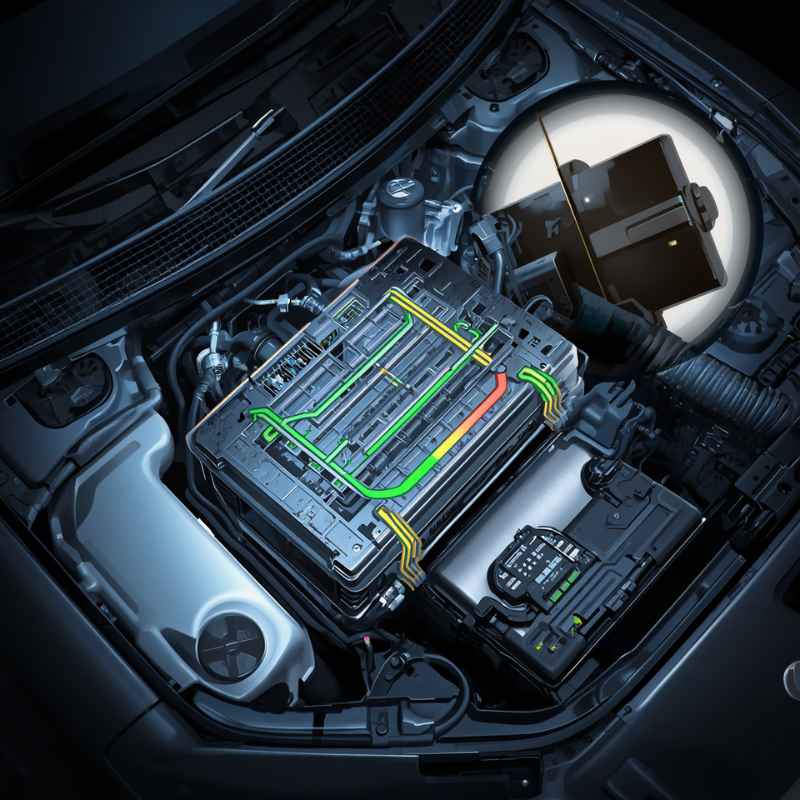
The MAP sensor is a key player in this. It tells the ECU how much air is available. The ECU then tells the fuel injectors how much fuel to spray.
If the MAP sensor is wrong, the ECU gets bad information. It might add too much fuel. Or it might not add enough.
This can lead to a few common issues. Your car might feel sluggish. It might not accelerate as well as it used to.
You might notice your car guzzling more gas than normal. This is because the engine isn’t running at its best. The air-fuel mix is off.
The MAP sensor helps the ECU understand the engine load. Engine load is a measure of how hard the engine is working. When you press the gas pedal, the engine works harder.
More air rushes in. The pressure in the manifold goes up. The MAP sensor detects this.
It tells the ECU to add more fuel.
When you let off the gas, the engine works less. Less air comes in. The pressure drops.
The MAP sensor detects this. It tells the ECU to reduce fuel. This constant communication keeps the engine running smoothly and efficiently.
Think about driving uphill versus driving on a flat road. Uphill, your engine is working harder. More air is needed.
More fuel is needed. Downhill, it’s the opposite. The MAP sensor helps the engine adapt to these different conditions automatically.
This makes driving much smoother and more responsive.
A Look Back: How Cars Used to Work
Before advanced sensors like the MAP sensor, cars used different systems. Many older cars used a Mass Air Flow (MAF) sensor. MAF sensors measure the mass of air entering the engine.
While also effective, MAP sensors have some advantages. They are often simpler and less prone to clogging.
Older cars might have also used something called a throttle position sensor. This tells the ECU how far the throttle plate is open. This gives a clue about how much air might be coming in.
But it’s not as precise as measuring the actual pressure in the manifold.
The MAP sensor became widely used because it offered a more direct measurement. It measures the effect of the engine’s vacuum. Vacuum is created when the pistons pull air into the cylinders.
This vacuum is a direct indicator of how much air is being consumed.
In simple terms, a stronger vacuum (lower pressure) means the engine is pulling in a lot of air. This happens when you accelerate hard. A weaker vacuum (higher pressure) means less air is being pulled.
This happens when the engine is idling or not under much load.
The evolution of these sensors shows how much cars have changed. They’ve become smarter. They are designed to be more efficient and cleaner.
The MAP sensor is a big part of that smart technology.
Cars from the 1980s and 1990s were among the first to widely adopt MAP sensors. This was part of a push for better fuel economy and reduced emissions. The technology has only gotten better since then.
Today, virtually all modern cars rely on these sensors.
My Own Close Call with a MAP Sensor
I remember a time a few years back. I was driving my old trusty sedan. It had been running fine for years.
Then, one morning, it felt…off. It was like driving with a blanket over the engine. The acceleration was slow.
The engine seemed to be working harder than usual just to get going.
My check engine light even came on. I’m not a mechanic, but I know that light means trouble. I felt a knot of anxiety in my stomach.
Car repairs can be so expensive! I started thinking about all the worst-case scenarios. Was it the transmission?
The engine itself?
I decided to take it to a local mechanic I trusted. I explained the symptoms. He plugged in his diagnostic tool.
He said the computer was showing a code related to the intake manifold pressure. He explained that the MAP sensor might be the issue.
He showed me the sensor. It was small, black, and plugged into a hose on the engine. He told me it was reading too low.
This meant the ECU thought there was less air going into the engine than there actually was. So, the ECU was giving the engine less fuel.
He
That experience really stuck with me. It showed me how one small part could have such a big impact. It also taught me not to jump to the most expensive conclusions.
Sometimes, the fix is simpler than you think. That day, my MAP sensor was the quiet hero.
MAP Sensor vs. MAF Sensor: What’s the Difference?
It’s easy to get MAP and MAF sensors mixed up. They both deal with air. But they measure it differently.
- MAP Sensor: Measures pressure inside the intake manifold. It’s like listening to how hard the engine is sucking air.
- MAF Sensor: Measures the mass (weight) of air entering the engine. It’s like weighing the air directly.
Many cars use one or the other. Some modern cars might use both! They provide different, valuable data to the ECU.
How Your Car’s Computer Uses MAP Sensor Data
The engine’s computer, the ECU, is constantly collecting information. It’s like a busy chef with many ingredients. The MAP sensor is one of its most important ingredients.
The ECU uses this pressure reading for several key tasks.
First, it helps determine the engine’s load. As we’ve discussed, a higher pressure reading means more air is being pulled in. This tells the ECU the engine is working hard.
It needs more fuel to match the air.
Second, it helps control ignition timing. Ignition timing is when the spark plug fires. It needs to be just right.
Too early or too late, and the engine won’t run well. The MAP sensor’s data helps the ECU adjust this timing. It makes sure the spark happens at the optimal moment.
Third, it plays a role in idle speed control. When your car is idling, the engine isn’t working hard. The MAP sensor shows a lower pressure.
The ECU uses this to keep the engine running at a stable, low speed without stalling.
Fourth, it helps manage fuel injection. The ECU calculates how much fuel to inject. It uses the MAP sensor reading.
It also uses other data, like engine temperature and throttle position. This ensures the air-fuel mixture is always close to perfect.
Finally, it helps with emission control. A properly running engine with the correct air-fuel mix produces fewer harmful emissions. The MAP sensor is crucial for keeping the engine running cleanly.
The ECU is always making tiny adjustments. It’s doing this hundreds of times a second. The MAP sensor’s input is a constant stream of data.
This allows the ECU to react to changing driving conditions in real-time. It makes the car feel responsive and efficient.
Quick Scan: MAP Sensor’s Top Jobs
Here’s a fast look at what the MAP sensor helps the car computer do:
| Job | What it Means for the Engine |
| Engine Load Detection | Tells computer how hard the engine is working. |
| Fuel Delivery | Helps decide how much fuel to inject. |
| Ignition Timing | Aids in setting the spark plug firing time. |
| Idle Control | Helps keep the engine from stalling at low speeds. |
| Emissions | Contributes to cleaner exhaust gases. |
Signs Your MAP Sensor Might Be Failing
Now, what happens when this important sensor starts to go bad? It’s usually not a sudden, complete failure. It often starts with subtle changes.
You might not even notice them at first.
One of the first signs is often poor engine performance. Your car might feel weaker. Acceleration can feel sluggish.
It might hesitate when you press the gas pedal. This is because the ECU isn’t getting accurate pressure readings. It’s making bad guesses about air and fuel.
Increased fuel consumption is another big clue. If your car is suddenly using a lot more gas, it’s worth investigating. The ECU might be injecting too much fuel because it thinks the engine needs it.
This wastes gas and money.
Rough idling is also common. When your car is stopped, the engine should run smoothly. If the MAP sensor is faulty, the engine might idle unevenly.
It might even sound like it’s about to stall. You might feel vibrations you didn’t notice before.
The check engine light is almost always a sign of trouble. A failing MAP sensor will often trigger a diagnostic trouble code (DTC). This code will tell a mechanic exactly which system is reporting an issue.
It’s the car’s way of saying, “Hey, something’s wrong here!”
Some drivers also report engine sputtering or backfiring. This happens when the air-fuel mixture is way off. It can lead to incomplete combustion.
This can cause strange noises from the engine or exhaust.
If you notice any of these symptoms, it’s a good idea to get your car checked. Don’t ignore them. A small problem now can become a bigger, more expensive one later.
Normal vs. Concerning: MAP Sensor Symptoms
Let’s look at what’s okay and what might mean trouble.
Normal Engine Behavior
Smooth acceleration. Good gas mileage. Steady idle speed.
No warning lights.
Concerning MAP Sensor Signs
Sluggishness. Poor acceleration. Worse gas mileage.
Rough or stalling idle. Check engine light is on.
Diagnosing a Faulty MAP Sensor
So, you think your MAP sensor might be the problem. How do you confirm it? This is usually a job for a mechanic.
They have special tools and knowledge.
The first step is often to use an OBD-II scanner. This device plugs into a port under your dashboard. It reads the car’s computer for any stored trouble codes.
Codes related to manifold absolute pressure are strong indicators. Examples include P0105, P0106, P0107, and P0108.
A mechanic might also perform a manual inspection. They’ll check the sensor itself. They’ll look for any physical damage.
They’ll also check the wiring and vacuum hose connected to it. A cracked hose or frayed wire can cause similar problems.
Sometimes, a mechanic will use a multimeter. They can test the electrical signals the sensor is sending. They can compare these readings to the manufacturer’s specifications.
If the readings are off, the sensor is likely bad.
Another method is to compare the sensor’s reading to known good values. If the car is idling, the manifold pressure should be a certain range. If the sensor reports something very different, it’s a problem.
This might be done with the OBD-II scanner or a more advanced diagnostic tool.
It’s important not to just replace parts randomly. Replacing a MAP sensor when it’s not the problem wastes money and time. Proper diagnosis is key.
That’s why a trusted mechanic is so valuable.
They can also rule out other issues. Sometimes, symptoms that look like a bad MAP sensor can be caused by other things. For example, a vacuum leak elsewhere in the engine can affect manifold pressure.
A clogged fuel filter can also cause a car to feel sluggish.
Common MAP Sensor Diagnostic Codes
Here are some codes you might see if your MAP sensor is acting up:
- P0105: MAP/Barometric Pressure Circuit Malfunction
- P0106: MAP/Barometric Pressure Circuit Range/Performance
- P0107: MAP/Barometric Pressure Circuit Low Input
- P0108: MAP/Barometric Pressure Circuit High Input
These codes are a good starting point for diagnosis.
Replacing a MAP Sensor: Can You Do It Yourself?
For many car owners, replacing a MAP sensor is a task they can tackle at home. It’s often located in an accessible spot. The process is usually straightforward.
First, you need the right replacement part. Make sure it’s for your specific car make, model, and year. You can usually find this information in your car’s owner’s manual or by using an online parts finder.
Safety first! Make sure the engine is cool. Never work on a hot engine.
Disconnect the negative battery terminal. This prevents any electrical shorts.
Locate the MAP sensor. It’s usually plugged into the intake manifold. There will be a wire harness connected to it.
There might also be a vacuum hose attached. Carefully disconnect the wire harness. This often has a small clip you need to press.
If there’s a vacuum hose, gently pull it off. Sometimes, they can be stuck. Try wiggling it gently.
If it’s really stubborn, a mechanic might have tools to help.
The sensor itself is often held in place by a single bolt. Remove this bolt. Then, carefully pull the old sensor straight out.
Note its orientation. You’ll want to install the new one the same way.
Install the new sensor. Make sure it’s seated properly. Reinstall the retaining bolt.
Reconnect the wire harness. Make sure it clicks into place. Reattach the vacuum hose.
Again, ensure a snug fit.
Reconnect the negative battery terminal. Start the car. The check engine light should go off.
If it doesn’t, you might need to clear the code with an OBD-II scanner. You can also try disconnecting the battery for a few minutes to reset the car’s computer.
It’s always a good idea to check online tutorials or videos for your specific car model. Seeing someone else do it can be very helpful. If you’re not comfortable working on your car, it’s best to leave it to a professional.
DIY MAP Sensor Replacement: Quick Steps
Before You Start:
- Engine Cool
- Gather Parts & Tools (New sensor, socket set, screwdriver)
- Disconnect Negative Battery Terminal
Steps:
- Locate the MAP sensor on the intake manifold.
- Disconnect the electrical connector (press the clip).
- Remove any attached vacuum hose.
- Unbolt the sensor (usually one bolt).
- Gently pull out the old sensor.
- Install the new sensor in the same position.
- Reinstall the bolt.
- Reconnect the electrical connector (ensure it clicks).
- Reattach the vacuum hose securely.
- Reconnect the battery terminal.
- Start the engine and check for issues.
After: Clear any remaining error codes.
What About Barometric Pressure?
You might have noticed the term “Barometric Pressure” appearing with MAP sensor codes. What’s that got to do with anything? Barometric pressure is the atmospheric pressure outside your car.
At sea level, atmospheric pressure is higher. Up in the mountains, it’s lower. Your car’s ECU needs to know this too.
This is because the engine’s performance is affected by the air density.
Some MAP sensors are actually called MAP/BPS sensors. This means they can measure both manifold pressure and barometric pressure. They often do this by first measuring barometric pressure when the engine is off.
Then, they measure manifold pressure when the engine is running.
This dual function is important. The ECU can use the barometric pressure reading to calibrate the MAP sensor. It helps it understand how the engine is performing at different altitudes.
For example, if you’re driving in Denver, the air is thinner. The MAP sensor needs to know this to make accurate calculations.
So, while the MAP sensor’s primary job is inside the engine, its ability to understand outside pressure helps it do its job even better. It’s another layer of intelligence for your car’s computer.
The Impact on Your Car’s Performance
A functioning MAP sensor is like having a perfect conductor for your engine’s orchestra. It ensures everything plays in harmony.
Better Fuel Economy: When the MAP sensor works correctly, the ECU can precisely control the fuel injection. This means no wasted fuel. Your car uses only what it needs for the current driving conditions.
This translates to better miles per gallon (MPG).
Smoother Acceleration: No more hesitating or sputtering. A good MAP sensor helps the engine respond instantly and smoothly when you press the gas. Power delivery feels consistent and strong.
Optimal Engine Power: The engine can produce its intended power output. It won’t feel like it’s struggling. This is crucial for everyday driving, merging into traffic, or tackling hills.
Reduced Emissions: As mentioned, the right air-fuel mix is key to clean emissions. A faulty MAP sensor can lead to incomplete combustion. This produces more pollutants like carbon monoxide and unburned hydrocarbons.
Keeping the sensor working helps your car be kinder to the environment.
Reliable Idling: A stable idle means your car won’t shake or stall when you’re stopped at a light. The MAP sensor helps the ECU maintain this steady state, even in varying conditions.
Think of it as fine-tuning. The MAP sensor allows the ECU to constantly fine-tune the engine’s operation. This leads to a more pleasant, efficient, and reliable driving experience overall.
When to Worry and When Not To
It’s easy to get anxious when your check engine light comes on. But not every warning means disaster. Let’s talk about when to be concerned about your MAP sensor.
When to Worry:
- Check Engine Light is ON: This is the most obvious sign. Especially if it’s accompanied by other symptoms.
- Sudden Change in Performance: If your car feels significantly weaker, slower, or less responsive than usual.
- Noticeable Drop in Fuel Economy: If you’re filling up your tank much more often without changing your driving habits.
- Rough or Stalling Idle: If the engine is shaking, sputtering, or dying when you’re stopped.
- Engine Misfires or Backfires: Strange noises from the engine or exhaust can indicate serious fuel/air mix problems.
When It Might Be Okay (But Still Worth Checking):
- Slight Hesitation During Hard Acceleration: If it’s very minor and only happens when you really push the car, it could be a minor issue.
- Intermittent Rough Idle: If it happens only once in a while and the car otherwise drives fine.
- Slightly Lower MPG in Extreme Weather: Very cold or very hot weather can naturally affect MPG. If it’s a huge drop, though, it’s not normal.
The most important thing is to pay attention to your car. If something feels wrong, it probably is. Early detection often leads to simpler and cheaper repairs.
Don’t wait for a small problem to become a big one.
Conclusion
The MAP sensor is a small component with a huge responsibility. It’s a vital link between your engine’s air intake and the car’s computer. By accurately measuring manifold pressure, it helps ensure your engine runs efficiently, powerfully, and cleanly.
Understanding what this sensor does can demystify some common car problems. It empowers you to have more informed conversations with your mechanic. And in some cases, it might even help you tackle a repair yourself.
So, next time your car acts a little funny, remember the humble MAP sensor. It might just be the key to getting you back on the road smoothly and efficiently.
Products related to this article
Sponsored / affiliate links. As an Amazon Associate I earn from qualifying purchases. I may earn additional commission from eligible campaigns.