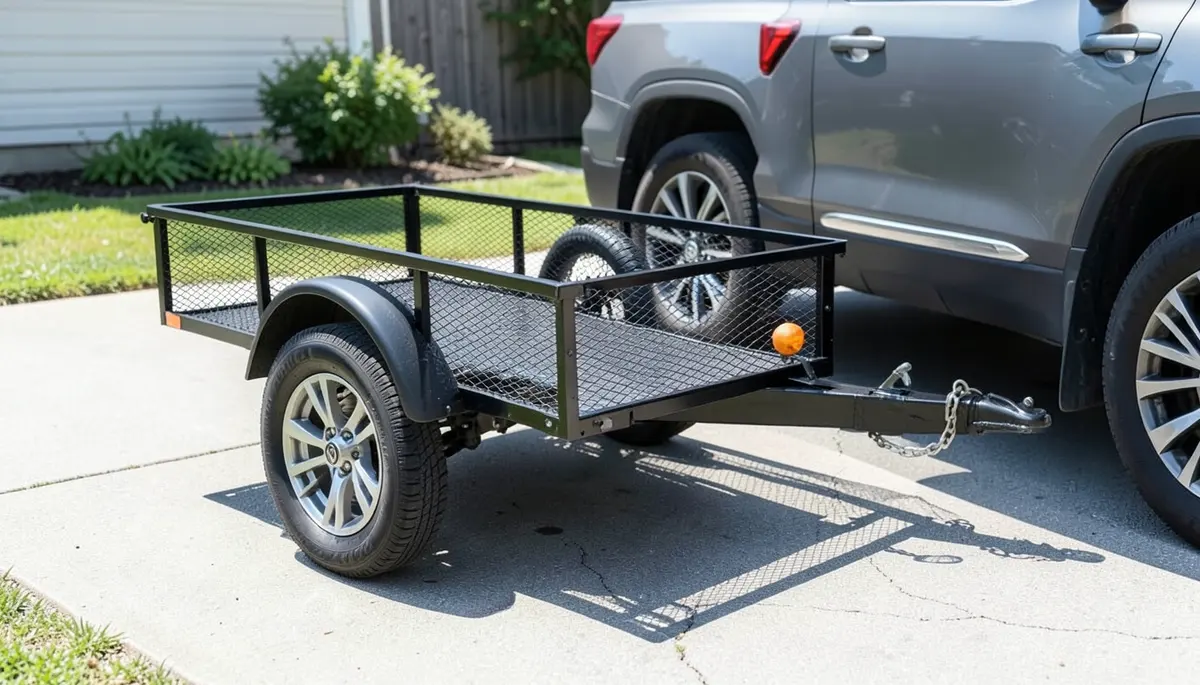
Small Cargo Trailer for a Car: Sizes, Weight Limits and Types
A small cargo trailer for a car is typically a 4×6 to 5×8 open, enclosed, or folding trailer rated to haul roughly 500 to 2,000 pounds of gear — well inside what most sedans, crossovers, and SUVs can legally tow. The catch is that “small” refers to the trailer’s footprint, not necessarily a safe match for your car; a 5×8 trailer can weigh 1,200 lbs empty before you add a single box, which will overload a car rated for only 1,000 lbs of towing.
This guide breaks down the real trailer types, their actual weight capacities, how to check your own car’s tow rating before you buy, and a lighter no-hitch-trailer alternative for people who only need to haul occasionally.
Types of Small Cargo Trailers for a Car
BEST NO-TRAILER-REGISTRATION ALTERNATIVE
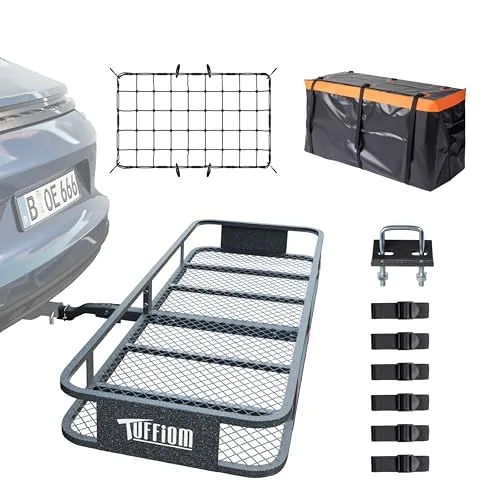 |
TUFFIOM 60-Inch Folding Hitch Cargo Carrier – $102.59 If you would rather skip trailer registration, insurance, and a second set of wheels entirely, this basket bolts onto your car’s existing 2-inch hitch receiver in minutes.
|
Nearly every small cargo trailer sold for passenger cars falls into one of three categories, and the right one depends on how often you tow, what you are hauling, and how much room you have to store it between trips.
- Open utility trailers — a steel or aluminum frame with mesh or expanded-metal side rails and a flat bed, usually 4×6 to 5×10 feet. These are the cheapest option and the easiest to load, but cargo is exposed to weather and needs to be tarped or strapped down.
- Enclosed cargo trailers — a fully boxed trailer with a rear ramp or swing door, common in 4×6 and 5×8 sizes. They protect gear from rain and theft and can be locked, but they weigh more empty and catch more crosswind on the highway.
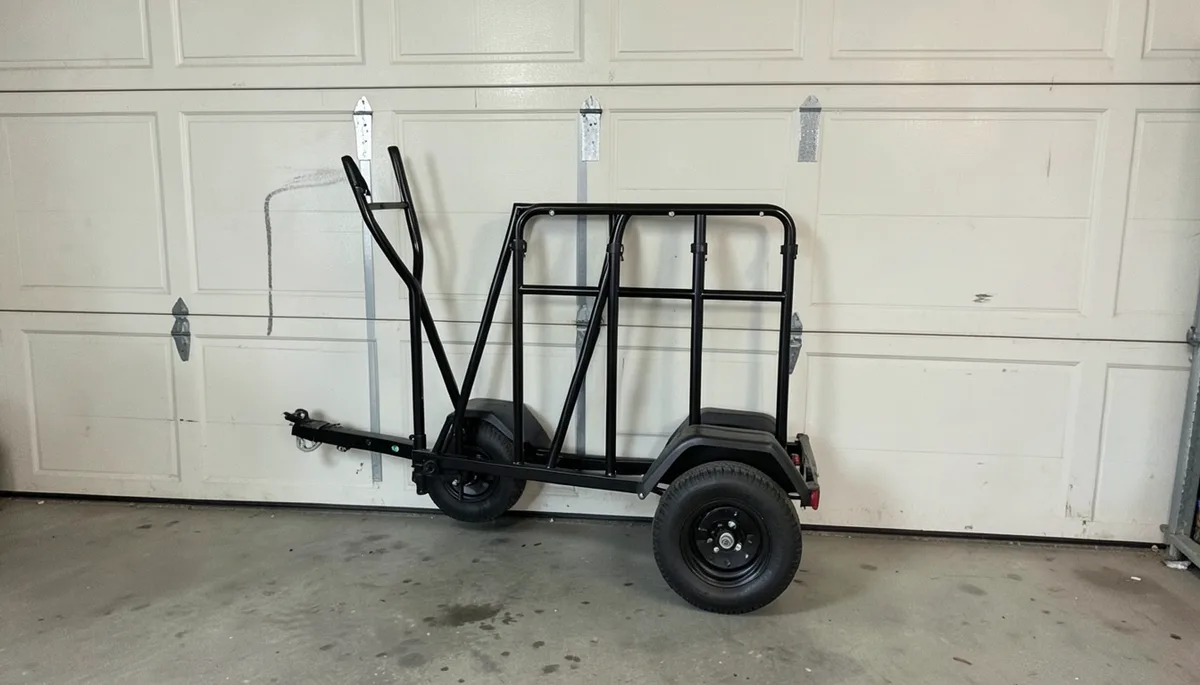
- Folding or collapsible trailers — the mesh sides and tailgate fold flat onto the bed, shrinking the trailer to a fraction of its towing footprint for garage storage. They carry less than a fixed-side utility trailer of the same length but solve the “where do I keep this” problem for people who tow only a few times a year.
How Much Can a Small Cargo Trailer Actually Haul?
A trailer’s usable cargo capacity is its GVWR (gross vehicle weight rating, the maximum the trailer, axle, and tires can carry loaded) minus the trailer’s own empty weight. That number is what actually matters when you are deciding whether a “small” trailer can hold your load.
| Trailer Size | Typical GVWR | Typical Empty Weight | Usable Cargo Capacity |
|---|---|---|---|
| 4×6 folding utility | 1,000 – 1,600 lbs | 250 – 350 lbs | 650 – 1,250 lbs |
| 4×8 open utility | 1,600 – 2,200 lbs | 450 – 600 lbs | 1,100 – 1,700 lbs |
| 5×8 open utility | 2,000 – 2,990 lbs | 550 – 750 lbs | 1,400 – 2,300 lbs |
| 5×8 enclosed | 2,990 – 3,500 lbs | 900 – 1,200 lbs | 1,700 – 2,400 lbs |
These are typical ranges pulled across common trailer manufacturers, not one specific model — always check the VIN tag riveted to the trailer’s tongue for the exact GVWR and empty weight before you load it.
Match the Trailer to Your Car’s Tow Rating, Not the Other Way Around
Most sedans and compact crossovers with a factory or aftermarket Class 1 hitch are rated for 1,000 to 1,500 lbs of towing; midsize and three-row crossovers with a Class 2 hitch typically go up to 2,000 to 3,500 lbs. That rating covers the trailer’s total loaded weight, not just the cargo — so a 5×8 open trailer loaded with 1,000 lbs of gear can easily add up to 1,700 lbs, which is already over the limit for a lot of sedans.
Before you shop for a trailer, look up your specific car’s towing capacity in the owner’s manual (not a generic figure for the model line, since trim and engine can change it), and check whether your hitch receiver is rated for the trailer’s tongue weight as well as its total weight. A 2-inch receiver is standard on most trailers in this size range; some lighter folding trailers use a 1¼-inch receiver instead, so confirm before you buy.
Do You Need a Full Trailer, or Would a Hitch Cargo Carrier Work?
If you only need extra room for a handful of trips a year, a full trailer is often more commitment than the job requires. A hitch-mounted cargo carrier basket bolts directly onto your car’s existing 2-inch receiver, has no wheels or axle of its own, and typically holds 400 to 500 lbs — enough for camping gear, coolers, or moving boxes without the extra length, the backing-up learning curve, or the registration and insurance questions that come with an actual trailer.
The tradeoff is capacity and protection: a cargo carrier basket sits lower and is fully exposed, so it works best paired with a waterproof cargo bag rather than for hauling something like a full load of firewood or building materials. For a deeper look at carrier styles and weight ratings, see our guide to hitch cargo racks for cars.
Registration, Titling, and Insurance for Small Trailers
Nearly every state requires a trailer to be registered and plated for road use, but titling rules vary a lot more. Many states set the titling threshold somewhere between 1,500 and 4,000 lbs GVWR, and a few, including Texas and Florida, let you register a trailer below that cutoff using a bill of sale instead of a full title. Because the exact weight break and paperwork differ by state, confirm the requirement with your local DMV before you tow one on public roads — do not assume a trailer is exempt just because it is small.
Insurance is a separate question from registration. Some auto policies extend limited liability coverage to a trailer while it is attached to an insured car, but that coverage usually will not pay to repair or replace the trailer itself or its contents if it is damaged, stolen, or involved in a crash. Call your insurer and ask specifically what happens if the trailer is damaged while parked and unattached, since that is the gap most owners find out about the hard way.
Frequently Asked Questions
Can a small sedan tow a cargo trailer?
Yes, if the sedan has a hitch rated for it and the trailer’s total loaded weight stays under that rating. Most sedans with a factory or aftermarket Class 1 hitch can tow 1,000 to 1,500 lbs, which covers a small folding trailer or a lightly loaded 4×6 open trailer, but not a fully loaded 5×8.
What size hitch does a small cargo trailer need?
Most 4×6 and larger utility trailers use a standard 2-inch receiver hitch. Some lightweight folding trailers are designed for a smaller 1¼-inch receiver, so check the trailer’s coupler size against your car’s receiver before buying.
Do I need to register a small utility trailer?
In nearly every state, yes — registration is required for road use regardless of size. Titling is a separate requirement that varies by state, with many states setting the threshold somewhere between 1,500 and 4,000 lbs GVWR. Check with your local DMV for the exact rule where you live.
Is an open or enclosed trailer better for a small car?
An open trailer is lighter, cheaper, and easier to keep within a small car’s tow rating, since it does not carry the extra empty weight of an enclosed box. An enclosed trailer protects cargo from weather and theft but weighs several hundred pounds more empty, so it eats into your car’s towing margin faster.
What is a lighter alternative to a small cargo trailer?
A hitch-mounted cargo carrier basket is the most common alternative. It bolts onto a car’s existing 2-inch receiver, typically holds 400 to 500 lbs, and does not require its own registration, title, or separate insurance the way a wheeled trailer does.
Conclusion
The right small cargo trailer for a car comes down to matching real numbers — the trailer’s GVWR, its empty weight, and your car’s actual tow rating — rather than picking based on size alone. An open 4×6 or folding trailer suits most sedans and light-duty towing, an enclosed 5×8 makes sense once you need weather protection and have the tow rating to spare, and a hitch cargo carrier is worth considering first if you only haul gear a few times a year and would rather skip trailer registration altogether.
Products related to this article
Sponsored / affiliate links. As an Amazon Associate I earn from qualifying purchases. I may earn additional commission from eligible campaigns.