Where Is The Temperature Sensor Located On A Car?
The temperature sensor on a car is not just one part. It refers to several sensors that monitor different temperatures. Key ones include the engine coolant temperature sensor, the intake air temperature sensor, and the oil temperature sensor. They are crucial for engine performance, fuel efficiency, and preventing overheating. Their locations vary, often near the engine block or intake system.
Understanding Your Car’s Temperature Sensors
Cars have a few important temperature sensors. Each one watches over a different part of your car. They send vital information to the car’s computer.
This computer is called the Engine Control Unit, or ECU. The ECU uses this data to make sure your car runs well.
Think of them as tiny thermometers for your car. They are always checking the heat. This helps the car’s brain know if things are getting too hot or too cold.
This information helps the car adjust how it runs. It can change the fuel mix or how fast the engine fan spins. This keeps everything working right.
Without these sensors, your car’s computer would be blind. It wouldn’t know when the engine is hot. It wouldn’t know if the air going into the engine is cold.
This would lead to poor running. It could even cause damage over time.

The Crucial Role of Engine Coolant Temperature (ECT) Sensor
The engine coolant temperature (ECT) sensor is perhaps the most important one. It lives in the engine’s cooling system. This system uses a liquid called coolant.
Coolant flows through the engine to soak up heat. The ECT sensor measures how hot this coolant is getting. It’s usually screwed into the engine block or cylinder head.
It has a small probe that dips into the coolant path.
This sensor is vital for many reasons. When your engine is cold, the ECU knows it needs more fuel. This helps the engine start up smoothly.
As the engine warms up, the ECT sensor tells the ECU to use less fuel. This saves gas. It also helps the engine run at its best.
If the engine starts to overheat, the ECT sensor alerts the ECU. The ECU might then turn on the cooling fans. It could also warn you with a dashboard light.
A faulty ECT sensor can cause all sorts of problems. Your car might not start well when cold. It could run rough.
You might see a check engine light. Sometimes, you might even notice a drop in your car’s gas mileage. It’s a small part but has a big impact.
Its location is usually near the thermostat housing or a coolant hose.
The Intake Air Temperature (IAT) Sensor’s Job
Next up is the intake air temperature (IAT) sensor. This sensor measures the temperature of the air that is entering the engine. Cold air is denser than warm air.
Denser air has more oxygen. The ECU needs to know the air’s temperature to calculate how much fuel to inject. It needs the right air-fuel mix for good performance.
The IAT sensor is often found in or near the air intake system. This could be in the air filter housing or in the intake manifold itself. It looks like a small probe with a metal tip.
It sticks into the airflow path. The ECU uses the IAT data along with other sensor data. This helps it create the perfect blend of fuel and air.
This is important for both power and fuel economy.
If the IAT sensor gives bad readings, the ECU might add too much or too little fuel. This can make your car feel sluggish. It might not accelerate well.
You could also notice poor fuel economy. The check engine light might come on too. Keeping this sensor clean and working is key for efficient driving.
The Often-Overlooked Oil Temperature Sensor
Some cars also have an oil temperature sensor. This sensor monitors the temperature of the engine oil. Engine oil is the lifeblood of your engine.
It lubricates moving parts. It also helps cool the engine. The oil can get very hot during hard driving or in hot weather.
The oil temperature sensor helps the ECU understand the overall thermal load on the engine. This information can be used for fine-tuning engine management. It helps ensure the engine isn’t running in extreme temperatures for too long.
Some cars will display this reading on the dashboard. Others just use it internally for the ECU. Its location is typically in the oil pan or near the oil filter housing.
It is screwed into a port that contacts the oil.
Knowing the oil temperature is also helpful for drivers. It tells you when your engine is fully warmed up. It’s best not to push your engine hard when the oil is still cold.
A faulty oil temperature sensor might not give accurate readings. This could lead to the ECU making incorrect adjustments. It could also mean you don’t get a warning if the oil gets too hot.
Where to Find Your Car’s Temperature Sensors
Finding these sensors can feel like a treasure hunt. They are usually tucked away in the engine bay. Each car model is a little different.
It’s always best to check your car’s specific repair manual. But there are common places to look.
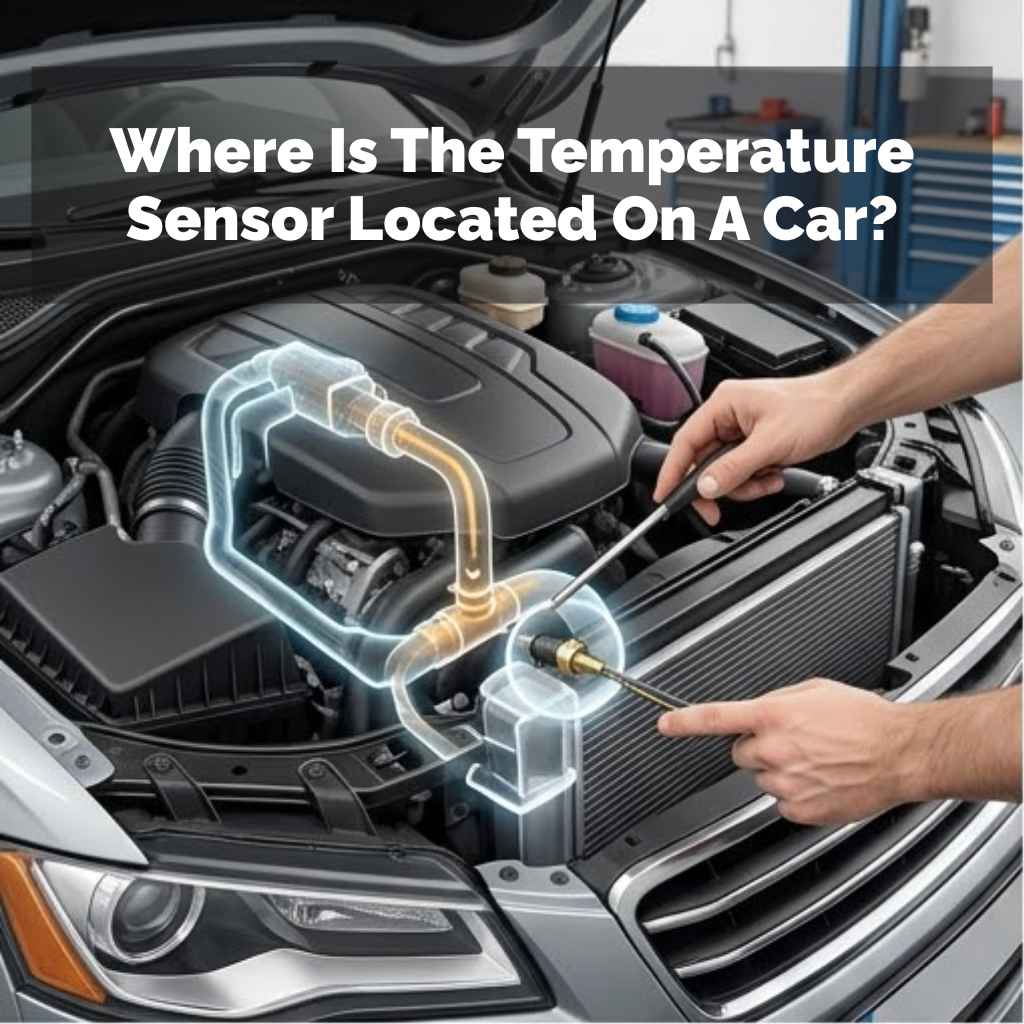
The ECT sensor is often near the front of the engine. Look for hoses connected to the radiator or the engine block. It might be close to where the upper radiator hose connects to the engine.
Sometimes, it’s near the thermostat housing. This is a metal housing where the top radiator hose meets the engine.
The IAT sensor is usually easier to spot. Follow the large hose that brings air from the air filter box to the engine. The sensor is often located in this hose or in the intake manifold itself.
It looks like a small plastic or metal fitting sticking into the air path.
The oil temperature sensor can be a bit trickier. It might be on the side of the engine block. It could also be near the oil filter.
Sometimes, it’s located in the oil pan itself. You might need to look underneath the car to find its exact spot.
Quick Sensor Location Guide
ECT Sensor: Near thermostat housing or top radiator hose connection. Screwed into engine block or cylinder head.
IAT Sensor: In the air intake hose or intake manifold. Sticks into the airflow.
Oil Temp Sensor: Near oil filter or in oil pan. Screwed into a port for oil contact.
My Own “Cold Engine” Scare
I remember one chilly morning a few years back. I jumped into my old sedan to head to a client meeting. I turned the key, and the car sputtered a bit.
It finally started, but it idled really rough. The check engine light was on, which is never a good sign.
My first thought was fuel. Maybe I was low on gas? Nope, the gauge was fine.
Then I thought about spark plugs. But the roughness felt different, more like the engine was confused. I noticed the car was drinking way more gas than usual on my short drive.
It felt like it was trying to warm up, but it just wouldn’t smooth out.
I took it to my mechanic later that day. He plugged in his scanner. The code pointed directly to the engine coolant temperature sensor.
Apparently, mine had gone bad. It was stuck telling the car’s computer that the engine was always cold. So, the car kept dumping extra fuel into the engine, like when it’s first starting up.
That’s why it ran so poorly and used so much gas. He replaced the sensor in about 20 minutes. The car ran like new afterwards.
It was a stark reminder of how important those little sensors are. I learned to pay more attention to how my car felt, even on simple drives.
Sensor Functionality Snapshot
What it Measures
- ECT: Engine coolant temperature
- IAT: Air temperature entering the engine
- Oil Temp: Engine oil temperature
Why it’s Important
- Optimal fuel injection
- Engine performance
- Fuel economy
- Overheating prevention
Factors Affecting Sensor Readings
Several things can influence what these sensors report. The most obvious is the actual temperature. But other conditions matter too.
For the ECT sensor, the coolant level is key. If the coolant is low, the sensor might not be fully submerged. This could give false readings.
The condition of the coolant also matters. Old, dirty coolant might not transfer heat as well. This could make the sensor read slightly higher than it should.
For the IAT sensor, humidity can play a small role. Very humid air behaves differently than dry air. The ECU accounts for this, but extreme conditions can challenge it.
The cleanliness of the sensor itself is also important. Dirt or debris can stick to the sensor tip. This can insulate it and give inaccurate temperature readings.
This is why checking and cleaning these sensors, if accessible, can sometimes help.
The oil temperature sensor relies on good oil circulation. If the oil is old or sludgy, it might not flow properly. This could lead to hot spots.
The sensor might not pick up the true average temperature. Also, the type of oil used can affect heat transfer. Using oil that meets your car manufacturer’s specifications is always a good idea.
Contrast: Normal vs. Concerning Sensor Behavior
| Normal Behavior | Concerning Behavior |
|---|---|
| ECT: Reads cold on startup, rises to steady temp when warm. | ECT: Reads high all the time, or fluctuates wildly. |
| IAT: Reads ambient temperature, slightly warmer when engine is running. | IAT: Reads much hotter than ambient, or stays too cold. |
| Oil Temp: Reads ambient on startup, rises slowly to a stable operating temp. | Oil Temp: Reads extremely high quickly, or stays very low. |
Common Issues and When to Worry
Most of the time, these sensors just do their job without fuss. But they can fail. When an ECT sensor fails, you might notice a few things.
The temperature gauge on your dashboard might read higher than normal, or it might not move at all. Your car might run rich, meaning too much fuel. This leads to poor gas mileage and black smoke from the exhaust.
In extreme cases, the engine could overheat. This can cause serious damage.
A failing IAT sensor can cause hesitation during acceleration. The car might feel less powerful. It could also lead to a rough idle.
You might notice your check engine light come on. The ECU might try to compensate, but it won’t be perfect. This can throw off your car’s efficiency.
Issues with the oil temperature sensor might not always trigger a warning light. But if your car has an oil temperature gauge, you’ll see strange readings. It might read too high or too low.
If it reads too high, it’s a serious warning. Your engine might be in danger. You should stop driving and investigate immediately.
If it reads too low, it might mean the sensor is faulty, or that the engine isn’t reaching optimal temperature, which is also not ideal for long-term wear.
Simple Checks for Temperature Sensors
What to Look For:
- Visual Inspection: Check for obvious damage to wires or the sensor body. Ensure they are clean and properly seated.
- Dashboard Gauges: Do your temperature or oil gauges behave normally? Do they move smoothly?
- Engine Behavior: Does the car start easily? Does it run smoothly? Is the fuel economy as expected?
- Warning Lights: Is the check engine light on? Does it turn off after the engine is warm?
When to Call a Pro: If you see consistent abnormal readings, poor performance, or warning lights, it’s time for a mechanic. They have the tools to test sensors accurately.
DIY Checks and Maintenance Tips
While diagnosing specific sensor failures often needs tools, there are some basic checks you can do. First, visually inspect the sensors and their wiring harnesses. Look for any signs of damage, corrosion, or loose connections.
Sometimes, a wire can get rubbed through by vibration. Or a connector can become dirty.
For the ECT sensor, make sure your coolant level is correct. Low coolant is a common cause of poor temperature readings. If the coolant looks very old or dirty, consider flushing and refilling the system.
This can improve heat transfer and sensor performance.
The IAT sensor is often located in a plastic tube. If you can access it safely, you can sometimes clean the tip of the sensor. Use a lint-free cloth.
Be very gentle. You don’t want to break the sensor. A dirty sensor might not be reading the air temperature correctly.
This can impact how much fuel your car uses.
For the oil temperature sensor, regular oil changes are key. Using the correct type and weight of oil is also important. It helps the oil do its job of lubricating and cooling.
If you notice any oil leaks around the sensor, get it checked and repaired promptly. Oil leaks can lead to low oil levels.
DIY Sensor Maintenance
For ECT Sensor:
- Check and maintain proper coolant level.
- Inspect coolant for cleanliness. Consider a flush if needed.
For IAT Sensor:
- Visually inspect for dirt or debris on the sensor tip.
- Gently clean if accessible and dirty.
For Oil Temp Sensor:
- Ensure correct oil type and level.
- Regular oil changes are crucial.
- Check for oil leaks near the sensor.
Impact on Fuel Efficiency
It’s easy to forget that these temperature sensors have a direct impact on your wallet, specifically your fuel budget. The ECU relies heavily on accurate temperature data to calculate the precise amount of fuel to inject. This process is called air-fuel ratio management.
When the sensors provide correct information, the ECU can maintain an optimal air-fuel mixture.
For example, when your engine is cold, the ECU needs to inject more fuel to help it run smoothly. The ECT sensor tells the ECU when the engine is warm enough to reduce fuel. If the ECT sensor is faulty and reads too cold, the ECU will keep injecting extra fuel.
This wastes gas. Your fuel economy will suffer significantly.
Similarly, the IAT sensor is critical for fuel efficiency. If the air entering the engine is very cold and dense, the ECU needs to inject more fuel to match the oxygen content. If the IAT sensor is faulty and reads too warm, the ECU will inject less fuel.
This can make the engine run lean. It might also reduce power. But a faulty sensor reading too cold can also waste fuel.
Even the oil temperature sensor can indirectly affect fuel economy. If the oil gets too hot, the engine works harder to overcome the increased friction. This can lead to a slight decrease in fuel efficiency.
A faulty sensor might not warn you of this condition. Regular maintenance of these sensors ensures your car is always running as efficiently as possible.
When Do You Need a New Sensor?
Deciding when to replace a temperature sensor usually comes down to a few key indicators. The most obvious is when your car’s computer flags a problem. This happens when a diagnostic scan tool reads a specific trouble code.
Codes like P0115, P0116, P0117, P0118, P0119 relate to the ECT sensor. Codes like P0110, P0111, P0112, P0113 point to the IAT sensor. Codes involving oil temperature sensors are less common but exist.
Beyond diagnostic codes, you might need a new sensor if you experience consistent performance issues. These include rough idling, hesitation during acceleration, poor acceleration, or stalling. If your gas mileage drops noticeably without any other explanation, a faulty temperature sensor is a likely culprit.
Another sign is erratic behavior from your dashboard gauges. If the temperature gauge jumps around, stays at maximum, or doesn’t move at all, the ECT sensor or its wiring is suspect. Similarly, if your car consistently runs poorly in very cold or very hot weather, it might be struggling to get accurate temperature readings.
Finally, if a mechanic performs a thorough diagnostic test and determines the sensor is not functioning within its specified parameters, replacement is necessary. Sensors are typically not repairable. If they fail, they must be replaced to restore proper engine function and efficiency.
Comparing ECT, IAT, and Oil Temp Sensors
It’s helpful to see the differences between these vital sensors side-by-side. They each monitor a different aspect of your car’s thermal environment, but they all work together to keep the engine running optimally.
Temperature Sensor Comparison Table
| Sensor Type | What it Measures | Primary Location | Main Function | Common Issues |
|---|---|---|---|---|
| Engine Coolant Temp (ECT) | Temperature of the engine coolant. | Engine block, cylinder head, thermostat housing. | Manages fuel injection, idle speed, fan operation, emissions. | Poor starting, rough idle, poor MPG, overheating, check engine light. |
| Intake Air Temp (IAT) | Temperature of air entering the engine. | Air intake hose, intake manifold. | Calculates air density for precise fuel metering. | Hesitation, poor acceleration, rough idle, poor MPG. |
| Oil Temp | Temperature of the engine oil. | Oil pan, oil filter housing, engine block. | Monitors engine thermal load, informs ECU, dashboard display. | Inaccurate gauge readings, potential for engine damage if unchecked. |
My Experience with a “Too Hot” Oil Reading
I once drove my truck on a long, hot road trip. It was summer, and the asphalt was shimmering. I was hauling a trailer, so the engine was working harder than usual.
After a few hours of driving through rolling hills, I glanced at my dashboard. My truck has a separate oil temperature gauge. It was reading higher than I had ever seen it.
It was creeping up towards the red zone. My heart sank.
I immediately eased off the gas. I found the nearest exit and pulled into a rest stop. I turned off the engine and popped the hood.
I let it sit for about 20 minutes. The heat radiating off the engine was intense. I checked the oil dipstick.
The oil level was good, but the oil itself was extremely hot. It felt almost too hot to touch.
This experience made me realize how crucial the oil temperature sensor is, even if it doesn’t always trigger a warning light. It gave me direct feedback about what my engine was enduring. I decided to take it easy for the rest of the trip.
I also made a mental note to get my cooling system and oil checked more thoroughly when I got home. It was a scary moment that highlighted the importance of monitoring all aspects of your engine’s health, including its oil temperature.
The “Is My Car Overheating?” Question
One of the most common concerns drivers have is whether their car is overheating. The ECT sensor is your primary alarm system for this. When the coolant temperature rises beyond a safe level, the sensor tells the ECU.
The ECU will then typically activate the electric cooling fans. You might also see the temperature gauge on your dashboard climb into the red zone. This is your signal to take immediate action.
If you notice your car’s temperature gauge climbing, pull over safely as soon as possible. Turn off the engine. Never open a hot radiator cap.
The coolant is under pressure and extremely hot. It can cause severe burns. Let the engine cool down completely before attempting any checks.
Check the coolant level in the overflow reservoir. If it’s low, you might have a leak.
While the ECT sensor is the main indicator, sometimes other issues can mimic overheating. A clogged radiator, a failing water pump, or a broken thermostat can all cause the engine to run too hot. Low engine oil can also contribute to higher engine temperatures.
The sensor itself can also fail, giving a false reading of overheating or underheating.
Conclusion: Tiny Sensors, Big Impact
It’s truly amazing how much responsibility rests on these small, often overlooked parts. The engine coolant temperature sensor, the intake air temperature sensor, and the oil temperature sensor are all unsung heroes. They work tirelessly behind the scenes.
They ensure your engine runs smoothly, efficiently, and safely. Without their accurate readings, your car’s computer would be lost. This would lead to performance issues, wasted fuel, and potential damage.
Paying attention to your car’s behavior and performing basic maintenance can help keep these sensors working correctly. If you notice unusual symptoms, a faulty temperature sensor is often a prime suspect. Understanding where they are and what they do gives you more power as a car owner.
It helps you keep your vehicle in great shape for years to come.
Products related to this article
Sponsored / affiliate links. As an Amazon Associate I earn from qualifying purchases. I may earn additional commission from eligible campaigns.