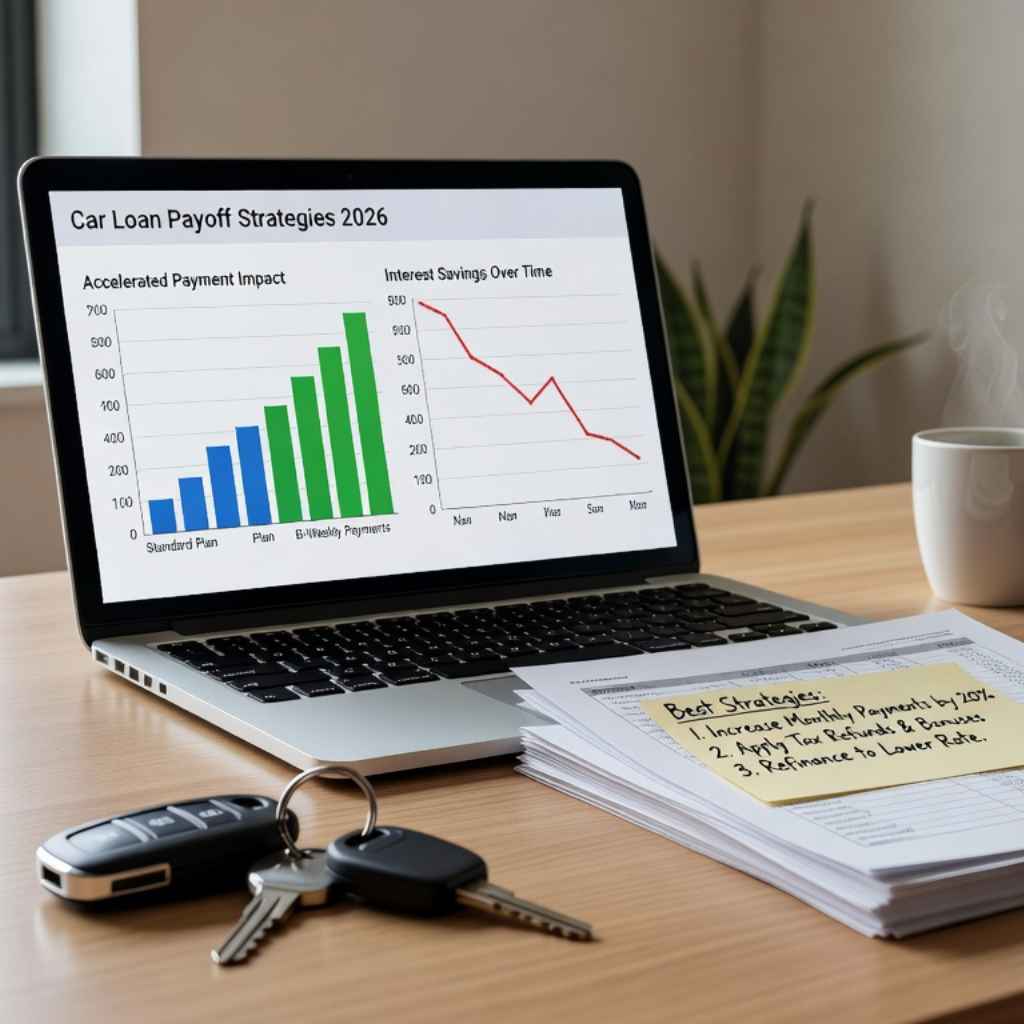
Best Strategies For Paying Off Car Loans Faster In 2026
Paying off your car loan faster means you save money on interest. It also frees up your budget sooner for other goals. With smart planning, you can reduce the loan term and get rid of the debt.
This guide explores proven strategies for achieving this goal.
Understanding Your Car Loan
First, let’s talk about what a car loan really is. It’s money you borrow to buy a car. You pay it back over time.
You also pay interest. Interest is like a fee for borrowing money. The longer you take to pay, the more interest you pay.
This is a key point. We want to cut down on that interest cost. We do that by paying off the loan faster.
Your loan has a few main parts. There’s the principal. This is the amount you borrowed.
Then there’s the interest rate. This is a percentage. It tells you how much extra you’ll pay.
There’s also the loan term. This is the length of time you have to pay it back. It might be 3 years, 5 years, or even longer.
Shorter terms mean higher monthly payments. But they also mean less total interest paid.
It’s good to know your loan details. Look at your loan papers. Find out your interest rate.
Know your current balance. Understand your monthly payment. This information is power.
It helps you make smart choices. It helps you see where you can make a difference. Knowing these numbers is the first step.
It’s the foundation for paying off your loan faster.
Why Pay Off Your Car Loan Early?
You might ask, “Why rush?” It’s a fair question. Paying off your car loan early offers real benefits. The biggest one is saving money.
Every extra dollar you pay towards the principal means less interest. Over time, this adds up to a significant amount. Think about what you could do with that saved money.
You could put it towards a down payment for a house. You could invest it for the future. Or you could simply have more spending money.
Another good reason is peace of mind. Debt can be stressful. Knowing you owe less or nothing at all can be very freeing.
It reduces financial pressure. It gives you more control over your money. Your monthly budget feels lighter without that car payment.
This can open up new possibilities for your life. You might be able to save more. You might feel more secure.
Finally, it shows financial discipline. Paying off debt early is a sign of good money management. It builds good habits.
These habits can help you with other financial goals. It’s a way to take charge of your financial future. It’s about being smart with your money.
It’s about achieving financial freedom sooner.
Strategy 1: The Bi-Weekly Payment Plan
This is a popular and simple way to pay extra. Most car loans are paid monthly. You make one full payment each month.
What if you split that payment in half? Then, you pay half of your monthly payment every two weeks. Since there are 52 weeks in a year, this means you make 26 half-payments.
That’s the same as 13 full monthly payments! You’re essentially making one extra full payment each year.
This extra payment goes directly to the principal. It works because most people get paid every two weeks. So, it fits nicely into your pay cycle.
You don’t feel a huge pinch in your budget. But you are making progress faster. This can shave months or even a year off your loan term.
It’s a subtle change with a big impact over time. Many lenders allow this. You just need to set it up.
Sometimes, you can do it through your online account. Other times, you might need to call them.
Be sure your lender applies the extra payment to the principal. Some lenders might just hold it for your next payment. You want it to reduce the loan amount.
That’s how you save on interest. This method is great for people who want a set-it-and-forget-it approach. It requires minimal effort once set up.
It’s a consistent way to make progress without a huge sudden change.
Bi-Weekly Payment Breakdown
How it Works: Pay half your monthly payment every two weeks.
Why it Helps: You make one extra full payment per year.
Result: Reduces loan term and total interest paid.
Effort: Low, once set up.
Strategy 2: Making Extra Principal Payments
This is perhaps the most direct way to pay off your loan faster. It means making payments that are larger than your minimum required amount. The key is to tell your lender that the extra amount should go towards the principal.
Always specify this. If you don’t, it might just be applied to your next month’s payment. That wouldn’t help you pay off the loan faster.
How can you make extra payments? You can do it when you have a little extra cash. Maybe you got a bonus at work.
Perhaps you sold some items you no longer need. Even small, regular extra payments can make a difference. For example, if your monthly payment is $300, try to pay $350.
That extra $50 each month adds up. Over years, it could significantly shorten your loan.
You can also plan for this. Set a small amount aside each week or month. Then, when you have enough for an extra payment, make it.
This strategy requires more active management. You need to remember to make the extra payment. You also need to ensure it’s applied correctly.
But the reward is substantial. You directly attack the principal balance. This reduces the amount of interest you pay over the life of the loan.
It’s a powerful way to take control.
It’s good to have a specific goal. For instance, aim to pay an extra $100 every few months. Or, if you get a tax refund, put a good chunk of it towards the principal.
Every bit helps. It’s about being consistent and intentional. Don’t just pay the minimum.
Look for opportunities to pay more. Your future self will thank you.
Strategy 3: Refinancing Your Car Loan
Refinancing means getting a new loan to replace your old one. You might do this to get a lower interest rate. Or you might want a shorter loan term.
Both can help you pay off your car loan faster.
Imagine your current loan has a high interest rate. Let’s say it’s 7%. You see that you can refinance to a new loan with a 4% interest rate.
This is a big saving! Even if your monthly payment stays the same, more of it will go to the principal. This speeds up the payoff.
You’ll also pay much less in interest over the entire loan period.
You can also refinance for a shorter term. If you have 4 years left, maybe you can refinance for just 2 or 3 years. This will likely mean a higher monthly payment.
But you’ll be debt-free much sooner. And you’ll save on interest too.
Before you refinance, do your homework. Compare offers from different lenders. Look at banks, credit unions, and online lenders.
Check what interest rates they offer. See what fees are involved. Some lenders charge origination fees or other costs.
These fees can sometimes cancel out the savings from a lower rate. You need to calculate the total cost. Make sure the new loan is truly better than your old one.
Refinancing is a great tool. It can help you get out of a loan faster. But it’s not for everyone.
Make sure you have a good credit score. This will help you get the best rates. If your credit has improved since you got your original loan, refinancing is often a smart move.
It’s a way to reset your loan terms and accelerate your progress.
Refinancing: Key Questions
Lower Interest Rate? Can you get a better APR?
Shorter Term? Can you switch to a 3-year loan from a 5-year loan?
Fees? Are there origination fees or other costs?
Credit Score? Has your credit improved since you took out the loan?
Strategy 4: Increasing Your Income
This might seem obvious, but it’s very effective. If you earn more money, you can use that extra money to pay off your car loan faster. This doesn’t mean you have to get a second full-time job.
There are many ways to bring in a little extra cash. Think about your skills. What do you enjoy doing?
Can you turn that into a side hustle?
Consider freelancing. Many people offer services online. This could be writing, graphic design, virtual assistance, or even tutoring.
Platforms like Upwork or Fiverr can connect you with clients. Even a few extra hours a week can generate significant income. If you love to bake, you could sell custom cakes.
If you’re good with cars, maybe offer minor repair services for friends.
Selling items you no longer need is another option. Go through your closets, garage, and attic. You might be surprised at what you find.
Online marketplaces like eBay or Facebook Marketplace make it easy to sell things. This is a great way to declutter and make money at the same time. Use all the proceeds from these side activities to make extra payments on your car loan.
This is a direct route to faster payoff.
What about asking for a raise at your current job? If you’ve been performing well, it’s worth discussing. You could also look for a new job that offers a higher salary.
Even a small increase in your regular income can be directed towards your loan. The more money you have available, the more you can put towards your debt. Increasing income is about creating more resources to tackle your financial goals.
Strategy 5: Cutting Down On Expenses
Just as earning more helps, spending less also frees up money. Look critically at your monthly budget. Where does your money go?
Are there areas where you can cut back? Even small savings can be redirected to your car loan.
Think about subscriptions. Do you use all those streaming services? Are you paying for gym memberships you rarely use?
Canceling a few subscriptions can save you $20-$50 a month. That’s money you can put towards your loan. Eating out is another big expense for many people.
Try packing your lunch for work a few days a week. Make coffee at home instead of buying it from a cafe.
Entertainment costs can add up. Instead of going to the movies every week, try a night in with friends. Look for free local events.
Reducing these costs can free up significant amounts of money. Also, consider your daily commute. Can you carpool?
Can you use public transportation sometimes? Can you combine errands to save on gas?
Shopping habits are also important. Before buying something, ask yourself if you really need it. Can you wait?
Can you find it cheaper elsewhere? Impulse purchases are a common budget killer. Try a “cooling off” period.
If you want to buy something, wait 24-48 hours. Often, you’ll realize you don’t need it after all.
Every dollar saved is a dollar that can go towards your loan. It requires being mindful of your spending. It means making conscious choices.
It’s about prioritizing your goal of becoming debt-free. This strategy works best when combined with others. You save money here, earn a little extra there, and then pay down the loan with both.
Expense Cutting Ideas
Subscriptions: Review and cancel unused ones.
Dining Out: Pack lunches, make coffee at home.
Entertainment: Look for free or low-cost activities.
Shopping: Avoid impulse buys, use a waiting period.
Transportation: Carpool, use public transit, combine errands.
Strategy 6: Paying More Than the Minimum Payment
This is similar to making extra principal payments but can be done in a more structured way. Your loan statement shows a minimum payment. This payment is calculated to pay off the loan over the set term.
If you consistently pay more than this minimum, you will pay off the loan sooner.
Let’s say your minimum payment is $300. If you can pay $350, that extra $50 is your additional principal payment. It’s crucial to specify that this extra amount goes to the principal.
Some lenders have a specific box on the payment coupon or online portal for “additional principal payment.” If not, you may need to call them to ensure it’s applied correctly.
The impact of even small extra payments is significant over time. For example, paying an extra $50 per month on a 5-year loan at 5% interest can save you over $1,000 in interest and shave nearly a year off the loan. The earlier you start making extra payments, the more interest you save.
You can make these extra payments monthly, quarterly, or whenever you have the funds. The key is consistency. If you can’t commit to a fixed extra amount every month, try to make an extra payment whenever you can.
A tax refund, a holiday bonus, or a birthday gift can all be used to make a dent in your principal. It’s about actively reducing the balance.
This strategy requires a bit of discipline. You need to remember to pay more than the minimum. And you need to make sure it’s applied to the principal.
But the rewards are definitely worth the effort. You’re taking direct control of your loan’s payoff timeline.
Strategy 7: The Debt Snowball vs. Debt Avalanche Method
These are popular debt payoff strategies. While often used for credit cards, they can be applied to car loans too. They work by focusing your extra payments on one debt at a time.
Debt Snowball: You pay the minimum on all your debts except for the smallest one. You put all your extra money towards that smallest debt. Once it’s paid off, you take the money you were paying on it (minimum + extra) and add it to the minimum payment of the next smallest debt.
This continues until all debts are gone. This method offers psychological wins. Paying off small debts quickly can be very motivating.
Debt Avalanche: You pay the minimum on all your debts except for the one with the highest interest rate. You put all your extra money towards that highest-interest debt. Once it’s paid off, you roll that payment over to the debt with the next highest interest rate.
This method saves you the most money on interest over time because you’re attacking the most expensive debt first.
For a car loan, you might have other debts like credit cards or student loans. If your car loan has a high interest rate, the debt avalanche method is financially smarter. If your car loan has a lower rate and you have higher-interest debts elsewhere, you might tackle those first.
However, if the car loan is your only debt or has the highest rate, applying these methods directly to it is very effective. The key is to dedicate any extra money you find towards paying down the principal faster.
Both methods require you to have some extra funds to apply beyond minimum payments. The decision between snowball and avalanche often comes down to personal preference and what keeps you most motivated. Seeing progress is key to sticking with any debt payoff plan.
Debt Payoff Methods at a Glance
Debt Snowball: Focus on smallest balance first. Good for motivation.
Debt Avalanche: Focus on highest interest rate first. Saves more money.
Application: Can be used for car loans, especially with multiple debts.
Requirement: Needs extra funds to apply beyond minimums.
Strategy 8: Avoiding New Debt
This might seem obvious, but it’s a crucial part of the faster payoff journey. Every time you take on new debt, it slows down your progress. This applies not just to new car loans, but also to credit cards, personal loans, or any other form of borrowing.
When you’re trying to pay off your existing car loan faster, it’s tempting to use a credit card for purchases. If you can’t pay off the credit card balance in full by the due date, you start paying interest on that new debt. This interest eats into the money you could be using for your car loan.
It creates a cycle that’s hard to break.
Think about your spending habits. If you find yourself relying on credit to make purchases, it’s a sign that your budget needs adjustment. Focus on living within your means.
Use the money you have available. If a purchase is too expensive for your current budget, it might be a sign you need to save up for it instead of borrowing.
This strategy is about being disciplined. It’s about saying “no” to new debt, even if it’s tempting. The more you can avoid taking on new financial obligations, the more resources you’ll have.
These resources can then be directed towards your primary goal: paying off your car loan faster. It’s about staying focused and resisting the urge to add more financial burdens.
Personal Experience: The “Found Money” Jar
I remember when I was trying to pay off my first car loan. It felt like a mountain. I was making my monthly payments, but it was slow going.
One day, I was cleaning out my purse and found a bunch of forgotten change. Then, at work, someone gave me a small bonus. I also realized I was buying lunch out way too often.
It was adding up.
So, I decided to create a “found money” jar. I started putting all my spare change in it. Any small amounts of cash I found or received as change went in.
I also made a rule: every time I skipped buying lunch and ate leftovers instead, I’d put the money I would have spent into the jar. That bonus I received? A good chunk of it went straight in.
It was amazing how quickly that jar filled up. After a few months, I cashed it in. I was surprised at how much money I had accumulated just from small, seemingly insignificant amounts.
I took that entire amount and made a large extra payment towards my car loan. It felt so good to see the balance drop by so much from money I would have otherwise just spent or lost. This simple habit made a real difference in my payoff timeline.
Real-World Context: Loan Terms and Interest
The environment of car loans in the US can be complex. Lenders offer various terms. A shorter loan term, like 36 or 48 months, means higher monthly payments.
But the interest rate is often lower. This is because the lender gets their money back faster. They also take on less risk.
Longer loan terms, such as 60, 72, or even 84 months, mean lower monthly payments. This makes cars more affordable. However, the interest rate is usually higher.
The longer you borrow the money, the more the lender charges for it. This is why a 72-month loan can end up costing you thousands more in interest than a 48-month loan for the same car.
User behavior plays a big role. Many people are tempted by lower monthly payments. They opt for longer terms without fully understanding the total cost.
They might think, “I can afford the monthly payment.” But they don’t consider the extra interest paid over those many years. This is a common pitfall that extends debt timelines. Understanding these loan structures helps you make informed choices to pay off your loan faster.
What This Means for You
When is paying off your car loan faster normal? It’s normal if you have the financial means and the desire to reduce your debt. Many people aim to pay off their car loans within 3-4 years, even if they have a longer term available.
It’s a smart financial move that saves money and reduces financial stress.
When should you worry about your car loan? You should worry if you are struggling to make the minimum payments. If you are constantly late or missing payments, this is a sign of trouble.
High-interest rates on your loan also warrant attention. It means you’re paying a lot for the privilege of borrowing money. If your loan term is excessively long (like 7+ years), it’s also worth re-evaluating.
Simple checks you can do: First, know your loan details: balance, interest rate, and remaining term. Second, review your budget. Can you find even $20-$50 extra per month to put towards the principal?
Third, check current refinance rates. Even if you don’t refinance, knowing the rates helps you understand your position.
Taking proactive steps can make a big difference. It’s about making your money work harder for you. It’s about getting out of debt sooner rather than later.
This frees up your finances for other important life goals. It’s a powerful way to improve your financial health.
Quick Fixes & Tips for Faster Payoff
Here are some quick tips to help you accelerate your car loan payments:
- Round Up Your Payments: If your payment is $312, pay $320. That small extra amount adds up over time.
- Use Windfalls Wisely: Tax refunds, bonuses, or gifts are perfect for making extra principal payments.
- Automate Extra Payments: Set up automatic transfers for extra amounts. This ensures you stick to your plan.
- Track Your Progress: Seeing your balance decrease can be very motivating. Use a spreadsheet or an app.
- Avoid New Car Purchases: Resist the urge to buy another car until your current one is paid off or you have a substantial down payment.
- Check for Prepayment Penalties: While rare on car loans, it’s always good to confirm your loan agreement doesn’t have any.
Car Loan Payoff Accelerator Checklist
1. Know Your Numbers: Balance, Rate, Term.
2. Budget Review: Find extra cash monthly.
3. Extra Payment Plan: Bi-weekly or fixed extra amount.
4. Windfall Strategy: Plan for bonuses, refunds.
5. Avoid New Debt: Focus on current loan.
6. Stay Motivated: Track progress, celebrate milestones.

Frequently Asked Questions
Can I pay off my car loan early without penalty?
Yes, in most cases. The Dodd-Frank Act of 2010 generally prevents lenders from charging prepayment penalties on auto loans. However, it’s always wise to check your specific loan agreement or ask your lender to be certain.
How much interest can I save by paying off my car loan early?
The amount of interest saved depends on your loan’s interest rate, the remaining balance, and how much extra you pay. The sooner and more often you pay extra towards the principal, the more interest you will save over the life of the loan.
Is it better to pay off my car loan early or invest the money?
This is a common question. If your car loan interest rate is higher than the potential return you expect from investing, paying off the loan is usually the better financial move. It’s a guaranteed return (saving interest).
If your loan rate is very low, investing might offer higher potential growth, but with more risk.
How often should I make extra payments?
You can make extra payments as often as you like, whenever you have the funds. Whether it’s monthly, quarterly, or even more frequently, every extra payment towards the principal helps reduce your loan term and the total interest paid.
What is the difference between paying extra and a bi-weekly payment plan?
A bi-weekly payment plan involves paying half your monthly payment every two weeks, resulting in one extra full payment per year. Making extra payments means adding a specific amount (e.g., $100) to your regular monthly payment, or making a lump-sum extra payment whenever you can. Both help pay down principal faster.
Can I refinance my car loan if I have bad credit?
It can be more challenging to refinance with bad credit, as lenders see you as a higher risk. However, it’s not impossible. Look for lenders specializing in subprime auto loans.
You may need to offer a larger down payment on a refinance or have a co-signer with good credit. Your interest rate will likely be higher than if you had good credit.
Conclusion
Paying off your car loan faster is achievable. It takes a plan and some consistent effort. By understanding your loan and using strategies like bi-weekly payments, extra principal payments, or refinancing, you can shorten your loan term.
Cutting expenses and increasing income provide more funds. These efforts save you money on interest. They also bring you closer to financial freedom.
Start today and watch your debt disappear faster than you imagined.
Products related to this article
Sponsored / affiliate links. As an Amazon Associate I earn from qualifying purchases. I may earn additional commission from eligible campaigns.
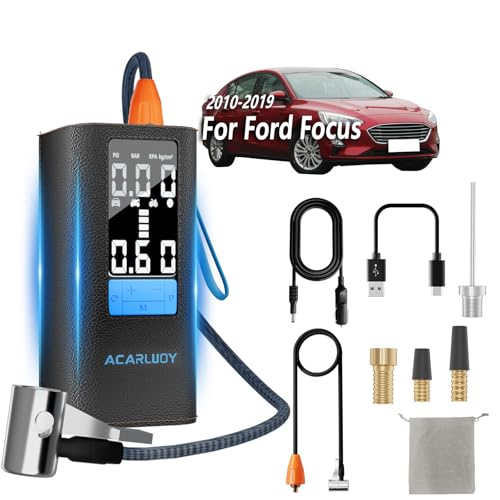 ACARLUOY Air compressor for tires that work off car outlet,Fit for Ford Focus 2010-2019,Suitable for Ford Focus Pickup 150PSI portable tire inflator,12V DC compact air compressor
 Air compressor for tires that work off car outlet,Fit for BMW I3 (2013-2025),Suitable for BMW I3 150PSI portable tire inflator,12V DC compact air compressor