What Kind Of Freon Does My Car Take? Quick Guide
It’s a common car problem. Your air conditioning blows warm air on a hot day. You know it needs a “recharge” or “Freon.” But then comes the confusing part: what kind of Freon does my car actually take?
This isn’t a one-size-fits-all answer anymore. Cars use different types of refrigerants. Knowing which one is right for your specific vehicle is super important.
Using the wrong type can cause serious damage. It can also be costly to fix.
Most cars built before 1995 use R-12 refrigerant. Cars made between 1995 and 2016 often use R-134a. Newer cars, typically from 2017 onwards, are switching to R-1234yf.
Always check your vehicle’s AC system or owner’s manual for the correct type. It is crucial to use the specified refrigerant to avoid damaging your AC system.
Understanding Car Air Conditioning Refrigerants
Your car’s air conditioning (AC) system works by cycling a special fluid. This fluid is called a refrigerant. It’s also commonly called “Freon,” though that’s actually a brand name.
This refrigerant changes from a liquid to a gas and back again. This change absorbs heat from inside your car. Then, it releases that heat outside.
Think of it like a tiny, continuous cooling cycle. The refrigerant is the key player. It needs to be the right kind for the system to work.
It also needs to be in the right amount. Over time, small leaks can happen. This causes the refrigerant level to drop.
That’s when your AC starts blowing warm air.
The type of refrigerant your car uses depends on when it was made. The world has been moving away from older refrigerants. This is because some were found to harm the ozone layer.
Or they had a high global warming potential. So, engineers have developed newer, safer options.
There are three main types of refrigerants you’ll find in cars. They are R-12, R-134a, and R-1234yf. Each one has different properties and is used in different vehicles.
You can’t just mix them. They are not compatible with each other.
The History of Car Refrigerants: From R-12 to R-1234yf
Let’s take a trip down memory lane. Understanding the history helps explain why there are different types today. It also shows the progress made in making things better for the environment.
R-12: The Old School Refrigerant
For many years, R-12 was the standard. It was very effective at cooling. Many cars from the early days of AC up until about 1994 used R-12.
It was a popular choice for a long time. It was reliable and did a great job.
However, scientists discovered that R-12 was harmful to the ozone layer. The ozone layer is like Earth’s shield against harmful sun rays. Chlorofluorocarbons (CFCs), like R-12, were found to deplete it.
This led to international agreements to phase out these types of chemicals.
Because of this, R-12 is no longer produced. You can still find it, but it’s very expensive and hard to get. It’s also not legal to use it in new vehicles.
If your car uses R-12, you’ll often hear it referred to as “Freon.” This is because Freon was a major brand name for R-12.
R-12: Key Points
Era: Used widely until mid-1990s (roughly pre-1995).
Type: Chlorofluorocarbon (CFC).
Environmental Impact: Harmful to the ozone layer.
Current Status: Phased out, difficult and expensive to obtain.
System Compatibility: Not compatible with newer refrigerants.
R-134a: The Transitional Champion
As R-12 was phased out, a new refrigerant took its place. This was R-134a. It’s a hydrofluorocarbon (HFC).
HFCs don’t harm the ozone layer. This was a big step forward for environmental protection.
Most cars made from around 1995 through to about 2016 used R-134a. If you have a car from this period, it likely takes R-134a. It became the industry standard for over two decades.
It’s still very common to find R-134a in many vehicles on the road today.
While R-134a is better for the ozone layer, it’s not perfect. It still has a high global warming potential. This means it can contribute to climate change if released into the atmosphere.
Because of this, regulations are now pushing for even newer, more eco-friendly refrigerants.
If you are buying an AC recharge kit for a car from this era, you’ll look for R-134a. The cans will clearly state this. It’s important to ensure you get the right one.
Mixing R-134a with R-12 or R-1234yf would be a big mistake for your car’s AC system.
R-134a: The Common Choice
Era: Common from mid-1990s to mid-2010s (roughly 1995-2016).
Type: Hydrofluorocarbon (HFC).
Environmental Impact: Does not harm ozone layer, but has high global warming potential.
Current Status: Still widely used, but being phased out in newer vehicles.
System Compatibility: Not compatible with R-12 or R-1234yf.
R-1234yf: The New Frontier
The latest generation of refrigerants is R-1234yf. It’s also an HFC, but it has a much lower global warming potential than R-134a. This makes it a much greener choice.
It’s the current standard for most new vehicles sold today.
If you bought a car that was made in 2017 or later, it most likely uses R-1234yf. Carmakers are transitioning to this refrigerant to meet stricter environmental regulations. These regulations focus on reducing greenhouse gas emissions.
R-1234yf is chemically different from R-134a. This means AC systems designed for R-134a cannot use R-1234yf. Likewise, systems designed for R-1234yf cannot use R-134a.
The connectors for recharging the system are also different. This is a safety feature to prevent accidental mixing.
Because R-1234yf is newer, it can be more expensive. The equipment needed to service these systems is also specialized. If your car uses R-1234yf, it’s often best to have it serviced by a professional.
They have the right tools and knowledge.
R-1234yf: The Modern Standard
Era: Standard in most new cars from around 2017 onwards.
Type: Hydrofluorocarbon (HFC) with low global warming potential.
Environmental Impact: Significantly lower global warming potential than R-134a.
Current Status: The refrigerant of choice for new vehicles.
System Compatibility: Not compatible with R-12 or R-134a. Uses different connectors.
How to Find Out What Kind of Freon Your Car Takes
This is the million-dollar question, right? You need to know for sure. Guessing is not an option.
Fortunately, there are a few reliable ways to find out. You don’t need to be a car expert to do this.
1. Check Under the Hood
This is often the easiest and quickest method. Open the hood of your car. Look for a sticker on the underside of the hood or on the radiator support.
This sticker usually has information about your car’s AC system. It will often state the type of refrigerant it uses and the correct amount.
The sticker might say “R-134a” or “R-1234yf.” It’s usually printed in clear, bold letters. Sometimes, it will also show the amount of refrigerant needed in ounces or pounds.
If you can’t find a sticker on the hood, look around the AC components under the hood. Sometimes, there’s a label directly on the AC compressor or on one of the refrigerant lines. These labels are specifically there to tell you what refrigerant is required.
I remember the first time I had to figure this out for my old Civic. I popped the hood, and there it was, a faded yellow sticker right on the strut tower. It clearly said “R-134a.” It saved me a lot of guesswork.
It’s always worth a look first!
2. Consult Your Owner’s Manual
Your car’s owner’s manual is a treasure trove of information. It contains details about all of your car’s systems. This includes the AC.
Look in the index or the section on maintenance or the HVAC system.
The manual should specify the type of refrigerant your car uses. It might also mention the correct fill quantity and even the proper type of AC oil. This is the most official source of information for your specific vehicle.
If you don’t have a physical copy of your owner’s manual, you can usually find a digital version online. Most car manufacturers have their manuals available for download on their websites. Just search for your car’s make, model, and year, and look for the owner’s manual PDF.
3. Look at the AC Service Ports
This is a slightly more technical way, but it’s very reliable. The AC system has service ports. These are where technicians connect their equipment to add or remove refrigerant.
The ports are designed differently for different refrigerants.
R-134a systems have larger service ports. R-1234yf systems have smaller service ports. The connectors on R-1234yf systems are also different to prevent accidental mixing.
If you look closely at the ports, you might see markings on them.
For R-134a, you’ll often see the letter “L” stamped on the low-side port cap. For R-1234yf, the ports are a different size, and the caps might have specific markings or different threading.
This method is best if you’re familiar with car parts. If you’re unsure, it’s better to stick with the sticker or owner’s manual. Incorrectly identifying the ports could lead to trying to connect the wrong hose.
Quick Port Check (Visual)
R-134a Service Ports:
- Larger in diameter.
- Commonly found on the passenger side of the engine bay.
- Low-side port may have an “L” marking.
R-1234yf Service Ports:
- Smaller in diameter.
- Often have a blue or red marking on the cap or port itself.
- Designed to prevent cross-contamination.
4. Ask a Professional Mechanic
If all else fails, or if you’re simply not comfortable checking yourself, a professional mechanic is your best bet. They service AC systems every day. They know exactly how to identify the refrigerant type for any vehicle.
When you take your car in for AC service, tell them your car’s year, make, and model. They can quickly look it up in their system. They have access to databases that list the correct refrigerant for virtually every car ever made.
A good mechanic will confirm the refrigerant type before they start any work. This ensures they use the correct product and don’t damage your system. It’s an investment in peace of mind, especially with newer, more complex systems.
Why Using the Wrong Refrigerant is a Big Problem
This isn’t just about getting your AC to blow cold air. Using the wrong refrigerant can cause serious, expensive damage to your car’s AC system. It’s like trying to feed your cat dog food – it just won’t work and can cause harm.
System Damage
The most common issue is damage to seals, hoses, and the compressor. Refrigerants have different chemical properties. They also operate at different pressures.
A system designed for R-134a might not handle the pressure or chemical makeup of R-1234yf correctly. This can lead to leaks or component failure.
Conversely, if you put R-134a into a system designed for R-1234yf, the seals might not be compatible. The system might also not be able to reach the correct operating pressures. This can lead to poor cooling performance and damage over time.
For older R-12 systems, trying to put R-134a or R-1234yf in would be disastrous. The internal components are just not designed for it. The pressures and chemical interactions would cause immediate problems.
Contamination
Refrigerants are not meant to be mixed. If you add the wrong type, it contaminates the entire system. Even a small amount of the wrong refrigerant can cause problems.
Once contaminated, the whole system often needs to be evacuated, flushed, and refilled with the correct refrigerant.
This process is costly. It involves specialized equipment to safely remove the mixed refrigerant. Then, the system needs to be cleaned thoroughly to remove any residue of the wrong chemical.
This is why prevention is key. Make sure you know exactly what your car needs.
Performance Issues
Even if the wrong refrigerant doesn’t immediately cause damage, it will likely affect performance. Your AC might not blow as cold as it should. The system might cycle on and off incorrectly.
This means you won’t get the comfortable cool air you expect on a hot day.
Modern AC systems are engineered for specific refrigerants. The pressures, temperatures, and flow rates are all calibrated. Introducing a different chemical throws off this delicate balance.
The system simply won’t work as efficiently or effectively.
Safety Hazards
While refrigerants are generally safe when handled properly, there can be risks. Older refrigerants like R-12 contained ozone-depleting substances. Newer refrigerants, while safer for the environment, are still chemicals.
They can cause frostbite if they come into contact with skin. Some might also be flammable under certain conditions.
Servicing an AC system requires safety precautions. If you are not trained, it’s best to leave it to the professionals. They use personal protective equipment (PPE) and follow safety protocols.
Consequences of Using the Wrong Refrigerant
1. System Damage: Seals, hoses, compressor failure.
2. Contamination: Requires expensive flushing and refilling.
3. Poor Performance: AC blows warm or not cold enough.
4. Costly Repairs: Replacing damaged components can be very expensive.
5. Safety Risks: Potential for frostbite or other issues.
DIY vs. Professional AC Recharge: When to DIY
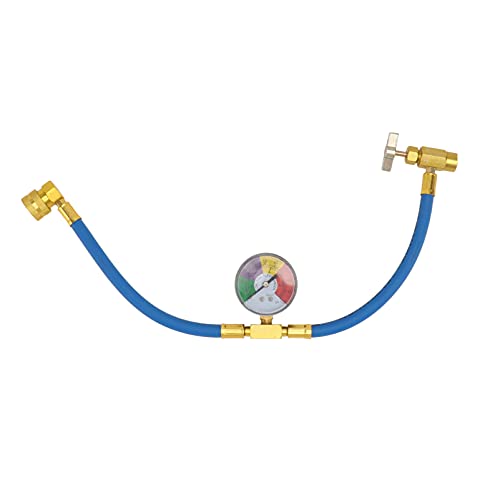
Many people consider recharging their car’s AC themselves. You can buy DIY recharge kits at auto parts stores. These kits usually come with a can of refrigerant and a hose with a gauge.
For some cars, DIY can be an option. But it has limitations.
When DIY is Generally Okay (for R-134a Cars)
If your car uses R-134a, and the only issue is a slow loss of refrigerant over time, a DIY recharge might be suitable. This is assuming you’ve confirmed the correct type of refrigerant.
Steps for DIY R-134a Recharge:
- Identify the correct refrigerant: Make sure it’s R-134a.
- Locate the low-side service port: It’s usually a larger port on the AC line.
- Attach the gauge: Connect the hose to the port.
- Check the pressure: Read the gauge. The AC system needs to be running for an accurate reading (engine on, AC on max).
- Add refrigerant slowly: Follow the kit’s instructions. Add small amounts at a time.
- Monitor the gauge: Stop when the gauge shows the correct pressure for ambient temperature.
- Disconnect and recap: Remove the hose and put the cap back on the port.
Important DIY Considerations:
- Only for R-134a: Do NOT attempt DIY for R-12 or R-1234yf. These require specialized equipment and knowledge.
- Leaks: DIY kits don’t fix leaks. If you have a leak, the refrigerant will just escape again. You might need to recharge it frequently, which is costly and bad for the environment.
- Overcharging: Adding too much refrigerant can also damage the system and reduce cooling efficiency. The gauge on the kit is essential.
- Oil: Some refrigerants need specific AC oils added. DIY kits might not include this.
When You Absolutely Need a Professional
If your car uses R-1234yf, you must go to a professional. The connectors are different, the pressures are different, and the chemicals require specialized handling.
You also need a professional if:
- You have R-12: This refrigerant is phased out and requires special recovery and handling.
- Your AC stopped working suddenly: This often indicates a bigger problem than just low refrigerant, like a bad compressor or a major leak.
- You suspect a significant leak: Professionals can detect and repair leaks.
- Your system has been contaminated: They can properly flush and refill the system.
- You’re unsure about anything: It’s always safer to ask an expert.
I learned this the hard way with my first car. The AC just wasn’t cold. I bought a DIY R-134a can.
I attached it, and the gauge seemed okay. The air got a little colder, but not great. A month later, it was back to blowing warm air.
Turns out, I had a slow leak that needed a proper repair. I wasted money on the can and still had to pay for the repair later.
Identifying R-1234yf Systems: What to Look For
As R-1234yf becomes the standard, it’s helpful to know how to spot these systems. They have specific design features to ensure the correct refrigerant is used.
Different Connectors
The most obvious sign is the service port connectors. The low-side port for R-1234yf is physically smaller than the R-134a port. It also has a different thread pattern.
This prevents you from accidentally connecting an R-134a charging hose.
If you look at a DIY recharge kit for R-134a, you’ll see the hose fitting is quite large. It would simply not fit onto an R-1234yf service port. Similarly, R-1234yf service equipment has unique fittings.
Labels and Stickers
Cars equipped with R-1234yf systems will almost always have clear labels. These labels are usually found under the hood. They will explicitly state “R-1234yf” as the required refrigerant.
Sometimes, they will also mention “Low GWP” (Low Global Warming Potential).
These labels are crucial for DIY users and technicians alike. They act as a primary identifier. Always trust the label over any assumptions.
Vehicle Year and Model
As a general rule of thumb:
- Pre-1995: Likely R-12.
- 1995-2016: Most likely R-134a.
- 2017 onwards: Most likely R-1234yf.
However, this is just a guide. Some manufacturers switched earlier or later. Always verify with a sticker, manual, or mechanic.
Spotting an R-1234yf System
Connector Size: Smaller than R-134a ports.
Port Markings: Often blue or red caps/markings.
Under-Hood Labels: Explicitly state “R-1234yf” and “Low GWP.”
Vehicle Age: Typically 2017 and newer models.
Professional Confirmation: The most reliable method.
Environmental Impact and Future Refrigerants
The move towards refrigerants like R-1234yf isn’t just about performance. It’s a significant environmental push. Older refrigerants like R-12 were damaging the ozone layer.
Newer ones like R-134a were better for ozone but still potent greenhouse gases.
The development of R-1234yf with its low global warming potential is a positive step. It means that even as we rely on air conditioning, the environmental footprint is shrinking.
What’s next? Research is ongoing. There’s interest in natural refrigerants like CO2 (R-744) for automotive AC.
However, these come with their own challenges, such as higher operating pressures. The goal is always to find a balance between effective cooling, cost, and environmental safety.
For now, R-1234yf is the focus. As it becomes more widespread, the cost is expected to come down. This will make servicing these systems more accessible.
Real-World Scenarios and What They Mean
Let’s imagine a few common situations you might face.
Scenario 1: Your car is a 2005 sedan.
What kind of Freon does it likely take? Based on the typical timeline, your 2005 sedan most likely uses R-134a. Your first step should be to check the sticker under the hood or consult your owner’s manual to be absolutely sure.
Scenario 2: You bought a brand new SUV last year.
What refrigerant is probably in its AC system? Modern vehicles from 2017 onwards have largely switched to R-1234yf. This is the most probable answer.
Again, confirm with the under-hood sticker or manual.
Scenario 3: Your classic car from the 1980s has AC.
What kind of Freon would it have used? Cars from the 1980s and early 1990s almost certainly used R-12. This is the older, ozone-depleting type.
If you need to service this AC, you’ll need a specialist familiar with R-12, and it will likely be expensive.
Scenario 4: Your AC just stopped blowing cold air suddenly.
What should you do? Don’t just grab a DIY can. A sudden failure often means a larger problem.
This could be a failed compressor, a blown fuse, or a significant leak. You need a professional diagnosis. They can safely check the system, identify the refrigerant type, and fix the root cause.
When is it Normal for AC to Blow Warm?
It’s important to note that AC systems aren’t designed to run forever without issue. There are times when the air might not be as cold as usual, and it’s not always a disaster.
- Ambient Temperature: On extremely hot days, when the outside temperature is very high, your AC system has to work much harder. You might notice it doesn’t cool quite as effectively as on a mild day. This is normal; the system is trying its best.
- Low Refrigerant (Slow Leak): Small leaks are common over time. Your car might lose a little refrigerant each year. This can lead to slightly less cold air before it becomes a problem. If the air is just “not as cold” but still cool, it might be time for a top-up, but always check for leaks first.
- System Strain: If you’ve been running your AC on max for hours, especially in stop-and-go traffic, the system can get stressed. Give it a break for a few minutes, and it might recover.
However, if your AC goes from blowing arctic-cold air to warm air very quickly, or if it’s completely blowing warm air when it used to be very cold, that’s usually a sign of a problem that needs attention.
Quick Tips for AC Maintenance
Keeping your car’s AC running smoothly is easier than you think. A little regular attention can go a long way.
- Run Your AC Regularly: Even in winter, run your AC for a few minutes once a month. This helps keep the seals lubricated and prevents refrigerant from escaping.
- Check for Leaks: If you notice a greasy residue around AC lines or the compressor, it could indicate a refrigerant leak.
- Clean the Condenser: The condenser, usually located in front of the radiator, needs good airflow. Keep it free of debris like leaves or bugs. You can gently rinse it with a hose.
- Listen for Strange Noises: Grinding or squealing sounds from the AC system could mean a failing compressor or fan clutch.
- Get it Serviced: Every few years, have your AC system checked by a professional. They can inspect for leaks, check refrigerant levels, and ensure everything is working optimally.

Frequently Asked Questions About Car Freon
What is Freon?
Freon is a brand name for a type of refrigerant. The actual chemical names are things like R-12, R-134a, and R-1234yf. When people say “Freon,” they usually mean any type of refrigerant used in car AC systems.
Can I mix R-134a and R-1234yf?
No, you absolutely cannot mix R-134a and R-1234yf. They are not compatible. Mixing them will contaminate your AC system, damage components, and lead to expensive repairs.
How do I know if my car needs a recharge?
The most common sign is when your car’s air conditioning stops blowing cold air or blows only slightly cool air, especially on a hot day. If it used to be very cold and now isn’t, it’s a good sign it might need a recharge or a check for leaks.
Can I use an R-12 recharge kit on a car that takes R-134a?
No, you cannot. R-12 and R-134a are completely different chemicals and operate at different pressures. Using the wrong one will damage your AC system.
Always verify the correct refrigerant type for your car.
Is it okay to let my car’s AC refrigerant leak out?
No, it is not okay. Refrigerants are chemicals that can harm the environment. Releasing them into the atmosphere is illegal and bad for the planet.
If you suspect a leak, get it repaired by a professional.
How long does a car AC recharge last?
If your AC system is working properly and has no leaks, a recharge should last for a very long time. However, most AC failures are due to small leaks. If you need frequent recharges, it means there’s a leak that needs to be found and fixed.
The Takeaway: Know Your Refrigerant
Understanding what kind of refrigerant your car takes is key to maintaining your AC system. Whether you have an older car with R-12, a mid-range car with R-134a, or a newer model with R-1234yf, knowing the difference prevents costly mistakes.
Always check for stickers under the hood, consult your owner’s manual, or ask a trusted mechanic. Protecting your car’s AC system means keeping it cool on those hot summer drives. And doing it the right way helps protect our environment too.
Products related to this article
Sponsored / affiliate links. As an Amazon Associate I earn from qualifying purchases. I may earn additional commission from eligible campaigns.