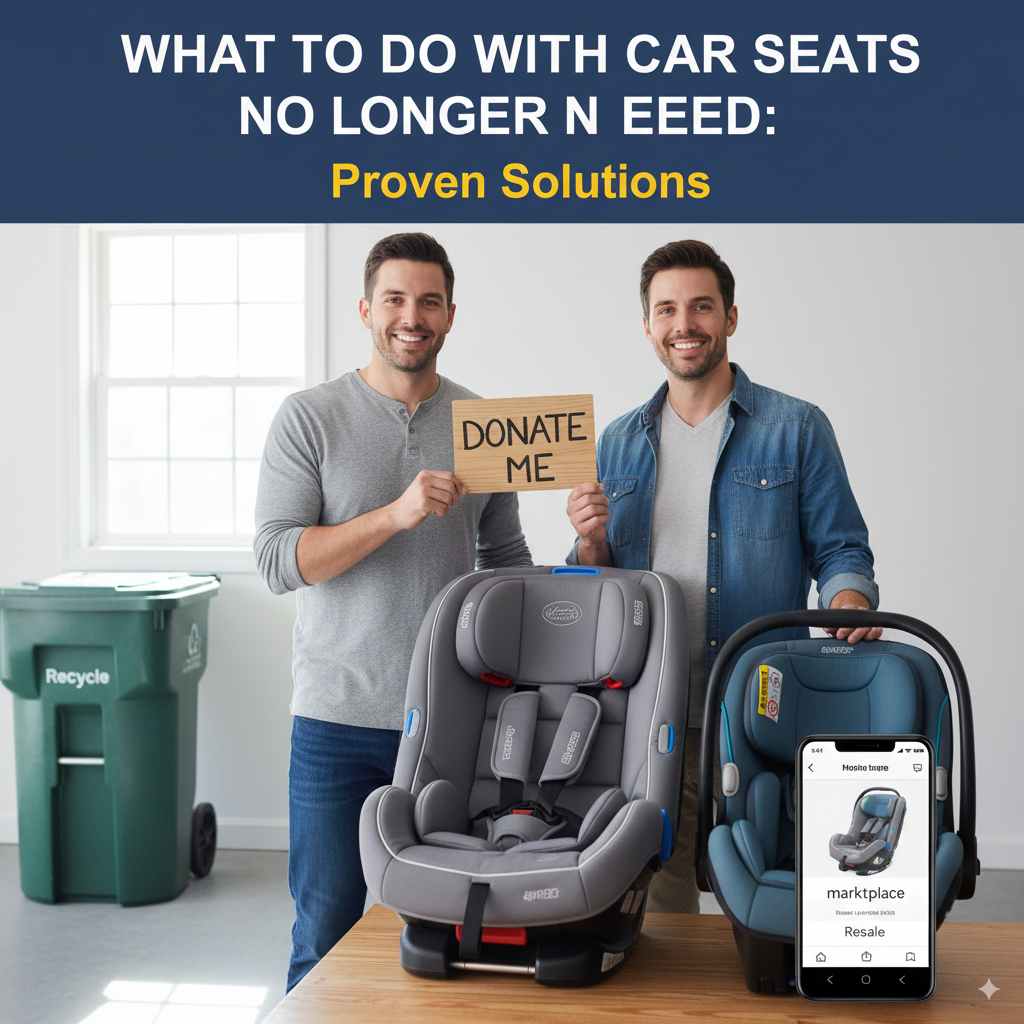
What To Do With Car Seats No Longer Needed: Proven Solutions
Don’t let old car seats clutter your home! You can safely donate them to charities, recycle them through specialized programs often found at retailers or scrap yards, or sometimes sell them if they’re in excellent, unexpired condition. Always check expiration dates and recall information before deciding.
It’s a common situation for many parents and guardians: kids grow up, and those trusty car seats that once kept them safe suddenly become obsolete. Whether it’s an infant seat outgrown, a booster that’s no longer needed, or a seat that served its purpose for a different family member, you’re left wondering, “What should I do with this?” It feels wrong to just toss it in the trash, especially given its important safety role. But where can it go to be useful, or at least disposed of responsibly?
You’re not alone in asking this question. Many people face this dilemma, and thankfully, there are excellent, safe, and eco-friendly ways to handle car seats that are no longer in use. Forget about that old seat taking up valuable space or ending up in a landfill. We’ve got some proven solutions that are easy to follow, no matter your comfort level. We’ll guide you through the best options, from giving your seat a new life to ensuring it’s recycled properly. Let’s find the perfect next step for your car seat!
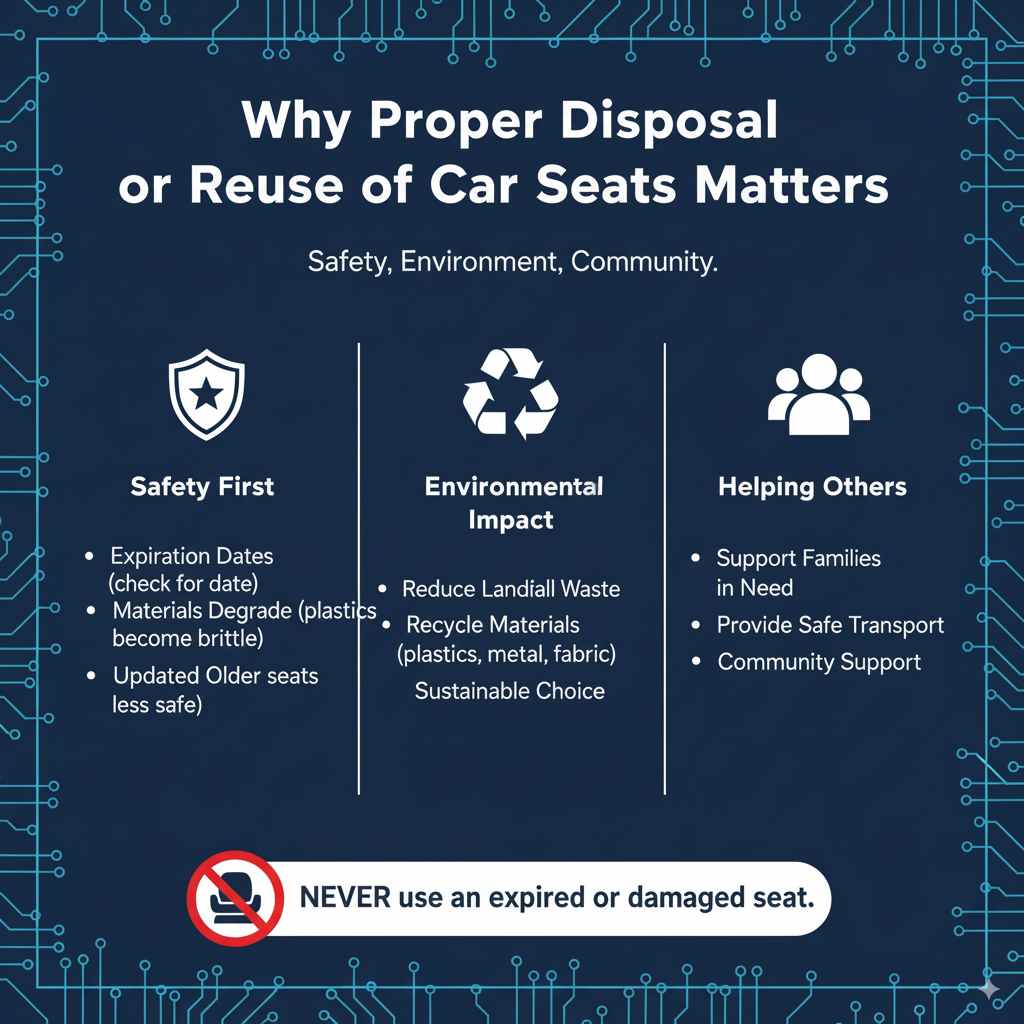
Why Proper Disposal or Reuse of Car Seats Matters
Before we dive into the “how-to,” it’s good to understand why simply throwing an old car seat away isn’t the best idea. These seats are designed with specific safety features and expire. Reusing or disposing of them incorrectly can pose risks or harm the environment.
- Safety First: Car seats have expiration dates, usually printed on the seat itself. After this date, the plastics can become brittle, and safety standards might have changed, compromising their effectiveness in a crash. Using an expired seat is dangerous.
- Environmental Impact: Car seats are made of various materials, including plastics, metal, and fabric. Many of these can be recycled, diverting waste from landfills.
- Helping Others: Gently used, unexpired car seats in good condition can be a lifeline for families struggling to afford them.
Understanding Car Seat Expiration and Recalls
This is the most crucial step before deciding what to do with your car seat. You need to know if it’s still safe to use or pass on.
Check the Expiration Date
Most car seats have an expiration date stamped on them. This is often found on a sticker on the base, the back of the seat, or on the sides. Look for phrases like “Date of Manufacture” and “Expiration Date” or a date that indicates when the seat should no longer be used. Manufacturers set these dates because the materials (especially plastics) degrade over time due to exposure to sunlight, temperature fluctuations, and general wear and tear. A common timeframe is 6 to 10 years from the date of manufacture, but always check your specific seat’s label.
Investigate Recalls
Even if your car seat is not expired, it might be part of a safety recall. You can check for recalls on the National Highway Traffic Safety Administration (NHTSA) website. This is essential for your own children’s safety and for anyone you might pass the seat to.
If a car seat is expired, has been in a crash (even a minor one), or is subject to a recall where the remedy is not complete, it should never be donated or resold for safety reasons. These seats should be rendered unusable to prevent accidental use.
Proven Solutions for Unneeded Car Seats
So, your car seat is expired, damaged, or simply no longer fits your child’s needs. What are your best options?
Option 1: Donation to Charities (with conditions!)
This is a wonderful way to help other families, but it comes with strict requirements. Only donate car seats that are:
- Not expired: Check the date!
- Never in a crash: Even a fender bender can compromise the structural integrity.
- Free from damage: No cracked plastic, frayed straps, or missing parts.
- Clean: Thoroughly washed and free of mold or stains.
- Accompanied by all original parts: Including the manual, if possible.
Who accepts them?
- Local Shelters and Women’s Shelters: Many actively look for donations for families in need. Always call ahead to confirm they accept car seats and what their specific requirements are.
- Non-profit Organizations: Organizations that support new mothers or low-income families might have programs for car seat donations.
- Churches or Community Centers: Some have outreach programs that could utilize car seats.
Important Note: Some organizations may not accept car seats due to liability or the difficulty of verifying their safety history. Always call and ask first!
Option 2: Car Seat Recycling Programs
This is often the most responsible choice for expired or damaged car seats because it keeps them out of landfills and allows valuable materials to be repurposed.
Retailer Take-Back Programs
Several major retailers have partnered with recycling companies to offer car seat recycling events or drop-off points. These programs are becoming more common and are usually free or have a nominal fee.
- Graco: Often partners with local recycling centers or has specific events. Keep an eye on their website for announcements.
- Britax: Has had recycling programs in the past, sometimes in conjunction with specific retailers.
- Target: Occasionally hosts trade-in events for various baby gear, including car seats.
- Buy Buy Baby: Has been known to participate in recycling initiatives.
How to find them:
Check the websites of major baby gear brands and large retailers in your area. Search online for “car seat recycling near me” or “baby gear recycling events.”
Specialized Recycling Centers
Some local recycling facilities or hazardous waste collection sites accept car seats. They might partner with specific recycling companies that can break them down.
A fantastic resource is TerraCycle, which often partners with various brands and retailers for recycling difficult-to-recycle items, including car seats. You can sometimes find drop-off locations through their site or participate in mail-in programs.
Manufacturer Recycling Initiatives
Some car seat manufacturers have their own recycling programs. You might need to mail the car seat back to them, sometimes for a fee or in exchange for a discount on a new product. Check the “support” or “recycling” section of your car seat brand’s official website.
Option 3: Sell It (Only in Pristine Condition)
If your car seat is relatively new, in excellent condition, has never been in an accident, and is well past its expiration date, you might consider selling it. However, this option requires extreme caution and honesty.
- Know the Risks: Buyers may not always be aware of expiration dates or the importance of a crash-free history. You have a responsibility to be fully transparent.
-
Where to Sell:
- Online Marketplaces: Platforms like Facebook Marketplace, eBay (ensure you clearly state the expiration date and crash history), or local parenting groups.
- Consignment Shops: Some baby consignment stores accept car seats, but they will have strict inspection rules.
- Be Honest and Clear: In your listing, prominently state the “Date of Manufacture” and the “Expiration Date.” Explicitly mention if the seat has “never been in a crash.” Failure to do so is not only unethical but can be dangerous.
- Set a Fair Price: Given the short lifespan of a car seat’s usability, don’t expect to get much. The focus should be on recouping a small amount of your original investment and ensuring it has a short, safe remaining life with a new family.
Disclaimer: Selling or giving away an expired or crash-affected car seat is extremely dangerous and should be avoided at all costs. Your primary concern should always be safety.
Option 4: Render It Unusable – The Last Resort
If your car seat cannot be donated, sold, or recycled through available programs, the safest final step is to render it completely unusable. This prevents anyone from picking it out of the trash and using it, potentially endangering a child.
How to make it unusable:
- Cut the Harness Straps: Use a sharp utility knife or strong scissors to cut through all of the internal harness straps. Make multiple cuts so they are in numerous small pieces.
- Destroy the Shell: If possible, break the plastic shell of the car seat. You can use a hammer or other tools to crack it in several places.
- Remove or Damage Labels: Obscure or remove any labels indicating safety standards or identifying the seat.
Once you’ve properly “destroyed” the car seat, you can then place it in your regular household trash. While not ideal from a recycling perspective, safety is paramount, and this ensures it won’t be used by someone who might not know its history.
Step-by-Step Guide: Preparing Your Car Seat for its Next Life (or Disposal)
No matter which option you choose, preparing the car seat correctly is essential.
Step 1: Gather Information
- Locate the car seat.
- Find the manufacturer’s label.
- Note the “Date of Manufacture” and “Expiration Date.”
- Check for any safety recall notices on the NHTSA website using the seat’s model number.
- Assess its condition: any damage, missing parts, or visible wear and tear?
Step 2: Clean the Car Seat Thoroughly
If you plan to donate or sell, cleaning is vital. Even for recycling, a clean seat is often preferred.
Cleaning Supplies You Might Need:
- Mild soap or detergent (like baby-safe dish soap)
- Warm water
- Soft cloths or sponges
- Stiff brush (for stubborn spots)
- Vacuum cleaner with hose attachment
- Possibly a baking soda/water paste for tough stains
Cleaning Process:
- Remove Fabric Coverings: Check your car seat manual for instructions on how to detach the fabric cover and harness pads.
- Wash Fabric: Most fabric covers can be hand-washed or machine-washed on a gentle cycle with mild soap and cold water. Always air dry completely to prevent shrinkage or damage. Never use a dryer unless the manual specifically allows it.
- Clean Plastic and Metal Parts: Wipe down the entire plastic shell, base, and buckle mechanisms with a damp cloth and mild soap. Use a soft brush for crevices. Rinse with a clean, damp cloth and allow to air dry completely.
- Vacuum: Use a vacuum with a crevice tool to remove any crumbs or debris from hard-to-reach areas.
- Straps: Harness straps are trickier. If heavily soiled, check your manual. Often, spot cleaning with a damp cloth and mild soap is recommended. Again, air dry thoroughly. Never use bleach or harsh chemicals.
Step 3: Decide on the Best Option
Based on the expiration date, condition, and recall status from Step 1, choose the most appropriate solution:
- Excellent Condition, Not Expired: Consider donation or possibly selling.
- Expired/Damaged/Recalled: Prioritize recycling or rendering unusable.
Step 4: Execute Your Chosen Solution
- For Donation: Contact the charity/shelter to confirm drop-off details and requirements.
- For Recycling: Find a local program or retailer event. Follow their instructions for drop-off or mail-in.
- For Selling: List your item with full transparency and safety details.
- To Render Unusable: Carefully follow the steps to cut straps and damage the shell before discarding in your regular trash.
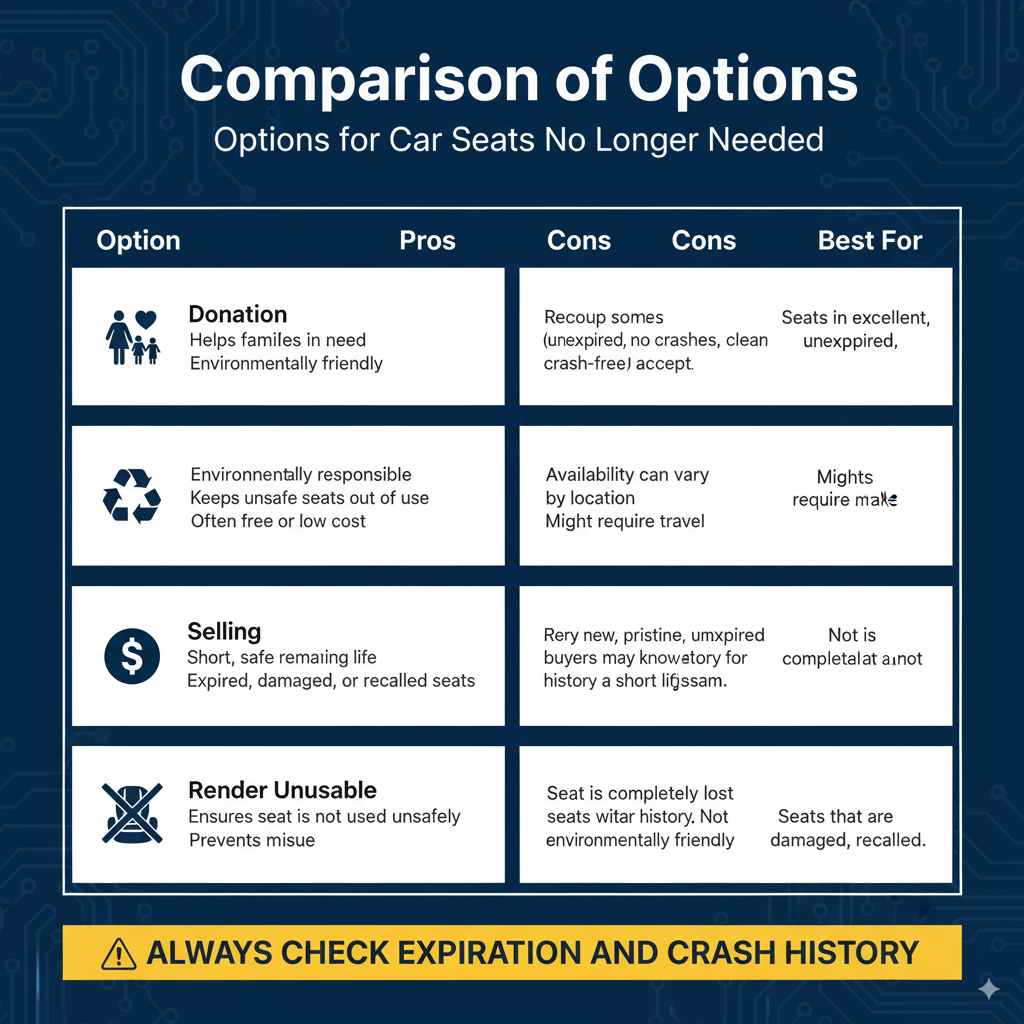
Comparison of Options
Here’s quick look at the pros and cons of each major option.
| Option | Pros | Cons | Best For |
|---|---|---|---|
| Donation | Helps families in need, environmentally friendly if seat is safe. | Strict requirements (unexpired, no crashes, clean); many places don’t accept them. | Seats in excellent, unexpired, crash-free condition. |
| Recycling Programs | Environmentally responsible, keeps unsafe seats out of use, often free or low cost. | Availability can vary by location and time; might require travel. | Expired, damaged, or recalled seats; seats that cannot be donated. |
| Selling | Recoup some costs, gives the seat a short, safe remaining life. | Requires honesty; buyers may not know risks; limited market for used seats. | Very new, pristine, unexpired seats with clear history for a short remaining lifespan. |
| Render Unusable | Ensures seat is not used unsafely, prevents misuse from trash. | Seat is completely lost; not environmentally friendly. | Seats that are expired, damaged, recalled, or cannot be donated/recycled. |
Frequently Asked Questions (FAQ)
- Can I put an expired car seat in my regular trash?
- Yes, if you render it unusable first. This means cutting the harness straps and damaging the shell to prevent anyone from taking it and using it unsafely. After that, it can go in your household waste.
- How do I find out if a car seat has been recalled?
- The best place to check for recalls is the National Highway Traffic Safety Administration (NHTSA) website. You’ll need your car seat’s make, model, and potentially its serial number.
- What if my car seat is expired but still looks new?
- Even if it looks new, expired car seats are unsafe. The plastic can degrade over time, making them less effective in a crash. It should not be used by children. Your best options are recycling or rendering it unusable.
- Is it safe to take a car seat from a stranger or a yard sale?
- It’s generally not recommended unless you know the person well and they can provide a complete, honest history of the seat: its expiration date, and that it’s never been in a crash. Without this information, the risk is too high.
- Where can I find local car seat recycling near me?
- You can often find local recycling options by searching online for “car seat recycling [your city/state]” or by checking the websites of large retailers like Target or buybuy BABY, as they sometimes host events. TerraCycle is also a great resource for finding specialized recycling points.
- My car seat was in a minor fender bender. Can I still donate or sell it?
- No, even minor crashes can compromise the integrity of a car seat’s structure. For safety reasons, seats that have been in any accident should not be donated or sold and should be recycled or rendered unusable.
Conclusion
Dealing with an unneeded car seat doesn’t have to be a puzzle. By understanding the safety aspects, checking expiration dates and recalls, and exploring your options, you can make a responsible choice. Whether you’re donating a perfectly good seat to a family in need, ethically recycling an old one to protect the environment, or ensuring an unusable seat is properly disposed of, you’re making a positive impact. You’ve got this! Take a few minutes to assess your seat, choose the best path forward, and give it the send-off it deserves. Your efforts contribute to child safety and a healthier planet.