
What’s the Highest Mileage Ever on a Car? Exploring Records
Figuring out What’s the Highest Mileage Ever on a Car? might seem like a tricky question at first. Many people wonder about this because it’s a testament to a car’s lifespan and its owner’s dedication to maintenance. It involves a bit of research, but don’t worry, we’re here to help! We’ll explore the incredible stories of vehicles that have gone the distance. We’ll break down the factors that contribute to longevity, and discover what it takes to keep a car running for hundreds of thousands, even millions, of miles. Let’s get started!
The Quest for Unprecedented Kilometers
The quest to discover which car has traveled the furthest is a fascinating one. It highlights the potential for vehicles to last longer than many people imagine. It’s not just about the car; it’s also about the owner’s care, the type of driving, and the maintenance that keeps everything running smoothly. The record holders are often celebrated, and their stories inspire car owners everywhere to treat their vehicles with respect and attention. These high-mileage champions teach us a lot about the intersection of engineering and care.
The Million-Mile Club: Legendary Vehicles
Several cars have achieved truly impressive feats, exceeding a million miles driven. This extraordinary number represents years of dependable service and careful upkeep. These vehicles have become legendary, demonstrating the potential for vehicles to far exceed their originally intended lifespan. These are not merely statistics; each milestone is the culmination of meticulous care, consistent maintenance, and the unwavering dedication of their owners. Let’s look at some shining examples.
-
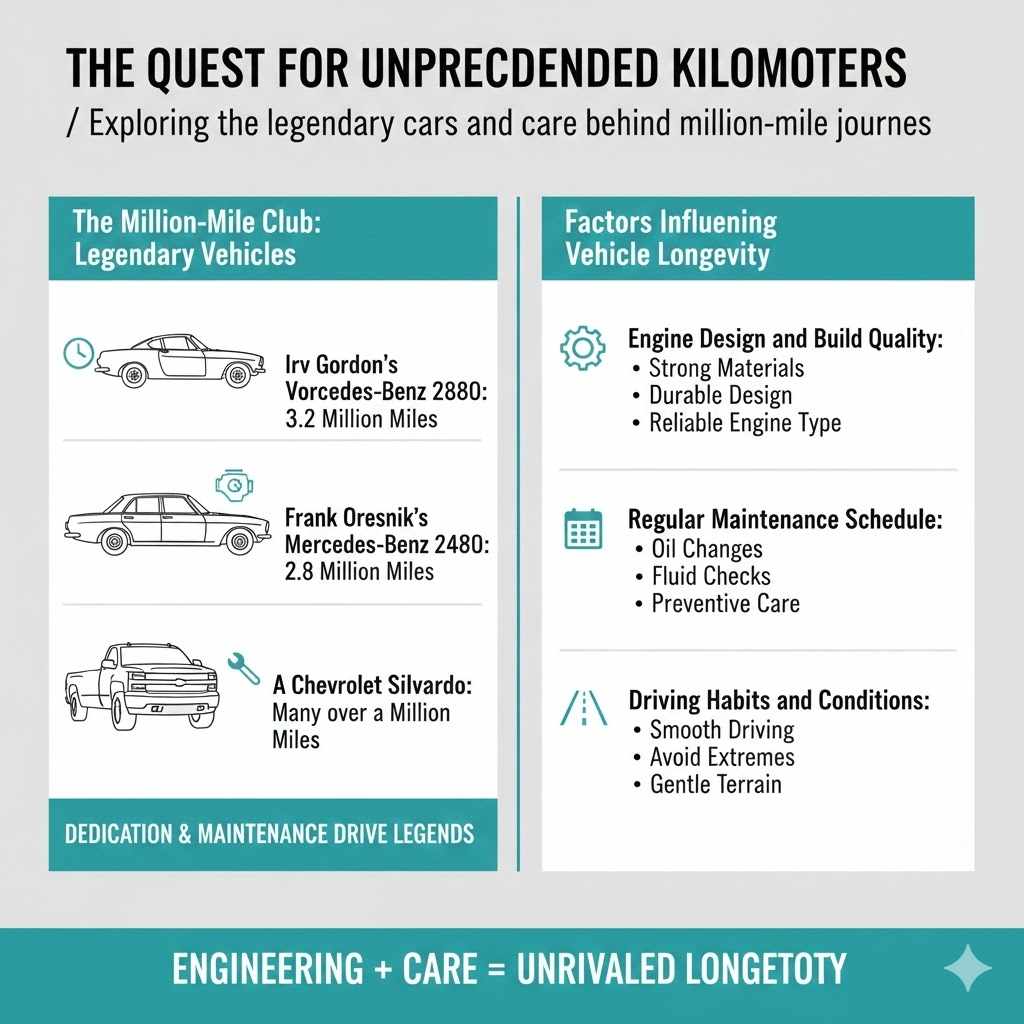
Irv Gordon’s Volvo P1800: Irv Gordon, a New York school teacher, holds the official Guinness World Record for the highest vehicle mileage. His 1966 Volvo P1800 reached an astounding 3.2 million miles (over 5.1 million kilometers) before his passing in 2018. This car wasn’t just driven; it was a part of his life, traveling across the United States and beyond.
This achievement is not just about the car itself but also about the driver’s habits. Gordon was known for his regular maintenance schedule, which included oil changes every 3,000 miles and other necessary upkeep. His commitment, along with the car’s inherent reliability, is a perfect combination for achieving such an astonishing number.
-
Frank Oresnik’s Mercedes-Benz 240D: Frank Oresnik’s Mercedes-Benz 240D, a diesel-powered sedan, also holds a place in high-mileage history. While not as high as Gordon’s Volvo, Oresnik’s Mercedes-Benz accumulated over 2.8 million miles (over 4.5 million kilometers) over decades. His car’s robust diesel engine and his careful approach to driving played major roles in this feat.
The diesel engine’s inherent durability contributes significantly to this mileage. Diesel engines, often known for their long lifespans and reliability, can endure extreme conditions with relative ease. Furthermore, Oresnik’s dedication to regular servicing made it possible for him to keep this car running for an extraordinarily long duration.
-
A Chevrolet Silverado: While less celebrated, numerous trucks and other vehicles have achieved similar milestones. Some owners of older Chevrolet Silverado trucks, known for their powerful and reliable engines, have reported driving well over a million miles with proper care. The focus on ruggedness and durability of a truck plays a crucial role in extending its useful life.
The Silverado’s engine, combined with regular maintenance and proper usage, creates a high potential for it to achieve exceptional mileage. Trucks are made to work hard, and if they’re looked after correctly, they can endure a great number of miles. This also applies to other similar pickup trucks of the period.
Factors Influencing Vehicle Longevity
Several factors contribute significantly to a car’s ability to cover extraordinary distances. It is not just one thing that determines a car’s endurance; it is a blend of several important elements. Understanding these aspects can help you assess and manage the longevity of your own vehicle. From how it is made to the care it receives, each part plays a vital role in its long-term performance.
-
Engine Design and Build Quality: The engine is at the center of a car’s ability to travel extensive distances. Engines made with strong materials and good designs are more likely to endure many miles. Materials like high-quality steel and aluminum, along with careful manufacturing, are important for engine parts.
An engine’s design plays an important role too. Engine designs that generate less stress, have efficient cooling systems, and include features that reduce wear will last longer. Consider the engine type; diesel engines are known for their durability and can often go the distance. A reliable engine is key for high mileage records.
-
Regular Maintenance Schedule: Following the manufacturer’s suggested maintenance schedule is critical. This includes regular oil changes, filter replacements, and checking and replacing fluids. Regular maintenance can catch small problems before they become big ones.
Consistent care prevents problems from worsening, reducing the likelihood of expensive repairs later on. A car’s lifespan will increase significantly if it receives consistent upkeep, with each part working in sync. This proactive approach helps to keep a car running smoothly for years, perhaps even decades.
-
Driving Habits and Conditions: How the car is driven also impacts its lifespan. Driving gently, avoiding aggressive acceleration and braking, and maintaining a steady speed can reduce wear and tear on the engine, brakes, and other parts.
The environment and terrain where the vehicle is used can affect its longevity. Driving on smooth roads is better than driving on rough ones, and avoiding extreme temperatures can also extend the life of the car’s parts. These factors matter for overall mileage.
The High-Mileage Car Landscape: Beyond the Records
While the record-setters grab the headlines, the wider landscape of high-mileage cars is incredibly diverse. Many ordinary vehicles, driven by dedicated owners, have achieved impressive mileage milestones. Their stories are a testament to the importance of car care. These examples demonstrate that reaching high mileage is feasible for a variety of cars. Understanding how these vehicles have fared offers valuable lessons for owners.
Car Types and Mileage Potential
The kind of car can influence its potential for high mileage. Some cars are naturally built for endurance, while others may require more careful maintenance to last long. Knowing the advantages and disadvantages of different car types can help in choosing the right car and caring for it properly. Several types of cars often perform exceptionally well.
-
Diesel Vehicles: Diesel engines are frequently known for their durability. Their strong construction and high torque make them well-suited to handle a lot of driving. Diesel cars often last longer, partly due to the engine’s design.
Diesel vehicles typically offer better fuel efficiency, which can make long-distance journeys more cost-effective. Regular maintenance, including changing oil and filters, is critical. Owners may find these engines can achieve high mileage records with good care.
-
Hybrid Cars: Hybrid cars, with their combination of gas and electric engines, can also reach high mileage. The electric motor helps lower the stress on the gas engine, which extends its lifespan. This synergy offers durability benefits.
Hybrid cars often have regenerative braking systems, which lessens wear on the brakes and other components. Regular care, similar to gasoline-powered vehicles, is still key. The fuel efficiency of these cars can allow for more distance covered over the car’s life.
-
Older, Well-Maintained Vehicles: Older vehicles, if well maintained, can sometimes outlast newer ones. The materials and designs used in older cars may have advantages. Simpler engines, lacking complicated electronic systems, could be easier to service and repair.
Owners of older cars are often more dedicated to their maintenance. They might be more likely to perform repairs themselves. They frequently develop a strong bond with their vehicles. Such dedication can keep these cars on the road for many years, even decades.
Real-World Mileage Expectations
While record-breaking mileage is inspiring, it’s important to have realistic expectations. The typical lifespan of a car varies depending on several factors. Knowing these general expectations can help plan for ownership and make important care choices. The goal for average drivers should be a long and reliable vehicle life.
According to the U.S. Department of Transportation, the average person drives around 13,500 miles annually. The average lifespan of a car is around 11-12 years. This means the average mileage for a car before it’s retired is approximately 150,000 miles. However, with appropriate care, many vehicles can greatly surpass this figure.
An individual’s driving habits can affect how much mileage they accumulate. People with long commutes will cover more distance than those who drive shorter distances. Additionally, the climate and road conditions can impact the lifespan of a vehicle.
Cost Considerations of High Mileage Cars
Keeping a car running for a long time involves costs, but there are also advantages. Understanding these financial aspects can help owners make smart decisions about car ownership. From maintenance to potential repairs, these things require careful evaluation. Planning can ensure your car remains on the road without breaking the budget.
-
Increased Maintenance Costs: As a car accumulates mileage, the demand for upkeep increases. Parts wear down, and more frequent servicing is required. Oil changes, tire replacements, and brake jobs become more critical.
Preventive maintenance is key in managing these expenses. Doing upkeep promptly, instead of postponing it, can save money and prevent larger problems. A well-maintained car usually lasts longer and costs less over time than one left unmaintained.
-
Potential for Major Repairs: High-mileage cars may need bigger repairs. Engine problems, transmission failures, or suspension troubles may arise. These issues can be expensive, demanding careful planning.
Having a savings plan or some kind of vehicle repair insurance can help handle such costs. Knowing the possible issues that come with high mileage means owners can prepare for them. It helps to keep a car operating efficiently for a longer period.
-
Value Retention: A well-maintained high-mileage car often retains its value better. This is especially true for classic or rare vehicles. The dedication invested in keeping a car in top condition can pay off when it’s time to sell or trade it.
Regular maintenance and meticulous care can increase its worth. Prospective buyers appreciate the work done to keep it running smoothly. Cars with high mileage, but with a good service record, can be more appealing than others. This is why careful care matters.
Maintaining a High-Mileage Vehicle: Practical Steps
The goal of many car owners is to extend their car’s life. The steps for achieving this are practical and achievable. Taking a thoughtful approach to vehicle care makes it easier to keep your car operating for many years. It is a mix of routines, attentive driving practices, and smart choices. This information will help your vehicle perform at its best for a long time.
Essential Maintenance Practices
To maximize the lifespan of your vehicle, certain maintenance practices are essential. These routines form the foundation of proper care and prevent a lot of problems from starting. These easy-to-do steps will help your car reach its full mileage potential.
-
Regular Oil Changes: Oil changes are one of the most important things to do to protect your engine. They remove dirt and debris, reduce friction, and keep the engine running smoothly. Regular oil changes should occur as per your car’s manual.
Using the right type of oil and filter is also critical. These can vary depending on the car model and conditions. Regular oil changes will greatly affect how many miles your car will travel. This is a simple but really effective step.
-
Tire Care and Rotation: Maintaining your tires helps with safety and fuel efficiency. Regular rotation is important to avoid uneven wear. Check tire pressure regularly to make sure you have the right amount of pressure for your vehicle.
Checking tires also involves examining the tread depth and looking for damage like cuts. Proper tire care improves handling and extends the life of your tires. This also contributes to the longevity of your car.
-
Fluid Checks and Replacements: Inspecting and changing fluids at the right intervals are important for your vehicle. This includes coolant, brake fluid, transmission fluid, and power steering fluid. Each fluid has a specific job in keeping your vehicle running.
Using the correct fluid for your car is also important. Fluid changes help prevent components from wearing out and will extend the lifespan of your vehicle. Keep your fluids at the correct levels, and your vehicle will thank you.
Driving Habits for Longevity
How you drive makes a big difference in how long your car lasts. Thoughtful driving habits lessen wear and tear on your car’s parts. These strategies are easy to put into practice and can have a big effect on extending your vehicle’s lifespan.
-
Gentle Acceleration and Braking: Driving smoothly will lessen the pressure on your engine, transmission, and brakes. Hard acceleration and sudden braking place stress on these parts, speeding up wear. Driving gently leads to a longer lifespan.
Practicing smooth starts and stops also boosts fuel economy. This helps keep all vehicle systems functioning well. It is a simple step, but it helps prolong the life of your car.
-
Avoiding Aggressive Driving: Aggressive driving, such as speeding, rapid lane changes, and hard cornering, increases wear. It pushes your car’s components to their limits. Maintaining a steady speed helps your car last longer.
Avoiding such habits lowers the risk of accidents and helps preserve your car. This safe driving practice can save you on repair costs and keep your car in better shape. It is great for you and your vehicle.
-
Regular Inspections: Regularly checking your car for problems prevents issues. Doing regular inspections includes checking for strange noises, leaks, and other symptoms of problems. Early detection can prevent serious repairs.
Inspections don’t have to be complicated or time-consuming. You can do a quick walk-around and peek under the hood to ensure everything seems fine. If you notice an issue, get it checked right away. This can extend your car’s useful life.
Best Practices for Vehicle Storage
The way you keep your car when it is not in use can affect its condition. Properly storing your car is especially important if you live in a harsh climate or if you will not be using the car for an extended period. Practicing these storage guidelines helps to protect your investment.
-
Storing Indoors: Keeping your car in a garage or shed protects it from weather elements. This avoids weather damage and reduces wear and tear on the paint, tires, and interior. If you have the space, it can make a big difference.
Indoor storage keeps your car clean and makes it easier to keep up with the maintenance. It is an excellent way to protect your car if you have the space. The inside temperature will help maintain it in better shape.
-
Using a Car Cover: If you cannot store your car indoors, a car cover is an excellent idea. A car cover protects your car from the sun, rain, and snow. It also prevents dirt from collecting on the surface of your vehicle.
A good car cover will safeguard the paint from scratches, UV damage, and other harms. This is a practical way to protect your car’s appearance. Make sure to get a cover that is suitable for your car size.
-
Long-Term Storage Preparations: If you are planning to store your car for a long time, there are actions you need to take. This involves filling the fuel tank, changing the oil, disconnecting the battery, and covering the car. This will prevent problems.
These preparations will help ensure that your car is in good condition when you are ready to use it again. It helps prevent fuel and moisture damage. Your car will be ready to go once you take it out of storage.
What’s the Highest Mileage Ever on a Car? – Case Studies
Reviewing real-life examples can better demonstrate how to achieve extraordinary mileage. Studying these cases reveals helpful lessons in maintenance, driving habits, and the vehicle selection process. By examining the actions of people who have reached high-mileage benchmarks, others can find useful tips. These real-world examples can give insight into what it takes to drive a car for many years.
Here are some examples that bring these ideas to life:
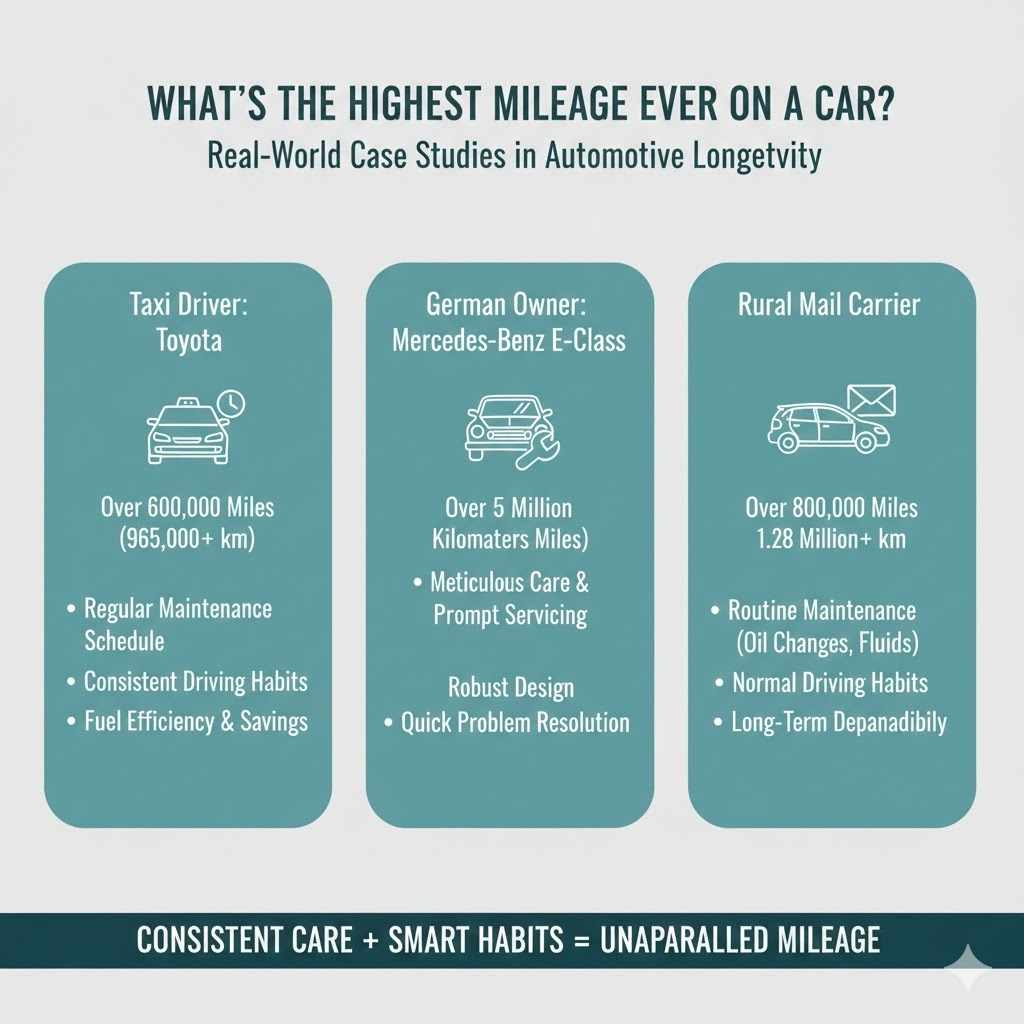
- A taxi driver in New York City drove his Toyota Prius for over 600,000 miles. His schedule of regular maintenance and consistent driving habits helped him attain a long-lasting car. His focus on preventive maintenance and his careful driving style were critical. The car’s fuel efficiency also enabled him to spend less on fuel, thus saving money.
He serviced the car at set intervals, changing oil, checking and replacing the filters and other fluids, and rotating the tires. He was also careful to avoid sudden starts, stops, and harsh driving actions. These strategies enabled him to travel many miles and to make money in a job.
- A man in Germany used his Mercedes-Benz E-Class to travel more than 1 million kilometers. He took meticulous care of his car, with regular and prompt servicing. The car’s robust design and his attentive care enabled the car to have an extended life.
He stuck to the maintenance schedule recommended by the car manufacturer. He also looked for problems quickly, like strange noises or leaks. He handled it right away before the problems got worse. This care helped the vehicle maintain its performance.
- A rural mail carrier drove her Honda Civic to over 800,000 miles. The combination of her normal driving habits and regular maintenance created a long car life. Her commitment to proper maintenance enabled her to make the Civic last a very long time.
Her routine included oil changes every 5,000 miles and other fluid
Frequently Asked Questions
Question: What is considered high mileage for a car?
Answer: High mileage is generally considered to be over 100,000 miles. However, with proper maintenance, many cars can easily exceed 200,000 or even 300,000 miles.
Question: Does high mileage affect a car’s value?
Answer: Yes, high mileage typically lowers a car’s value. However, a well-maintained car with high mileage can still retain more value than a poorly maintained one.
Question: Are older cars more durable than newer ones?
Answer: This can vary. Older cars sometimes have simpler designs, which can be easier to maintain. Newer cars often have advanced technology but can be more complex to repair.
Question: What are the key maintenance items for high-mileage cars?
Answer: Regular oil changes, tire care and rotation, fluid checks and replacements, and timing belt replacements (if applicable) are essential for high-mileage cars.
Question: How can I extend the lifespan of my car?
Answer: Follow your car’s maintenance schedule, drive gently, and address any issues promptly. Proper storage and regular inspections also help extend the lifespan.
Final Thoughts
Exploring What’s the Highest Mileage Ever on a Car? reveals the impressive possibilities of vehicle longevity. We’ve explored the record-setters, the factors contributing to these incredible feats, and the key practices that allow vehicles to run for hundreds of thousands of miles. Remember, a car’s lifespan isn’t just about the vehicle itself; it’s a story of diligent maintenance, smart driving habits, and an understanding of the vehicle’s needs. By following the tips and strategies we’ve discussed, you too can contribute to a long and successful relationship with your vehicle. The dedication you give now will reward you in the long run. Embrace regular care and responsible driving to experience the joy of reaching your own high-mileage milestones.