When Did Cars Come to America Historical Overview
Many people wonder about the very beginnings of cars in America. The question When Did Cars Come to America? Historical Overview can seem a bit tricky at first glance, especially when you start looking into all the different inventions and early models.
But don’t worry! We’ll break it down step by step in a way that’s super easy to follow. Get ready to learn about the exciting early days of automobiles and how they changed everything.
The Dawn Of Automobiles In America
This section will explore the very first experiments and creations that paved the way for cars in the United States. We’ll look at the ingenious minds that tinkered with engines and wheels, turning dreams of self-propelled vehicles into reality. You’ll get a clear picture of the initial sparks that ignited the automotive revolution on American soil, setting the stage for rapid development and widespread adoption.
Early Inventors And Their Vision
Before the sleek machines we know today, brave inventors dreamt of personal transportation that didn’t rely on horses. These pioneers faced many challenges, from finding reliable power sources to designing stable frames. Their persistence in the late 19th century laid the groundwork for what would become a transformative technology.
One of the earliest examples of an American-made automobile was developed by Charles Duryea and his brother Frank. They built what is often considered the first gasoline-powered automobile in the United States. It was a three-wheeled buggy that ran on a single-cylinder gasoline engine.
They tested it successfully in Springfield, Massachusetts, marking a significant moment.
Another key figure was Ransom E. Olds, who played a vital role in making automobiles more accessible. He founded the Olds Motor Vehicle Company and introduced assembly line techniques to car manufacturing, a concept that would later be perfected by Henry Ford.
His “Oldsmobile Curved Dash” was one of the first mass-produced automobiles in America.
The idea of a self-propelled carriage was being explored in Europe around the same time, but American innovators were also hard at work. Their contributions were essential in bringing the automobile from a novelty to a practical mode of transport. This early period was filled with innovation and a spirit of “let’s see if this works.”
Consider the challenges these inventors faced. They had to find materials that could withstand the stresses of a moving vehicle. They needed to develop engines that were powerful enough yet not too heavy.
And they had to convince people that these strange, noisy machines were a good idea.
The Gasoline Engine’s Arrival
The development and improvement of the gasoline engine were absolutely critical for the birth of the automobile. Before this engine could be reliably used in vehicles, it had to be perfected. Early engines were often unreliable, heavy, and difficult to start.
Inventors worked tirelessly to make them smaller, lighter, and more efficient.
The four-stroke internal combustion engine, as patented by Nicolaus Otto in 1876, became the blueprint for most gasoline engines. This engine cycle, involving intake, compression, power, and exhaust, allowed for a more controlled and continuous power output. This was a huge step up from earlier steam-powered or electric experiments for personal transport.
In America, inventors like Charles Kingsford Smith adapted and refined these engine designs. They experimented with different fuel mixtures, ignition systems, and cooling methods. These advancements were not just about making a car run; they were about making it run safely and dependably.
It was a process of trial and error, with each failure teaching them something new.
The availability of gasoline as a fuel was also a factor. As oil drilling and refining processes improved, gasoline became more accessible. This meant that inventors and early car owners had a more practical fuel source for their engines, further driving the development of the automobile.
This was a turning point for personal transportation.
The impact of a working, reliable gasoline engine cannot be overstated. It provided the power needed for these early automobiles to move under their own power, setting them apart from any previous invention. This technological leap truly opened the door for the automobile age.
Early Automobiles Take To American Roads
This section will focus on the actual appearance of the first automobiles on American roads and the initial reactions they generated. We’ll discuss the very first models that were produced and sold, and how these early vehicles were perceived by the public. It’s about the transition from invention to product and the very beginnings of car culture.
The First Production Cars
The concept of mass production was revolutionary for automobiles. Before this, each car was essentially a custom build. The introduction of production lines meant cars could be made more consistently and at a lower cost.
This made them accessible to a wider range of people, not just the very wealthy.
The Duryea Motor Wagon Company, founded by the Duryea brothers, is often credited with producing and selling the first gasoline-powered cars in the United States. By 1896, they had built thirteen identical cars. This marked the shift from experimental one-offs to actual commercial production.
Their vehicles were simple but functional.
Ransom E. Olds’ Oldsmobile Curved Dash, introduced in 1901, became incredibly popular. It was designed to be relatively simple and affordable.
Olds pioneered the use of a stationary assembly line, where car parts were brought to the chassis. This sped up production significantly. Around 425 of these cars were made in its first year, a remarkable number for the time.
These early production cars were quite different from modern vehicles. They often lacked features like enclosed cabins, electric starters, and sophisticated suspension systems. Driving them required skill and patience.
Nevertheless, they represented a monumental step forward in personal mobility. The enthusiasm for these new machines was palpable.
The success of these early production efforts proved that there was a real market for automobiles. They showed that the concept of a self-propelled vehicle could be a practical reality for everyday people. This paved the way for more advancements and more manufacturers to enter the market.
Public Reaction And Adoption
When cars first appeared on American streets, people were understandably surprised and sometimes a little scared. These horseless carriages made strange noises, smelled different, and moved without any visible means of propulsion. It was a completely new sight for most folks.
Some saw cars as dangerous novelties. There were concerns about speed, control, and safety. Early drivers often had to contend with poor road conditions, which made driving difficult and uncomfortable.
Local authorities sometimes restricted where and when these new vehicles could be used.
However, many others were fascinated. The potential for faster, more independent travel was incredibly appealing. People marveled at the idea of going places without relying on a horse.
The freedom and convenience that cars promised began to capture the public’s imagination.
Local newspapers and magazines often reported on the appearance of new automobiles, sometimes with humor and sometimes with awe. Events like early automobile races and parades helped to build excitement and showcase the capabilities of these new machines. They were no longer just curiosities; they were becoming a symbol of progress.
The adoption rate was slow at first, as cars were expensive and unreliable. But with each improvement and each new successful model, more people began to see the value. The transition from skepticism to widespread acceptance was a gradual but undeniable process.
The Automobile Industry Takes Shape
This part of our exploration looks at how the automobile transformed from a new invention into a major industry. We will examine the key figures and companies that drove this growth and how manufacturing processes evolved to meet increasing demand. This is where the car really started to become a central part of American life.
Henry Ford And Mass Production
Henry Ford is arguably the most influential figure in the history of the automobile. His vision was not just to build cars, but to build cars that almost anyone could afford. This revolutionary idea changed the automotive landscape forever and had a massive impact on American society.
Ford’s greatest innovation was the moving assembly line, which he perfected and implemented for the Model T in 1913. Before this, cars were assembled by craftsmen working on a stationary chassis. The assembly line broke down the manufacturing process into many small, repetitive tasks.
Workers specialized in one or two actions, performing them quickly and efficiently as the car chassis moved past them.
This method drastically reduced the time it took to build a car. A Model T that once took over 12 hours to assemble could be built in about 90 minutes. This increased efficiency directly translated into lower production costs.
Ford could then sell his cars for much less money, making them accessible to a much larger segment of the population.
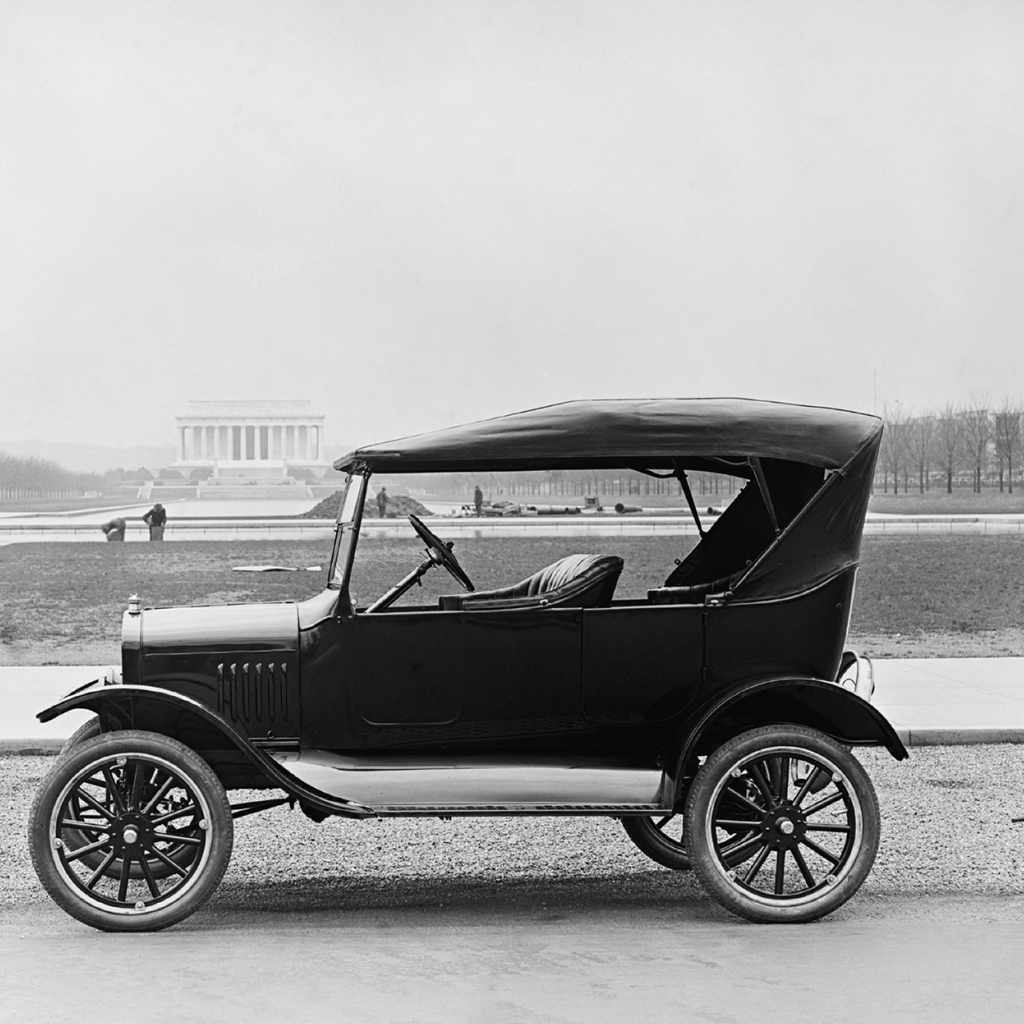
The Model T itself was designed to be simple, durable, and easy to repair. Ford famously said that customers could have any color they wanted, as long as it was black, because black paint dried the fastest. This focus on standardization and efficiency was key to his success.
His approach revolutionized not just car manufacturing but industrial production across many sectors.
The impact of Ford’s mass production was profound. It created millions of jobs, spurred the growth of related industries like steel and rubber, and fundamentally changed how Americans lived and traveled. The car went from a luxury item to a common necessity thanks to his efforts.
The Rise Of Other Manufacturers
While Henry Ford was a giant in the industry, he was not alone. The success of early automobiles inspired many other entrepreneurs and engineers to start their own car companies. These companies competed with Ford and often introduced their own innovations, pushing the industry forward.
General Motors (GM) was a key competitor that emerged. Founded by William C. Durant, GM adopted a strategy of offering a wide range of car models at different price points.
This was in contrast to Ford’s singular focus on the Model T. Durant acquired various existing car companies, such as Buick, Oldsmobile, and Cadillac, creating a powerful conglomerate.
The Chevrolet brand was later established by Louis Chevrolet and William C. Durant to compete directly with Ford’s Model T. Chevrolet offered a car that was seen as a bit more stylish and equipped with some features Ford didn’t offer as standard.
This competition drove both companies to innovate more quickly.
Other significant early manufacturers included Chrysler, founded by Walter Chrysler, who also brought new management and engineering ideas to the table. The rivalry and innovation between these companies led to rapid advancements in engine technology, safety features, and vehicle design. They experimented with different materials, body styles, and manufacturing techniques.
This era of competition led to the development of a diverse automotive market. It meant that consumers had more choices than ever before. The growth of these major companies also fueled the expansion of dealerships, repair shops, and parts suppliers, creating a massive economic ecosystem around the automobile.
The period saw an explosion of brands and models. While many didn’t survive, their efforts contributed to the overall progress of automobile design and production. The automotive industry was becoming a cornerstone of the American economy and way of life.
When Did Cars Become Widespread
This final section will discuss the period when cars truly became commonplace across America. We’ll look at the factors that led to their widespread adoption and how this transformation impacted American society. This is about the transition from a new invention to an essential part of daily life.
The Impact Of Affordable Cars
The affordability of cars was a primary driver of their widespread adoption. Before manufacturers like Ford made cars accessible, owning an automobile was a luxury only the very wealthy could afford. The ability to produce cars at a lower cost opened up the market dramatically.
The Model T, often called the “Tin Lizzie,” played a huge role. Its price dropped significantly over the years due to improved manufacturing processes and economies of scale. By the 1920s, it was within reach of many working-class families.
This meant that for the first time, ordinary Americans could own personal transportation.
The availability of financing options also helped. As the industry matured, banks and finance companies began offering loans to customers who couldn’t pay the full price of a car upfront. This made purchasing a car even more attainable for a broader segment of the population.
The ripple effect of affordable cars was immense. People could live further from their jobs, leading to the growth of suburbs. They could travel to visit family and friends more easily, strengthening social connections.
Businesses could transport goods more efficiently, boosting commerce.
The desire for personal mobility became a strong cultural force. Owning a car became a symbol of freedom, independence, and economic success. This desire, combined with increasing affordability, created a demand that fueled further growth and innovation in the automotive industry.
The change was so significant that it’s hard to imagine American life without the automobile today. This period marked the real start of the car-centric society we know.
Infrastructure Development For Cars
As more cars appeared on the roads, a critical need arose for better infrastructure to support them. Early roads were often unpaved, muddy tracks that were challenging for automobiles. The growth of car ownership necessitated significant investment in road building and maintenance.
Governments, both local and federal, began to recognize the importance of a well-developed road network. Projects like the Lincoln Highway and the Dixie Highway were early examples of transcontinental routes designed to connect cities and facilitate travel. These were not just about paving; they involved grading, drainage, and marking.
The development of the highway system was a massive undertaking. It involved surveying, engineering, and construction on an unprecedented scale. As roads improved, driving became safer, more comfortable, and more practical.
This, in turn, encouraged even more people to buy cars, creating a positive feedback loop.
Beyond roads, the infrastructure also expanded to include places to refuel, repair, and maintain vehicles. Gas stations, which started as simple pumps at general stores, began to appear more frequently along major routes. Garages and repair shops also proliferated, offering essential services to car owners.
The availability of these services made car ownership much more practical and less intimidating. People felt more confident about taking longer trips knowing they could find fuel and get help if their car broke down. This infrastructure development was as crucial to the automobile’s success as the car itself.
The interconnectedness that roads provided transformed travel and commerce. It opened up vast new possibilities for exploration and economic activity across the country. The landscape of America began to change, shaped by the needs of the automobile.
Frequently Asked Questions
Question: When was the very first automobile invented in America
Answer: The first gasoline-powered automobile in the United States is generally credited to Charles and Frank Duryea in 1893, with their first public run in 1894.
Question: Was the gasoline engine invented in America
Answer: While many Americans contributed to engine development, the fundamental principles of the four-stroke internal combustion engine were largely developed in Europe by inventors like Nicolaus Otto.
Question: Who made the first car available to the public
Answer: Ransom E. Olds, with his Oldsmobile Curved Dash in 1901, was one of the first to mass-produce and sell automobiles to the general public.
Question: How did Henry Ford make cars affordable
Answer: Henry Ford revolutionized car manufacturing with the moving assembly line, which drastically reduced production time and costs, allowing him to sell the Model T at a much lower price.
Question: When did cars become common for average families
Answer: Cars became increasingly common for average American families in the 1910s and 1920s, especially with the introduction of affordable models like the Ford Model T.
Final Thoughts
Looking back at the beginnings of cars in America reveals a fascinating story of innovation, persistence, and societal change. From early, sputtering experiments to the mass-produced vehicles that reshaped the nation, the journey was remarkable. The development of reliable gasoline engines and the vision of inventors like the Duryea brothers and Ransom E.
Olds were foundational. Henry Ford’s genius with the assembly line then made car ownership a reality for millions, transforming daily life, work, and leisure.
The rise of competing manufacturers like General Motors and Chrysler further spurred progress, offering consumers more choice and driving continuous improvements in design and performance. This period of rapid growth wasn’t just about building cars; it was about building an industry that would become a bedrock of the American economy. The expansion of roads and fueling stations was also a critical piece of the puzzle, making travel more practical and accessible.
If you’re curious about how things got started, remember that every complex invention has humble beginnings. It’s a testament to human ingenuity and the desire for progress. Keep exploring these historical threads; they tell us so much about how we got to where we are today.
Understanding these early steps can give you a greater appreciation for the technology we often take for granted.