Where Did My Car Get Towed: Essential Guide
Is your car missing from where you parked it? Don’t panic! Your car was likely towed. This guide will help you quickly find out where your car was towed, what to expect, and how to get it back without a hitch. We’ll walk you through the simple steps and essential information you need.
It’s a sinking feeling no car owner wants to experience: you walk back to where you parked, and… it’s gone. Seeing an empty space where your car should be can cause instant stress and frustration. Did someone steal it? Was it towed away? Most of the time, if you parked illegally or your vehicle was involved in a police situation, it’s been towed. But don’t worry, finding your car and getting it back doesn’t have to be a confusing ordeal. This guide is here to help you navigate the process smoothly, offering clear steps and simple advice to reunite you with your vehicle. We’ll cover exactly what to do and where to look, so you can get your car back as quickly as possible.
Why Cars Get Towed
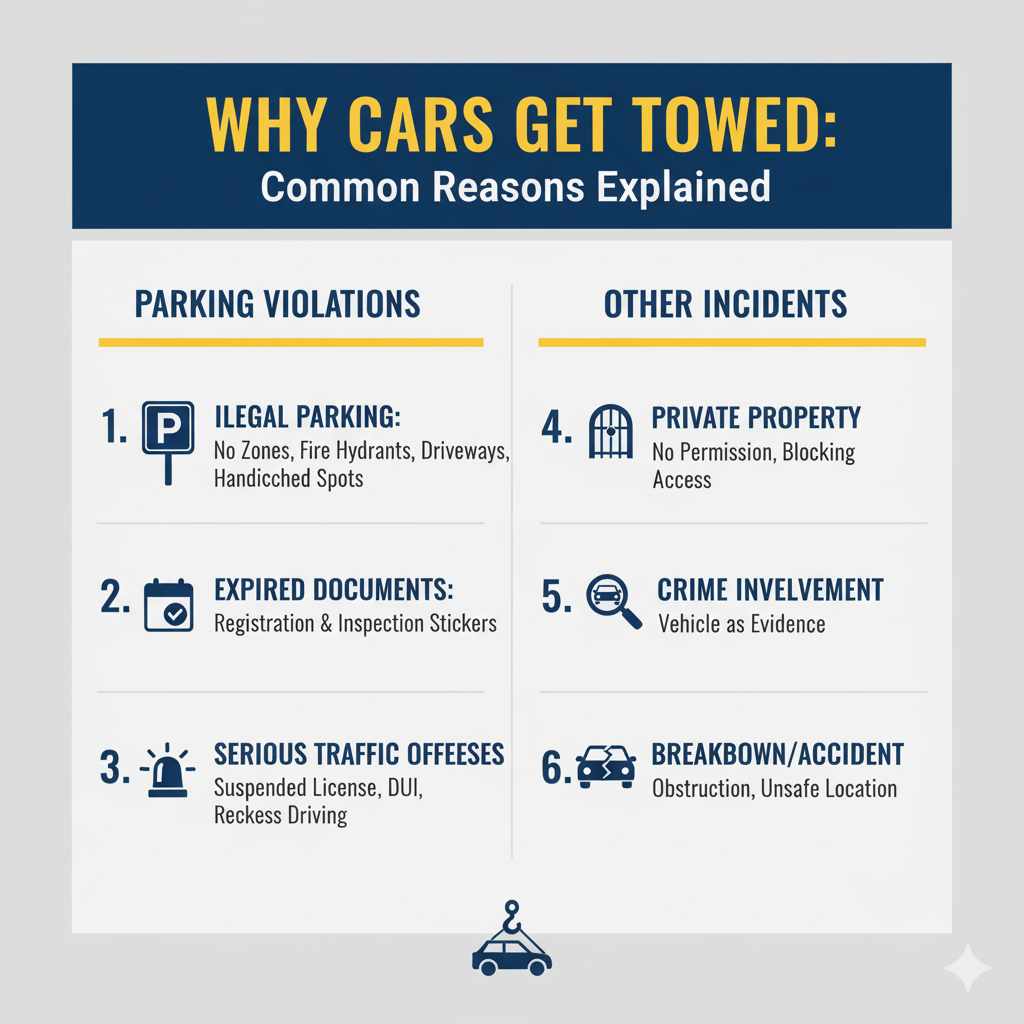
Understanding why your car might have been towed can help you avoid the situation in the future. Towing usually happens for specific reasons, often related to parking regulations or legal incidents. Here are the most common scenarios:
- Illegal Parking: This is the most frequent reason. Parking in a “no parking” zone, blocking a fire hydrant, a driveway, a crosswalk, too close to an intersection, or in a handicapped spot without a permit are all common violations.
- Expired Registration/Inspection: If your vehicle’s registration or inspection sticker has been expired for a significant period, law enforcement may deem it unsafe or illegal to be on the road and have it impounded.
- Suspended License/DUI: If a driver is caught driving with a suspended license or under the influence of alcohol or drugs, their vehicle can be towed and impounded by police.
- Traffic Violations: Serious traffic offenses, such as reckless driving or fleeing the scene of an accident, can lead to a vehicle being towed.
- Private Property Violations: Parking on private property without permission, such as in a private parking lot without a valid permit or blocking access, can result in the vehicle being towed by the property owner’s contracted towing service.
- Involvement in a Crime: If authorities believe your vehicle was used in the commission of a crime, it may be impounded as evidence.
- Vehicle Breakdown/Accident: While not always a tow away, sometimes a disabled vehicle blocking traffic or involved in an accident needs to be removed by a tow truck.
Immediate Steps: What to Do When Your Car is Gone
The moment you realize your car isn’t where you left it, it’s easy to feel overwhelmed. Take a deep breath. Here’s a clear, step-by-step plan to help you locate your vehicle and begin the retrieval process.
Step 1: Look for a Parking Ticket or Notice
Before assuming your car was towed, check your windshield or door for any parking tickets or notices. Sometimes, a ticket will be issued, and if it goes unpaid or if the violation is severe, towing can still occur. If there’s no ticket, it’s highly probable your car has been towed.
Step 2: Contact Local Law Enforcement
This is your primary point of contact. If you suspect your car was towed due to a parking violation or being a traffic hazard, the local police department or sheriff’s office will have records of towed vehicles. They can tell you which towing company has your car.
- For non-emergency situations: Call the non-emergency number for the police department in the jurisdiction where your car was parked. You can usually find this number with a quick online search (e.g., ” [City Name] police non-emergency number”).
- If your car was stolen: If you suspect theft, call the emergency number (911 in the US and Canada) or your local police immediately to file a stolen vehicle report. This is crucial, as towing companies will not release a vehicle if it has been reported stolen.
When you call, be prepared to provide:
- Your license plate number.
- Your vehicle’s make, model, and color.
- The location where you parked your car (street address, nearby landmarks).
- The approximate time you parked your car.
Law enforcement agencies often maintain databases of towed vehicles. They can usually pinpoint the towing company and the location of the impound lot.
Step 3: Check with the Authority That Enforces Parking in That Area
If you parked in a specific zone with its own enforcement agency, you might need to contact them.
- Public Parking Lots/Garages: Contact the parking authority or management company for that specific lot or garage. They will have records of which towing company they use for violations.
- Private Property: If you parked on private property (like a shopping center or apartment complex lot), contact the property management or security office. They can direct you to the towing company they contracted with.
Step 4: Contact Towing Companies Directly (If Law Enforcement Can’t Help)
In some cases, especially if the tow was initiated by a private company for a minor infraction on private property, law enforcement might not have immediate information. If the authorities can’t help, or if you have an idea of which towing companies operate in the area where your car was towed, you might need to call them directly. You can often find a list of local towing companies online through a simple search like “towing companies near [neighborhood/area].” It can be a lengthy process, so try law enforcement first.
Finding Your Car: Key Information and Resources
Locating your towed vehicle requires a systematic approach and having the right information ready. Different jurisdictions and situations lead to different resources. Here’s a breakdown of where and how to find your car:
Official City/County Towing Resources
Many cities and counties have official websites or online portals that list towed vehicles. These systems are often updated in real-time or daily by towing companies and law enforcement. Searching for “[Your City/County Name] towed vehicles” can often lead you to these resources.
For instance, in New York City, the NYC Department of Finance provides information on towed vehicles. Similarly, other municipal governments offer similar online lookup tools.
Towing Company Websites
Once law enforcement or property management gives you the name of the towing company, visit their website. Most towing companies specializing in impound services have a “vehicle lookup” feature on their homepage. You can typically enter your license plate number or VIN (Vehicle Identification Number) to see if your car is in their lot. They also usually list their hours of operation and location.
Vehicle Identification Number (VIN)
Your VIN is a unique 17-character code that identifies your vehicle. It’s essential for confirming ownership and retrieving your car. You can find your VIN on your vehicle’s dashboard (visible through the windshield), on the driver’s side doorjamb, or on your insurance or registration documents. Even if you don’t have your physical documents, knowing your VIN can be helpful.
National Insurance Crime Bureau (NICB) VINCheck
While primarily used to check for vehicle history and theft, the NICB’s VINCheck can sometimes offer helpful information, especially if the vehicle was reported stolen and then recovered. It’s a free service that can provide an extra layer of information.
Getting Your Car Back From the Impound Lot
Once you’ve located your car at an impound lot, the next step is to retrieve it. This process usually involves proving ownership and paying fees. Be prepared for this, as fees can add up quickly.
What You’ll Need to Bring
To reclaim your vehicle, you will almost always need to present specific documents and be the registered owner or an authorized representative. Typical requirements include:
| Document Type | Description | Importance |
|---|---|---|
| Valid Government-Issued Photo ID | Driver’s license, state ID, or passport. Must match the name of the registered owner. | Proof of identity. |
| Proof of Ownership | Vehicle title, current registration card, or a bill of sale if you recently purchased the vehicle. | Confirms you are the legal owner. |
| Proof of Insurance | A current insurance card or policy document showing your vehicle is insured. This is legally required to drive the car. | Confirms compliance with state laws. |
| Release Form (if applicable) | In some cases, you may need a release form from the police department or the entity that authorized the tow before the impound lot will let you take the car. | Authorization to release the vehicle. |
Understanding Towing and Impound Fees
Be prepared for fees. Towing companies and impound lots charge for their services, and these costs can significantly increase each day your car remains at the lot. Fees typically include:
- Towing Fee: The cost to transport your vehicle from its original location to the impound lot. This varies based on distance and type of tow.
- Impound/Storage Fee: A daily rate charged for storing your vehicle at the lot. This is often the largest part of the cost, as it accumulates over time.
- Administrative/Release Fee: A fee charged by the impound lot for processing your vehicle’s release.
- Potential Penalties/Fines: If the tow was due to a parking violation or other infractions, you may also owe parking tickets or fines from the issuing authority.
Important Note: Fees are usually payable in cash or via cashier’s check or money order. Many impound lots do not accept personal checks or credit cards. Always call ahead to confirm accepted payment methods.
When You Arrive at the Impound Lot
When you reach the impound lot, follow these tips:
- Be Patient: The release process can take time. Staff need to verify your documents, calculate fees, and prepare the vehicle for release.
- Inspect Your Vehicle: Before driving off the lot, do a thorough inspection of your car. Check for any new damage that may have occurred during the towing process. If you find any, document it immediately, take photos, and report it to the towing company and potentially the authority that ordered the tow or your insurance company.
- Confirm Fees: Double-check that the fees being charged align with what you were told and what is posted.
- Get a Receipt: Always get a detailed receipt for all payments made. This is your proof of payment and can be crucial if any disputes arise later.
What If My Car Was Towed for an Accident or Mechanical Issue?
If your car was towed due to an accident or a mechanical breakdown that made it undrivable, the process can differ slightly.
Accidents: After an accident, law enforcement or a tow truck operator will typically arrange for your vehicle to be towed. The vehicle might go to an impound lot or a repair shop. If it’s at an impound lot, you’ll follow the standard retrieval process (proof of ownership, ID, payment). If it’s at a repair shop, you’ll need to coordinate with them regarding repairs and towing charges.
Mechanical Breakdowns: If you called a towing service yourself due to a breakdown, your car is likely at a shop you or your roadside assistance provider chose. You’ll typically pay the towing company directly for the tow and then arrange payment with the repair shop. If a tow truck was called by law enforcement for a disabled vehicle blocking traffic, it might go to an impound lot as described above.
In accident-related tows, especially if the vehicle is very damaged, your auto insurance company will likely get involved. They can help facilitate the retrieval, cover towing costs (if your policy includes it), and manage repairs or claims.
Preventing Your Car From Being Towed
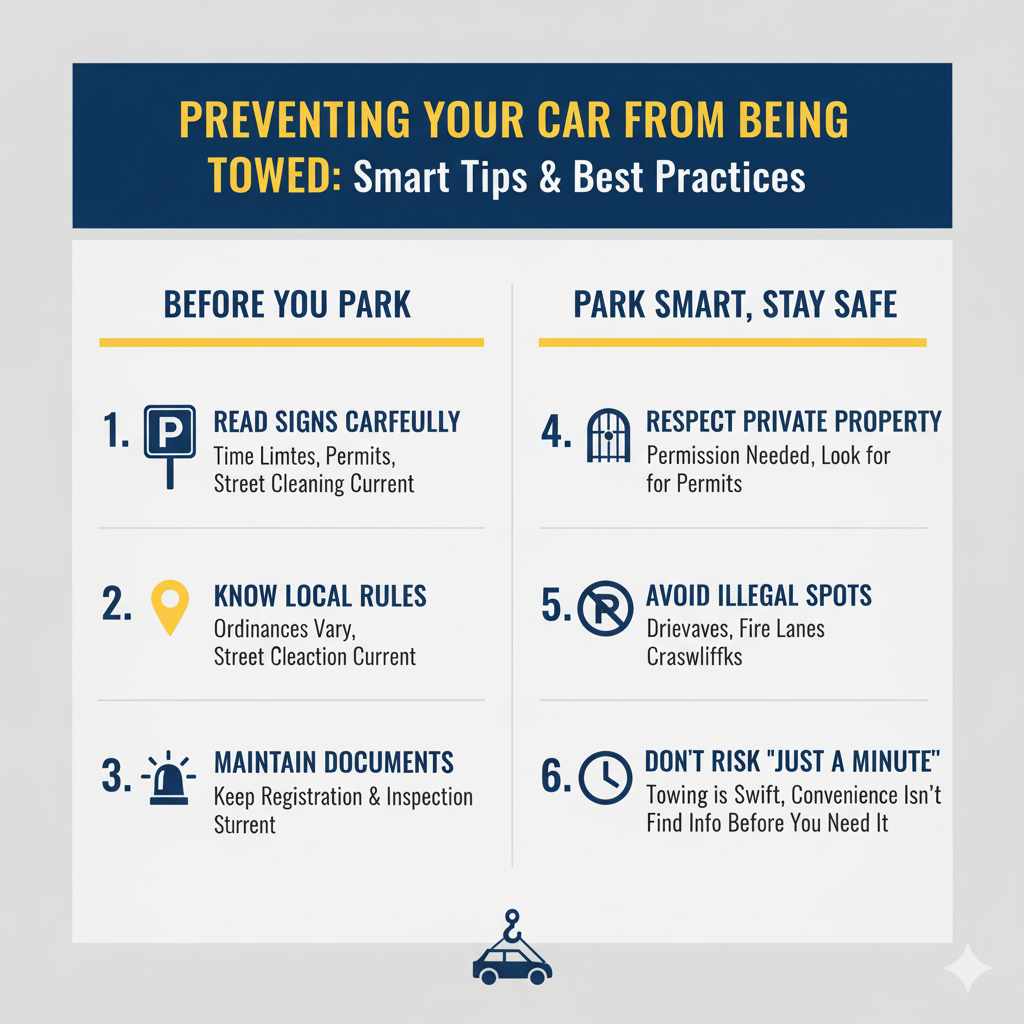
The best way to deal with a towed car is to avoid it altogether! Here are key tips to keep your vehicle safe and out of the impound lot:
- Read Signs Carefully: Always pay close attention to parking signs. Understand time limits, permit requirements, street cleaning schedules, and any other restrictions. “No Parking,” “Tow Away Zone,” and “Permit Parking Only” signs mean exactly that.
- Know Local Ordinances: Familiarize yourself with local parking rules, especially when visiting new areas. What might be acceptable in one town could be a violation in another.
- Avoid Blocking Access: Never park in a way that blocks driveways, fire lanes, crosswalks, or creates hazards.
- Maintain Your Vehicle: Keep your registration and inspection stickers up to date. Driving with expired documents is a common reason for towing.
- Be Mindful of Private Property: If parking in a commercial lot or private residential area, ensure you have permission or the correct permit. Look for signs indicating towing enforcement.
- Don’t Park Illegally for Convenience: Even if you plan to be “just a minute,” the risk of towing often outweighs the convenience.
- Understand City Impound Lots: Knowing the location of your city’s primary impound lot and the process for retrieving a towed vehicle can save you time and stress if the worst happens. Some cities have websites that list them. For example, The U.S. Department of Transportation provides general information on vehicle regulations that can be helpful, though specific towing rules are usually local.
Frequently Asked Questions (FAQs)
Q1: How long will my car be kept at the impound lot?
A1: Your car will be kept until you retrieve it, pay all associated fees, and provide the necessary documentation. In some cases, if unclaimed after a certain period (which varies by state and towing company policy), the vehicle may be sold at auction. It’s best to retrieve your car as soon as possible.
Q2: Can someone else pick up my car for me?
A2: Yes, often a third party can pick up your car, but they will need specific authorization. This usually requires a notarized letter from the registered owner granting permission, along with copies of the owner’s ID and proof of ownership. The person picking up the car will also need their own valid government-issued photo ID. Always confirm the specific requirements with the towing company beforehand.
Q3: What if my car is towed while I have a loan on it?
A3: If you have a loan on your vehicle, you are still responsible for retrieving it and paying towing and impound fees. You will need to provide proof of ownership (which may be held by the lender) and proof of insurance. Your lender might also need to be notified, and in some cases, they might have specific procedures or requirements related to retrieving a vehicle they have a lien on.
Q4: Can I negotiate the towing or impound fees?
A4: Generally, towing and impound fees are set by state and local regulations or by the towing company’s published rates. Negotiating these fees is rarely possible, especially for standard towing and storage. However, if you believe there was an error in the towing process or the fees charged are incorrect, you have the right to dispute them.
Q5: What should I do if I believe my car was towed illegally?
A5: If you believe your car was towed without a valid reason or by mistake, gather all evidence you have (photos of parking, timestamps, witness information). Contact the authority that permitted the tow (police, parking authority, property owner) to dispute the tow. You may need to pay the fees to retrieve your car first, and then formally dispute the charges later.
Q6: How can I find out which towing company towed my car if the police don’t have the information?
A6: If law enforcement cannot provide the towing company details, and you know where your car was parked, you can try contacting towing companies that operate in that specific area. You can also check with the property owner or management if it was private property. Online searches for “towing companies [area name]” are your next best step. Be prepared to provide your vehicle’s description and license plate number.
Conclusion
Discovering your car has been towed is undoubtedly a jarring experience, but by following these steps, you can navigate the situation with confidence. Remember to stay calm, gather your necessary documentation, and have the required payment ready. Contacting local law enforcement is typically your first and most crucial step. Understanding the reasons for towing, knowing what to expect regarding fees and procedures!