Why Is My Car Battery Smoking? Causes, Risks & Fixes
A smoking car battery almost always means the alternator is overcharging past 14.5 volts, the case is cracked and leaking acid, or an internal short is overheating the cells, unless you just parked in extreme heat, which boils the electrolyte instead. All three real faults can ignite the hydrogen gas the battery vents, explosive between 4.1% and 72% concentration in air. This guide covers the exact causes, the first steps to take safely, and when to replace the battery.
What Does It Mean When Your Car Battery Is Smoking?
A smoking battery doesn’t always mean disaster, but it is always a warning sign. Smoke usually means the battery is overheating, leaking, or reacting to an internal or external fault. It could be a chemical reaction inside the cells, an electrical fault, or spilled battery acid. The important thing is to stay calm and figure out the cause. Here are the main reasons a car battery smokes, and what to do about each one.
Is a Smoking Car Battery Dangerous? Explosion and Toxic Gas Risk
Yes. A smoking or hissing battery is venting hydrogen gas, and that gas is explosive at concentrations between 4.1% and 72% in air, according to Canada’s Centre for Occupational Health and Safety. If you see active smoke or hear hissing, do not lean over the battery, do not bring metal tools or a lit cigarette near it, and do not try to jump-start or restart the car “just to check.” Turn off the engine, step back from the vehicle, and let it vent and cool in open air before anyone approaches it again.
📊 An NHTSA analysis of hospital emergency-room data found an estimated 2,280 people are injured by motor vehicle battery explosions every year, most often while charging, jump-starting, or handling the cables, and 72% of those injuries were to the eyes. Source: NHTSA Research Note, Injuries Associated With Hazards Involving Motor Vehicle Batteries
Once the smoke or hissing has completely stopped and the case has cooled to the touch, you can inspect it safely, wearing gloves and safety glasses, since the acid mist that comes off a venting battery is corrosive to skin and eyes.
“I once had an alternator that was pumping out too much voltage, and my battery started hissing and smoking. It was a clear sign something was wrong, a healthy alternator should read 13.5 to 14.5 volts, not more.”
Common Causes of a Smoking Car Battery
There are several reasons your battery might be letting off smoke or fumes. Understanding the cause is the first step to fixing it. Here are the most common culprits:
Overcharging Due to a Faulty Alternator
Your car’s alternator is like the battery’s best friend, it keeps it charged while you drive. But if the alternator is faulty, it can send too much power to the battery. This overcharging causes the battery to overheat, which can lead to smoke or a burning smell. A healthy alternator should deliver about 13.5 to 14.5 volts. Anything more, and your battery is in trouble.
Short Circuits in the Battery
A short circuit inside the battery happens when the positive and negative terminals connect improperly. This can cause excessive heat, leading to smoke or even sparks. This can happen when debris, like dirt or metal, gets inside the battery case or when the internal plates are damaged. It’s rare, but it’s serious. If you notice smoke along with a burning plastic smell, a short circuit in the car’s wiring could be the issue.
Damaged or Leaking Battery
Batteries contain sulfuric acid, which is corrosive and dangerous. If your battery is cracked or damaged, acid can leak out, react with other materials, and produce smoke or a foul smell. A small crack from a bumpy road trip is enough to cause faint smoke and a rotten egg odor. If you see any liquid around your battery, don’t touch it, acid can burn your skin.
Overheating from Extreme Weather
Hot weather can be brutal on car batteries, especially in places like Arizona or Texas. When temperatures soar, the battery’s electrolyte can boil, causing steam or smoke. A car parked in blazing sun can develop a slight haze around the battery after a long drive. Cold weather can also stress the battery, but heat is usually the bigger problem.
Loose or Corroded Battery Terminals
Loose battery terminals or corrosion can cause poor electrical connections, leading to heat buildup and smoke. Corrosion looks like white or greenish powder around the terminals. If your battery keeps corroding, cleaning the terminals with a wire brush usually does the trick, but disconnect the battery first and be careful.
Faulty Wiring or Electrical Issues
Bad wiring in your car’s electrical system can cause excessive current to flow through the battery, making it overheat and smoke. Frayed wires near the battery can cause all sorts of problems, including smoke. Checking the wiring around the battery can help you spot this issue early.
Reversed or Loose Jumper Cables During a Jump-Start
Connecting jumper cables backward, red to negative instead of positive, creates a dead short between the two batteries, and a battery can start smoking within seconds. This is also why a brand-new battery can smoke the very first time it’s jumped or reconnected: the fault is in the cable connection, not the battery itself. Always connect red to positive first, then black to a grounded metal surface (not the dead battery’s negative terminal) on the vehicle with the good battery, and double-check both clamps are tight before starting either engine.
Best Battery Tester Pick
ANCEL BA101 Car Battery Tester
Clips onto the battery and reads voltage, CCA, and charging-system health in seconds, so you can confirm whether the alternator is overcharging before it smokes again.
- Best for: Checking if your alternator is overcharging the battery, the #1 cause of smoking.
- Why we picked it: Reads cranking voltage and CCA without disconnecting the battery, catching overcharging before it damages the cells again.
- Main drawback: Works on 12V lead-acid, AGM, GEL, and EFB batteries only, not 6V, 24V, or lithium packs.
Compare more battery safety tools
 Option 1 Battery Terminal Cleaner Tool Kit
|
 Option 2 CRC Battery Terminal Protector
|
 Option 3 Nitrile Chemical-Resistant Gloves
|
As an Amazon Associate we earn from qualifying purchases.
Signs to Watch for Alongside Smoking
When your battery is smoking, it’s not always just about the smoke. Other clues can help you figure out what’s wrong. Here’s what to look for:
- Burning Smell: A chemical or plastic-like smell often points to overheating or a short circuit.
- Hissing or Bubbling Sounds: This could mean the battery’s electrolyte is boiling.
- Swollen Battery Case: If the battery looks bloated, it’s under pressure and could be dangerous.
- Dim Lights or Electrical Issues: If your headlights are dim or your radio cuts out, it might be tied to a battery problem.
- Corrosion or Leaks: White powder or wet spots around the battery are red flags.
What to Do If Your Car Battery Is Smoking
Seeing smoke coming from your battery is nerve-wracking, but don’t panic. Follow these steps in order:
- Turn Off the Car: If it’s safe to reach the door, shut off the engine to stop electrical flow to the battery.
- Move Away From the Vehicle: Don’t lean over the battery or open the hood while it’s actively smoking or hissing. The vented gas is flammable, so keep sparks, lit cigarettes, and metal tools away too.
- Wait for It to Stop and Cool: Let the smoke, hissing, or bubbling stop completely and the case cool to the touch before anyone approaches it again.
- Inspect From a Safe Distance: Once it’s cooled, check for loose cables, corrosion, or leaks. Wear gloves and safety glasses, and don’t touch acid residue with bare skin.
- Call for Help: If you’re not sure what’s wrong, call a mechanic or roadside assistance rather than trying to restart or jump the car yourself.
How to Prevent Your Car Battery from Smoking
Prevention is always better than dealing with a smoky battery. Here are some tips to keep your battery in good shape:
- Regular Maintenance: Check your battery every few months for corrosion, loose terminals, or cracks.
- Test the Alternator: Have your alternator tested at an auto shop to ensure it’s not overcharging.
- Keep It Clean: Clean the battery terminals with a mixture of baking soda and water to remove corrosion.
- Avoid Extreme Heat: Park in the shade when possible, especially in hot climates.
- Replace Old Batteries: Most batteries last 3-5 years. If yours is older, consider replacing it before it causes problems.
Here’s a quick table summarizing the causes and solutions:
| Cause | Symptoms | Solution |
|---|---|---|
| Overcharging (Faulty Alternator) | Smoke, burning smell | Test and replace alternator |
| Short Circuit | Sparks, smoke, burning plastic smell | Replace battery, check for debris |
| Leaking Battery | Smoke, rotten egg smell, visible liquid | Replace battery, avoid contact with acid |
| Overheating (Weather) | Steam, smoke in hot conditions | Park in shade, check battery health |
| Loose/Corroded Terminals | Smoke, poor performance | Clean and tighten terminals |
| Faulty Wiring | Smoke, electrical issues | Inspect and repair wiring |
| Reversed Jumper Cables | Immediate smoke while jump-starting | Reconnect red-to-positive, black-to-ground correctly |
When to Replace Your Car Battery
Sometimes, a smoking battery is a sign it’s time to say goodbye. Batteries don’t last forever, and pushing a dying one can lead to bigger problems. Here are signs it’s time for a new battery:
- Age: If your battery is over 3-5 years old, it’s nearing the end of its life.
- Frequent Issues: If you’re constantly jump-starting your car or noticing smoke, it’s time to replace it.
- Visible Damage: Cracks, leaks, or swelling mean the battery is unsafe to use.
- Poor Performance: If your car struggles to start or the electronics are acting up, test the battery’s health before deciding.
Once a battery has smoked or vented, replace it rather than reusing it, the internal damage is usually permanent even if it still starts the car afterward. When replacing your battery, choose one that matches your car’s specifications from the owner’s manual or the auto shop. Also, make sure to recycle your old battery, most auto shops will take it for you.
Safety Tips for Handling a Smoking Battery
Dealing with a smoking car battery can be dangerous, so safety comes first. Keep these in mind:
- Wear Protective Gear: Gloves and safety glasses can protect you from acid or fumes.
- Avoid Sparks: Don’t use metal tools near the battery, as they can cause sparks.
- Work in a Ventilated Area: Fumes from a battery can be toxic, so keep the area airy.
- Don’t Ignore the Problem: A smoking battery won’t fix itself. Get it checked out ASAP.
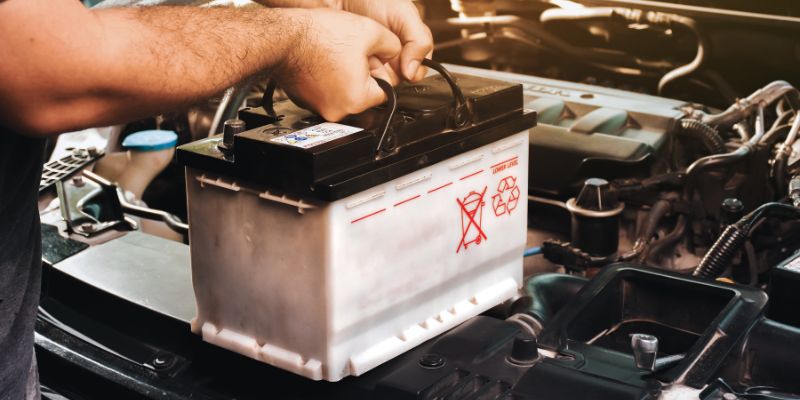
Why Professional Help Matters
A smoking battery is one of those things worth leaving to a professional. A mechanic can diagnose the problem accurately, whether it’s the battery, alternator, or wiring. They have the tools to test voltage, check for leaks, and confirm everything is safe before you get back on the road.
Conclusion
A smoking car battery is a serious issue, but it’s not the end of the world. Whether it’s an overcharging alternator, a short circuit, reversed jumper cables, or just a hot day pushing your battery to its limits, understanding the cause is the first step to fixing it safely. Stay calm, move away if it’s actively venting, check for obvious issues once it’s cooled, and get professional help when needed to keep your car running smoothly.
FAQs
Why does my car battery smell like rotten eggs?
That rotten egg smell is usually sulfuric acid or hydrogen gas leaking from the battery. It happens when the battery is overcharging or damaged. Don’t ignore it, check for leaks or corrosion and get it inspected by a mechanic.
Can a smoking car battery catch fire?
Yes, though it’s uncommon. A smoking battery can ignite if there’s a short circuit or excessive heat, since the hydrogen gas it vents is explosive between roughly 4% and 72% concentration in air. Turn off the car, keep sparks and metal tools away, and call for professional help to stay safe.
How do I know if my alternator is causing the battery to smoke?
If your battery is smoking and you notice dim lights or electrical issues, the alternator might be overcharging. A digital battery tester or a mechanic can confirm this by checking whether the charging voltage is holding above 14.5 volts.
Is it safe to drive with a smoking battery?
No, it’s not safe. A smoking car battery could indicate a serious issue like a short circuit or leak. Stop driving immediately, and have the vehicle towed rather than driving it to a shop.
How often should I check my car battery?
Check your battery every 3-6 months for corrosion, loose terminals, or cracks, and test it yearly once it passes the 3-year mark. Regular checks help catch problems early and prevent issues like smoking or sudden failure.
Should I disconnect a smoking car battery myself?
Only after the smoke, hissing, and heat have completely stopped. Wearing gloves and eye protection, disconnect the negative terminal first to break the circuit, then the positive. If it’s still hot or actively venting, stay back and call a mechanic or tow truck instead.
Products related to this article
Sponsored / affiliate links. As an Amazon Associate I earn from qualifying purchases. I may earn additional commission from eligible campaigns.