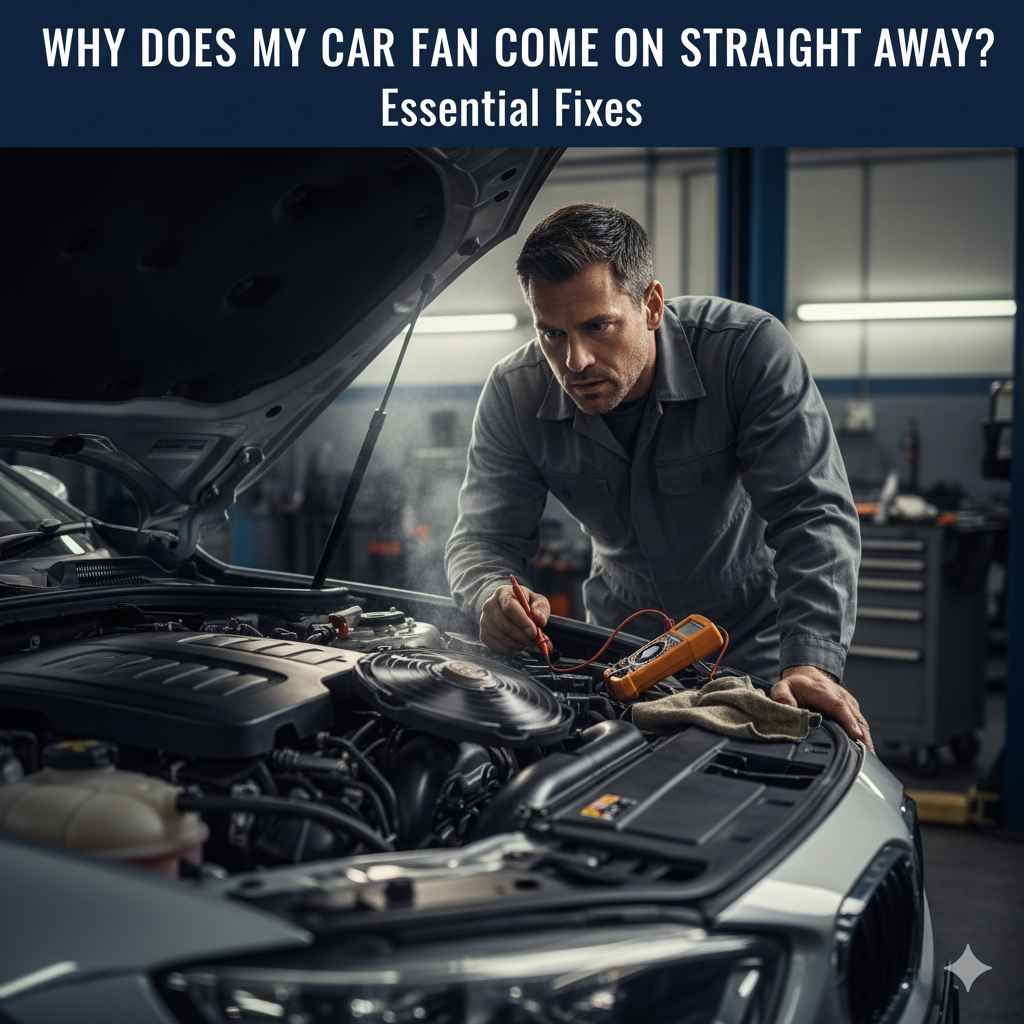
Why Does My Car Fan Come On Straight Away: Essential Fixes
Your car’s cooling fan running immediately, even when the engine is cold, usually points to a sensor issue, a problem with the thermostat, or an electrical glitch. Don’t worry, these are often fixable yourself! We’ll guide you through the most common reasons and simple solutions to get your car running cool and quiet again.
Ever started your car, and almost instantly, you hear that familiar hum of the cooling fan kicking in? It’s a bit puzzling, especially when the engine gauge shows it’s still cold. Many drivers find this a common, yet frustrating, issue. It can make you wonder if something serious is wrong with your car. But before you panic, know that this is often a sign of a few straightforward problems that can be diagnosed and fixed. I’m Md Meraj, and I’m here to help you understand exactly why this happens and what you can do about it. We’ll break down the common causes in simple terms, so you can tackle it with confidence. Let’s dive in and get your car’s fan behaving normally again!
Understanding Your Car’s Cooling Fan System
Your car has a cooling system designed to keep the engine at its optimal operating temperature. A key part of this system is the electric cooling fan. This fan’s job is to pull air through the radiator, especially when your car is stationary or moving slowly, helping to dissipate heat. Normally, the fan kicks on when the engine reaches a certain temperature, usually around the middle of the temperature gauge. When it starts working right away, even when the engine is cold, it means something is telling it to do so prematurely.

Common Reasons Your Car Fan Might Come On Immediately
There are several reasons why your car’s cooling fan might defy the normal operating procedure and turn on as soon as you start the engine. Let’s explore the most frequent culprits:
1. Faulty Coolant Temperature Sensor (CTS)
The coolant temperature sensor is like the brain of your cooling system for the fan. It measures the temperature of the coolant flowing through the engine. This information is sent to the car’s computer (ECU – Engine Control Unit), which then decides when to turn the cooling fan on. If this sensor gets faulty, it might send incorrect information to the ECU, telling it that the engine is overheating when it’s actually cold. This false reading can cause the fan to engage immediately.
What is a Coolant Temperature Sensor?
This small but vital sensor is typically screwed into the engine block or cylinder head, surrounded by the engine’s coolant. It contains a thermistor, a type of resistor whose resistance changes with temperature. When the coolant is cold, the resistance is high, and when it’s hot, the resistance is low (or vice versa, depending on the sensor type). The ECU monitors this change to gauge temperature.
How to Identify a Faulty CTS:
- Dashboard Warning Lights: A malfunctioning CTS can sometimes trigger the ‘Check Engine’ light or a specific temperature warning light.
- Inaccurate Temperature Gauge: The temperature gauge on your dashboard might read incorrectly, either too high or too low.
- Poor Engine Performance: Apart from the fan issue, a bad CTS can affect fuel mixture calculations, leading to rough idling, poor acceleration, or decreased fuel economy.
- Fan Runs Constantly: As you’re experiencing, the fan running all the time is a significant indicator.
Fixing a Faulty CTS:
Replacing a coolant temperature sensor is often a manageable DIY task for beginners. Here’s a general idea of how it’s done:
- Locate the Sensor: Consult your car’s manual or search online for your specific make and model to find the exact location of the CTS.
- Allow Engine to Cool: Always work on a cool engine to avoid burns.
- Disconnect Battery: For safety, disconnect the negative terminal of your car battery.
- Drain Some Coolant: You might need to drain a small amount of coolant to prevent spillage when removing the sensor.
- Remove the Old Sensor: Use a wrench or socket set to unscrew the old sensor. Be prepared for a small amount of coolant to leak out.
- Install the New Sensor: Screw in the new sensor hand-tight, then snug it up with your wrench. Ensure it’s seated properly.
- Reconnect Battery and Refill Coolant: Reconnect the battery, refill any lost coolant, and start the engine to check for leaks and proper fan operation.
You can find replacement CTS units at most auto parts stores. Always ensure you get the correct part number for your vehicle.
2. Thermostat Malfunction
The thermostat is a valve that controls the flow of coolant between the engine and the radiator. It stays closed when the engine is cold to help it warm up faster. Once the engine reaches its normal operating temperature, the thermostat opens to allow coolant to flow to the radiator and be cooled by the fan. If the thermostat gets stuck in the open position, coolant will constantly flow to the radiator, even when the engine is cold. This can trick the cooling system into thinking it needs immediate cooling, leading the fan to engage immediately.
What is a Thermostat?
Think of the thermostat as a gatekeeper for your coolant. It’s typically located where the upper radiator hose connects to the engine. Inside, it has a wax pellet that expands when heated, pushing the valve open. When cooled, it contracts, and the valve closes. If this wax pellet gets stuck or the valve mechanism seizes, it can’t regulate coolant flow correctly.
Signs of a Stuck Thermostat:
- Engine Takes Too Long to Warm Up: If the thermostat is stuck open, the engine might struggle to reach its proper operating temperature, especially in cold weather.
- Overheating: In some cases, if the thermostat gets stuck closed, it can prevent coolant from reaching the radiator altogether, causing rapid overheating.
- Cooling Fan Runs Constantly: As with a bad CTS, a thermostat stuck open can keep the system cooler than the ECU expects, leading to immediate fan activation.
- No Heat from Heater: If the thermostat isn’t opening, hot coolant won’t circulate to the heater core, resulting in lukewarm or cold air from your vents.
How to Replace a Thermostat:
Replacing a thermostat is another accessible DIY job, though it can be a bit messier than a CTS replacement.
- Park and Cool: Ensure your engine is completely cool.
- Disconnect Battery: Disconnect the negative battery terminal as a safety precaution.
- Locate Thermostat Housing: It’s usually found where the large upper radiator hose meets the engine.
- Drain Coolant: Position a drain pan underneath and drain a significant portion of the coolant from the radiator or engine block.
- Remove Hoses and Housing: Unscrew the bolts holding the thermostat housing. You may need to wiggle off the hoses attached to it.
- Remove Old Thermostat: Carefully take out the old thermostat, noting its orientation (there’s usually an arrow or a jiggle valve that needs to be positioned correctly).
- Install New Thermostat: Place the new thermostat into the housing, ensuring it’s in the right position.
- Reassemble: Reattach the housing and hoses, tighten bolts, and reconnect the battery.
- Refill and Bleed: Refill the cooling system with the correct type and amount of coolant. Bleeding the system is crucial to remove air pockets. Check your owner’s manual for the specific procedure for your car.
A new thermostat and gasket kit are relatively inexpensive. Make sure you purchase the correct temperature rating for your vehicle.
3. Airflow or Cooling Fan Control Module Issues
Modern cars often have a fan control module or a relay system that manages when the electric cooling fan operates. This module receives signals from the ECU and precisely controls the fan speed. If this module malfunctions or if there’s an issue with the fan relay, it can lead to the fan running constantly or at unnecessarily high speeds, including right from startup.
Understanding Fan Control Modules and Relays:
The fan control module is a sophisticated electronic device that allows for variable fan speeds. Relays, on the other hand, are simpler electromagnetic switches that complete an electrical circuit. Both are designed to be activated by the ECU based on engine parameters.
Diagnosing Control Module or Relay Problems:
- Fan Runs at Full Speed Always: While a faulty module can cause various issues, a common symptom is the fan defaulting to its highest speed immediately.
- Fan Doesn’t Run When Needed: Conversely, a bad module or relay might prevent the fan from running at all when the engine gets hot.
- Intermittent Issues: Sometimes the fan might run fine for a while, then start acting up.
Fixing Fan Control Modules or Relays:
Replacing a fan control module or relay is usually straightforward. These components are often located in the fuse box or near the fan assembly.
- Locate the Module/Relay: Your car’s owner’s manual or a service manual will show you the location.
- Disconnect Battery: Always disconnect the negative battery terminal.
- Remove and Replace: Relays are typically clipped in and can be pulled out and replaced with an identical one. Modules might be bolted in and have electrical connectors.
- Check Fuses: While you’re at it, check the fuse associated with the cooling fan. A blown fuse can also cause problems, though it usually means the fan won’t run at all.
These parts are generally affordable, and swapping them out is a quick fix.
4. Wiring Harness Issues
The cooling fan, its sensor(s), and the control module are all connected by a wiring harness. Damage to this wiring – such as frayed wires, loose connections, or short circuits – can send false signals to the ECU or directly activate the fan. This is less common than sensor or thermostat issues but can definitely cause the fan to run unexpectedly.
Common Wiring Problems:
- Chafed Wires: Wires rubbing against engine components can wear down insulation, leading to shorts.
- Corroded Connectors: Moisture and dirt can cause corrosion in electrical connectors, disrupting the signal.
- Loose Connections: Vibrations can sometimes shake electrical connectors loose.
Troubleshooting Wiring:
This can be more challenging for beginners. It often requires a multimeter to test for continuity and voltage. If you suspect a wiring issue, it’s often best to have a professional mechanic inspect it, as incorrectly diagnosing or repairing wiring can cause further damage.
5. Dashboard Temperature Gauge Sends Erroneous Signal
In some vehicles, the dashboard temperature gauge isn’t just a gauge; it’s directly linked to the engine’s temperature reading and can, in rare instances, influence the cooling fan’s operation if it’s malfunctioning or if its associated wiring is compromised. While less common than a direct CTS fault, a problem here could trick the system.
How the Gauge Interacts:
The temperature gauge receives its signal from a sensor, which might be the same one as the CTS or a separate sender unit. If this signal is corrupted or incorrect, it could contribute to the perceived need for immediate cooling.
Signs of Gauge Related Issues:
- Inaccurate Readings: The temperature gauge itself might be stuck on hot, fluctuate wildly, or show a consistently cold reading even when the engine feels hot.
- Warning Lights: Associated warning lights on the dashboard may illuminate.
Addressing Gauge Problems:
Diagnosing a faulty temperature gauge sender or instrument cluster issues typically requires specialized testing. If your temperature gauge is acting strangely and the fan is running immediately, it’s worth having a mechanic investigate the sender and its wiring.
Using a Multimeter to Test Sensors (A Beginner’s Guide)
A multimeter is an invaluable tool for any DIYer. You can use it to test the resistance of your coolant temperature sensor. You’ll need to know your car’s specific resistance values for different temperatures, which you can often find in a service manual or online automotive forums.
Tools You’ll Need:
- Digital Multimeter (DMM)
- Socket Set or Wrench
- Safety Glasses
- Gloves
- Container for Coolant (if draining)
- Replacement Sensor (if needed)
Testing the CTS:
- Disconnect Sensor: Locate the CTS and unplug its electrical connector.
- Remove Sensor: (As described in the CTS replacement section).
- Test Resistance: Set your multimeter to measure resistance (Ohms, Ω). Place the multimeter probes on the two terminals of the sensor.
- Compare Readings: Compare the reading to the known resistance values for the current coolant temperature. For a cold engine, the resistance should be high; for a hot engine, it should be low. If the reading is way off, the sensor is likely bad.
- Optional: Apply Heat: You can carefully heat the sensor with a hairdryer or warm water (not boiling!) while testing to see if the resistance changes as expected.
Remember, improper testing can damage the sensor or your multimeter. Always consult your car’s service manual for precise instructions and specifications.
Table: Common Causes and Symptoms
Here’s a quick look at the common reasons for your fan running immediately and what you might notice:
| Problem | Likely Symptoms | Fan behavior |
|---|---|---|
| Faulty Coolant Temperature Sensor (CTS) | Check Engine light, inaccurate temp gauge, poor engine performance. | Fan runs constantly, even when cold. |
| Stuck Thermostat (Open) | Engine takes too long to warm up, poor heater performance. | Fan runs constantly, even when cold. |
| Cooling Fan Control Module/Relay Failure | Fan runs at full speed always, or not at all when needed. | Fan runs immediately and often at high speed. |
| Wiring Harness Issues | Intermittent electrical problems, Check Engine light, fan might behave erratically. | Fan runs immediately or unpredictably. |
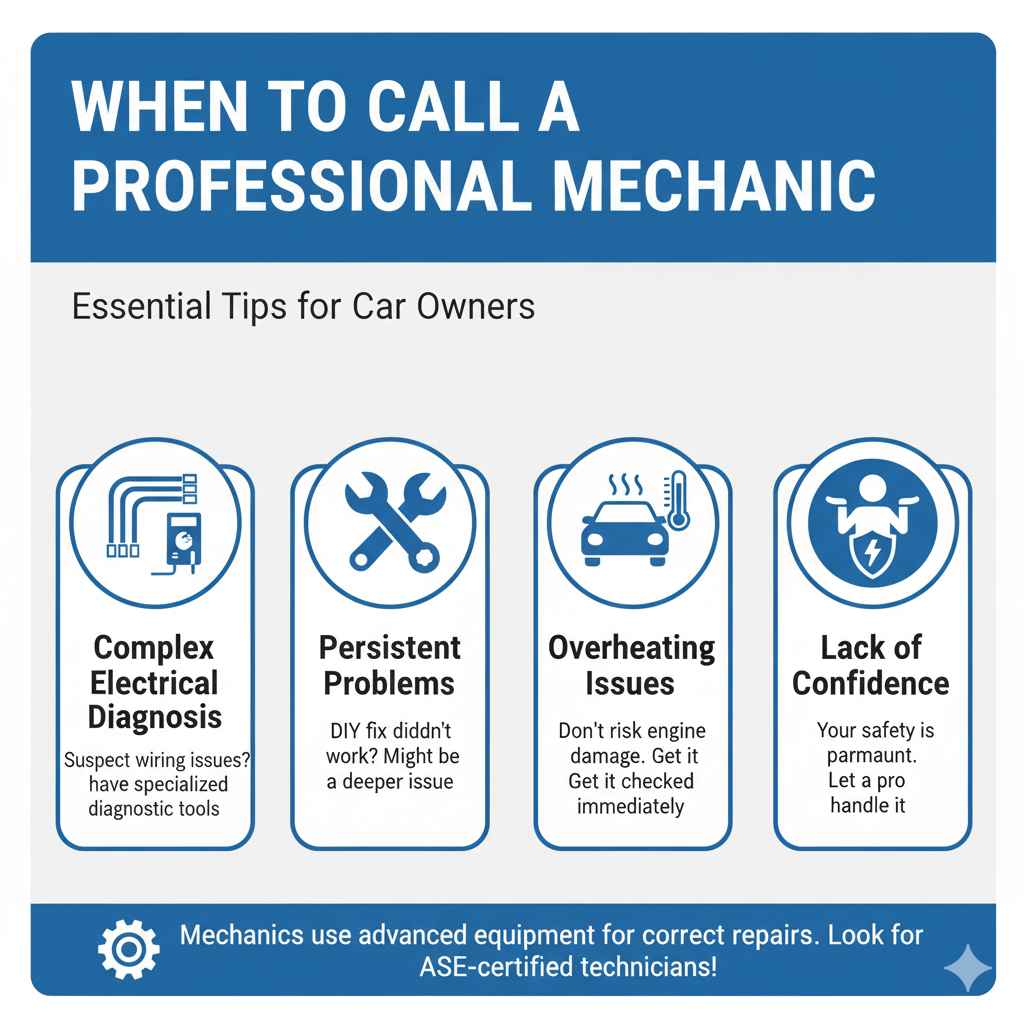
When to Call a Professional Mechanic
While many of these issues are beginner-friendly, there are times when it’s best to seek professional help. If you’re uncomfortable with any of the steps, lack the necessary tools, or if the problem persists after your DIY attempts, it’s time to call in the experts.
Signs You Should See a Mechanic:
- Complex Electrical Diagnosis: If you suspect a wiring harness issue but can’t pinpoint it, a mechanic has specialized diagnostic tools.
- Persistent Problems: If you replace a part and the issue remains, there might be a deeper, more complex problem.
- Overheating Issues: If your car is actually overheating, dealing with it yourself could lead to serious engine damage. Get it checked immediately.
- Lack of Confidence: Your comfort and safety are paramount. If you’re not feeling confident, let a pro handle it.
A mechanic can quickly diagnose the problem using advanced equipment and ensure repairs are done correctly. Resources like The National Automotive Technicians Education Foundation (NATEF), now part of ASE, help ensure technicians are well-trained, so you can trust their expertise.
Frequently Asked Questions (FAQ)
Q1: Can my car be damaged if the cooling fan comes on right away?
For the most part, no immediate damage will occur if the fan comes on straight away. Modern cars are designed with safety margins. However, if the fan is supposed to be off and is constantly drawing power, it could eventually drain your battery. More importantly, it’s a sign that something isn’t working as it should, and ignoring it might lead to other problems down the line if the underlying issue affects engine performance or regulation.
Q2: How do I know if my car’s coolant is low?
You can check your coolant level by looking at the translucent coolant reservoir, usually marked with ‘MIN’ and ‘MAX’ lines. The engine should be cool when checking. If the level is below the ‘MIN’ line among multiple vehicles, it means you might have a leak or evaporation over time and need to top it up. If it’s consistently low, you should have the cooling system inspected for leaks.
Q3: What kind of coolant should I use?
Automakers specify particular types of coolant (antifreeze) for their vehicles, often based on color and chemical composition (e.g., IAT, OAT, P-HOAT). Using the wrong type can cause corrosion or damage to your cooling system components. Always consult your owner’s manual to determine the correct coolant for your car. Mixing types is also generally not recommended.