Why Does My Car Say Shift to Park? Essential Fixes
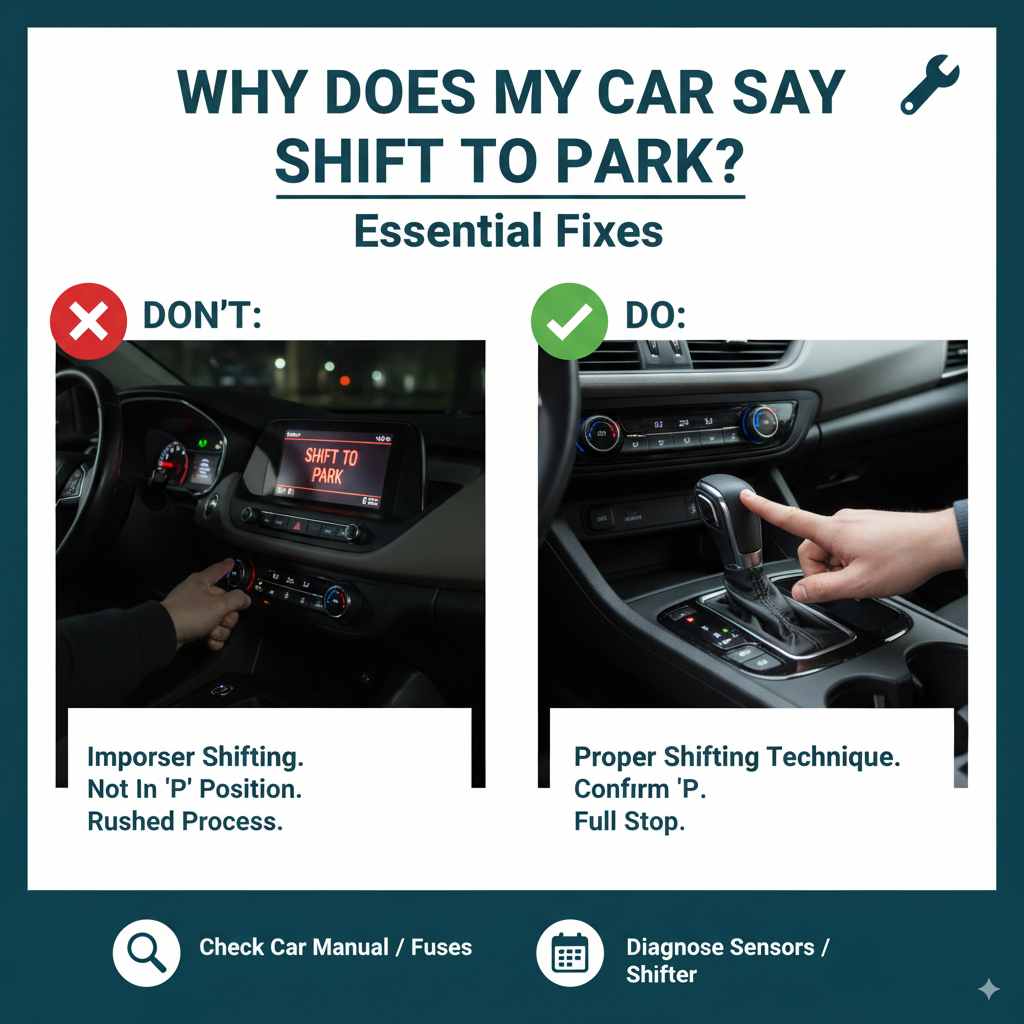
Your car flashing “Shift to Park” can halt your day. This message often means a minor sensor glitch, a loose connection, or a problem with your brake-light switch. Fortunately, many fixes are simple and can be done yourself, saving you time and money. We’ll guide you through the common causes and easy solutions to get you back on the road.
Have you ever been about to turn off your car, only to be greeted by that insistent “Shift to Park” message on your dashboard? It’s a common frustration, and it can be a bit alarming. You’re sure you’ve put the car in park, so why is it telling you otherwise? Don’t worry, you’re not alone! This little message usually pops up when your car’s systems aren’t quite sure you’ve secured the gearshift properly. It’s a safety feature, but when it’s wrong, it can be confusing. We’ll break down exactly why this happens and, more importantly, how you can fix it, easily and confidently.
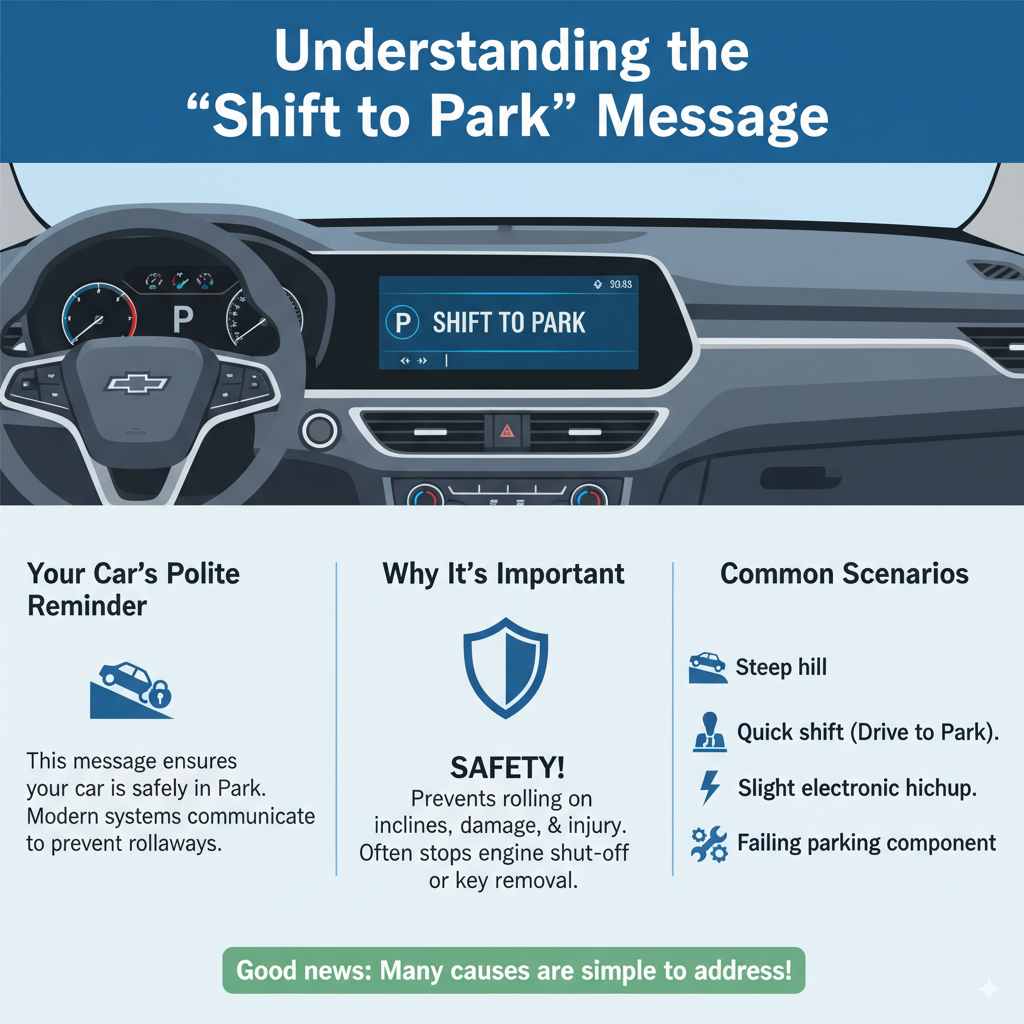
Understanding the “Shift to Park” Message
This message is your car’s way of ensuring it’s safely in Park. Modern cars have complex systems that communicate to make sure everything is just right before you turn off the engine or lock the doors. When the “Shift to Park” alert appears, it means one of these systems isn’t getting the signal it expects. It’s like a polite, but firm, reminder from your car.
Why is this message important?
Safety! If your car actually wasn’t in park, it could roll away, especially on an incline, causing damage or injury. The message is designed to prevent this. It also often prevents the car from shutting off completely or from letting you remove the key, adding another layer of security against unintended movement.
Common Scenarios When It Appears
You might see this message when:
You park on a steep hill.
You quickly shift from Drive to Park without fully engaging it.
There’s a slight electronic hiccup.
A component related to the parking system is failing.
The good news is that many of these causes are quite simple to address.
Top Reasons Your Car Says “Shift to Park”
Let’s dive into the most common culprits behind this dashboard warning. Understanding these will help you pinpoint the issue and decide on the best fix.
1. Brake-Light Switch Malfunction
This is a very frequent cause. Your brake-light switch, usually located near or on the brake pedal arm, tells the car system when you’re pressing the brake. It also plays a role in signaling when the car is in Park. If this switch is faulty, dirty, or out of adjustment, it might not be sending the correct “brake applied” or “car in park” signals.
What it looks like: Sometimes, you’ll notice your brake lights aren’t working consistently when you press the pedal if this switch is the problem.
Why it happens: Over time, the switch can wear out, get dirty from road grime, or its linkage can become loose.
2. Shifter Interlock Mechanism Issues
Your gear shifter has a safety mechanism called a shift interlock. This prevents you from shifting out of Park unless your foot is on the brake. It also helps confirm that Park is properly engaged. If this interlock is sticky, damaged, or its sensors are malfunctioning, it can trigger the “Shift to Park” message.
What it looks like: You might feel a slight “stuck” sensation when trying to move the gear shifter, or the shifter might not feel like it’s fully clicking into positions.
Why it happens: Wear and tear, debris, or electrical faults in the interlock system.
3. Parking Pawl or Gear Selector Issues
The parking pawl is a metal pin inside your transmission that locks the transmission when you shift into Park. While less common for a “Shift to Park” message, issues here can sometimes cause related electrical signals to be misinterpreted, though this usually manifests more as the car rolling. More directly related, the actual electrical signal from the gear selector (the part that detects which gear you’ve selected) might be faulty.
What it looks like: If the gear selector is the issue, warning lights for transmission problems might also appear. The car might also hesitate to switch gears.
Why it happens: Internal transmission wear, electrical connector issues, or sensor failure.
4. Battery or Electrical System Problems
A weak or failing car battery can cause all sorts of strange electrical gremlins, including dashboard warnings. Similarly, loose battery terminals or corroded wiring can interrupt the flow of power and signals, leading to the “Shift to Park” message.
What it looks like: You might notice other electrical issues, like dim headlights, slow power windows, or difficulty starting the car.
Why it happens: Batteries have a limited lifespan, and connections can loosen or corrode due to age and environmental factors.
5. Loose Wiring or Connectors
All these components rely on electrical connections. If a wire becomes loose, a connector gets dirty, or a ground point corrodes, the signal telling the car it’s in Park might not reach the computer. This is especially common in areas exposed to weather and road debris.
What it looks like: The problem might be intermittent, appearing and disappearing, or it could be constant.
Why it happens: Vibration, moisture, and corrosion can loosen or damage electrical connections over time.
Essential Fixes for the “Shift to Park” Message
Now for the exciting part: how to fix it! We’ll go from the simplest checks to slightly more involved solutions. Remember, safety first – always engage your parking brake and ensure the car is on a level surface before working on it.
Step 1: The Simple Gearshift Jiggle
This is the easiest fix and often works for minor, temporary glitches.
1. Ensure Car is Off: Make sure your car is completely turned off.
2. Foot on Brake: Press and hold the brake pedal firmly.
3. Shift Gently: Gently try to move the gear shifter out of Park, and then firmly back into Park. You might need to give it a little wiggle or ensure it clicks securely into place.
4. Check for Message: See if the “Shift to Park” message disappears after you (re)engage Park.
5. Attempt Restart: If the message is gone, try starting the car again.
This sometimes resets the shifter’s position sensor or dislodges minor debris that might be causing a slight misalignment.
Step 2: Check Your Brake Lights
This is a great way to diagnose a potential brake-light switch issue.
1. Car Off: Turn off the ignition.
2. Get Help (or use a reflection): Have a friend stand behind your car while you press the brake pedal, or find a reflective surface like a storefront.
3. Press Brake: Firmly press the brake pedal.
4. Observe: Check if both brake lights illuminate.
5. What if they don’t? If one or both brake lights are out, the brake-light switch is a prime suspect.
Tool You Might Need: A Phillips head screwdriver, possibly a small pry tool.
Potential Fix: If the switch is accessible, you might be able to gently adjust its position or clean its contacts. However, for most people, replacing the brake-light switch is a more reliable fix. Many auto parts stores (`example: AutoZone.com`) offer diagnostic help and replacement parts.
Step 3: Inspect and Clean Battery Terminals
Corrosion and loose connections here can cause widespread electrical issues.
1. Safety First: Ensure the car is OFF.
2. Locate Battery: Open your hood and find the car battery.
3. Check Terminals: Look at the metal posts (terminals) where the cables connect. Is there any white, blue, or greenish powdery substance (corrosion)? Are the cables securely fastened?
4. Clean if Necessary: If corroded, disconnect the cables (negative terminal first, then positive). Use a wire brush or a battery terminal cleaning tool to scrub off the corrosion from both the terminals and the cable clamps. A mixture of baking soda and water can also help neutralize acid.
5. Reconnect: Reattach the cables (positive first, then negative) and tighten them securely.
6. Test: Start your car to see if the message is gone.
Tools You’ll Need: Wrench set (usually 10mm or 13mm), wire brush or battery terminal cleaner, safety glasses, gloves, baking soda (optional).
Where to Find Info: You can find excellent visual guides from reputable sources like AAA (`example: newsroom.aaa.com/car-maintenance/battery-maintenance/`).
Step 4: Examining the Shifter Assembly (For the Adventurous DIYer)
This can be more involved and varies greatly by car model. It involves checking for obvious damage, debris, or loose connections around the gear shifter mechanism itself.
1. Consult Your Manual: Refer to your car’s owner’s manual or a repair manual for your specific vehicle to understand how to access the shifter assembly.
2. Disassemble Gently: Carefully remove any trim pieces around the shifter.
3. Inspect: Look for any obvious debris, bent linkages, or loose electrical connectors attached to the shifter.
4. Clean and Secure: Gently clean any visible dirt or grime. Ensure all electrical connectors are firmly seated.
5. Reassemble: Put everything back together carefully.
6. Test: Start the car.
Tools You Might Need: Trim removal tools, Phillips head screwdriver, small socket set.
Caution: If you’re not comfortable with this step, it’s best to leave it to a professional to avoid damaging delicate components.
Step 5: Resetting the Car’s Computer (ECU/PCM)
Sometimes, a simple reset can clear temporary glitches.
1. Disconnect Battery Cables: Turn off the car. Disconnect the negative battery terminal.
2. Wait: Let the car sit for about 15-30 minutes. This allows the car’s computer (ECU – Engine Control Unit or PCM – Powertrain Control Module) to fully discharge and reset.
3. Reconnect Battery: Reconnect the negative battery terminal.
4. Start Car: Start the engine and see if the message has cleared.
Note: This might reset your radio presets and other programmable settings.
When to Seek Professional Help
While many “Shift to Park” issues are simple, some require the expertise of a mechanic. If you’ve tried the basic fixes and the message persists, or if you encounter any of the following, it’s time to call in the professionals:
Persistent Message: If the warning light stays on despite your efforts.
Intermittent Shifting: If the gear shifter feels loose, stuck, or difficult to move into gear.
Other Warning Lights: If other dashboard warning lights (like the Check Engine light or transmission warning) illuminate simultaneously.
Rolling While Parked: If your car has ever rolled or felt like it wasn’t securely in Park, even with the message off.
Lack of Confidence: If you’re unsure about performing any of the diagnostic or repair steps.
A mechanic has specialized tools to read your car’s computer codes, diagnose complex electrical issues, and inspect internal transmission components. They can accurately identify and fix the problem, ensuring your car’s safety and reliability.
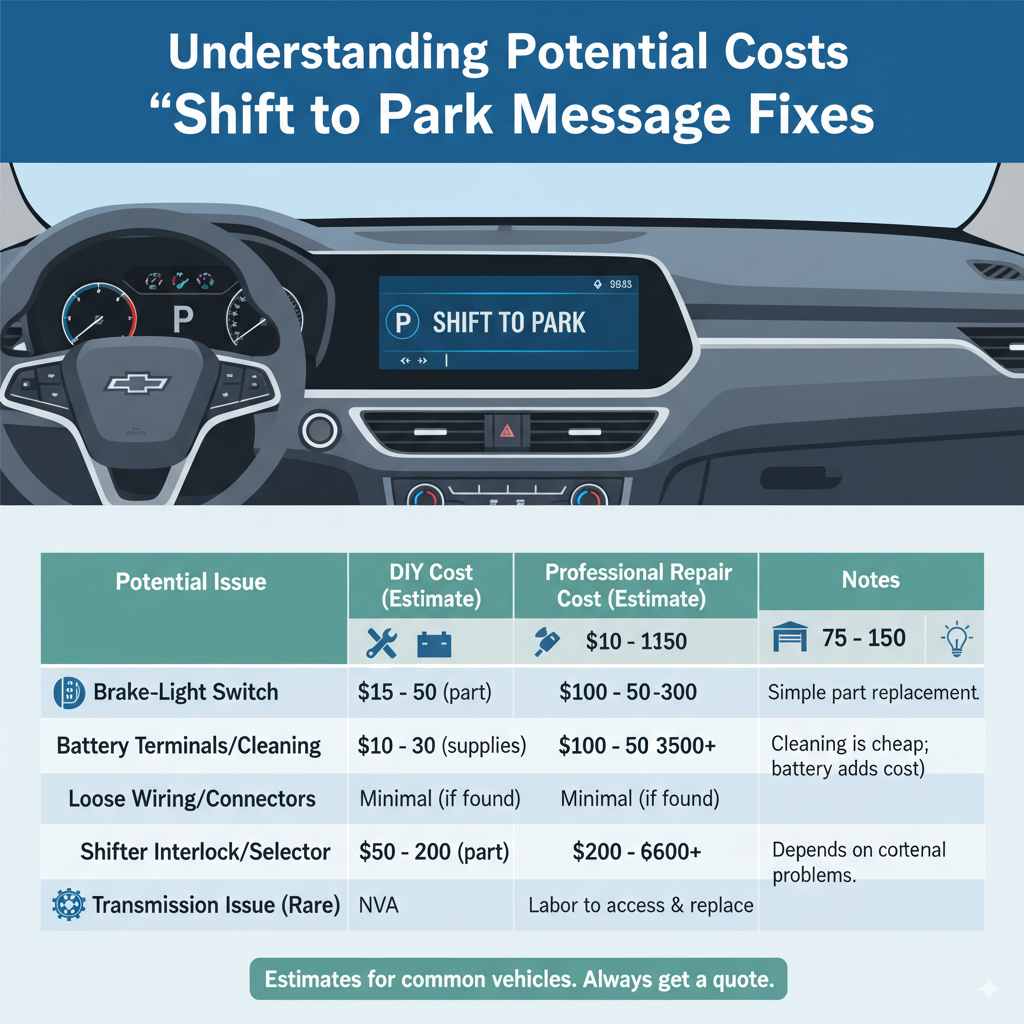
Understanding Potential Costs
The cost to fix a “Shift to Park” message can vary widely depending on the cause and your location. Here’s a general idea:
| Potential Issue | DIY Cost (Estimate) | Professional Repair Cost (Estimate) | Notes |
|---|---|---|---|
| Brake-Light Switch | $15 – $50 (part) | $100 – $300 | Often a simple part replacement. |
| Battery Terminals/Cleaning | $10 – $30 (supplies) | $75 – $150 (if battery issue) | Cleaning is cheap; battery replacement adds cost. |
| Loose Wiring/Connectors | Minimal (if found) | $100 – $350+ | Depends on complexity of diagnosis and repair. |
| Shifter Interlock/Selector | $50 – $200 (part) | $200 – $600+ | Can involve labor to access and replace internal shifter components. |
| Transmission Issue (Rare) | N/A | $500 – $3000+ | Most expensive, usually due to internal transmission problems. |
Estimates are for common vehicles and can vary based on make, model, year, and geographic location. Always get a quote.
Frequently Asked Questions (FAQ)
Q1: Can I drive my car if it says “Shift to Park”?
A1: It’s generally not recommended to drive for extended periods if the message persists, especially if you also notice other symptoms like shifting problems or brake lights not working. The message is a safety indicator, and ignoring it could potentially lead to safety issues if the car isn’t truly in park.
Q2: How often should I check my brake-light switch?
A2: You don’t need to check it regularly unless you suspect a problem. The best way to “check” it is to simply ensure your brake lights are working by observing them in reflection or having someone help you. If their function is intermittent or they fail, then you should investigate the switch.
Q3: My car won’t turn off, and it says “Shift to Park.” What’s wrong?
A3: This is a common symptom related to the “Shift to Park” warning. The car’s computer won’t allow the ignition to fully shut off until it believes the vehicle is securely in Park. Addressing the root cause of the “Shift to Park” message will likely resolve the inability to turn off the engine.
Q4: Is it safe to simply ignore the message if the car seems fine?
A4: While sometimes the message is a false alarm, it’s a safety feature. It’s best to investigate the cause. Ignoring it could mean you are overlooking a genuine problem with the transmission’s parking mechanism or related safety systems, which could lead to a rolling vehicle or other issues down the line.
Q5: I just got new tires. Could that cause this message?
A5: It’s highly unlikely that simply getting new tires would directly cause a “Shift to Park” message. This issue is almost always related to the vehicle’s gear selection, braking system, or electrical components associated with them, not the wheels or tires themselves.
Q6: My car only says “Shift to Park” when it’s cold out. What does that mean?
A6: Temperature can affect certain electronic components and fluid viscosity. If the message only appears in cold weather, it might suggest an electrical connection that is contracting in the cold, or a sensor that is becoming sluggish. This points more towards an electrical or sensor-related issue that is exacerbated by temperature changes.
Conclusion
Seeing that “Shift to Park” message can feel like a puzzle, but as we’ve explored, it’s usually a solvable one. From a simple jiggle of the gear shifter to checking your brake lights, many of the most common causes are within your reach to fix. These straightforward steps can save you a trip to the mechanic and boost your confidence in handling your car’s needs.
Remember to always prioritize safety by engaging your parking brake and ensuring your vehicle is secure before attempting any checks. If the problem persists after trying the simpler solutions, don’t hesitate to consult a trusted mechanic. They have the tools and expertise to diagnose and repair more complex issues, ensuring your car remains safe and reliable for all your journeys. Taking care of these small alerts promptly keeps your car running smoothly and prevents larger headaches down the road. You’ve got this!