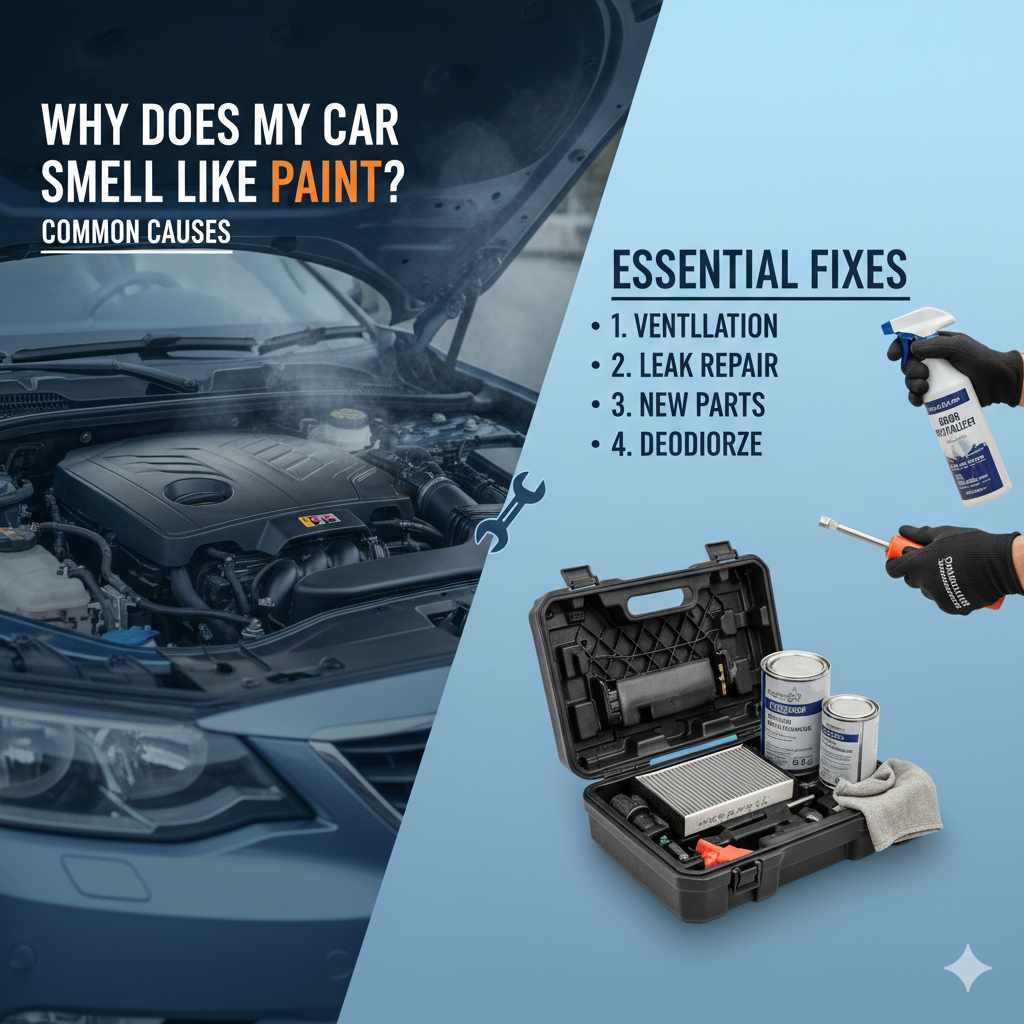
Why Does My Car Smell Like Paint? Essential Fixes
Your car smelling like paint can be unsettling, but it’s often a sign of something fixable. This smell usually comes from fresh car paint, cleaning products, or leaking substances like oil or coolant. We’ll guide you through identifying the cause and simple fixes so you can get back to driving with confidence.
Have you ever gotten into your car and been hit with a strong, chemical odor that reminds you of a fresh coat of paint? It’s a common, and frankly, a bit of a puzzling experience for many car owners. That “paint” smell can range from mildly annoying to downright concerning, especially if you’re not sure where it’s coming from. You might be wondering if it’s just residual from a recent repair, or if something more serious is going on under the hood or within the cabin.
Don’t worry! You’re not alone in experiencing this. Identifying the source of the smell is the first step to solving it. In this guide, we’ll break down the most common reasons why your car might smell like paint, and more importantly, we’ll walk you through easy, beginner-friendly fixes. We’ll cover everything from simple cabin cleaning to checking for minor leaks, empowering you to tackle this puzzling car smell with confidence.
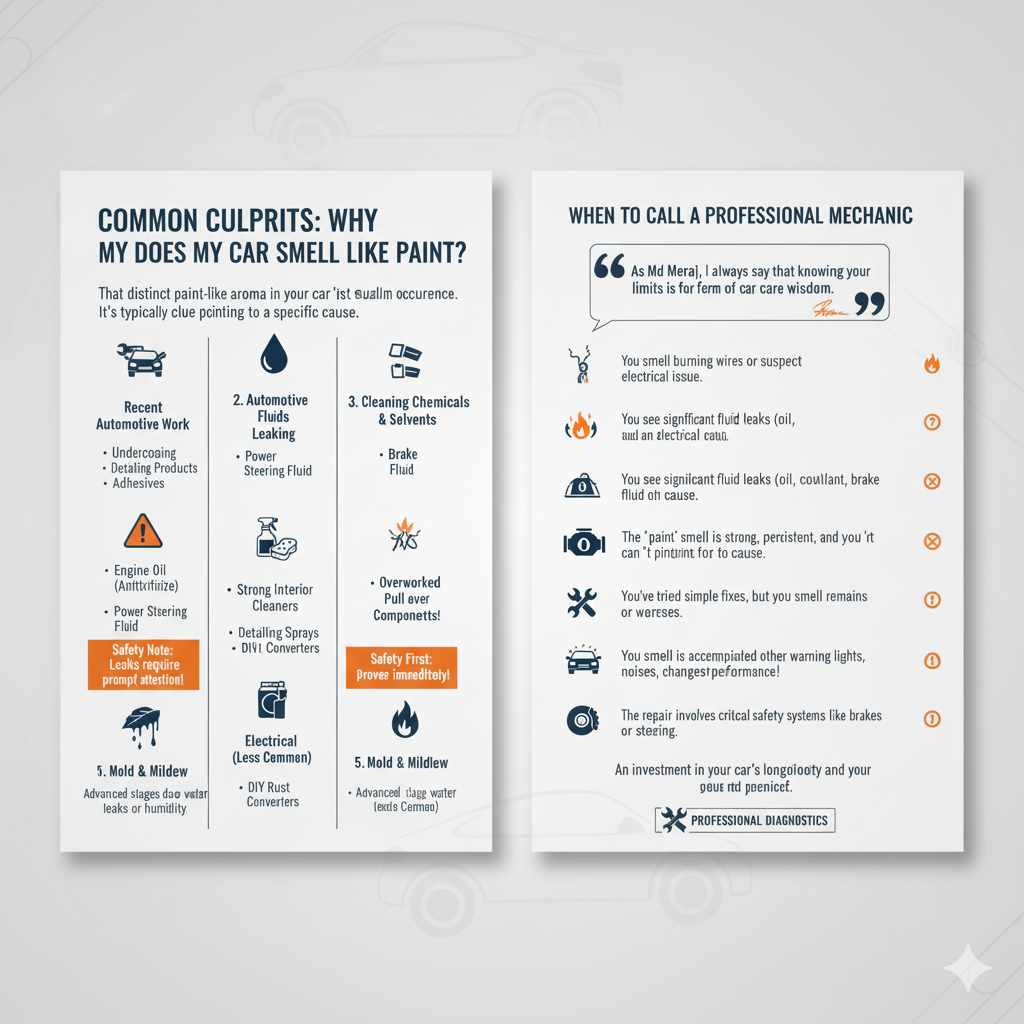
Common Culprits: Why Does My Car Smell Like Paint?
That distinct paint-like aroma in your car isn’t usually a random occurrence. It’s typically a clue pointing to a specific cause. Understanding these common culprits is key to pinpointing the problem and finding the right solution. Let’s explore the most frequent reasons you might be smelling paint in your car.
1. Recent Automotive Work
This is by far the most straightforward reason. If you’ve recently had any bodywork done, a fresh paint job, or even some interior detailing involving sealants or adhesives, the smell of paint or new materials is expected. Body shops use a variety of chemicals, primers, paints, and sealants, all of which can have strong odors. These smells are often volatile organic compounds (VOCs) that dissipate over time.
- Fresh Paint: Exterior touch-ups or full resprays will naturally leave a paint smell.
- Undercoating or Rust Proofing: These treatments can have a chemical smell similar to paint.
- Interior Detailing Products: Some sealants used on dashboards, plastics, or even new floor mats can emit a strong, paint-like odor during their curing process.
- Adhesives: Any repairs that involved gluing or bonding new parts might also introduce chemical smells.
2. Automotive Fluids Leaking
Sometimes, the “paint” smell is a misinterpretation of other chemical odors from leaking automotive fluids. Certain fluids, especially when they leak onto hot engine or exhaust components, can break down and produce strong, acrid smells that can be mistaken for paint. This is a more serious concern and requires prompt attention.
- Engine Oil: Small oil leaks, especially onto exhaust manifolds or pipes, can burn off and create a strong, pungent odor.
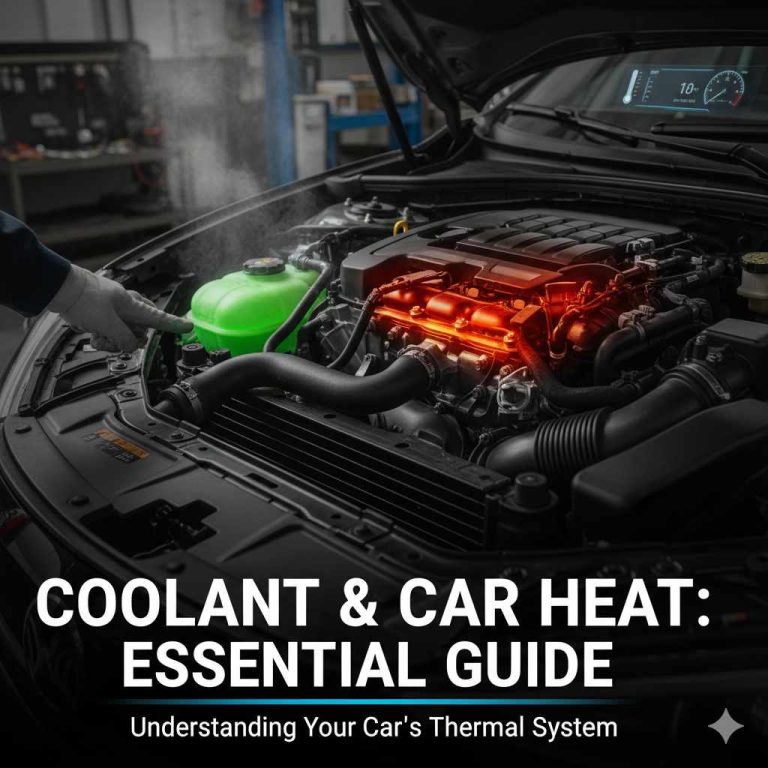
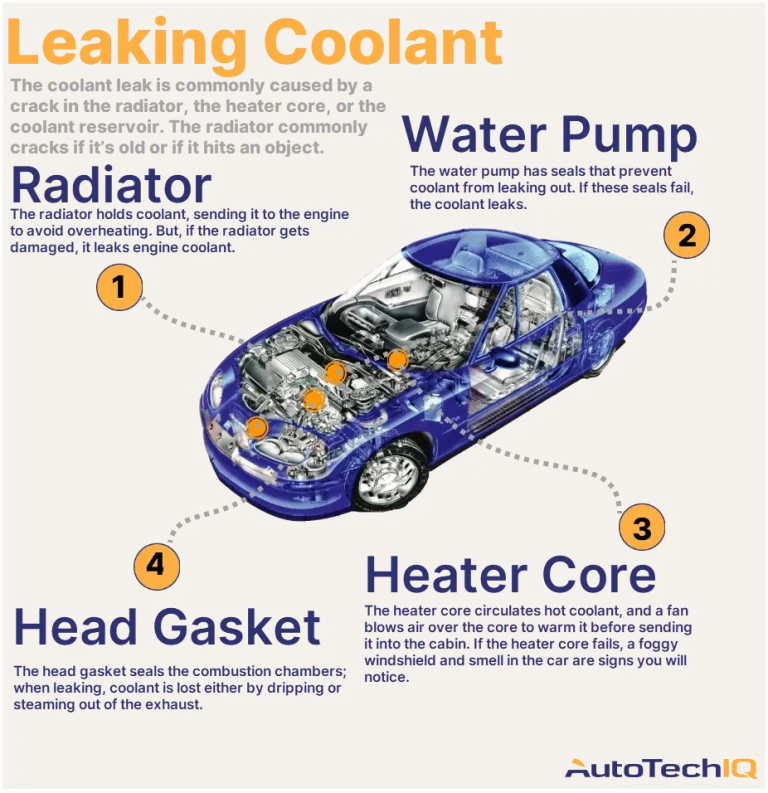
- Coolant (Antifreeze): A sweet-smelling (but toxic!) leak from the cooling system can sometimes have an underlying chemical note that people associate with paint, particularly if it’s burning off on hot engine parts. A radiator leak or a hose issue could cause this.
- Power Steering Fluid: Leaks in the power steering system can produce a chemical smell that might be misinterpreted.
- Brake Fluid: Though less common, brake fluid leaks can also create strong chemical odors.
Important Note: Leaking fluids can be a safety hazard. If you suspect a fluid leak, it’s crucial to address it immediately. You can learn more about common fluid leaks and their causes on reputable automotive resources like NHTSA’s vehicle maintenance and safety page.
3. Cleaning Chemicals and Solvents
Have you recently used strong cleaning products or solvents inside your car? Many interior cleaners, degreasers, or even some air fresheners are formulated with powerful chemicals that can leave a lingering odor. Sometimes, these odors can mimic the smell of paint, especially if they are strong or have a solvent-like base.
- Strong Interior Cleaners: Products used to deep clean upholstery or plastics.
- Detailing Sprays: Some specialized detailing sprays contain compounds that off-gas.
- DIY Rust Converters/Treatment: If you’ve tackled any minor rust spots yourself, the products used can have very strong chemical smells.
4. Electrical Fumes
A burning electrical smell is generally sulfuric and acrid, but in some very specific (and usually severe) cases, accompanying fumes or the perception of the smell can be confused with paint, especially if it’s a strong, chemical odor. This is a serious warning sign of electrical system issues, like melting wires or overheating components.
- Overheating Wires: Damaged or frayed wiring can overheat and produce a burning smell.
- Short Circuits: A short circuit can cause components to fail and emit fumes.
- Overworked Components: An overloaded electrical component, like a fan motor, can also overheat and smell.
Safety First: An electrical burning smell is a serious indicator. If you detect this, it’s best to pull over safely and have your vehicle inspected by a professional immediately. Ignoring it can lead to fires.
5. Mold and Mildew (Less Common for “Paint” Smell but Possible)
While typically associated with a musty, damp smell, in some advanced stages or with certain types of mold, the released spores can sometimes create an unpleasant, slightly chemical odor that might be misconstrued as paint, especially if it’s in a confined space like a car interior. This usually occurs due to water leaks or high humidity, leading to damp carpets and upholstery.
Diagnosing the Smell: A Step-by-Step Approach
Before you can fix the paint smell, you need to know what’s causing it. This section will guide you through a simple diagnostic process like a detective, helping you narrow down the possibilities right in your driveway.
Step 1: Pinpoint the Location of the Smell
Try to determine where the smell is strongest. Is it coming from outside the car, wafting in through the vents? Is it strongest when the car is running or when it’s turned off? Is it more concentrated in one part of the cabin?
- Inside the Cabin: Open all doors and windows. Sniff around the dashboard, seats, floor mats, and trunk.
- Under the Hood: With the engine running (and being very careful of moving parts and heat), carefully open the hood and try to locate the source.
- Underneath the Car: Look for any visible leaks or dripping fluids.
Step 2: Consider Recent Activities
Think back to what you’ve done with your car recently. This is often the biggest clue!
- Did you just get your car back from the mechanic or body shop?
- Were any new car parts installed?
- Did you use any new cleaning products or air fresheners?
- Did you carry any new items, like paint cans or chemicals, in your car?
- Have you recently driven through standing water or experienced heavy rain?
Step 3: Check for Visible Leaks
Get down and look. Safely looking under your car and around the engine bay can reveal obvious problems.
- Look for puddles of fluid under where the car was parked.
- Examine the engine bay for any signs of wetness or dark drips on components.
- Check the radiator overflow tank and hoses for leaks or low levels.
You can often identify the type of fluid by its color and consistency:
| Fluid Type | Color | Consistency/Smell | Potential Leak Points |
|---|---|---|---|
| Engine Oil | Brown/Black | Slippery, can smell burnt when hot | Oil pan, valve cover gasket, oil filter, oil pan plug |
| Coolant (Antifreeze) | Green, Orange, Pink, Blue | Slightly sweet, sometimes chemical | Radiator, hoses, water pump, heater core |
| Power Steering Fluid | Clear to Amber | Slightly oily/chemical | Hoses, pump, steering rack |
| Brake Fluid | Clear to Amber | Slightly oily, strong chemical | Master cylinder, brake lines, calipers |
Step 4: Test the Vents
Turn your car’s ventilation system (fan) on and off, cycling through fresh air and recirculation modes. Try this with the engine running and off.
- Smell Stronger with Fan On (Fresh Air): Suggests outside source or a leak that’s being pulled into the cabin.
- Smell Stronger with Fan On (Recirculation): Indicates something internal to the car’s ventilation system or cabin air filter area.
- Smell Stronger with Engine Running: Points towards engine fluids or exhaust-related issues.
Essential Fixes: Tackling the Paint Smell
Once you have a good idea of what’s causing the smell, it’s time to get to work. Here are some common fixes, ranging from simple DIY steps to knowing when to call in the pros.
Fix 1: Airing Out and Cleaning the Cabin
If the smell is recent and you suspect it’s from new materials, detailing products, or something you carried in the car, airing out and cleaning is your first line of defense.
- Park Safely: Find a safe, well-ventilated area, ideally outdoors.
- Open Doors and Windows: Open all doors, the trunk, and the windows. Let the car air out for several hours, or even a full day, especially on a warm, sunny day.
- Clean Surfaces: Use a mild interior cleaner specifically designed for automotive use. Wipe down all plastic surfaces, the dashboard, door panels, and center console. Avoid harsh chemicals that might worsen the smell. A solution of vinegar and water (50/50) can also be effective for neutralizing odors, but test in an inconspicuous area first.
- Clean Floor Mats/Carpets: If the smell seems to linger in the fabric, use a dedicated carpet and upholstery cleaner. For stubborn lingering odors, a baking soda treatment can help. Sprinkle generously, let it sit overnight, then vacuum thoroughly.
- Consider a Cabin Air Filter Replacement: A dirty or old cabin air filter can trap odors. Replacing it is a relatively simple DIY task for most vehicles. Check your owner’s manual for its location. Many are behind the glove box.
- Use Odor Absorbers: Place a bowl of activated charcoal, baking soda, or coffee grounds in the car overnight to absorb lingering smells.
Pro Tip: Natural deodorizers like activated charcoal are excellent for long-term odor absorption without masking scents with artificial fragrances. You can find effective automotive odor absorbers at most auto parts stores.
Fix 2: Addressing Minor Fluid Leaks (If Safe to Do So)
If you’ve identified a minor fluid leak, and you feel comfortable and have the right tools, some issues are fixable yourself.
- Identify the Fluid: Use the table above to help.
- Check Fluid Levels: Ensure engine oil, coolant, power steering fluid, and brake fluid are at the proper levels. Low levels confirm a leak.
- Tighten Loose Caps: Sometimes, a loose oil cap or reservoir lid can allow vapors to escape.
- Minor Hose Clamps: For coolant or vacuum hoses, a loose clamp is a common culprit. Safely tightening it might stop a small leak. Always ensure the engine is cool before touching anything.
When to Call a Professional: If the leak is significant, if you can’t identify the source, if it involves brake or power steering systems, or if you’re unsure at any step, it’s time to consult a trusted mechanic. Driving with compromised brakes or steering is dangerous.
Fix 3: Dealing with Paint/Workshop Smells
If your car smells like paint because of recent bodywork, patience is often the best cure, coupled with a little help.
- Continued Ventilation: Keep the car aired out as much as possible. Parking in sunlight can help VOCs dissipate faster, but be mindful of interior heat buildup.
- Use Specialized Odor Eliminators: Look for automotive odor eliminators that specifically target chemical smells or VOCs. These can be found at auto parts stores.
- Ozone Treatment (Professional): For persistent smells after bodywork, a professional auto detailer might offer an ozone treatment. Ozone is a powerful oxidizer that breaks down odor molecules. This is a professional service and should be done by experts.
- Check for Overspray: Inspect if any paint or primer accidentally got onto components you can access, like suspension parts or exhaust tips. If so, and it’s safe to reach, you could try to gently clean it with the recommended solvent for that paint type. However, be extremely cautious not to damage surrounding materials.
Fix 4: Investigating Electrical Smells
An electrical burning smell is a critical indicator. While there aren’t many DIY fixes here, understanding the potential sources helps in communicating with your mechanic.
- Turn Off Accessories: If the smell appears when certain accessories are on (like the radio, AC, or heated seats), turn them off to see if the smell subsides. This can help isolate the problematic circuit.
- Visual Inspection (Engine Off and Cool): Carefully look for any melted or singed wires or connectors in the engine bay or under the dashboard.
- Get Professional Diagnosis IMMEDIATELY: Electrical issues can escalate rapidly and pose a fire risk. Do not attempt to fix suspected electrical burning smells yourself unless you have automotive electrical experience. Towing your car to a reputable mechanic is the safest course of action.
Reputable sources like The Car Connection’s guide to car smells can offer further insights into diagnosing various automotive odors, including electrical ones, and emphasize the importance of professional help for safety concerns.
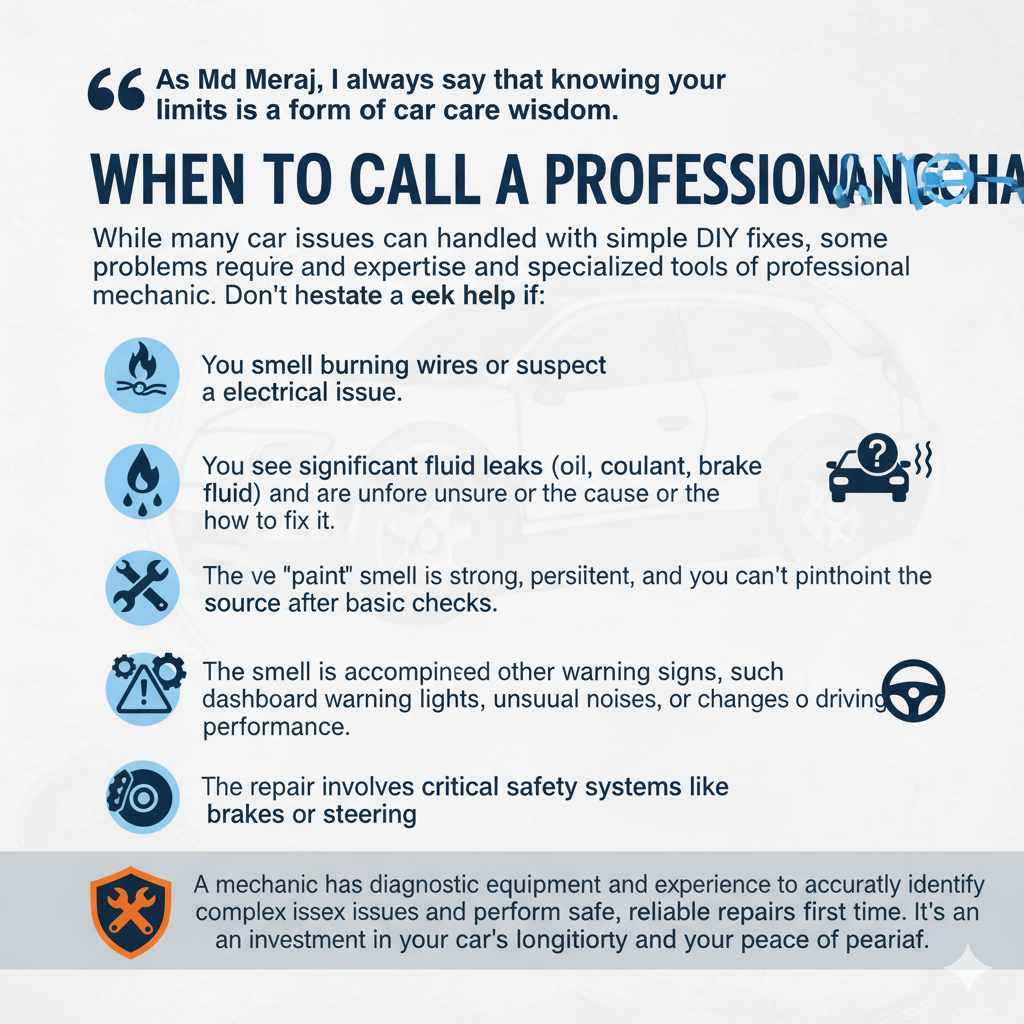
When to Call a Professional Mechanic
As Md Meraj, I always say that knowing your limits is a form of car care wisdom. While many car issues can be handled with simple DIY fixes, some problems require the expertise and specialized tools of a professional mechanic. Don’t hesitate to seek help if:
- You smell burning wires or suspect an electrical issue.
- You see significant fluid leaks (oil, coolant, brake fluid) and are unsure of the cause or how to fix it.
- The “paint” smell is strong, persistent, and you can’t pinpoint the source after basic checks.
- You’ve tried simple fixes, but the smell remains or worsens.
- The smell is accompanied by other warning signs, such as dashboard warning lights, unusual noises, or changes in driving performance.
- The repair involves critical safety systems like brakes or steering.
A mechanic has the diagnostic equipment and experience to accurately identify complex issues and perform safe, reliable repairs the first time. It’s an investment in your car’s longevity and your peace of mind.
Frequently Asked Questions (FAQ)
Q1: Is a paint smell in my car dangerous?
A paint smell itself isn’t always dangerous. If it’s from recent bodywork, it’s usually just a process of off-gassing VOCs that will dissipate. However, if the smell is acrid, like burning chemicals or wires, or if it’s accompanied by signs of fluid leaks, it can indicate a serious safety issue and should be addressed immediately.
Q2: How long does the paint smell from a repair usually last?
Typically, smells from new paint or coatings will diminish significantly within a few days to a couple of weeks with regular ventilation. Highly sensitive individuals might notice it longer. If the smell persists strongly beyond two weeks, it might be worth checking if there are residual issues or if something minor was missed during the repair.
Q3: Can my air conditioning system cause a paint smell?
While less common for a direct “paint” smell, a severely clogged or contaminated cabin air filter, or issues with the AC evaporator, can sometimes lead to unusual odors. If the smell is related to the AC system, it’s often more of a musty, moldy, or chemical smell, but in some cases, it might be misidentified. Replacing the cabin air filter is a good first step.