Why Is My Car AC Not Getting Cold? Essential Fixes
Your car AC isn’t blowing cold air? Common culprits include low refrigerant, a clogged cabin air filter, or a faulty condenser fan. This guide offers easy-to-understand fixes to get your car’s cooling system working again, saving you time and money.
Is there anything more frustrating than climbing into your car on a hot day, only to be met with a blast of warm air instead of a refreshing chill? It’s a common problem, and it can turn a comfortable drive into an uncomfortable ordeal. But don’t sweat it! You don’t need to be a master mechanic to understand why your car’s air conditioning might be struggling to stay cold. We’re going to break down the most likely reasons your AC isn’t performing as it should, using simple language and straightforward steps.
This guide is designed for you, the everyday driver who wants to understand their car better and tackle common issues without feeling overwhelmed. We’ll walk you through potential problems, explain what they mean, and offer practical solutions you can try yourself or discuss confidently with a professional. By the end, you’ll have a clearer picture of what’s happening under the hood and how to get that cool breeze flowing again.
Why Your Car AC Isn’t Getting Cold: The Most Common Culprits
When your car’s air conditioning system decides to take a personal vacation on a scorching summer day, it can be a real downer. The good news is that most of the time, these issues aren’t a sign of a major, expensive disaster. They’re often due to a few common, and sometimes easily fixable, problems. Let’s dive into the most frequent reasons why your car AC is blowing warm air.
1. Low Refrigerant Levels
Think of refrigerant (often called Freon, though that’s a brand name) as the blood of your car’s AC system. It’s the special gas that circulates and absorbs heat from the cabin, making it cold. If the refrigerant level is too low, it’s like your body not having enough blood – it just can’t do its job effectively. This is the most common reason for an AC not blowing cold air.
Why it happens: Refrigerant doesn’t get “used up” like gasoline. If your system is low, it means there’s a leak somewhere. These leaks can be tiny, often happening at seals, O-rings, or damaged hoses within the AC system. Over time, even a small leak can deplete the refrigerant charge.
What a low refrigerant level feels like:
- The air coming from the vents is cool, but not cold.
- The AC system might cycle on and off more frequently than usual.
- You might hear unusual noises from the AC compressor (the part that pumps the refrigerant).
2. Clogged Cabin Air Filter
Your cabin air filter is like the lungs of your car’s interior. It’s a mesh filter tucked away somewhere in your dashboard or glove box area that cleans the air entering your car’s cabin. If it gets clogged with dust, pollen, leaves, and other debris, it restricts airflow.
Why it happens: Over time, the filter traps a lot of gunk. When it’s full, less air can pass through it. This means the blower motor has to work harder, and even if the AC system itself is working perfectly, the reduced airflow means you won’t feel much cold air.
What a clogged cabin air filter feels like:
- Weak airflow from the vents, even when the fan is on high.
- A musty or stale smell when you turn on the AC.
- Reduced performance of defroster and heating, not just cooling.
3. Faulty Condenser Fan
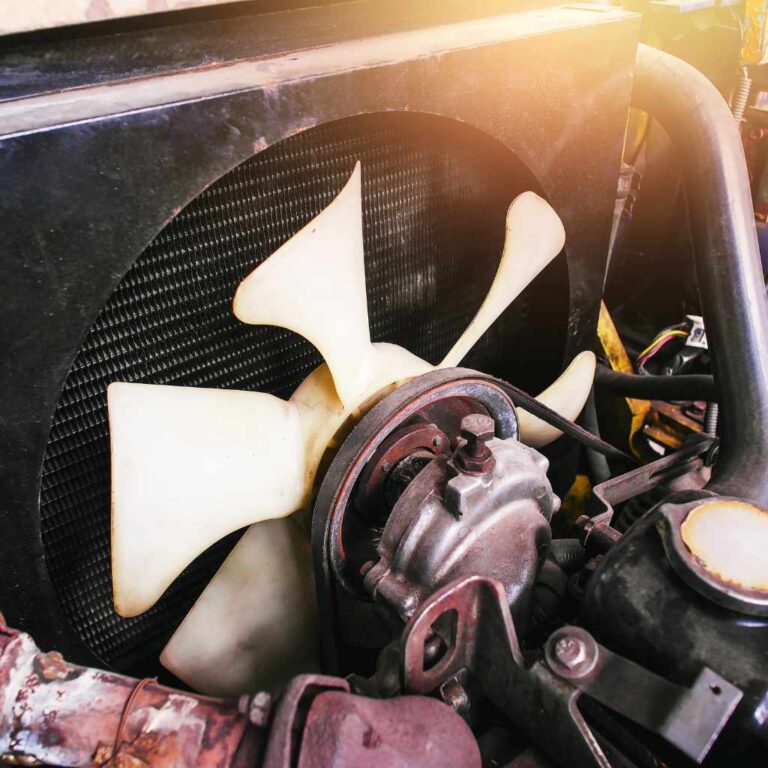
The condenser is a radiator-like component, usually located at the very front of your car, near the engine’s radiator. It releases the heat absorbed from your car’s cabin into the outside air. The condenser fan is crucial because it pulls air across the condenser coils, helping to dissipate this heat. If the fan isn’t working, the condenser can’t release heat efficiently.
Why it happens: The fan motor can burn out, or a fuse supplying power to the fan could blow. Sometimes, the wiring to the fan can become damaged.
What a faulty condenser fan feels like:
- The AC works okay when the car is moving at speed (because the natural airflow from driving helps cool the condenser).
- The AC blows warm air when the car is idling or moving slowly.
- You might notice the AC system pressure readings are higher than they should be, which can cause the compressor to shut off to protect itself.
4. Leaks in the AC System
As mentioned with low refrigerant, leaks are a major cause of AC problems. The refrigerant is contained within a sealed system of hoses, pipes, seals, and components. If any part of this system develops a crack, a loose connection, or a worn-out seal, refrigerant can escape.
Common leak points:
- O-rings: Small rubber seals at connection points that can degrade over time.
- Hoses: Rubber hoses can develop cracks or punctures.
- Compressor seal: The seal on the AC compressor can fail.
- Condenser or Evaporator: These heat exchangers are susceptible to corrosion or damage.
Signs of a leak:
- The AC gradually loses its cooling ability over weeks or months.
- You might see oily residue around AC components, as the refrigerant oil can leak out with the refrigerant.
- A hissing or bubbling sound from the AC system.
5. Blocked Orifice Tube or Expansion Valve
These are small but critical components that control the flow of refrigerant through the system. The orifice tube (in some systems) or the expansion valve (in others) regulates how much liquid refrigerant enters the evaporator (the part inside your dashboard that cools the air) and turns it into a cold gas. If they get clogged with debris or moisture, they restrict the flow of refrigerant.
Why it happens: Tiny particles of debris from other AC system components, or moisture that has entered the system, can clog these narrow passages.
What a blocked valve feels like:
- Inconsistent cooling – it might blow cold sometimes and warm others.
- The temperature of the air from the vents can fluctuate.
- The AC system might freeze up, leading to no airflow at all.

Essential Fixes: From Simple DIY to Professional Help
Now that we’ve covered the most common reasons your car’s AC isn’t getting frosty, let’s talk about what you can do about it. Some fixes are incredibly simple and can be done by anyone with a wrench and a bit of patience. Others require specialized tools and knowledge, so we’ll point you in the right direction for those too.
Fix 1: Replace the Cabin Air Filter (DIY-Friendly!)
This is often the easiest and cheapest fix, and something you can absolutely do yourself. A clean cabin air filter is vital for good airflow.
Tools and Materials You Might Need:
- New cabin air filter (check your car’s manual or an auto parts store for the correct one)
- Screwdriver (if any screws need removing)
- Gloves (optional)
- Trash bag (for the old filter)
Step-by-Step Replacement:
- Locate the Filter: The cabin air filter is usually behind the glove box or under the dashboard. Consult your car’s owner’s manual for the exact location and how to access it. For many cars, you’ll need to open the glove box and then either squeeze the sides of the box to drop it down or remove a few screws.
- Remove the Old Filter: Once you find the filter housing, there might be clips or a frame holding the filter in place. Carefully remove the old, dirty filter. Note the direction of airflow printed on the old filter, as the new one needs to be installed the same way.
- Install the New Filter: Insert the new cabin air filter into the housing, making sure it’s seated correctly and arrows indicate the proper airflow direction.
- Reassemble: Close the glove box or reattach any panels you removed.
Tip: Check your owner’s manual for recommended cabin air filter replacement intervals, typically every 12,000 to 15,000 miles, or more often if you drive in dusty conditions.
Fix 2: Recharge the AC System (DIY-Possible, But With Caution!)
If you suspect low refrigerant, you might consider a DIY AC recharge kit. These kits are available at most auto parts stores and come with a can of refrigerant and a gauge. They are designed to add refrigerant and temporarily fix leaks.
DIY Recharge Kit Considerations:
- Pros: Relatively inexpensive, can provide a quick fix, good for identifying if refrigerant is the issue.
- Cons: It’s a temporary fix if there’s a leak, overcharging can damage your AC system, using the wrong type of refrigerant can cause problems, and it doesn’t address the root cause (the leak).
Important Safety Note: Refrigerant is stored under pressure, and improper handling can lead to frostbite or eye injury. Always wear safety glasses and gloves. Also, ensure you are using the correct type of refrigerant for your vehicle. Check your owner’s manual or a sticker under the hood for R-134a or the newer R-1234yf specifications. Using the wrong one can be dangerous and costly.
Basic Steps for Using a DIY Recharge Kit (Always follow kit instructions):
- Locate the Low-Pressure Port: With the engine running and AC on MAX, find the AC service port labeled “L” (Low). It’s usually a fatter, black fitting on one of the larger AC lines.
- Connect the Gauge: Attach the hose from the recharge kit to the low-pressure port.
- Check Pressure: Read the gauge. If it’s in the “low” range, refrigerant is likely the issue.
- Add Refrigerant: Shake the can of refrigerant thoroughly and connect it to the hose. Follow the kit’s instructions precisely to add refrigerant, checking the gauge regularly. Do not overcharge.
- Disconnect and Test: Once the gauge reads in the “normal” range, disconnect the hose. Turn off the engine and restart the AC to see if it blows colder.
When to Call a Pro: If the pressure is still low after adding refrigerant, or if the problem returns quickly, you have a significant leak that needs professional diagnosis and repair. Adding refrigerant repeatedly is not a sustainable solution and can damage your system.
Fix 3: Address the Condenser Fan (Likely Professional)
If you suspect the condenser fan isn’t working, this usually involves electrical components like fuses, relays, or the fan motor itself. While a blown fuse is an easy fix, diagnosing and replacing a fan motor or electrical issue is typically best left to a qualified mechanic.
What a Mechanic Will Check:
- Fuses and Relays: A blown fuse or faulty relay is a common and relatively easy fix. Your mechanic will check the fuse box for any blown fuses related to the AC or condenser fan.
- Wiring: They will inspect the wiring harness for damage, corrosion, or loose connections.
- Fan Motor: If the fan itself isn’t spinning, the motor may have failed and needs replacement.
Why this is usually a professional job: Accessing the condenser fan can be difficult, often requiring removal of other engine components. Diagnosing electrical issues also requires specific tools and expertise (like a multimeter) and an understanding of your car’s electrical system. For safety and to avoid further damage, it’s wise to let a professional handle this.
Fix 4: Repair AC Leaks (Professional Job)
Finding and repairing refrigerant leaks is a complex process that almost always requires professional tools and expertise for safety and effectiveness.
How Professionals Find and Fix Leaks:
- UV Dye: A special dye is added to the AC system. The system is run, and then the mechanic uses a UV light to spot where the dye has leaked out.
- Electronic Leak Detectors: These sensitive tools can detect the escaping refrigerant.
- Nitrogen Pressure Test: The system can be pressurized with inert nitrogen gas, and a listen for leaks or soapy water application can help pinpoint the escape point.
Once a leak is found, the faulty component (hose, seal, compressor, etc.) must be replaced, and then the system needs to be evacuated (all gas removed) and recharged with the correct amount of refrigerant and oil.
External Resource: For more information on AC system components and common issues, you can refer to resources like the U.S. Department of Energy’s Energy Saver guide, which offers tips on maintaining your vehicle for better fuel efficiency and longevity, including AC care.
Fix 5: Address Orifice Tube or Expansion Valve Issues (Professional Job)
If these components are clogged or malfunctioning, they require replacing and often involve discharging and recharging the AC system, which means this is another job best left to the professionals.
What a Mechanic Does:
- System Discharge: The refrigerant must be safely removed from the AC system before these components can be accessed.
- Component Replacement: The old orifice tube or expansion valve is removed and replaced with a new one.
- Evacuation and Recharge: After replacement, the system is evacuated (a vacuum is pulled to remove air and moisture) before being recharged with the correct type and amount of refrigerant.
These repairs can be crucial for the longevity of your AC system. A faulty expansion valve or orifice tube can lead to the AC compressor working too hard or not at all, potentially causing further damage if not addressed.
Troubleshooting Table: Quick Checks for a Warm AC
To help you quickly identify potential issues, here’s a handy table. Remember, safety first! If you’re unsure about any step, it’s always best to consult a professional.
| Symptom | Possible Cause | DIY Check/Fix? | Likely Professional Fix |
|---|---|---|---|
| No cold air, weak airflow from vents | Clogged cabin air filter | Yes (Replace Filter) | — |
| Air is cool but not cold; cooling gradually worsened | Low refrigerant (due to leak) | DIY recharge (temporary); Check for leaks | Professional leak detection and repair |
| AC blows warm when idling or stopped, but cold while driving | Faulty condenser fan (or low refrigerant in hot weather) | Check for obvious obstructions; Listen for fan | Professional fan motor, fuse, or relay diagnosis/repair |
| AC blows cold intermittently, or temperature fluctuates | Blocked orifice tube/expansion valve OR failing compressor clutch | — | All |
| AC blows warm, engine temperature is high | Overheating engine affecting AC performance | Check coolant level | Engine cooling system diagnostics |
Understanding AC System Components
To better understand the fixes, it helps to know what the main parts of your car’s AC system do. This isn’t about becoming an expert mechanic, but about having a basic grasp of the “team” working to keep you cool.
- Compressor: The heart of the system. It’s a pump that compresses low-pressure refrigerant gas into high-pressure, hot gas. It’s usually powered by a belt connected to the engine.
- Condenser: Located at the front of your car, it’s like a small radiator. It takes the hot, high-pressure gas from the compressor and cools it down to a high-pressure liquid, releasing heat to the outside air. This process is helped by the condenser fan.
- Orifice Tube or Expansion Valve: These are small devices that regulate the flow of refrigerant. They reduce the pressure of the liquid refrigerant just before it enters the evaporator, causing it to become very cold.
- Evaporator: Located inside your car’s dashboard, this is another heat exchanger. As the cold, low-pressure liquid refrigerant flows through it, it absorbs heat from the air inside your cabin. This cools the air that’s then blown out through your vents.
- Receiver/Drier (or Accumulator): This component stores excess refrigerant and removes moisture from the system. Moisture is the enemy of AC systems, as it can freeze and clog components or cause corrosion.
- Refrigerant: The special fluid (like R-134a or R-1234yf) that circulates through the system, changing states from gas to liquid and back to absorb and release heat.
- Cabin Air Filter: As we discussed, this cleans the air before it enters your car’s interior.
- Condenser Fan: Moves air across the condenser coil to help dissipate heat.
When one of these parts isn’t doing its job correctly, it impacts the entire system, leading to that dreaded warm air.

Frequently Asked Questions (FAQ)
Q1: How often should I have my car’s AC serviced?
A: It’s a good idea to have your AC system checked by a professional every 1-2 years. This includes checking refrigerant levels, inspecting for leaks, and ensuring all components are working properly. Regular checks can catch small problems before they become big, expensive ones.
Q2: Can I just add any refrigerant to my car?
A: Absolutely not! Your car is designed for a specific type of refrigerant (like R-134a or R-1234yf). Using the wrong type can damage your AC system and be dangerous. Always check your owner’s manual or a sticker under the hood for the correct specification and use a recharge kit designed for that type.
Q3: My AC worked fine last summer but not this year. What gives?
A: This is a very common scenario and usually indicates that a slow leak has developed in your AC system over the winter. The refrigerant level was likely just high enough to keep it cool last year, but now it’s too low to be effective. This points towards a leak that needs professional attention.
Q4: Is it safe to drive my car if the AC isn’t working?
A: Yes, it is generally safe to drive your car if the AC is not working. The AC system is a separate system from the engine’s core functions, so while it might be uncomfortable for you, it won’t damage your engine or other critical parts. However, if you notice other related issues, like engine overheating, it’s best to stop driving and get it checked.
Q5: How do I know if it’s a leak or just needs a recharge?
A: A simple recharge is a temporary measure. If your AC stops cooling again within a few weeks or months, you have a leak that needs to be found and fixed. Professional mechanics have specialized tools like leak detectors and UV lights to pinpoint the exact source of the leak. A DIY recharge kit can tell you if refrigerant is low, but doesn’t fix the leak itself.
Q6: I hear a hissing sound from my AC. Is that bad?
A: A faint hissing sound when the AC initially engages is sometimes normal as refrigerant flows. However, a loud, continuous hissing or hissing that you can locate near AC lines or components could indicate a leak. It’s best to have this checked by a professional.
Conclusion: Staying Cool and Confident
Dealing with a car AC that blows warm air can be a bummer, especially when you’re trying to stay comfortable on the road. But as we’ve seen, many of the reasons behind this frustrating problem are quite common and, in some cases, manageable with a little troubleshooting. From the simple act of swapping out a clogged cabin air filter to understanding when a refrigerant leak needs professional attention, you’re now better equipped to diagnose and address the issue.
Remember, simple maintenance like replacing your cabin air filter regularly can prevent many airflow problems. If you suspect low refrigerant, a DIY recharge kit can offer a temporary fix and help confirm the diagnosis, but it’s crucial to remember that this points to an underlying leak that a qualified technician should repair for a permanent solution. For more complex issues involving fans, electrical components, or internal AC system parts, don’t hesitate to bring your car to a trusted mechanic. They have the specialized tools and expertise to get your AC system running efficiently and reliably.
By understanding these essential fixes and knowing when to tackle a task yourself versus seeking professional help, you can save money, gain confidence in your car care abilities, and ensure those hot summer drives are always cool and comfortable. Happy motoring!