Why Is My Car Leaking Antifreeze? Causes Explained
Seeing a puddle under your car can be a worry, especially when it’s brightly colored and sweet-smelling. Figuring out Why Is My Car Leaking Antifreeze? Causes Explained can feel tricky if you’re new to car care.
But don’t fret! It’s a common issue, and we’ll walk through it simply. We’ll break down the common culprits step-by-step so you can pinpoint the problem.
Get ready to learn what’s causing that leak and how to fix it.
Common Reasons Your Car Leaks Antifreeze
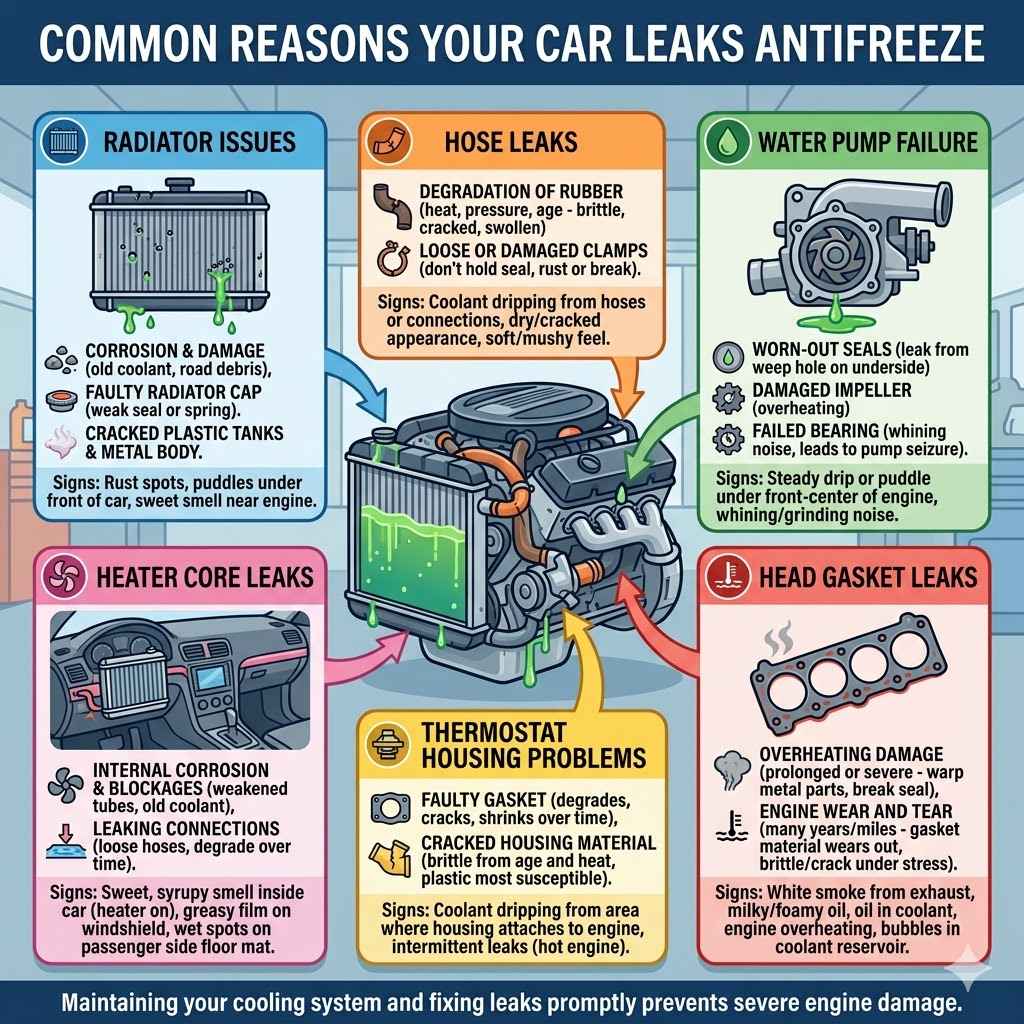
A leaking antifreeze problem is a signal that something isn’t right with your car’s cooling system. This system is vital for keeping your engine from getting too hot. When it leaks, it can lead to serious engine damage.
This section covers the most frequent reasons for these leaks, from small cracks to bigger system failures. We’ll help you identify the signs and what to look for.
Radiator Issues
The radiator is like the car’s thermostat, working hard to cool the engine. It’s a metal or plastic component with many small tubes. The hot engine coolant flows through these tubes, and air passing over them cools it down.
Over time, radiators can corrode or get damaged.
Corrosion happens when the metal inside the radiator wears away. This is often due to old coolant or using the wrong type of coolant. Damage can occur from road debris hitting the radiator, like small stones or branches.
Even a minor impact can create a small hole or crack.
Signs of a leaky radiator include visible rust spots or green, pink, or orange puddles under the front of your car. You might also notice a sweet smell near your engine. If the radiator itself is damaged, you might see bent fins or actual holes.
Radiator Cap Problems
The radiator cap looks simple, but it plays a big role. It seals the system and keeps the coolant under pressure. This pressure raises the boiling point of the coolant, making the cooling system more efficient.
If the cap’s seal is worn out or the spring is weak, it can’t hold pressure. This allows hot coolant to escape, often as steam or a spray, especially when the engine is hot. A faulty cap might seem like a minor issue, but it can lead to overheating and further damage to the cooling system.
Cracked or Corroded Radiator Body
The main body of the radiator is made of metal or plastic. Over years of use, the metal parts can rust and become thin. This thinning can lead to small leaks, often appearing as drips or even a steady flow of coolant.
Plastic tanks attached to the metal core can also develop cracks, especially due to heat and age. These cracks allow coolant to escape. A visual inspection is usually enough to spot corrosion or cracks on the radiator’s surface.
Hose Leaks
Coolant hoses are like the arteries of the cooling system. They are rubber tubes that carry the hot coolant from the engine to the radiator and back. There are usually two main hoses: the upper radiator hose and the lower radiator hose.
There are also smaller hoses connecting to other parts like the heater core.
These hoses are made of tough rubber, but they can wear out. Over time, the rubber can become brittle, cracked, or swollen. This happens because of constant exposure to heat, pressure, and the chemicals in the coolant itself.
A worn-out hose can develop small leaks or even burst under pressure.
If a hose is leaking, you’ll often see coolant dripping from its connection points or from the hose itself. The rubber might look dry and cracked, or it might feel soft and mushy. A hose that feels too hard or swollen is also a sign it needs replacing.
Leaks from hoses are common and often easier to fix than radiator problems.
Degradation of Rubber
Rubber is an organic material that breaks down over time. Heat from the engine, the constant flow of coolant, and exposure to air all contribute to this degradation. The rubber in hoses can become brittle and develop small cracks, or it can soften and swell, weakening its structure.
This makes it prone to leaks, especially at the clamps where the hose connects to the engine or radiator. A hose that looks dry and has small fissures is a clear sign of degradation.
Loose or Damaged Clamps
Hoses are secured to the engine and radiator with clamps. These are usually metal bands that squeeze the hose onto the fitting. If these clamps become loose, they won’t create a tight seal.
This allows coolant to seep out. Sometimes, the clamps themselves can rust or break, failing to hold the hose in place. Replacing old or damaged clamps can often stop small leaks at the hose connections.
Water Pump Failure
The water pump is a crucial part that circulates coolant throughout the engine. It’s a mechanical device with a spinning impeller that pushes the coolant. Without a functioning water pump, the coolant would just sit there, and the engine would quickly overheat.
Water pumps have a seal that prevents coolant from leaking out. This seal is designed to wear out over time. When the seal starts to fail, coolant can leak from a small hole located on the underside of the pump.
This is often called a “weep hole.”
A leak from the water pump usually appears as a steady drip or a puddle forming underneath the front-center of the engine. You might also hear a whining or grinding noise coming from the pump if the bearing is going bad. Ignoring a water pump leak can lead to severe engine damage.
Worn-Out Seals
Every moving part that handles fluid needs a seal to prevent leaks. The water pump has a mechanical seal that keeps coolant from escaping around the spinning shaft. Over time, this seal can wear down, crack, or become damaged.
When this happens, coolant can begin to seep out from the weep hole on the pump’s housing. This is a designed way to warn you that the pump is failing before it causes a major breakdown.
Damaged Impeller or Bearing
The impeller is the part of the water pump that spins and moves the coolant. If the impeller gets damaged, it can’t move coolant effectively, leading to overheating. The pump also has a bearing that allows the shaft to spin smoothly.
If this bearing fails, it can cause a loud noise and eventually lead to the pump seizing up. A failing bearing can also damage the seal, causing leaks.
Heater Core Leaks
The heater core is like a small radiator located inside your car’s dashboard. It uses hot engine coolant to warm the air that comes out of your vents. When you turn on your car’s heater, hot coolant flows through the heater core, and a fan blows air across it, warming the cabin.
Like the main radiator, the heater core can develop leaks due to corrosion or damage. Because it’s inside the car, a leaking heater core has specific symptoms. You might notice a sweet, syrupy smell inside your car, especially when the heater is on.
You might also see a greasy film on your windshield. This happens when the coolant leaks onto the inside of the dashboard and the heat from the vents carries it to the windshield. Sometimes, you might even see wet spots on the passenger side floor mat.
Internal Corrosion and Blockages
The heater core is exposed to the same coolant as the rest of the system. Over time, internal corrosion can weaken the metal tubes and fins, leading to leaks. If the coolant is old or contaminated, sediment can build up inside the heater core.
This can cause blockages, reducing heating performance and potentially creating pressure that leads to leaks.
Leaking Connections
Hoses connect the engine’s coolant system to the heater core. These connections can become loose or the hoses themselves can degrade over time. If these connections leak, coolant will drip into the passenger cabin.
Often, the first sign is a damp floor mat, usually on the passenger side.
Thermostat Housing Problems
The thermostat is a valve that controls the flow of coolant. It stays closed when the engine is cold, allowing it to warm up quickly. Once the engine reaches its optimal temperature, the thermostat opens, letting coolant flow to the radiator to be cooled.
The housing is the part that holds the thermostat.
The thermostat housing is usually made of metal or plastic. It connects to the engine and the coolant hoses. Like other components in the cooling system, the gasket that seals the housing can wear out.
The housing itself can also develop cracks, especially if it’s made of plastic and gets brittle from age and heat.
A leak from the thermostat housing will typically appear as coolant dripping from the area where the housing attaches to the engine. The gasket is the most common failure point. If the housing itself is cracked, you’ll see coolant coming directly from the crack.
Faulty Gasket
The thermostat housing is sealed to the engine with a gasket. This gasket prevents coolant from escaping. Over time, heat and pressure can cause this gasket to degrade, crack, or shrink.
A damaged gasket will no longer create a tight seal, allowing coolant to leak out. This is one of the most common causes of leaks from the thermostat housing area.
Cracked Housing Material
Thermostat housings can be made of metal or plastic. Plastic housings are more susceptible to cracking over time due to exposure to heat cycles and vibrations. A crack in the housing, no matter how small, will allow coolant to escape.
These leaks can sometimes be intermittent, appearing only when the engine is hot and under pressure.
Head Gasket Leaks
The head gasket is a critical seal between the engine block and the cylinder head. It seals the combustion chambers, oil passages, and coolant passages. Its job is to keep these elements separate and prevent them from mixing.
When a head gasket fails, it can cause a variety of problems. One of the most serious is allowing coolant to leak into the combustion chambers or into the oil. Conversely, it can allow exhaust gases or oil to leak into the cooling system.
Symptoms of a blown head gasket include white smoke coming from the exhaust (coolant burning), coolant in the oil (making it look milky or foamy), or oil in the coolant. You might also notice the engine overheating frequently, or you might see bubbles in the coolant reservoir.
A head gasket leak is a significant and often expensive repair. It requires removing the cylinder head from the engine block to replace the gasket.
Overheating Damage
The most common cause of head gasket failure is prolonged or severe engine overheating. When an engine gets too hot, the metal parts can warp or expand unevenly. This stress can break the seal of the head gasket.
Once damaged, it can no longer keep the different fluids and gases separate. This is why maintaining your cooling system and fixing leaks promptly is so important.
Engine Wear and Tear
Even without extreme overheating, the head gasket experiences immense pressure and heat during normal engine operation. Over many years and miles, the gasket material itself can simply wear out. It can become brittle or crack under constant stress, leading to leaks between the critical passages it seals.
Regular maintenance and using the correct fluids can help prolong its life.
Diagnosing Antifreeze Leaks A Step-by-Step Guide
Spotting a leak is the first step. Figuring out exactly where it’s coming from is the next. This guide provides a clear path to diagnose your car’s antifreeze leak.
We’ll walk you through simple checks you can do yourself. These steps will help you narrow down the possibilities before you visit a mechanic.
Visual Inspection
The most straightforward way to find a leak is to look for it. This involves carefully examining the entire cooling system. You’re looking for wet spots, stains, or obvious damage.
Start by looking under the car for any fresh puddles of coolant. Note the color (usually green, pink, orange, or yellow) and consistency. Then, pop the hood and inspect all the major cooling system components.
Check the radiator, hoses, water pump, and thermostat housing. Look for any signs of wetness, discoloration, or crusty residue, which is often dried coolant.
Check For Puddles
When your car is parked, look on the ground beneath it. Antifreeze is a liquid, so it will form a puddle. The location of the puddle can give clues.
A puddle directly under the front of the engine might suggest a leak from the radiator or water pump. A puddle towards the middle or back might point to a heater core issue or a hose running that far.
Inspect Hoses And Connections
Feel along the radiator hoses. Squeeze them gently. They should feel firm but slightly pliable.
If they feel brittle, cracked, or mushy, they might be leaking. Also, check where the hoses connect to the engine and radiator. Look for any wetness or dried coolant stains around the clamps.
These areas are common spots for leaks to start.
Examine The Radiator
Look at the radiator’s surface. You might see rust spots, bent fins, or even small holes if it’s damaged. Check around the seams where the plastic tanks meet the metal core.
These are common places for leaks to develop. Sometimes, a leak might only show up when the engine is hot and the system is under pressure.
Cooling System Pressure Test
A cooling system pressure test is a diagnostic tool used to find leaks that might not be visible during a simple visual inspection. Mechanics use a special tool to pressurize the cooling system to a specific level.
This test simulates the pressure that builds up in the system when the engine is running and hot. By increasing the pressure, even small leaks become more apparent. The technician can then observe where the coolant is escaping.
This is especially useful for finding leaks in components like the radiator, hoses, heater core, and even small cracks in engine parts.
After pressurizing, the system is monitored for any drop in pressure. A pressure drop indicates a leak somewhere. The technician can then pinpoint the location.
This test is relatively quick and can save a lot of time and guesswork in diagnosing tricky leaks.
How It Works
A pressure tester connects to the radiator filler neck. It has a pump and a gauge. The technician pumps air into the system, increasing the pressure.
The gauge shows how much pressure is in the system and allows the technician to monitor if that pressure drops over time. A steady pressure reading means there are no leaks.
Detecting Hidden Leaks
Some leaks only happen when the engine is hot and the coolant is under pressure. A pressure test mimics these conditions. It forces coolant out of even tiny cracks or weak seals that might not show any signs of leaking when the engine is cold.
This makes it a very effective diagnostic tool for elusive leaks.
Checking The Coolant Reservoir
The coolant reservoir, also known as the overflow tank, stores excess coolant. It’s usually a translucent plastic tank connected to the radiator. When the engine heats up, the coolant expands and some is pushed into the reservoir.
As the engine cools, coolant is drawn back into the system.
Checking the reservoir is a simple way to monitor your coolant levels. If the level is consistently low, even after topping it up, it indicates a leak somewhere in the system. You can also look for cracks in the reservoir itself, or check its hose connections for leaks.
Sometimes, you might see white or colored deposits around the cap of the reservoir, which can be a sign of dried coolant. If the coolant in the reservoir looks murky or has oil floating on top, this could be a sign of a more serious internal engine issue, like a blown head gasket.
Monitoring Coolant Levels
The reservoir is a key indicator of your cooling system’s health. If you regularly find yourself adding coolant, there’s a leak. Keep an eye on the “Min” and “Max” lines marked on the side of the tank.
The level should be between these marks when the engine is cool.
Inspecting The Reservoir Itself
The plastic tank can become brittle with age and heat. Look for any visible cracks or damage. Also, check the hose that connects the reservoir to the radiator.
This hose can also degrade and develop leaks, often at the connection points.
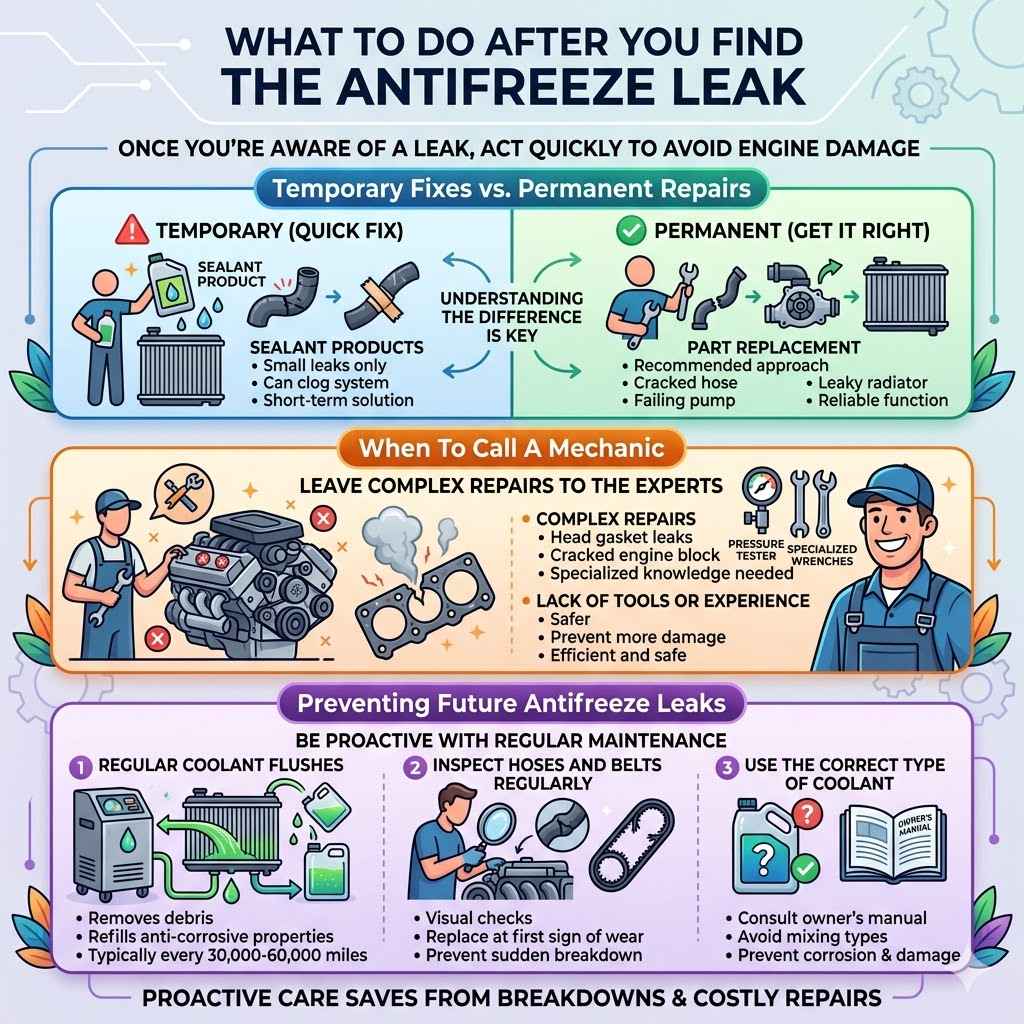
What To Do After You Find The Leak
Once you know your car is leaking antifreeze, it’s important to act quickly. Driving with a coolant leak can lead to serious, expensive damage to your engine. This section guides you on the next steps, whether you plan to fix it yourself or take it to a professional.
Temporary Fixes vs. Permanent Repairs
Sometimes, you might need a quick fix to get your car to a mechanic. Other times, you’ll want to get the job done right the first time. Understanding the difference is key.
Temporary fixes, like using a sealant, can sometimes stop a small leak for a short period. However, they are rarely a long-term solution. Permanent repairs involve replacing faulty parts like hoses, radiators, or water pumps.
These are the most reliable ways to ensure your cooling system works correctly again.
Sealant Products
There are products available that you can add to your coolant to seal small leaks. These can be helpful in a pinch to get you to a repair shop. However, they often only work for very minor leaks.
They can also sometimes clog up other parts of the cooling system, causing new problems down the line.
Part Replacement
The most effective way to fix a leak is to replace the damaged part. This might be a cracked hose, a failing water pump, or a leaky radiator. Replacing the faulty component ensures the cooling system can function as designed.
This is the recommended approach for most leaks.
When To Call A Mechanic
While some car repairs are simple DIY tasks, others require specialized tools and knowledge. Antifreeze leaks can sometimes be more complex than they appear.
If you’re not comfortable working on your car, or if the leak seems to be coming from a hard-to-reach area, it’s always best to call a professional mechanic. Issues like head gasket leaks or complex radiator repairs are best left to the experts. They have the experience and equipment to diagnose and fix the problem correctly the first time.
Complex Repairs
Some leaks, like those from the head gasket or a cracked engine block, require significant engine work. These jobs demand specialized tools and a deep understanding of engine mechanics. Attempting these repairs without the proper knowledge could lead to more damage and higher costs.
Lack Of Tools Or Experience
If you don’t have the right tools for the job, or if you’re unsure about how to proceed, it’s safer to seek professional help. Mechanics have a wide array of tools, including pressure testers and specialized wrenches, that make repairs efficient and safe. Your safety and the longevity of your vehicle are worth it.
Preventing Future Antifreeze Leaks
Keeping your car’s cooling system in good shape is the best way to avoid antifreeze leaks. Regular maintenance is key to preventing problems before they start.
This involves more than just topping up your coolant. It means checking your hoses, belts, and radiator regularly. It also means flushing and replacing your coolant at the recommended intervals.
By being proactive, you can save yourself from unexpected breakdowns and costly repairs.
Regular Coolant Flushes
Coolant degrades over time. It loses its anti-corrosive properties and can become contaminated. Flushing the system removes old coolant and any debris.
Then, refilling it with fresh, proper coolant ensures optimal performance and protection against corrosion. The frequency of flushes depends on your car’s make and model and the type of coolant used, but typically ranges from every 30,000 to 60,000 miles.
Inspect Hoses And Belts Regularly
Hoses and belts are subject to wear and tear. Cracks, bulges, or excessive softness in hoses are signs of aging. Similarly, frayed or worn belts can affect the water pump’s operation.
Make a habit of visually inspecting these components whenever you check your oil or other fluids. Replacing them at the first sign of wear can prevent a sudden breakdown.
Use The Correct Type Of Coolant
Different cars require different types of antifreeze. Using the wrong type can cause corrosion and damage to your cooling system components. Always refer to your owner’s manual to identify the correct coolant specifications for your vehicle.
Mixing types can also lead to issues and should be avoided.
Frequently Asked Questions
Question: What color is antifreeze and what does it smell like?
Answer: Antifreeze typically comes in several colors including green, pink, orange, red, yellow, and blue. It has a distinctively sweet smell, often compared to cotton candy or syrup.
Question: Can I drive my car if it’s leaking a little antifreeze?
Answer: It’s generally not recommended to drive a car with an antifreeze leak, even a small one. Leaks can worsen over time and lead to overheating, which can cause severe engine damage. It’s best to address the leak immediately.
Question: How much does it cost to fix an antifreeze leak?
Answer: The cost can vary greatly depending on the cause of the leak. Simple fixes like replacing a hose clamp might cost under $50, while major repairs like replacing a radiator or a head gasket can cost hundreds or even thousands of dollars.
Question: Is it safe to touch antifreeze?
Answer: Antifreeze is toxic and should be handled with care. It has a sweet taste that can attract children and pets, but ingesting even a small amount can be deadly. Always wear gloves when handling it and avoid skin contact.
Question: How often should I check my antifreeze level?
Answer: You should check your antifreeze level at least once a month, and before any long road trips. It’s best to check it when the engine is cool, as the level will be lower then.
Summary
Your car leaking antifreeze means a part in the cooling system needs attention. Common culprits include worn hoses, radiator issues, water pump problems, thermostat housing leaks, and heater core failures. By performing a visual inspection and, if needed, a pressure test, you can often pinpoint the source of the leak.
Addressing leaks promptly with the right repair, whether it’s a simple part replacement or a more involved fix, is crucial for your engine’s health. Regular maintenance, like flushing the coolant and inspecting hoses, will help prevent future problems.