Car Wont Start in Cold Weather? Causes and Fixes
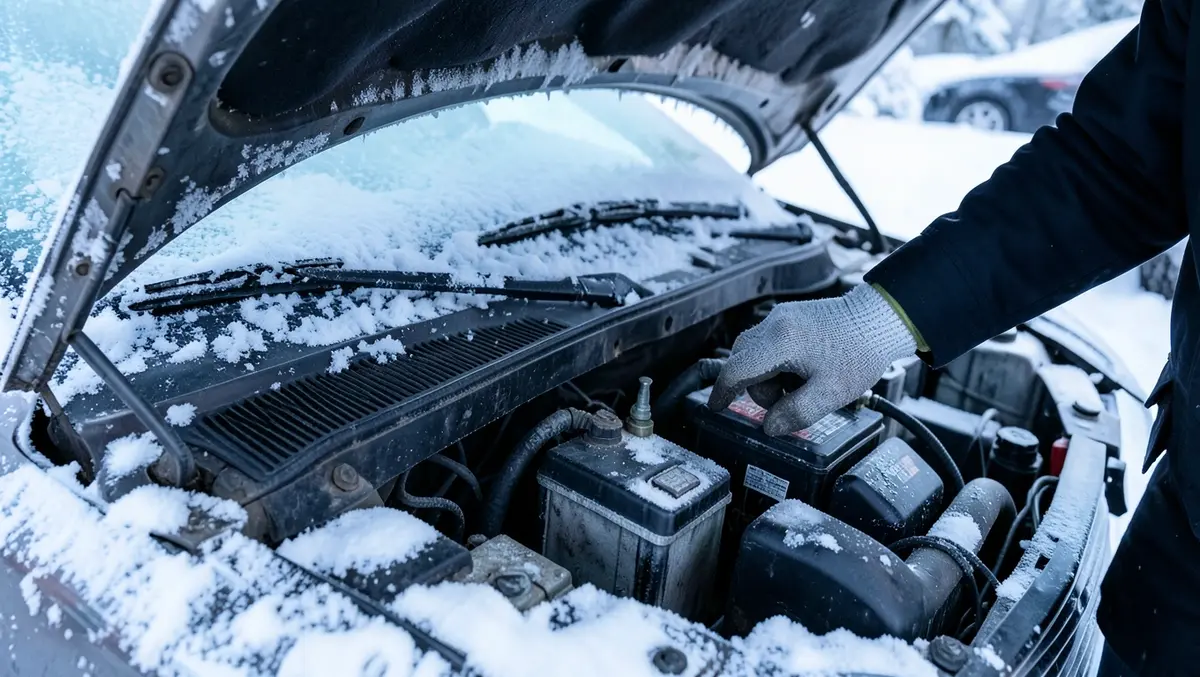
Cold weather causes no-start problems for two reasons at once: your battery loses a large chunk of its cranking power in low temperatures, and your engine oil thickens, making the engine harder to turn over. Together, that “double whammy” is why a battery that starts your car fine in July can leave you stranded on a January morning — even if the battery itself isn’t dead.
Quick Answer: A car usually won’t start in the cold because a lead-acid battery loses roughly 35% of its cranking power at 32°F and up to 60% at 0°F, right when thickened engine oil is demanding more of that power to turn the engine over. The most common culprits, in order, are a weak or aging battery, thick oil, a failing starter motor, and (less often) a frozen fuel line caused by water condensation in the tank.
Why Cold Weather Makes Your Car Harder to Start
Backup Plan For Cold Mornings
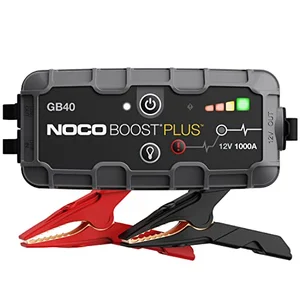 |
NOCO Boost GB40 12V 1000A Jump Starter – $84.69 A weak battery is the single most common reason cars won’t start in cold weather — this keeps a fast, safe jump-start in your trunk so you’re never stuck waiting on a tow truck.
|
Inside a lead-acid battery, electricity is produced by a chemical reaction between the plates and the electrolyte. That reaction slows down as the temperature drops, so the battery simply can’t push out as much current. Industry testing on standard lead-acid batteries commonly cites a loss of roughly 35% of cranking power at 32°F (0°C), and as much as 60% by the time it hits 0°F (-18°C).
At the exact same time, your engine oil is getting thicker in the cold, which increases friction inside the engine. That means the starter motor needs more current to crank the engine over — right when the battery has less current to give. If your battery, starter, or oil is already borderline, cold weather is what pushes it over the edge into a no-start.
What Are Cold Cranking Amps (CCA), and Why Do They Matter?
Cold Cranking Amps (CCA) is the rating that tells you how much current a battery can deliver at 0°F for 30 seconds while still holding at least 7.2 volts. It’s the single most important spec for cold-weather starting — more relevant than the battery’s price or brand.
Most gasoline cars need a battery rated between 400 and 600 CCA. Larger sedans and SUVs typically sit toward the higher end of that range, and diesel trucks often call for 700 to 1,000+ CCA because diesel engines need significantly more cranking force to start. If you live somewhere with real winters, check your owner’s manual and consider a battery with a CCA rating on the higher end of what’s recommended — it buys you a real margin on the coldest mornings. A slow crank, repeated clicking, or the dash lights dimming when you turn the key are all classic signs the battery’s CCA is no longer enough for the temperature outside.
Common Cold-Weather Starting Problems at a Glance
| System | What Cold Does to It | Typical Warning Sign |
|---|---|---|
| Battery | Loses 35–60% of cranking power as temperature drops | Slow crank, clicking, dim dash lights |
| Engine oil | Thickens, increasing resistance the starter has to overcome | Engine cranks slower than usual, especially first start of the day |
| Fuel system | Water condensation in the tank/lines can freeze and block flow | Engine cranks but won’t catch, or stalls right after starting |
| Spark plugs | Worn plugs struggle to produce a strong spark on a cold, thick air/fuel mix | Rough idle or misfire once running, hard cold start |
| Starter motor | Already-worn components draw more current than the cold battery can supply | Single click with no crank, or intermittent no-start |
| Coolant | An incorrect (too-watery) mix can freeze solid in extreme cold | Frozen coolant reservoir; overheating once the car does start |
Weak or Cold Battery
The battery is by far the most common reason a car won’t start in cold weather. Check the battery’s charge with a voltmeter — a healthy, fully charged 12V battery should read about 12.6 volts at rest. Clean any corrosion off the terminals with a wire brush and make sure the cable connections are tight; corrosion adds resistance right when the battery can least afford to lose current.
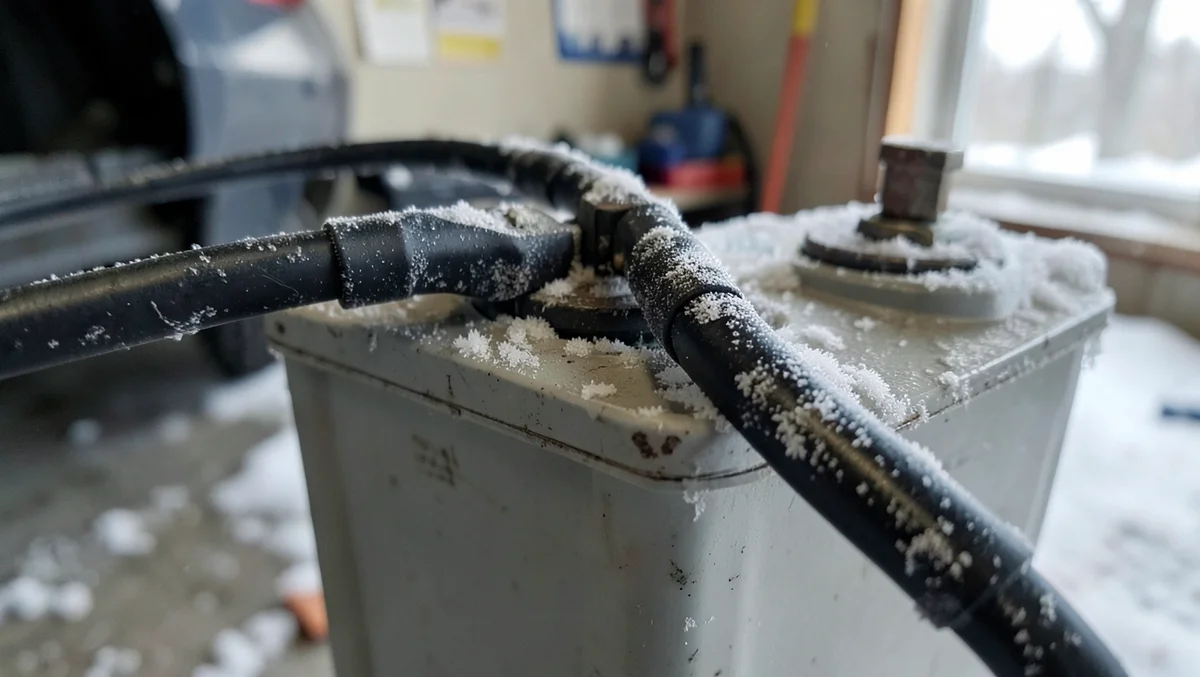
Most car batteries last three to five years, and they lose capacity gradually before they fail outright — so a battery that struggled a little last winter is a strong candidate to fail this winter. If yours is in that age range, check the manufacture date stamped on the case. If you want to dig deeper into how to tell whether yours is on its way out, we cover the specific warning signs a car battery is failing and, separately, simple ways to keep a battery charged through winter so it doesn’t catch you off guard.
Thick Engine Oil
Oil viscosity is graded with two numbers, like 5W-30 — the number before the “W” describes how the oil flows in cold temperatures, and the lower that number, the better it flows when it’s cold. Check your owner’s manual for the manufacturer’s recommended winter viscosity; many modern cars already call for a 0W or 5W oil, which stays reasonably fluid down to well below freezing. Full synthetic oil generally resists thickening in the cold better than conventional oil. Old, dirty oil is also more prone to thickening, so staying on top of regular oil changes (most manufacturers recommend every 5,000 to 7,500 miles for synthetic oil, sometimes more) is a genuinely useful cold-weather habit, not just a maintenance chore.
Frozen Fuel Lines (It’s Usually Water, Not the Gas Itself)
Gasoline itself doesn’t freeze in ordinary winter weather — it typically needs to drop to around -40°F before that becomes a real concern. What actually freezes and blocks the fuel line is water. Condensation naturally builds up inside a fuel tank as outside temperatures rise and fall, and because water is heavier than gasoline, it settles at the bottom of the tank and can work its way into the fuel line, where it freezes and blocks fuel from reaching the engine.
Two habits go a long way here: keep your gas tank at least half full through winter (less empty space means less room for condensation to form), and use a gas-line antifreeze or fuel additive containing isopropyl alcohol, which absorbs that water so it passes through the system harmlessly instead of freezing. If your fuel line does freeze, the most reliable fix is simply moving the car into a heated garage and letting it warm up.
Worn Spark Plugs
Spark plugs create the spark that ignites the air/fuel mixture, and cold, denser air makes that job a little harder even for plugs in good shape. Worn or fouled plugs that were already borderline in warm weather often can’t produce a strong enough spark once temperatures drop, leading to a rough or failed cold start. If you’re not sure when yours were last replaced, most plugs are good for 30,000 to 100,000 miles depending on the type (copper wears fastest, iridium lasts longest) — check your maintenance records or ask a shop to inspect them if cold starts have gotten noticeably rougher.
Failing Starter Motor
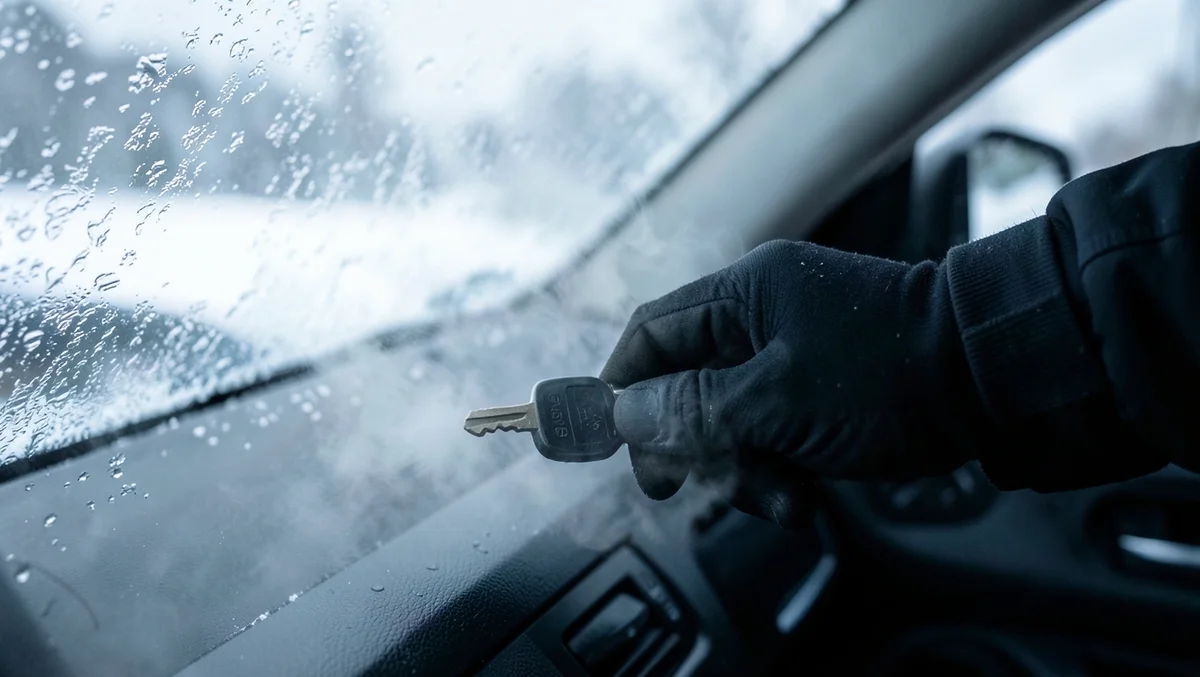
A starter that’s already wearing out often only shows symptoms in the cold, because it needs slightly more current to spin a cold, thickened engine over — current a cold battery is less able to provide. Watch for a single loud click with no crank at all (different from the rapid clicking of a dead battery), an engine that cranks but sounds sluggish or grinding, or a car that starts fine sometimes and not others with no clear pattern. Loose or corroded connections at the starter itself can mimic a failing starter, so check those first; if the connections are clean and tight and the symptoms persist, it’s worth having a mechanic test the starter directly rather than guessing.
Coolant Problems
Low coolant on its own usually doesn’t stop a car from starting — but some newer vehicles are programmed to shut the engine down or refuse to restart if the coolant level drops low enough to risk serious engine damage, so it’s not something to ignore. The more common cold-weather coolant problem is a mix that’s gone wrong: coolant should be roughly a 50/50 blend of antifreeze and water. If a top-off left the mixture too heavy on water, that coolant can actually freeze solid in genuinely cold weather, which can prevent circulation and, in extreme cases, crack the engine block. Check your coolant reservoir level and, if you’re not sure of the mix, have a shop test it with a hydrometer before the next cold snap.
How to Prevent Cold-Weather No-Start Problems
- Use an engine block heater. Plugging one in a few hours before you drive keeps the oil warmer and noticeably easier for the starter to turn over.
- Park in a garage when you can. Even an unheated garage is usually 10–20°F warmer than outside, which meaningfully helps both the battery and the oil.
- Keep the battery topped off with a trickle charger or battery tender if the car sits unused for stretches in cold weather.
- Have the battery load-tested before winter, not after it strands you — most auto parts stores will do this for free.
- Keep the gas tank at least half full to reduce condensation buildup in the fuel system.
- Stay current on oil changes and use the manufacturer’s recommended winter-weight oil.
If your car’s specific symptom is a flashing anti-theft light rather than a straightforward slow crank, that’s a different (and fairly common) cause worth ruling out — see our guide on what it means when the anti-theft light is blinking and the car won’t start.
Frequently Asked Questions
How Do I Fix My Car Not Starting in the Cold?
Start by checking the battery voltage and cleaning the terminals, since a weak battery is the most common cause. If the battery checks out, use a block heater or park in a garage to keep the oil and engine warmer, and make sure you’re running a winter-appropriate oil viscosity. If the car cranks but won’t catch, a frozen fuel line or worn spark plugs are the next things to check.
Is It Normal for a Car Not to Start in the Cold?
Occasional slow cranking in very cold weather is common even for a healthy car, since batteries genuinely lose power in the cold. A car that flat-out refuses to start, or that needs multiple attempts every cold morning, usually means the battery, starter, or oil is already borderline and the cold is simply exposing it.
Can a Battery Be Too Cold to Work?
Yes. A standard lead-acid battery can lose roughly 35% of its cranking power at 32°F and up to 60% at 0°F, because the chemical reaction that produces current slows down in the cold. The battery isn’t necessarily damaged — it just can’t deliver as much power until it warms back up or is recharged.
Does Gasoline Freeze in Cold Weather?
Not under normal winter conditions — gasoline generally needs to reach around -40°F before it starts to gel. What actually freezes and blocks a fuel line in the cold is water from condensation inside the tank, which is why keeping the tank full and using a gas-line antifreeze additive helps prevent it.
What Are Cold Cranking Amps, and How Many Do I Need?
Cold Cranking Amps (CCA) measures how much current a battery can deliver at 0°F for 30 seconds. Most gasoline cars need a battery rated between 400 and 600 CCA, while trucks and diesel engines often require 700 to 1,000+ CCA. Check your owner’s manual for the minimum recommended for your vehicle, and consider going higher if you live somewhere with harsh winters.
The Bottom Line
Cold weather doesn’t create new problems in your car so much as it exposes the ones that were already borderline — a battery near the end of its life, oil that’s overdue for a change, or a starter that’s starting to wear out. Checking your battery’s voltage and CCA rating, staying current on oil changes, and keeping your gas tank more than half full through winter will prevent most cold-weather no-starts before they happen. Keep a jump starter or a set of cables in the car anyway; even a well-maintained battery can lose enough capacity on a genuinely frigid morning to need one.
Products related to this article
Sponsored / affiliate links. As an Amazon Associate I earn from qualifying purchases. I may earn additional commission from eligible campaigns.
 1800 Amp Jump Starter with Air Compressor, acetek Car Battery Jump Starter 260 PSI Tire Inflator, 20000mAh 12V Auto Lead-Acid Battery Booster (Up to 6L Gas or 6L Diesel Engine) with LED Light & USB
 Mighty Max Battery MM-G24 Start and Stop Car BCI Group Size 24 12V 70Ah, 120RC, 710 CCA Rechargeable AGM Car battery