Will My Car Lock If Keys Are Inside
Sometimes, simple questions about our cars can be a bit tricky, especially when you’re new to driving or just trying to figure out how things work. The question, “if i unlock car with keys and leave the key inside will it lock then door,” pops up because car locking systems can be confusing. Modern cars have smart features, and it’s not always obvious how they’ll react in different situations.
Don’t worry, though! We’ll break it down step by step to make it super clear. Let’s figure out what happens with your car keys.
Understanding Car Door Locking Mechanisms
This section explores how car doors lock and unlock automatically and manually. We will look at the basic principles behind modern car security systems. Understanding these systems helps explain why a car might behave in a certain way when keys are left inside.
We’ll also touch on the different types of locking mechanisms.
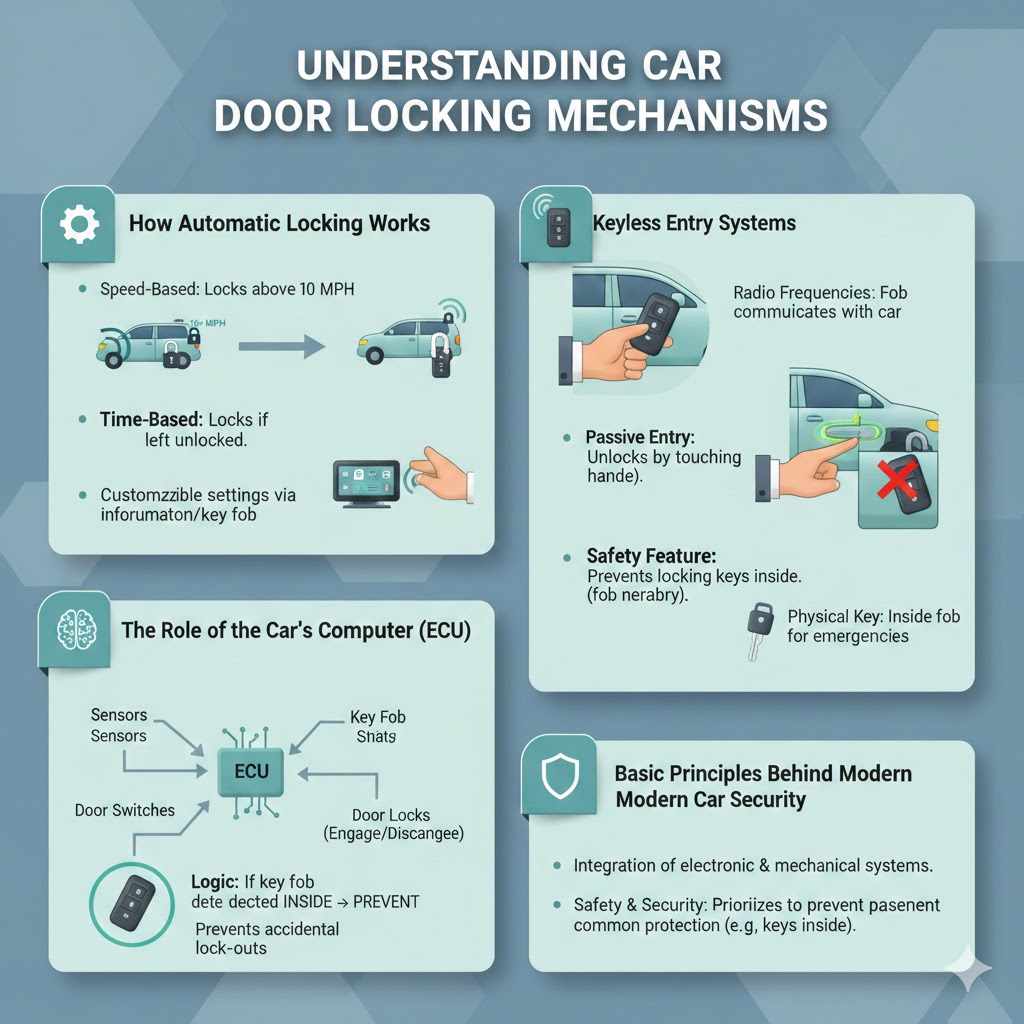
How Automatic Locking Works
Many cars today have automatic locking features. This means the doors might lock on their own after a certain time or when you reach a specific speed. This is a safety feature designed to protect you and your passengers.
For example, if you start driving, your car might automatically lock all the doors once you’re moving above 10 miles per hour. This prevents doors from accidentally opening. It also makes it harder for someone to try and open a door from the outside while you are driving.
Some cars also have a feature that locks the doors if they are unlocked but not opened within a short period. This is a security measure to ensure the car remains locked if you accidentally unlock it and then walk away.
The exact timing and speed for these automatic locks can often be adjusted by the car owner. You can usually find these settings in your car’s infotainment system or through a combination of button presses on your key fob or dashboard. This customization allows drivers to set up the security features to their preference.
Keyless Entry Systems
Keyless entry systems use radio frequencies to communicate between the key fob and the car. When you press a button on the fob, it sends a signal. The car receives this signal and performs the requested action, like unlocking or locking the doors.
Some advanced keyless systems also allow for “passive entry.” This means the car can detect the key fob is nearby and unlock the doors when you touch the door handle. It does not require you to press any buttons on the fob.
These systems are very convenient. However, they rely on the car’s computer to interpret signals. If the car’s computer thinks the key is still inside, it may prevent itself from locking.
This is a safeguard to avoid locking the keys inside the vehicle.
It’s important to know that even with keyless entry, a physical key is often still inside the fob itself. This physical key can be used to open the door if the fob battery dies. But for the electronic locking, the car needs to detect the fob’s signal.
The Role of the Car’s Computer (ECU)
The Electronic Control Unit, or ECU, is the brain of your car’s locking system. It receives information from sensors, the key fob, and door switches. Based on this information, it tells the door locks whether to engage or disengage.
The ECU is programmed with specific logic. This logic dictates how the car should behave. For example, it’s programmed to recognize if the key fob is detected inside the car’s cabin.
If it is, the ECU will likely prevent the doors from locking automatically.
This programming is a safety feature. It aims to prevent accidental lock-outs. If the car’s computer senses the key is inside, it assumes the driver might be returning soon.
It therefore prioritizes keeping the car accessible.
The ECU also manages other functions related to security, like the alarm system. It works in conjunction with other modules in the car to ensure overall safety and security of the vehicle. Understanding the ECU’s role helps clarify why different scenarios play out as they do.
If I Unlock Car With Keys And Leave The Key Inside Will It Lock Then Door
This is the central question many drivers wonder about. When you unlock your car using the key or key fob and then leave the key inside the vehicle without closing the door, the behavior of the locking system can vary. This section explains the common outcomes and the reasons behind them.
We will address the primary concern directly: whether the car will lock itself if the keys are left inside.
The Common Scenario With Keys Inside
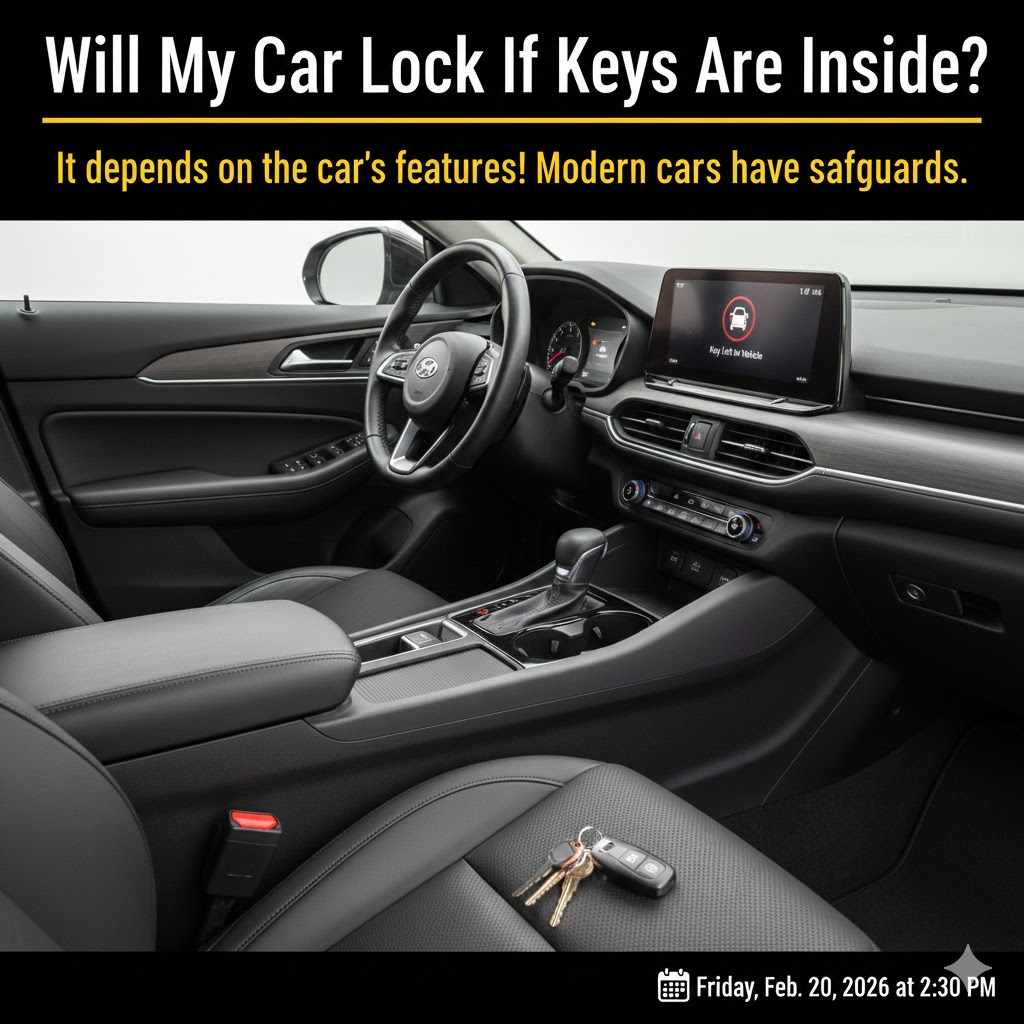
In most modern cars, if you unlock the doors and then leave the keys inside the car without closing the doors, the car will NOT automatically lock itself. This is a deliberate safety feature. The car’s computer system detects that the key fob is within the vehicle’s cabin.
The system is designed to prevent drivers from locking their keys inside. This is especially true if the doors are still open. The car assumes that you might be about to get in or that you have a good reason for the keys to be inside.
Imagine you unlock your car, then step away to grab something from your house. You leave the door open and the keys on the seat. If the car were to lock automatically in this situation, you would be locked out of your own vehicle.
This would be a frustrating experience.
Therefore, car manufacturers program their vehicles to recognize the presence of the key fob. When the fob is detected inside the car, the automatic locking functions are usually suspended. This ensures you can always get back into your car.
What If The Doors Are Closed?
The scenario changes slightly if you close the doors after unlocking and leaving the keys inside. If all doors are closed, and the car’s computer detects the key fob is inside, it will still generally prevent itself from locking.
Some older car models might have different behaviors. However, the vast majority of vehicles manufactured in the last 15-20 years are designed with this lockout prevention feature. This is a standard part of their security programming.
If you were to try and lock the car manually using the lock button on the door panel or the key fob while the key is inside, the car might refuse to lock. It might even unlock itself immediately after you try to lock it. This is the car’s way of telling you the keys are still inside.
This feature is incredibly useful. It saves drivers from the common mistake of accidentally locking their keys inside. It is a small but important piece of technology that adds significant convenience.
When Can A Car Lock Itself With Keys Inside?
There are very few circumstances where a car might lock itself with keys inside, and they often involve specific settings or unusual situations. One such case could be if the key fob battery is critically low and the car can no longer reliably detect it.
Another possibility is if a specific “auto-lock” setting is programmed to lock the doors after a set time, regardless of key presence, and the driver has bypassed or overridden the key detection logic. This is extremely rare and usually requires intentional user programming.
Some older vehicles might not have sophisticated key detection. For instance, if the key was simply placed on the floor, a very old system might not register its presence. However, as car technology has advanced, so has the intelligence of these systems.
It is also important to distinguish between a key fob and a physical key. If you have a car that uses a traditional key that you insert into an ignition, and you leave that key in the ignition, the car might still be able to lock itself in some models, especially if it’s an older design. Modern systems with push-button start and key fobs are much better at preventing this.
Practical Scenarios and Examples
Let’s look at some real-world situations to make this clearer.
- Scenario: You unlock your car using the remote. You open the driver’s door, toss your bag with the key fob on the passenger seat, and walk around to the back of the car to load groceries. You then close the driver’s door. In this case, the car will almost certainly not lock itself. The system detects the key fob inside the cabin, even with the door now closed.
- Scenario: You are cleaning out your car. You unlock it and take out the keys to put them on the roof of the car for a moment while you vacuum. You then accidentally close the driver’s door. If the key fob is on the roof, it’s outside the car’s detection range. The car might then lock itself automatically after a short period or if you try to lock it manually. This is why it’s smart to keep the key with you or inside the car if you’re not sure.
These examples highlight how the car’s sensors and programming react to the key’s location relative to the vehicle’s interior. The key takeaway is that for automatic locking to occur with the key inside, the car must not be able to detect the key’s presence within its operational range.
Understanding Key Fob Signal Strength and Detection Range
The ability of your car to detect your key fob is crucial to preventing lock-outs. This section will explain how key fob signals work and what determines their range. We will discuss factors that can affect whether your car recognizes the key fob is inside.
How Key Fobs Communicate
Key fobs use radio waves to send signals to your car. These signals are specific to your vehicle and are encrypted for security. When you press a button on your key fob, it emits a radio frequency signal.
Your car has a receiver that listens for these signals. When it receives a valid signal, it performs the requested action, such as unlocking the doors or starting the engine. The communication is typically a one-way street from the fob to the car, although some advanced systems allow for two-way communication for status updates.
The frequency used is usually in the 315 MHz or 433 MHz range, common for remote keyless entry systems. The unique codes ensure that only your fob can operate your car, preventing others from unlocking your vehicle.
This system relies on clear transmission. Obstacles or interference can weaken the signal. Therefore, understanding the range and potential interrupters is important for seamless operation.
The Range Of Key Fob Detection
The detection range of a key fob typically extends a few feet from the car’s exterior sensors. For passive entry systems, this range might be around 3-5 feet. This allows you to have the fob in your pocket or bag and still be able to unlock the car by touching the door handle.
For systems that require you to press a button on the fob, the range can be significantly larger, often up to 50-100 feet or more. However, this is for transmitting commands, not for the car to constantly detect the fob’s presence inside.
The car’s internal detection system is usually more localized. It’s designed to know if the fob is within the cabin, on the dashboard, or in a specific holder. The goal is to confirm the fob is accessible for starting the car or for passive entry features.
If the fob is outside this specific internal detection zone, even if it’s just a few inches away from a sensor, the car might not register its presence. This is why sometimes if you place the fob very close to the edge of the car door, it might behave differently.
Factors Affecting Signal Strength
Several factors can affect the signal strength and detection range of your key fob. One of the most common is the battery life of the fob itself. As the battery weakens, the signal it transmits becomes less powerful.
Physical obstructions also play a significant role. Metal objects, especially, can block or weaken radio signals. If your key fob is in a metal box, your car’s metal body, or even in a pocket with other metal items like coins or your phone, the signal can be degraded.
Electronic interference from other devices can also be an issue. Wi-Fi routers, other key fobs, and certain electronic appliances can emit radio waves that might interfere with your car’s keyless entry system. This is more common in densely populated areas like parking garages.
Even the weather can play a minor role. Heavy rain or dense fog can sometimes slightly dampen radio signals, though this is usually a negligible effect for most modern systems.
It’s worth noting that the car’s own battery and the health of its receivers can also impact detection. A healthy car battery ensures all electrical systems, including the receiver for the key fob, are functioning optimally.
Troubleshooting Key Fob Issues
If you are experiencing problems with your key fob not being detected, the first and simplest step is to replace the battery. Most key fobs use small, coin-like batteries that are easy to find and replace.
If replacing the battery doesn’t solve the issue, try moving the key fob to different locations within the car. Place it on the driver’s seat, the center console, or the dashboard. See if the car’s system then recognizes it.
Check for any visible damage to the key fob itself. Cracks or exposed wires could indicate internal damage. Also, ensure there are no large metal objects around the fob that could be interfering with the signal.
If these basic troubleshooting steps don’t work, it might be time to consult your car’s owner’s manual for specific advice related to your vehicle model. In some cases, the issue might require professional diagnosis from a dealership or an automotive locksmith. They can check the car’s receiver system and reprogram the fob if necessary.
Car Locking Behavior When Keys Are In Ignition vs. Fob Inside
This section differentiates between scenarios involving a traditional key left in the ignition and a key fob detected within the car. The car’s response can differ based on these two common situations. Understanding this distinction is important for accurate expectations.
Traditional Key In Ignition
For vehicles that use a physical key to start the engine, leaving the key in the ignition can lead to different outcomes than leaving a key fob inside. In many older cars, if the key is left in the ignition and the doors are closed, the car might still allow you to lock the doors from the outside.
This is because the system might prioritize the ignition being in the “on” or “accessory” position as a signal that the key is in use. Some cars have a warning chime that sounds if you try to open the door with the key in the ignition, reminding you to take it.
However, many modern cars with traditional ignition keys also have lockout prevention. They might prevent the doors from locking if the key is detected in the ignition and the doors are closed, or they might offer an override.
The primary risk with leaving a traditional key in the ignition is often not accidental locking but the security risk of someone being able to drive the car away if they gain access to it. This is why it’s generally a good practice to remove the key from the ignition whenever you leave the vehicle.
Key Fob Detected Inside the Car
As discussed earlier, keyless entry and push-button start systems are designed to prevent lock-outs when the key fob is detected inside the car. The car’s computer constantly monitors for the presence of the fob. If it’s within the detection range inside the cabin, the automatic locking features are typically disabled.
This means that even if you close all the doors, the car will not lock itself. If you try to lock the car using the remote or a button on the door, it might refuse to lock, or it might unlock itself immediately, accompanied by an audible alert.
This behavior is a cornerstone of modern car security for convenience and to prevent the common problem of locking yourself out. The technology relies on the fob’s unique signal being received by the car’s internal receivers.
It’s a straightforward system in principle: key inside and detected means no locking. This applies whether the doors are open or closed, though the signal detection can be more robust with doors closed.
Manufacturer Variations in Locking Logic
It’s important to remember that different car manufacturers implement their locking systems with variations in logic and features. While the general principle of preventing lock-outs with keys inside is widespread, the specifics can differ.
For example, some manufacturers might have a slightly shorter detection range for their key fobs. Others might have a more aggressive auto-lock feature that engages after a shorter period of inactivity. A few might offer different modes for auto-locking that can be adjusted by the owner.
For instance, a Toyota might behave differently than a Ford or a BMW in a very specific edge case. This is why consulting your car’s owner’s manual is always the best approach for understanding your particular vehicle’s behavior. The manual provides precise details on its security and locking functions.
These variations often stem from proprietary software and hardware used by each manufacturer. They also reflect differing design philosophies regarding convenience versus security settings.
Safety and Security Implications
Understanding how your car locks work has implications for both your safety and the security of your vehicle. This section will cover the benefits of modern locking systems and how they contribute to overall security.
Benefits of Intelligent Locking Systems
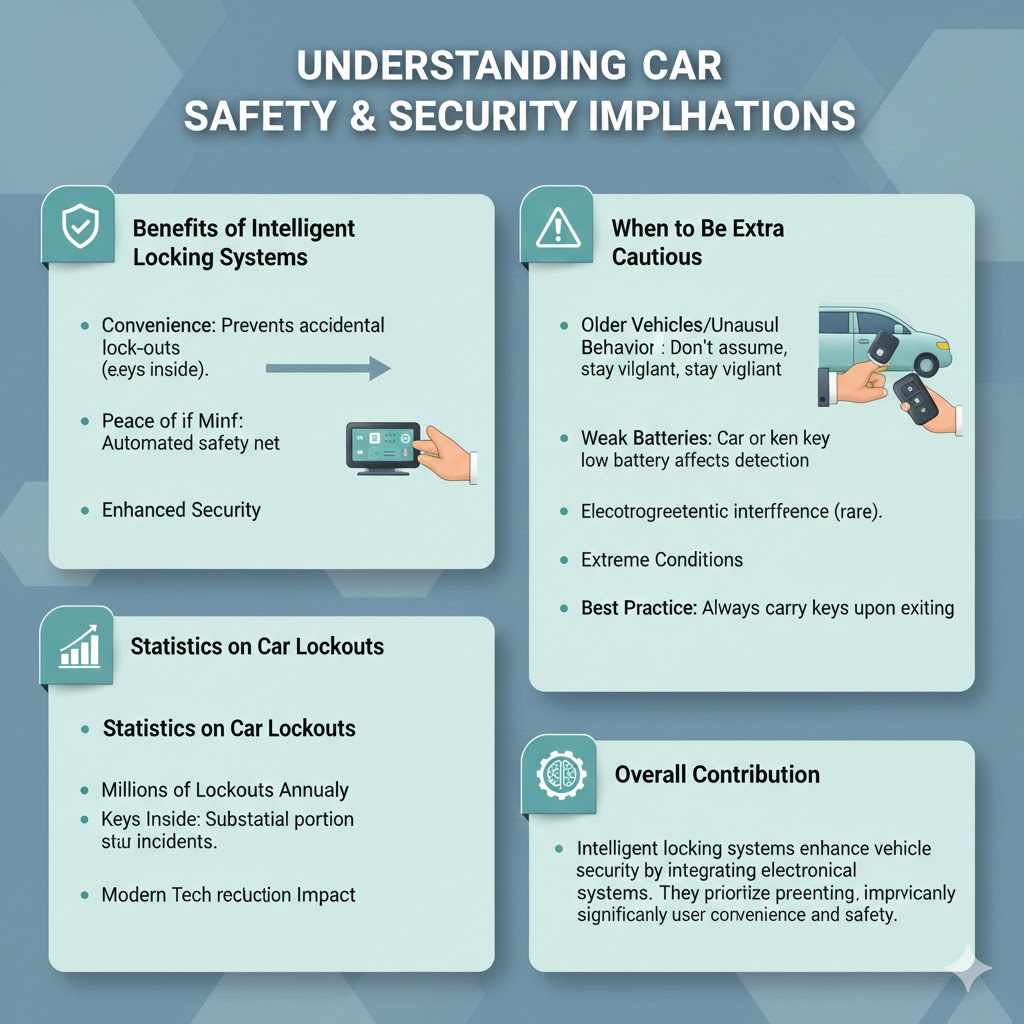
Intelligent locking systems, like those that prevent lock-outs, offer significant practical benefits. The most obvious is convenience. You don’t have to worry about accidentally leaving your keys in the car and being unable to get back in.
This feature is especially helpful in busy situations or when you’re distracted. It removes a common source of stress for drivers. The technology works in the background, providing peace of mind without requiring active effort from the user.
Furthermore, these systems enhance vehicle security by reducing the likelihood of a car being left unlocked unintentionally. While the primary function discussed here is preventing lock-outs, the underlying technology also contributes to the car’s overall ability to remain secure.
These smart features are a testament to how automotive technology has evolved to make driving safer and more user-friendly. They address common driver errors and provide an automated safety net.
When to Be Extra Cautious
While modern cars are smart, it’s always wise to exercise caution. Never assume your car will definitely prevent a lock-out, especially if you have an older vehicle or if you’re experiencing any unusual behavior with your key fob.
If your car’s battery is weak, or if the key fob battery is low, the detection system might not work reliably. In such cases, it’s best to keep the key on your person at all times when interacting with the vehicle.
Also, be aware of extreme environmental conditions. While uncommon, heavy electromagnetic interference in specific locations could potentially affect the system’s performance. If you are in such an area, it’s prudent to be more vigilant.
The best practice is to always have your keys with you when you exit the vehicle, regardless of its locking system. This simple habit prevents most potential lockout situations.
Statistics on Car Lockouts
While specific, universally updated statistics on car lockouts tied directly to leaving keys inside can be hard to pinpoint, the general issue of car lockouts is significant. Roadside assistance services report millions of lockout calls annually.
For example, one analysis of roadside assistance data indicated that “lockouts” consistently rank among the top reasons for calls for service, often second only to flat tires or dead batteries. While these include all types of lockouts (keys locked in trunk, keys lost, etc.), accidental lock-ins with keys inside are a substantial portion of these incidents.
Industry estimates suggest that a significant percentage of lockout calls could be avoided with intelligent vehicle features. The reduction in these calls is a direct benefit of advancements in automotive electronics and programming that prioritize preventing such situations.
These numbers underscore the importance of the technology designed to prevent drivers from locking their keys inside. It highlights a common problem that modern cars have effectively mitigated for many users.
Frequently Asked Questions
Question: If I unlock my car and leave the keys inside but close all the doors, will it lock automatically
Answer: In most modern cars, no. If the key fob is detected inside the car, the system will usually prevent automatic locking, even if the doors are closed. It’s a safety feature to avoid lock-outs.
Question: What if I have an older car model, can it lock keys inside
Answer: Older car models might have less sophisticated systems and could potentially lock keys inside, especially if they lack advanced key detection. It’s always best to check your owner’s manual for older vehicles.
Question: Does the location of the key fob inside the car matter for detection
Answer: Yes, the location does matter. The car’s system has a specific detection range. Placing the fob on the dashboard or in the center console is usually optimal for detection.
Question: Can my car lock itself if the key fob battery is dead
Answer: If the key fob battery is completely dead, the car may not be able to detect it. In such a scenario, the car might revert to its default locking behavior, which could include automatic locking if the doors are closed.
Question: What should I do if I think I’ve locked my keys inside my car
Answer: First, check if your car has a spare key that you can use. If not, you may need to call roadside assistance or a locksmith to help you gain access to your vehicle.
Summary
Generally, if you unlock your car with the keys and leave them inside, your car will not lock the doors. Modern vehicles are designed with smart systems that detect the key fob and prevent accidental lock-outs. This feature ensures you can always access your vehicle.