Acrylic Enamel Paint for Cars: Pros, Cons, Cost & VOC Rules
Acrylic enamel paint gives cars a hard, glossy single-stage finish for about half the cost of urethane, but without an 8:1 hardener mix it chips more easily and cures softer. Skipping the catalyst or exceeding California’s 2.8 lb/gal VOC limit can mean a finish that peels or fails inspection. This guide covers acrylic enamel versus urethane and lacquer, whether you need a hardener, current VOC rules, and real per-quart costs.
Quick Answer
Acrylic enamel is a solvent-based, single-stage automotive paint that dries to a hard, glossy shell, typically lasting 5-10 years. It costs roughly $50-$100/gallon (about half of urethane), doesn’t legally require a hardener, but chips more easily without one. It’s still legal in every U.S. state, including California, when it meets local VOC limits (2.8 lbs/gallon for single-stage topcoats).
What Is Acrylic Enamel Paint?
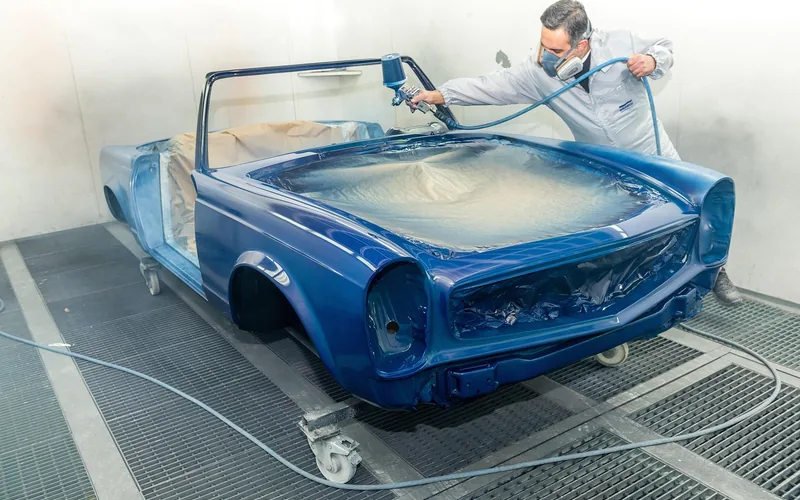
Acrylic enamel paint is a solvent-based, single-stage automotive coating that air-dries to a hard, glossy shell without necessarily needing a separate clear coat. It differs from acrylic lacquer, which stays soft, needs many coats, and is largely phased out for legal and durability reasons, and from urethane, a two-part chemical system that costs roughly twice as much but resists chips and UV fading better. Acrylic enamel is most often sold as a ready-to-spray color coat that can go on alone or be mixed with a hardener for extra durability.
Acrylic Enamel vs. Urethane vs. Lacquer: Key Differences
The three main automotive topcoat types trade off cost, durability, and how forgiving they are for a first-time painter.
| Paint Type | Approx. Cost/Gallon | Needs a Hardener? | Best For |
|---|---|---|---|
| Acrylic Lacquer | $30-$80 | No (thinner-based) | Show cars and restorations; restricted in many states |
| Acrylic Enamel | $50-$100 | Optional, but recommended | Budget single-stage jobs, panels, equipment |
| Urethane (2K) | $100-$200+ | Yes, mixed 2-part system | Daily drivers, factory-match chip and UV resistance |
Single-stage paint, the category acrylic enamel belongs to, applies color and gloss in one step instead of a separate base coat/clear coat process.
Best Acrylic Enamel Paint Pick
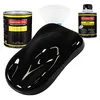
Restoration Shop Jet Black Acrylic Enamel Auto Paint Kit – $85.99
A complete quart kit that already includes the AE3001 hardener at the correct 8:1 ratio and rated at 2.8 VOC as packaged, so you don’t have to buy or measure the catalyst separately, exactly the setup this guide recommends over spraying enamel unmixed.
- Best for: A full single-stage panel or car repaint with built-in chip resistance
- Why we picked it: Pre-portioned hardener removes the mixing-ratio guesswork this guide warns about
- Main drawback: Solid colors only, no metallic flake option in this specific listing
Compare more acrylic enamel paint options
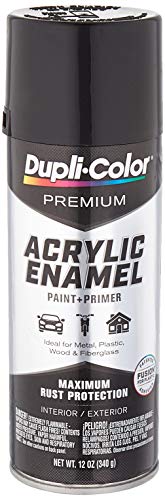
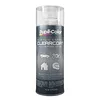 Option 1 Dupli-Color Acrylic Enamel Crystal Clear Spray Paint – $13.63
|
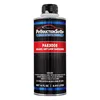 Option 2 Restoration Shop AE3001 Acrylic Enamel Wet Look Hardener – $27.99
|
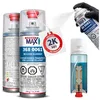 Option 3 SprayMax 2K Glamour High Gloss Clear Coat – $27.97
|
As an Amazon Associate we earn from qualifying purchases.
Do You Need a Hardener with Acrylic Enamel Paint?
No, not legally, most acrylic enamel is a one-part paint that air-dries on its own. But skipping the hardener has a real cost: without it, the paint tends to chip more easily and stays softer once cured, since there’s no catalyst forming a harder cross-linked shell. Manufacturers like Restoration Shop package their AE-series enamel with an AE3001-style wet-look hardener mixed at roughly an 8:1 paint-to-catalyst ratio, and their spec sheet lists the mixed product at 2.8 VOC as packaged, no separate reducer required.
Adding hardener does three things: it speeds drying time, increases chip and chemical resistance, and boosts gloss. If you’re painting a daily driver rather than a show piece stored indoors, using the hardener is the difference between a finish that survives gravel and one that doesn’t. None of this matters if the surface underneath isn’t ready; see our guide on how to sand and prime a car before you spray any coat, hardener or not.
“Mixed at the correct ratio, acrylic enamel’s own hardener additive is what actually closes the durability gap with urethane, unmixed enamel is the softer, cheaper option most painters end up upgrading from.”
Is Acrylic Enamel Paint Legal for Cars in 2026?
Yes. Acrylic enamel remains legal to buy and use in every U.S. state, including California, as long as the specific formula meets that state’s VOC (volatile organic compound) limit for automotive refinish coatings. California’s Air Resources Board caps single-stage automotive topcoats, the category most acrylic enamel color coats fall into, at 2.8 pounds of VOC per gallon; basecoats are capped lower, at 3.5 lbs/gallon, and primers/clears at 2.1 lbs/gallon. Reputable manufacturers list the VOC rating directly on the can or product page, so it’s worth checking before you buy if you live in a state with tighter local air-district rules.
📊 California caps single-stage automotive topcoats, including most acrylic enamel, at 2.8 lbs of VOC per gallon — Source: California Air Resources Board, Automotive Refinishing Program
How Much Does Acrylic Enamel Paint Cost?
Acrylic enamel typically runs $50 to $100 per gallon for a straightforward color, roughly half what a comparable urethane basecoat costs at $100 to $200+ per gallon. That gap is the main practical reason painters still choose enamel: cost is close to the only area where it beats urethane outright. A quart kit that already includes hardener and strainers, enough to cover one to two panels, runs closer to $60-$110 depending on color and metallic content. Budget an extra $15-$30 for a clear topcoat if you want added UV and chip protection on top of the base color. If you’re matching an existing factory color rather than picking a new one, see our guide on how to mix car paint for a perfect match before you order a gallon.
Pros and Cons of Acrylic Enamel Paint for Cars
Pros
- Costs roughly half as much as urethane for a comparable job
- No hardener required to spray it, simpler than a 2-part urethane system
- Dries to a hard, glossy shell that doesn’t need a separate clear coat
- Widely available in single-stage colors from brands like Restoration Shop and Dupli-Color
Cons
- Chips more easily than urethane unless mixed with a hardener
- Cures softer and takes longer to reach full hardness without a catalyst
- Must stay under your state’s VOC limit (2.8 lbs/gal for single-stage topcoats in California)
- Less UV and chemical resistance long-term compared to a 2K urethane clear coat
Frequently Asked Questions
What Is Acrylic Enamel Paint?
Acrylic enamel paint is a solvent-based, single-stage automotive coating that dries to a hard, glossy finish without necessarily needing a separate clear coat. It costs less than urethane but is more prone to chipping unless mixed with a hardener.
How Long Does Acrylic Enamel Paint Last?
Most acrylic enamel jobs last 5 to 10 years with regular washing and waxing. Mild climates and a properly mixed hardener can push that closer to 12-15 years, while coastal salt air, harsh UV, or skipping the hardener can shorten it to 5-8 years.
Do I Need a Hardener for Acrylic Enamel Paint?
Not legally, most acrylic enamel air-dries without one. But a hardener mixed at the manufacturer’s ratio, typically around 8:1, speeds drying, increases chip and chemical resistance, and boosts gloss. Daily drivers benefit from it more than garage-kept show cars.
Is Acrylic Enamel Paint Still Legal in California and Other States?
Yes. Acrylic enamel remains legal nationwide, including California, as long as the specific formula meets your state’s VOC limit for automotive refinish coatings, 2.8 lbs/gallon for single-stage topcoats under CARB rules. Check the can or product spec sheet for the VOC rating before buying.
Can I Apply Acrylic Enamel Paint Myself?
Yes. Acrylic enamel is generally easier for a first-time painter than 2-part urethane because it doesn’t require precise catalyst timing. Use a spray gun, follow the manufacturer’s mix ratio if using a hardener, and expect to do more finish work, wet-sanding and buffing, to get a show-quality gloss.
How Does Acrylic Enamel Compare to Urethane and Lacquer?
Acrylic enamel sits in the middle: it costs about half of urethane and is easier to apply than either lacquer or urethane, but it’s less chip- and UV-resistant than urethane and less glossy out of the gun than lacquer. Urethane suits daily drivers; lacquer suits show cars with limited outdoor exposure; enamel suits budget single-stage jobs.
Conclusion
Acrylic enamel paint earns its place as the budget single-stage option: a hard, glossy finish at roughly half the cost of urethane, legal nationwide as long as the formula meets your state’s VOC limit. The trade-off is durability, without a hardener mixed at the correct ratio, it chips more easily and cures softer. If you’re painting a daily driver, budget for the hardener kit; if it’s a show car kept out of the elements, unmixed enamel may be all you need.
Products related to this article
Sponsored / affiliate links. As an Amazon Associate I earn from qualifying purchases. I may earn additional commission from eligible campaigns.