Best Electric Paint Sprayer for Cars: HVLP Types and Checklist
A general-purpose electric paint sprayer is built for latex, stain and furniture, and automotive basecoat and clear are a harder job. The realistic electric option for car paint is an HVLP turbine system, and Fuji Spray says its Mini-Mite Platinum series can atomize professional base and clear coat finishes, including 2K paints. Those 2K hardeners contain isocyanates, so a supplied-air respirator matters more than the sprayer. This page is a buying checklist built from maker, paint and EPA pages, not a test: we did not test any sprayer.
Is a General-Purpose Electric Sprayer Good Enough for Car Paint?
Best Turbine HVLP Pick
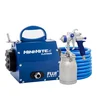 |
Fuji Spray 2904-T70 Mini-Mite 4 Platinum HVLP Spray System Best for: A mobile or home painter who wants an electric, compressor-free HVLP system whose maker says the Mini-Mite Platinum series can atomize professional base and clear coat finishes, including 2K paints. Why we picked it: Fuji’s pages list a 4-stage turbine at 9.0 psi, stainless steel fluid passages, a minimum 65% transfer efficiency and a #4 Ford viscosity cup in the kit. Main drawback: The Amazon listing bullets we read do not mention cars, and Fuji’s automotive page names the T75G and G-XPC guns for this turbine, not the T70 bottom-feed gun in this listing. It is also not a booth: 2K clear still needs a supplied-air respirator and proper ventilation. |
As an Amazon Associate we earn from qualifying purchases. Spec-based pick from the listing, not a hands-on test.
Short answer: usually not for a color and clear job. The three sprayers this page used to feature are listed on Amazon for latex paint, stain, furniture and walls, not automotive basecoat or clear. A turbine HVLP system is different because the maker states automotive use on a dedicated page: Fuji Spray Auto describes itself as serving the automotive aftermarket and collision repair industry, and its Mini-Mite page is aimed at mobile technicians.
“Best” on this page does not mean tested or ranked. It means a short feature checklist taken from sources we read, listed below. We name one pick in the box above because its maker pages state automotive finishing use, its listing is in stock today, and its specs are published. We have not held, run or sprayed it.
Electric Sprayer Types for Cars: What the Sources Support
The table lists each type with what a source we read actually states. Where we read nothing, the cell says so rather than guessing.
| Type | How it works | What a source we read says | Source |
|---|---|---|---|
| HVLP turbine system (electric, no compressor) | An electric turbine pushes a large volume of low-pressure air to the gun | Fuji says turbine guns run at much lower pressure at the spray head than compressor HVLP guns, with less overspray and bounce back. Mini-Mite 4 is 9.0 psi. | Fuji Spray FAQ and product pages |
| Compressor HVLP or cup gun | Shop air is reduced and atomizes paint at the cap | Akzo Nobel lists HVLP max 0.7 bar at the air cap and a 1.2 to 1.4 mm tip for one clearcoat. Needs a compressor, so it is not an electric sprayer. | Autoclear LV Exclusive TDS |
| Handheld electric HVLP gun | A small built-in turbine, paint cup on the gun | Listings we read name latex, stain, furniture and walls. No automotive claim was found in them. | Amazon catalog data, read today |
| Airless | Paint is forced through a tip at high fluid pressure | EPA lists airless among spray technologies accepted in its shop rule. We read no maker page saying a given airless unit suits automotive color or clear. | 40 CFR 63.11173(e)(3) |
| Electrostatic | An electrostatic attraction is created between the part and the atomized paint | The same rule defines it and lists it as accepted. We read no consumer product page for it. | 40 CFR 63.11180 |
| Cordless or battery powered | Not covered by any maker page we read | No claim made. Apply the checklist below and ask the maker for a stated automotive use. | None read |
What “Best” Means Here: A Feature Checklist
Instead of a ranking we use criteria that a source can back up. Each row shows what the Fuji Mini-Mite 4 Platinum pages state, so you can hold any other sprayer to the same list.
| Checklist item | Why it matters | Stated for the Mini-Mite 4 Platinum |
|---|---|---|
| Air pressure at the cap | EPA defines HVLP equipment as designed and operated between 0.1 and 10 psig at the air cap | 4-stage turbine, 9.0 psi (Fuji product page) |
| Stated automotive finishing use | General sprayers are marketed for latex and stain | Series page says it can atomize professional base and clear coats, including 2K |
| Transfer efficiency | More paint reaches the panel, less becomes mist | Minimum 65% (Fuji series page) |
| Fluid path material and gun type | Solvent-based coatings need compatible parts | Stainless steel needle, nozzle and fluid passages; non-bleed gun |
| Viscosity cup included | You must measure thinning, not guess it | #4 Ford viscosity cup listed as included |
| Cup size range | Panels need refills | 3 oz (89 cc) to 1 quart (1000 cc) across the series |
| Hose and warranty | Placement and support | 25 ft hose; 2-year warranty on parts and labor |
If a maker or listing cannot give you the first two rows in writing, treat the sprayer as a general-purpose tool. The specific Amazon kit in the box is the 2904-T70 version with a bottom-feed gun. Fuji Spray Systems lists the T70 as one of three guns for the series, while the Fuji Spray Auto page names the T75G and G-XPC for the Mini-Mite 4. Confirm which gun you are buying before you rely on the automotive wording.
Thinning, Viscosity and Tip Size
Every source we read puts viscosity first. Fuji says thinning matters because too thin leaves runs and too thick leaves orange peel, that the reducer must be compatible with the coating, and that several thin wet coats beat one or two thick ones. It also says to measure run time with the viscosity cup. Fuji tells users to hold the gun 6 to 8 inches from the surface, overlap about 50% on each pass, and keep the gun about square to the panel.
For real automotive numbers, read the paint maker, not a sprayer page. The table shows one example, Akzo Nobel Car Refinishes Autoclear LV Exclusive, a two-pack clearcoat. These figures belong to that product only. Your paint has its own sheet, and its figures override anything here.
| Item | Stated for Autoclear LV Exclusive | Where it comes from |
|---|---|---|
| Mix ratio by volume | 100 clear : 60 hardener : 20 reducer | Technical data sheet S1.05.07 |
| Spray viscosity | 15 to 17 seconds, DIN cup 4, at 20 C | Same sheet |
| Fluid tip, gravity gun | 1.2 to 1.4 mm | Same sheet |
| HVLP air pressure | Max 0.7 bar at the air cap (1.7 to 2.2 bar at the gun inlet) | Same sheet |
| Coats and flash | Light closed coat, 3 to 5 minutes flash off, then a full coat | Same sheet |
| Pot life | 1 hour at 20 C | Same sheet |
| Hardener chemistry | Poly-isocyanate resins; sheet says “for professional use only” | Same sheet |
Note the cup type: the sheet quotes DIN cup 4 seconds, while the Fuji kit lists a #4 Ford cup. Those are different cups, so do not assume the seconds match; ask Fuji or your paint supplier.
Safety: Isocyanates, Respirators, Ventilation and Fire
EPA’s Automotive Refinishing Safety Information page says refinishers use isocyanates, which it calls the leading attributable chemical cause of asthma in the workplace, and organic solvents such as toluene and ethylbenzene. EPA’s supplied-air respirator fact sheet says isocyanates are a major ingredient in clear coats and many primers and can cause asthma, allergic lung and skin reactions, and chronic lung disease, and have even caused painter deaths from asthma reactions.
The same fact sheet says air-purifying (cartridge) respirators often do not give painters adequate protection, and that if cartridges are not changed regularly they may give little, if any, protection. The Akzo Nobel sheet above states that the company recommends a fresh air supply respirator. For the respirator links EPA publishes, see our guide to sanding and priming a car, which already collects them.
- Fuji says turbine placement matters: put the turbine on the floor about 20 ft from the spray area where it can draw clean, cool air.
- Fuji says lacquer fumes are toxic and flammable, so adequate ventilation is absolutely necessary, and explosion-proof light switches, fixtures and an extraction fan are a must.
- Fuji says to rest the turbine 10 to 15 minutes for every 45 minutes of continuous spraying, and that you will normally refill the cup after 20 to 30 minutes.
- Fuji says spraying lacquer may be prohibited in your location, so check local rules before you start.
This page does not say a home garage setup is safe for 2K clear. It only repeats what these sources state. If you cannot supply air to a respirator and control fumes and ignition sources, do not spray 2K products.
When to Hire a Body Shop Instead
Hire a shop when the job needs 2K clear and you cannot meet the respirator and ventilation limits above, when you need a blended color match across several panels, or when the car is worth more than the cost of a professional repaint. That list is our judgment, not a maker limit. For commercial work, EPA’s rule in 40 CFR 63.11173(e) calls for trained painters, a filtered booth or enclosure, and HVLP, electrostatic, airless or equivalent spray guns. A sprayer helps with thinning, pattern and overspray, but it does not replace a booth or a respirator. For peeling or failed paint, start with how to fix paint peeling on a car before buying any sprayer.
Questions to Ask Before You Buy
- Does the maker state, in writing, that this sprayer can spray automotive basecoat and clear, including 2K if that is your paint?
- What is the air pressure at the cap, and is it 10 psi or less?
- Which gun comes in the box (bottom feed, gravity), and which fluid tip sizes are offered?
- Is a viscosity cup included, and what units does your paint’s data sheet use?
- Are the fluid passages stainless steel, and is the sprayer approved for solvent-based coatings?
- How long can it run before it must rest, and where does the turbine have to sit?
- What respirator, ventilation and fire controls does your paint’s safety data sheet require?
If the answer to the first question is no or “not stated,” the sprayer may still suit primer, trim or small parts, but you should not count on it for a full color and clear. See also our pages on electric spray paint guns for cars, spray guns for painting cars and air compressors for painting a car if you are weighing a compressor setup instead.
Common Mistakes With Electric Sprayers on Cars
| Mistake | What happens | Source |
|---|---|---|
| Using a latex-class sprayer for color and clear | Marketed for latex and stain; no automotive claim stated | Amazon listings read today |
| Not thinning or measuring viscosity | Too thin runs, too thick orange peel | Fuji Spray FAQ |
| Holding the gun too close | Bounce back, which carries finish away from the surface | Fuji Spray FAQ |
| Holding it too far away | Dry spray, where the material cures before it reaches the panel | Fuji Spray FAQ |
| Mixing incompatible reducer or thinner | Fuji says the reducer must be compatible and lacquer products should come from one company | Fuji Spray FAQ |
| Relying on a cartridge respirator for isocyanates | EPA says unchanged cartridges may give little protection | EPA supplied-air fact sheet |
| Copying numbers from another paint | Each data sheet has its own ratio, viscosity and tip | Autoclear LV Exclusive TDS |
Frequently Asked Questions
What Is The Best Electric Paint Sprayer For Cars?
There is no tested winner. Look for an HVLP turbine whose maker states automotive base and clear use, publishes air pressure and ships a viscosity cup. Our single pick is the Fuji Mini-Mite 4 Platinum kit, chosen on those published specs, not on a test.
Can I Paint A Car With An Electric Spray Gun?
A maker has to say the gun can atomize your paint. Fuji says its Mini-Mite Platinum series can atomize professional base and clear coat finishes, including 2K paints. Listings for latex-class guns do not make that claim. Respirator and ventilation limits still apply.
Do I Need A Compressor With An Electric HVLP Sprayer?
No. A turbine system makes its own low-pressure air. A compressor HVLP gun is a different setup.
Can A Cordless Or Battery Powered Sprayer Paint A Car?
We read no maker page about battery sprayers, so we make no claim. Ask the maker whether it states automotive base and clear use, the air pressure at the cap and the viscosity range it supports.
Is It Safe To Spray Clear Coat At Home?
EPA says isocyanates in clear coats and many primers can cause asthma and lung disease, and that supplied-air respirators usually give the best protection. If you cannot meet that and control fumes, hire a shop. This is not medical advice.
Conclusion
An electric sprayer for car paint is a narrow category: a turbine HVLP system with a maker statement, a published pressure and a viscosity cup. Use the checklist, read your paint’s data sheet, and treat respiratory protection as the first purchase. Our one pick is the Mini-Mite 4 Platinum kit in the box above. See the maker’s own Mini-Mite Platinum series page and the Autoclear LV Exclusive data sheet before you buy.
Products related to this article
Sponsored / affiliate links. As an Amazon Associate I earn from qualifying purchases. I may earn additional commission from eligible campaigns.