Goodyear Assurance WeatherReady Review: Is It Worth It?
Goodyear Assurance WeatherReady is a smart pick if you need one tire for wet roads, slush, and the odd snow day; choose a true winter tire if you face frequent ice, packed snow, or unplowed roads.
This guide is part of our Car accessories guide series.
Verdict


It is an all-weather compromise, not a winter substitute. The original WeatherReady fits drivers who spend most of the year on damp pavement, cold rain, and mixed commutes, then see only light snow a few times each season. That is where it makes sense. Push it into repeated deep-snow or icy conditions, and the limits show fast.
Pros and cons
- Pros: strong wet traction in hard rain, good resistance to hydroplaning, useful light-snow ability, comfortable ride, year-round use without swaps.
- Cons: not a true winter tire, ice grip is limited, road noise can rise as it wears, premium pricing makes the value harder to justify.
Bottom line: buy it for mixed-weather commuting, not for serious winter duty. If the budget stretches, compare it carefully against a Michelin CrossClimate 2 setup or a seasonal winter-tire swap before buying on the strength of the 3PMSF badge alone.
According to worldtirereview.com — Goodyear says the original WeatherReady uses 3D TreadLock Technology Blades.
Specs at a glance
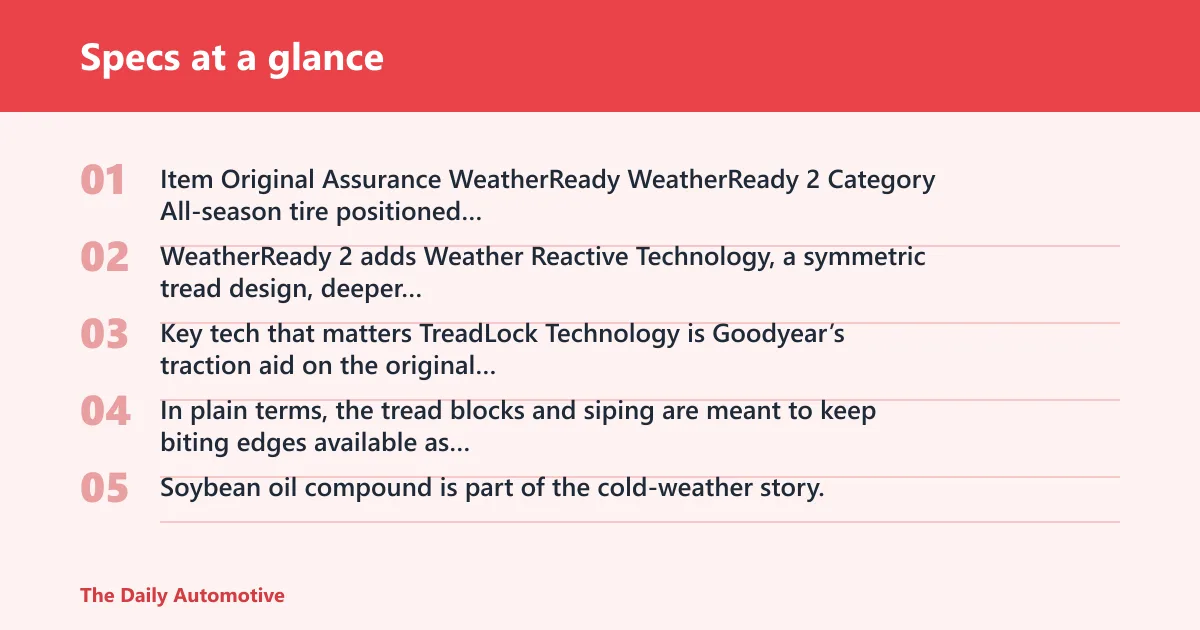
| Item | Original Assurance WeatherReady | WeatherReady 2 |
|---|---|---|
| Category | All-season tire positioned for year-round use | All-season tire with Weather Reactive Technology |
| Wet-road focus | Silica blend and evolving traction design | Deep grooves for water evacuation |
| Snow rating | 3PMSF and M+S support | 3PMSF severe snow service rating |
| Snow/ice capability | Light snow and slush use | Light snow and ice capability |
| Tread design | 3D TreadLock Technology Blades | Symmetric tread design |
| Wear-related traction support | Grooves Evolving Traction technology | Modern compound and groove layout |
| Construction | Twin-steel belt package and polyamide overlay | Construction details support stability and durability |
| Price/value | Premium pricing, value depends on climate | Premium pricing, value depends on winter need |
The original WeatherReady is the simpler buy to understand: year-round use, wet-weather strength, and some snow capability. WeatherReady 2 adds Weather Reactive Technology, a symmetric tread design, deeper grooves, and a stronger winter-positioned story, but it still stops short of replacing a dedicated winter tire where ice and deep snow dominate.
Key tech that matters
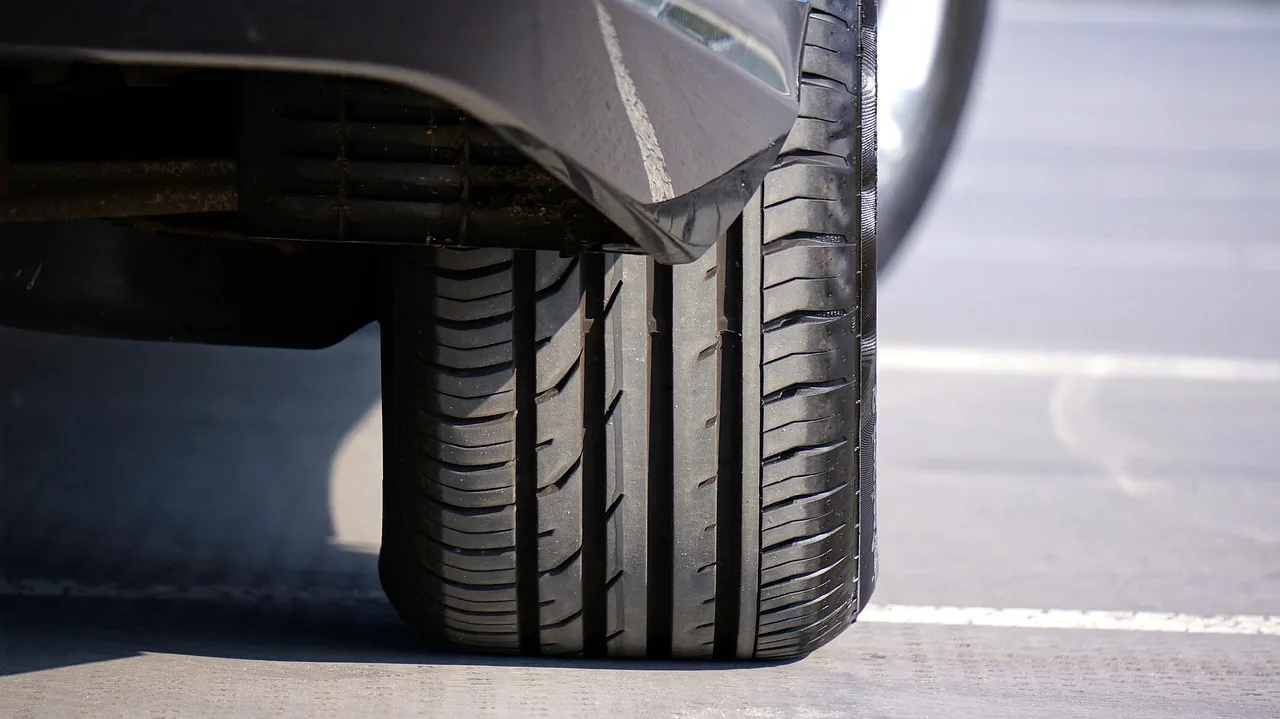
TreadLock Technology is Goodyear’s traction aid on the original tire. In plain terms, the tread blocks and siping are meant to keep biting edges available as the tire wears, so snow and wet grip do not fall off as fast as they can on simpler all-season designs.
Soybean oil compound is part of the cold-weather story. It is used to help the rubber stay more flexible when temperatures drop, which matters on chilly mornings and cold, wet pavement.
Twin-steel belt package and polyamide overlay are the internal structure. That combination supports stability, wear resistance, and impact protection, especially when the tire is asked to run long highway miles or absorb rougher pavement.
What the 3PMSF symbol and M+S marking mean here
The 3PMSF symbol, or three-peak mountain snowflake, is a severe snow service baseline. It tells you the tire has met a winter-capability threshold, but it does not make the tire equal to a true winter tire with deep-snow and ice priorities.
M+S means mud and snow. It is a looser marking and mainly signals slush-and-snow suitability, not serious winter performance. On this tire family, the two markings help explain why it can work in cold weather without becoming a replacement for a dedicated snow tire.
Who is the Goodyear Assurance WeatherReady for?
It is for drivers in rain-heavy or cold-mix climates who want one tire set for three seasons plus occasional winter duty. If the year brings frequent damp roads, cold mornings, and only light snow, it is a sensible compromise. If your roads stay white for weeks, keep shopping.
Best fit
- Commuters in the snow belt who mostly see plowed streets.
- Drivers who value wet braking and hydroplaning resistance more than deep-snow bite.
- Owners who want to avoid seasonal swaps.
Who should skip it
- Drivers on unplowed rural roads.
- Anyone facing repeated ice or packed snow.
- People who want winter-tire steering and braking, not a compromise.
What works
The original WeatherReady’s strongest trait is wet-road confidence. Goodyear’s silica blend is aimed at reducing slipping on wet streets, and the tread pattern is built to move water away instead of letting it pile under the contact patch. That is exactly what you want in heavy rain and cold drizzle.
Dry-road behavior is also solid for an all-weather tire. Steering feels predictable in daily use, and the tire’s internal construction helps keep the carcass steady on the highway. It is not sporty, but it is calm enough that most commuters will never miss a dedicated summer tire.
Why the tread design matters in heavy rain
Grooves and siping are not marketing decoration. They create channels for water and add edges that can bite into damp pavement. On a tire like this, that combination is what makes hydroplaning resistance one of the strongest reasons to buy it.
WeatherReady 2 sharpens that formula with Weather Reactive Technology, a symmetric tread design, and deep grooves for water evacuation. Based on the spec sheet and reviews, that makes it the cleaner wet-weather choice if rain is the main problem and winter is only part of the equation.
What does not
The weak spot is winter severity. The original WeatherReady can handle light snow and slush, but packed snow and ice are where it falls behind a real winter tire. The same warning applies to WeatherReady 2, even with its stronger winter positioning and 3PMSF rating.
Road noise is another tradeoff. Many owners like the ride when the tire is fresh, but noise can grow as the tread wears. That is a common issue with all-weather tires that carry lots of siping and winter-capable tread blocks, and it matters more after the first long stretch of use.
Replacement timing and rotation matter
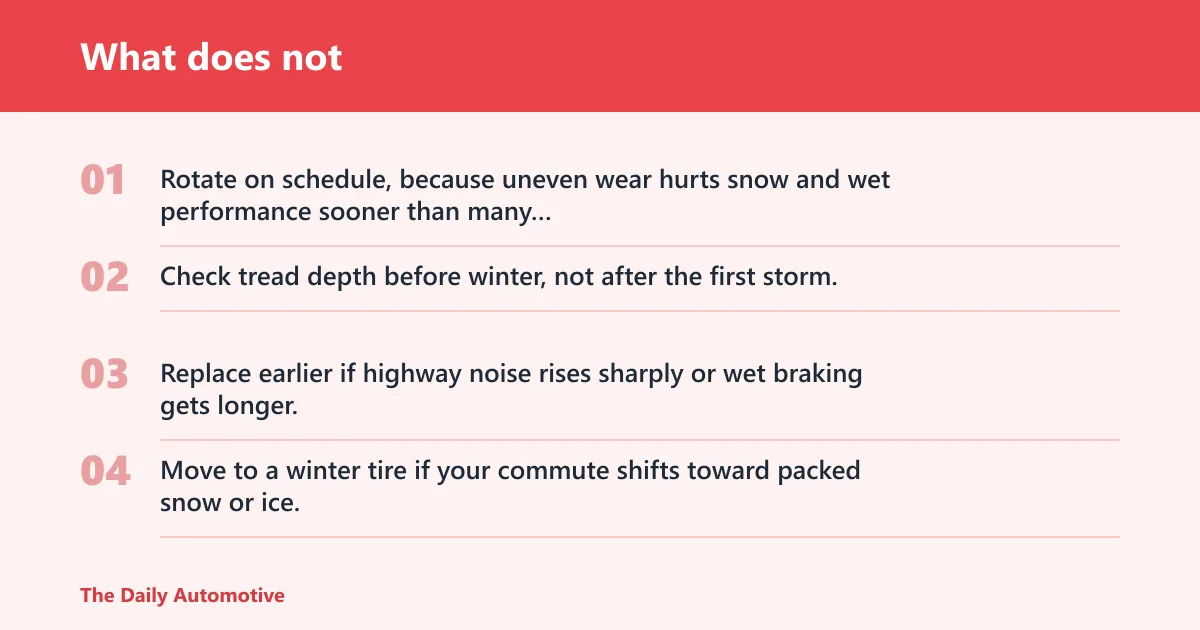
- Rotate on schedule, because uneven wear hurts snow and wet performance sooner than many buyers expect.
- Check tread depth before winter, not after the first storm.
- Replace earlier if highway noise rises sharply or wet braking gets longer.
- Move to a winter tire if your commute shifts toward packed snow or ice.
How does it behave on dry and wet roads?
On dry roads, the original WeatherReady feels stable and easy to live with. It is built for everyday commuting rather than sharp handling, but the belt package and tread layout help it track straight and stay composed on the highway.
Wet roads are where it earns its keep. Hydroplaning resistance is a real strength, and the tire’s water-moving grooves and wet-focused compound give it a more confident feel than many standard all-seasons. In rain, that matters more than quick steering response.
Is the Goodyear Assurance WeatherReady good in snow?
Yes, but only up to a point. It is good in light snow and slush, and the 3PMSF and M+S markings support that claim. It is not a substitute for a dedicated winter tire on packed snow, black ice, or roads that stay snowy for long stretches.
WeatherReady 2 improves the winter story with its 3PMSF severe snow service rating and light snow and ice capability, but it still belongs in the all-weather category. That means useful winter help, not winter-tire authority.
Light snow and slush performance
For a city driver on plowed streets, the tire’s siping and grooves can give enough bite to get through a few messy storms. That makes it a practical year-round choice for drivers who want fewer tire changes.
Packed snow and ice limitations
Once the surface turns dense or polished, winter tire compounds and block patterns have the upper hand. The WeatherReady family can proceed, but it does so with less margin and less stopping confidence than a true winter tire.
Is it noisy and comfortable on the highway?
Ride comfort is a strength. The tire is generally comfortable over rough pavement, and the construction helps it avoid the harshness that some aggressive all-weather treads can bring. That makes it easy to live with on long commutes.
Noise is more complicated. Fresh tread is usually acceptable, but wear can change that. After a few tens of thousands of miles or so, owners may notice more road hum or a more pronounced tread sound on coarse asphalt, since that is when an all-weather tire can start to sound older.
What owners should watch after longer use
- Uneven shoulder wear from skipped rotations.
- Increased road roar on patched or coarse highways.
- Longer wet stops if the tread depth drops too far.
Decision table: which tire fits your climate?
| Climate / use case | Mild rain | Frequent freezing temps | Packed snow | Icy roads | Highway commuting | Best fit |
|---|---|---|---|---|---|---|
| Goodyear Assurance WeatherReady | Strong fit | Good for mixed use | Limited | Poor to fair | Strong | Wet roads, cold rain, light snow |
| Goodyear Assurance WeatherReady 2 | Strong fit | Better winter-leaning all-weather option | Better than original, still not a winter tire | Limited | Strong | Mixed weather with more snow responsibility |
| Dedicated winter tire | Okay, but not the point | Best fit | Best fit | Best fit | Usually noisier and softer | Frequent snow, ice, and unplowed roads |
This is the cleanest way to think about the family. WeatherReady works as a compromise tire for rain and mild winter duty. WeatherReady 2 pushes farther into winter use. A dedicated winter tire is still the right answer when snow and ice are the real problem.
Should you buy it over the Michelin CrossClimate 2 or a winter setup?
Buy the WeatherReady if you want a balanced all-weather tire for wet roads and occasional snow, and you value Goodyear’s wet-road and wear-focused approach. If your winter is harsher or you want a more aggressive all-climate tire, Michelin CrossClimate 2 may make more sense. If winter is serious, a swap setup wins.
Where WeatherReady looks stronger
The WeatherReady line makes sense for buyers who want a calm, everyday tire with strong rain manners and enough winter help for short, mixed commutes. It is also easier to justify if your real need is wet traction first and snow second.
Where CrossClimate 2 may make more sense
Based on specs and reviews, CrossClimate 2 is often the better pick when the buyer wants a more winter-forward all-weather feel and is willing to pay premium pricing for it. That matters if snow and cold are regular, not occasional, conditions.
When a seasonal swap setup costs less over time
A seasonal setup can be cheaper in the long run if you keep a summer or all-season set for warm months and a true winter set for cold months. It costs more upfront, but it can deliver better winter grip and preserve each set by shortening its yearly mileage.
Alternatives
Goodyear Assurance WeatherReady 2 is the direct step up if you want the newer Goodyear all-weather story. Weather Reactive Technology, a symmetric tread design, deep grooves, and a 3PMSF severe snow service rating make it the more winter-capable choice on paper. The drawback is simple: it still is not a dedicated winter tire, and premium pricing remains part of the equation.

MICHELIN CROSSCLIMATE2 A/W CUV is the cleaner choice for buyers who want a more winter-leaning all-climate tire and are willing to pay for it. The spec sheet points to strong braking and long wear, which helps justify the price. The drawback is cost, and some drivers may find it more tire than they need for mostly rainy, mild winters.

Continental PureContact LS makes sense if winter is mild and quiet-road comfort matters more than snow duty. The 70,000-mile coverage and low-noise pitch are attractive, and the $160.23 price is easier to swallow than many premium all-weather tires. The drawback is obvious: it is not the answer for drivers who actually need winter traction.
Should you buy it
Buy the Goodyear Assurance WeatherReady if your year is mostly rain, cold rain, and light snow, and you want one tire set that stays civilized on the highway. Skip it if your winter brings repeated ice, packed snow, or roads that are often unplowed. That is where a real winter tire earns its keep.
Pricing is part of the decision. The review pricing starts at 138.00 and up, which is premium enough that value depends on climate more than branding. If you need winter help a few times a season, it can be money well spent. If you need winter authority, it is the wrong place to save.
Frequently asked questions
goodyear assurance weatherready vs weatherready 2 review
The original WeatherReady is the simpler all-weather compromise: strong wet-road manners, light-snow ability, and year-round use without swaps. WeatherReady 2 adds Weather Reactive Technology, a symmetric tread design, deep grooves, and a 3PMSF severe snow service rating, so it is the better pick if winter use matters more.
goodyear assurance weatherready 2 vs michelin crossclimate 2 review
WeatherReady 2 looks like the more balanced wet-weather choice, while CrossClimate 2 is often the more winter-forward all-climate option. For drivers with more snow and colder conditions, Michelin may make more sense. For drivers who want strong rain behavior and still want winter-capable branding, Goodyear stays competitive.
are goodyear assurance weatherready tires good in snow
They are good in light snow and slush, and the 3PMSF and M+S markings support that use. They are not the best choice for packed snow, deep snow, or ice. For those conditions, a dedicated winter tire remains the safer and more capable tool.
How long do Goodyear Assurance WeatherReady tires last?
Longevity depends heavily on rotation, alignment, driving style, and climate, so no honest review should promise a magic mileage figure. The practical answer is that tread life is a major buying factor here, because wear affects wet grip, snow bite, and highway noise all at once.
Is the Goodyear Assurance WeatherReady noisy on the highway?
Fresh tires are usually acceptable, but wear can bring more tread hum over time, especially on coarse pavement. That is one reason to rotate them on schedule and monitor tread depth. If quiet highway running is the top goal, some touring all-seasons are better suited.
Does the Goodyear Assurance WeatherReady work in light snow or only rain?
It works in both, but with different levels of confidence. Rain is its stronger use case, while light snow and slush are the winter conditions it can handle well enough for many commuters. It should not be treated as a substitute for a true winter tire on harsher roads.
Products related to this article
Sponsored / affiliate links. As an Amazon Associate I earn from qualifying purchases. I may earn additional commission from eligible campaigns.