3 Best Air Hoses for Car (2026): Based on Specs and Reviews
The best air hose for a car is usually a 3/8-inch hybrid polymer hose, with 1/4-inch airstream fittings and a 25- to 50-foot length; choose rubber only if winter flexibility matters more than coil memory. A poor hose leaks at the coupler, stiffens in cold garages, and slows tire inflation and light air-tool use. This guide compares three hoses by tire inflation, light automotive tool use, cold-weather handling, and storage.
Quick comparison
| Product | Badge | Best for | Price | ||
|---|---|---|---|---|---|
 |
YOTOO Hybrid Air Hose 3/8-Inch by 25-Feet 300 PSI HeavyYOTOO | Our pick | 3/8 in. x 25 ft. · 300 PSI · Hybrid | $24.99
Price as of 23 Oct 2026
|
View |
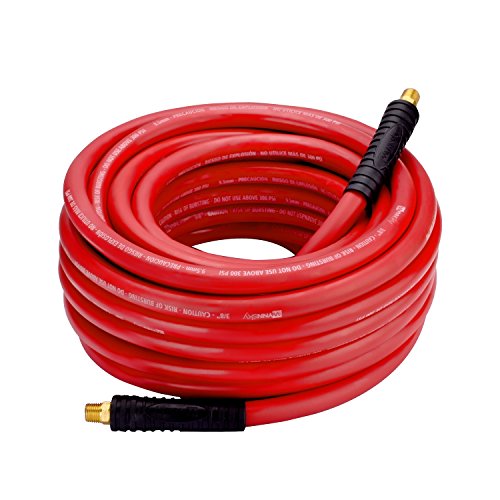 |
WYNNsky Rubber Air Hose,50-Feet x 3/8-Inch, 300 PSI, RedWYNNsky | Also great | 3/8 in. x 50 ft. · 300 PSI · Rubber | $29.99
Price as of 23 Oct 2026
|
View |
 |
Flexzilla Air Compressor Hose, 3/8 in. x 50 ft., 1/4 in.Flexzilla | Upgrade pick | 3/8 in. x 50 ft. · 300 PSI · Hybrid | $38.26
Price as of 23 Oct 2026
|
View |
 |
GASHER 1/4" 25FT Polyurethane Recoil Air Hose with QuickGASHER | Budget pick | 1/4 in. x 25 ft. · 300 PSI · Recoil | $23.99
Price as of 23 Oct 2026
|
View |
This comparison is based on garage jobs you actually do, not broad material claims. The best hose changes with airflow demand, winter stiffness, and how much room you have for storage.
How we chose
We compared hoses on four points that matter in a home garage: diameter, material, fittings, and storage. A hose for tire inflation can be lighter and smaller than one meant for an impact wrench.
Working pressure matters too. Automotive hoses are commonly reported in the 150 to 300 PSI range, and the hose rating should exceed both compressor output and tool demand. Cold-weather flexibility and coupler fit were also part of the filter.
Storage shape changes the buy. A reel, a short lead-in hose, or a coil that stows in a narrow bay can matter more than a few extra feet of length around a car.
Best hybrid air hose: best for most car owners
The YOTOO hybrid hose is the safest default for most home-garage car use because it balances airflow, flexibility, and storage without forcing a heavy shop hose onto a simple inflation setup. It uses a hybrid rubber/PVC build, is rated for 300 PSI working pressure, and comes in a 3/8-inch by 25-foot format with 1/4-inch brass male fittings.
That size is enough for tire inflation and occasional light tool use, especially when you want a hose that moves easily around a car but still feels more capable than a short inflator line. The bend restrictors help reduce kinking, and hybrid construction usually handles cold better than straight PVC while staying lighter than many rubber hoses.
The drawback is obvious: this is not the best pick if your garage stays very cold and you want the hose to remain as supple as rubber. It is also shorter than the common 50-foot shop length, so larger driveways or a compressor parked far from the work area may need an extension strategy.
Best rubber air hose: best for cold garages
The WYNNsky rubber hose may be a better fit when winter storage and cold-garage flexibility matter more than low weight. It is a 3/8-inch by 50-foot hose rated to 300 PSI, with brass end fittings and bend restrictors, so it suits shop-style use where the hose may need to reach around a vehicle or across a bay.
Rubber stays more flexible in cold weather than PVC, which helps when the garage drops toward freezing and a stiff hose starts fighting every turn. That matters for both inflation and tool work, because a hose that stays soft is less likely to kink or yank a tire chuck loose mid-check.
The drawback is weight. A rubber hose is heavier than a hybrid one, and that extra mass is noticeable when you drag it across concrete or hang it on a reel. If your main job is quick tire inflation and easy pickup, the extra heft may be more than you need.
Best polyurethane recoil hose: best for tight spaces
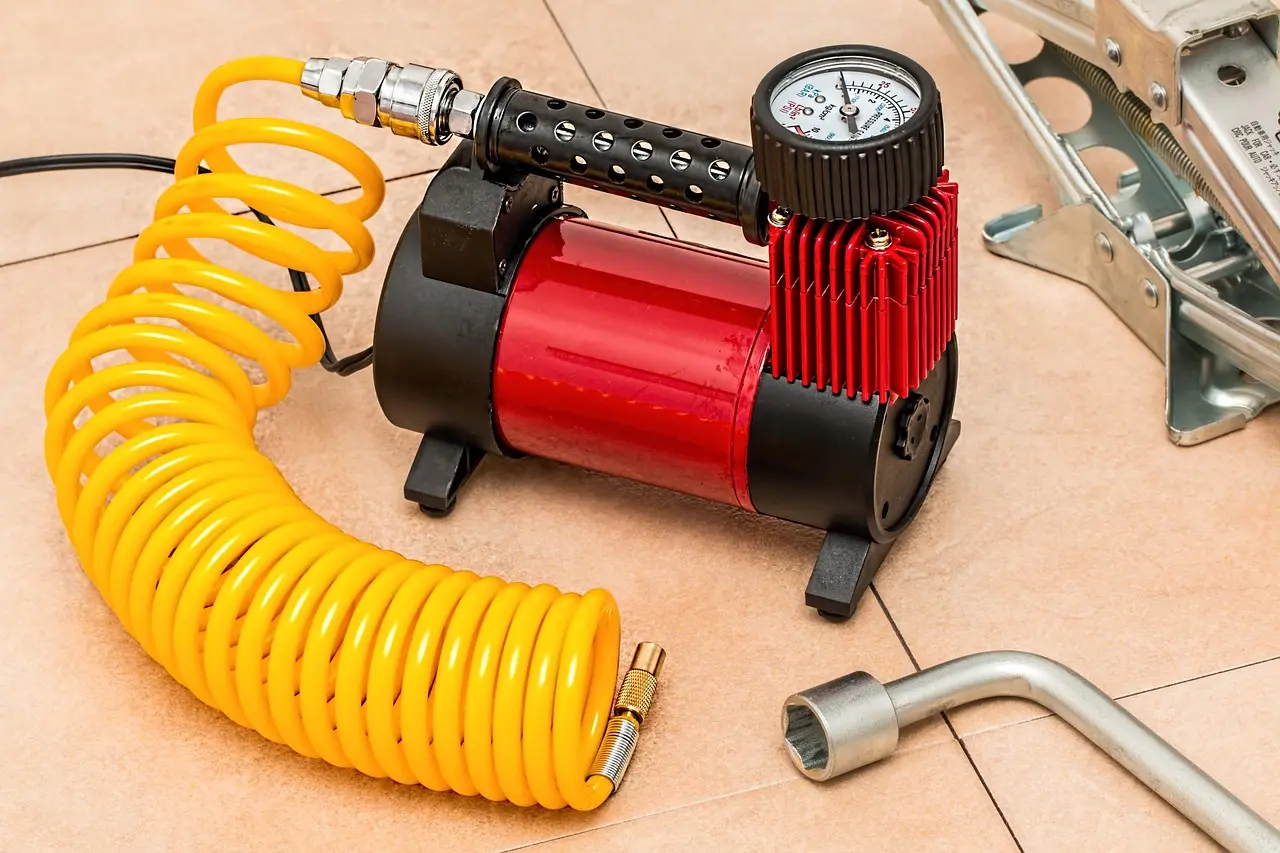
The GASHER polyurethane recoil hose is a compact-storage option for small garages, portable kits, and quick tire inflation. It is a 1/4-inch by 25-foot recoil hose rated to 300 PSI, and it includes quick coupler and plug hardware for fast hookups.
Its self-coiling shape keeps it out of the way when space is tight, which helps if you store tools in a corner or want a line that does not sprawl across the floor while you move around a car. Polyurethane recoil hoses are a practical answer for drivers who care more about tidy storage than long, straight reach.
The tradeoff is airflow. A recoil hose in 1/4-inch size is fine for inflation and small air tools, but it is not the same as a 3/8-inch shop hose for sustained high-flow work. The coiled shape can also tug back on the chuck, which some users find annoying during longer inflation sessions.
Air hose decision matrix
| Use case | Diameter | Material | PSI target | Length | Storage style | Avoid if |
|---|---|---|---|---|---|---|
| Tire inflation only | 1/4-inch | Polyurethane recoil or lightweight hybrid | 150 to 300 PSI | 25 feet is usually enough | Coil, wall hook, or compact bin | You also want frequent impact wrench use or a hose that must stay flat in cold weather. |
| Occasional impact wrench use | 3/8-inch | Hybrid or rubber | 300 PSI is a practical target | 25 to 50 feet | Reel storage or loose hang | Your compressor is small and the hose path is short enough that 1/4-inch airflow loss would not matter. |
| Cold-garage use | 3/8-inch | Rubber or cold-rated hybrid | 150 to 300 PSI | 50 feet if reach matters | Reel or large hook | The garage stays warm year-round and you value light weight more than flexibility in freezing conditions. |
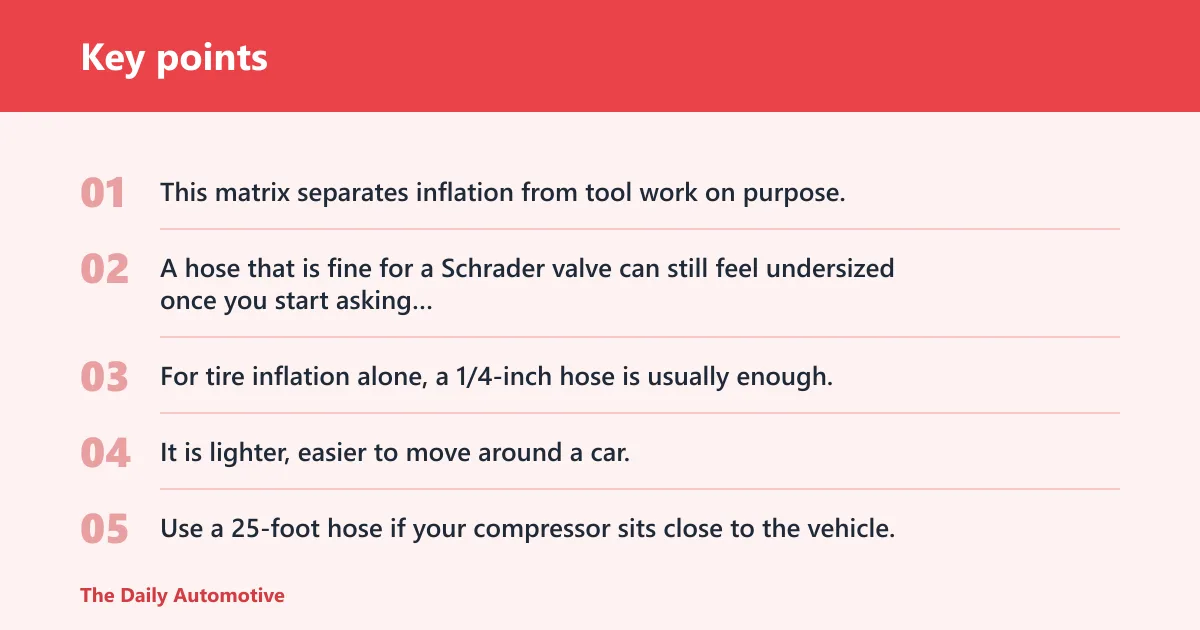
This matrix separates inflation from tool work on purpose. A hose that is fine for a Schrader valve can still feel undersized once you start asking it to feed a wrench, especially if the line is long or stiff.
Tire inflation only
For tire inflation alone, a 1/4-inch hose is usually enough. It is lighter, easier to move around a car, and typically better suited to inflators and small air chucks than a bulky shop hose.
Use a 25-foot hose if your compressor sits close to the vehicle. If you are working around two cars or a larger driveway, 50 feet can be useful, but only if you need the reach.
Occasional impact wrench use
Once you add an impact wrench, the better buy is usually 3/8-inch. That diameter moves more air than 1/4-inch and is the common shop size for compressors and tools that need more flow.
This is where hybrid and rubber hoses pull ahead of PVC. They are less prone to stiffening and usually handle movement around a car better than a basic PVC line.
Cold-garage use
If the hose will live in a cold garage, rubber is the safest material choice, with a cold-rated hybrid close behind. Cold-weather flexibility matters because stiff hose walls can kink, twist, and pull fittings loose right when you need steady inflation.
That is also where reel storage helps. A hose that coils neatly but stays flexible is easier to deploy and less likely to fight the user on a winter morning.
What to look for before you buy
Match the hose to the job first. Tire inflation, a small blow gun, and a pneumatic ratchet do not ask the same thing from a hose, even if the compressor is the same.
Check diameter, material, fittings, and working pressure as a set. A hose with the right diameter but the wrong coupler can still waste time, leak air, or fail to connect cleanly to the inflator or compressor outlet.
Diameter and airflow
Use 1/4-inch when the job is mostly inflation or small tools. Use 3/8-inch when you want more airflow, better hose performance with shop tools, or less pressure drop over longer runs.
A common mistake is buying a longer 1/4-inch hose for an air wrench and expecting it to behave like a shop line. The smaller hose can work, but it is the less forgiving choice when flow demand rises.
Material and flexibility
Hybrid hose is the best all-around material for most car owners because it splits the difference between rubber flexibility and PVC weight. It is a good fit when one hose must handle garage chores, tire inflation, and occasional tool work.
Rubber is still the better call when winter use comes first. PVC is the economical option for light-duty pneumatic tasks, but it is the least appealing choice for cold garages because it tends to stiffen more readily.
Fittings, pressure, and storage
Quick-connect fittings save time, but the connector standard must match both the compressor and the tool. Brass fittings are common because they hold up well and reduce corrosion risk at the coupler.
Schrader valves are standard on car tires, so most car inflators connect without drama. Specialty valves may need adapters, and a 360° rotating tire chuck can help the hose sit naturally instead of twisting at the valve stem.
Storage matters more than many buyers expect. A reel, a hook, or a compact recoil hose changes how often you will actually use the hose, especially in a tight garage where a loose 50-foot line becomes clutter fast.
Failure modes to avoid
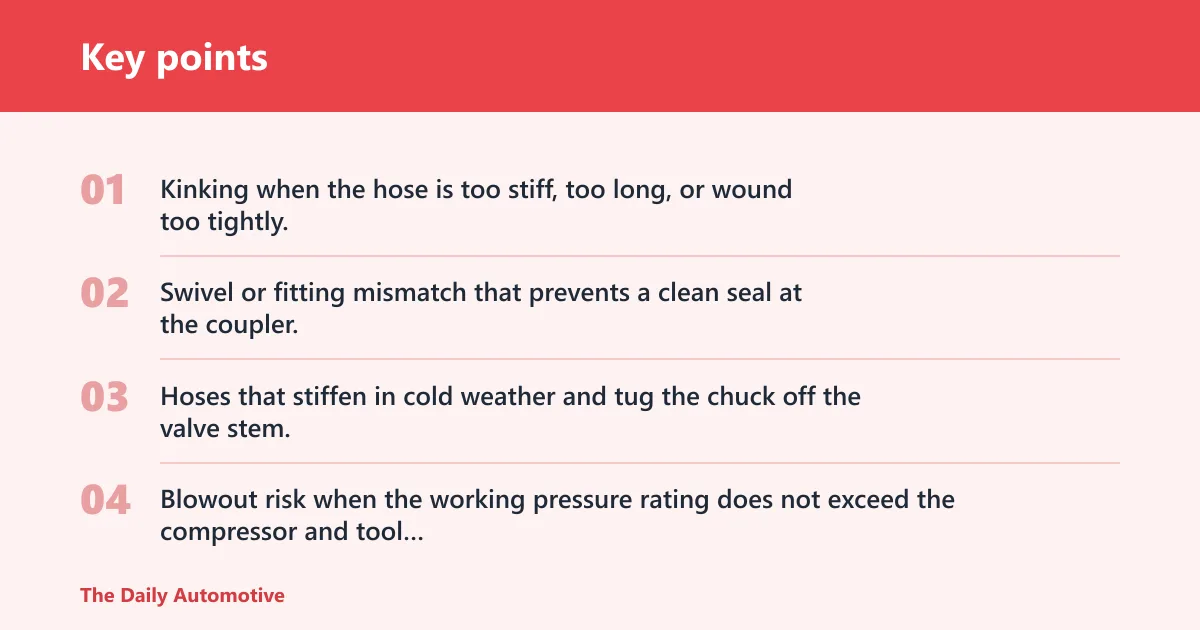
- Kinking when the hose is too stiff, too long, or wound too tightly.
- Swivel or fitting mismatch that prevents a clean seal at the coupler.
- Hoses that stiffen in cold weather and tug the chuck off the valve stem.
- Blowout risk when the working pressure rating does not exceed the compressor and tool needs.
A common first-timer mistake is buying by price alone and ignoring the coupler. A hose can have the right length and diameter, then lose time and air at a poor-fitting quick connect.
Which one should you buy?
If you want one hose for most home-garage automotive jobs, buy the YOTOO hybrid. It gives you the best balance of 3/8-inch airflow, 300 PSI working pressure, and easier handling than a heavier rubber line.
If your garage gets cold and the hose will be used through winter, choose the WYNNsky rubber hose instead. Its flexibility in low temperatures matters more than the extra weight when stiffness is the bigger problem.
If storage space is tight and the hose is mainly for tire inflation, pick the GASHER recoil hose. It gives you compact storage and simple grab-and-go handling, with the clear limit that it is not the best tool hose for sustained airflow.
Say your compressor sits in one corner and your car is parked nose-out in winter. A 50-foot rubber hose is the safer bet if the line has to snake around the car and stay workable in the cold. If the compressor is beside the car and you only inflate tires, a shorter 1/4-inch hose is enough.
Suppose you use an impact wrench a few times a year to rotate wheels. A 3/8-inch hybrid or rubber hose makes more sense than a compact recoil line because the tool needs more flow and the hose needs to stay manageable under load.
Frequently asked questions
What is the best air hose material?
For most drivers, hybrid is the best all-around material because it gives good flexibility, good kink resistance, and better cold-weather behavior than basic PVC. Rubber is better if low-temperature flexibility matters most. PVC is acceptable for light-duty inflation, but it is the least attractive choice for winter use.
What is the best hose to buy?
The best hose to buy for most car owners is a 3/8-inch hybrid hose with brass quick-connect fittings and a working pressure rating that reaches the 300 PSI range. That combination fits tire inflation, occasional light tool use, and garage storage better than a narrow, low-flow inflator hose.
Hybrid air hose vs rubber air hose
Hybrid hoses are usually lighter and easier to move, while rubber hoses are more flexible in cold weather and often feel better for shop-style use. If you want one hose for mixed garage work, hybrid is the broad answer. If winter stiffness is the main concern, rubber is the safer pick.
Air hose rubber vs pvc vs hybrid
Rubber is the most flexible in cold weather, PVC is the lightest and most economical, and hybrid sits between the two for handling and weather behavior. For automotive use, hybrid is usually the best compromise. PVC works for light-duty pneumatic tasks, but it is the weakest option in freezing temperatures.
What size air hose do I need?
If your main job is tire inflation, 1/4-inch is usually enough. If you expect to run air tools, especially an impact wrench, 3/8-inch is the better buy because it carries more airflow. Length matters too, and 25 feet is often enough unless the compressor sits far from the car.
Difference between 1/4 and 3/8 air hose
A 1/4-inch hose is lighter and easier to handle, which suits inflators and small air tools. A 3/8-inch hose flows more air, so it is the common shop choice for compressors and tools that need more volume. For sustained tool use, 3/8-inch is the safer choice.
Hydraulic hose vs air hose
Hydraulic hose is not a substitute for an air hose. The pressure systems, fittings, and intended use are different, so it should not be treated as interchangeable with automotive compressed-air hose. For car inflation and shop tools, choose a hose made and rated for air service.
Products related to this article
Sponsored / affiliate links. As an Amazon Associate I earn from qualifying purchases. I may earn additional commission from eligible campaigns.