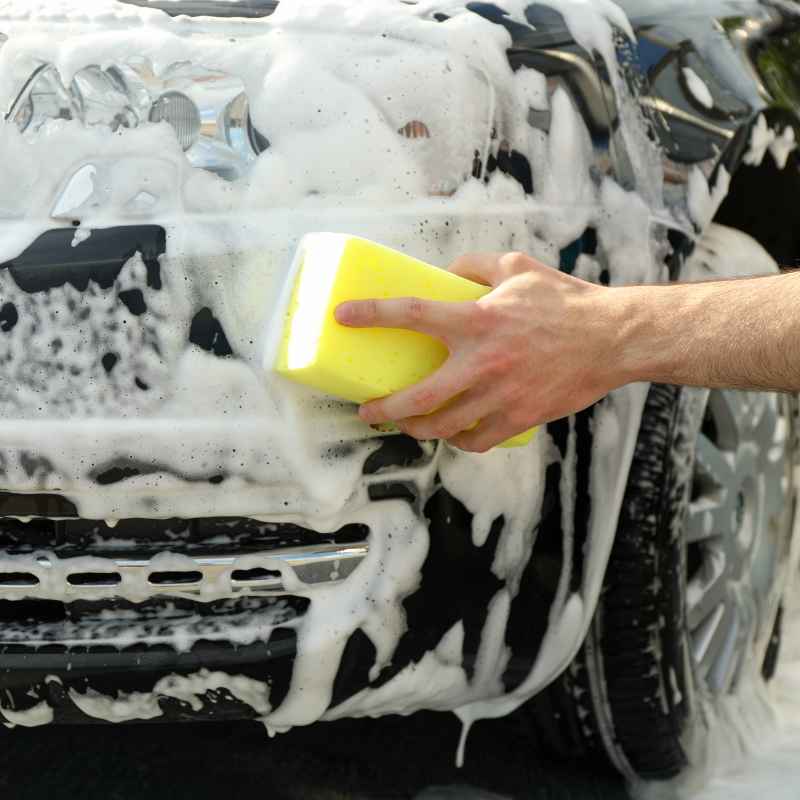
Are Car Washes Tax Deductible? The Answer May Surprise You
The short answer is that car washes are generally not tax deductible for personal use. However, they can be a deductible business expense if they are ordinary and necessary for the operation of your business vehicle and you properly track your mileage and expenses.
Understanding Business Vehicle Expenses
When you use your car for work, there are rules about what you can claim. The IRS wants to make sure you’re only deducting costs directly related to earning income. This means separating your business driving from your personal trips.
It’s a bit like trying to keep your work and home life separate – sometimes it’s easy, and sometimes it needs a clear system.
Think about it: if you’re driving to meet a client, that’s business. If you’re driving to the grocery store for your family, that’s personal. The IRS makes this distinction very important.
For car washes to be deductible, they must fall into the business category. This often means your car wash is part of keeping your business vehicle in good shape for professional use.
When Car Washes Can Be Deductible
So, when exactly can you claim that car wash on your taxes? The key word here is business use. If your car is a tool for your job, then keeping that tool in good working order can be a legitimate business expense.
This applies to most small business owners, freelancers, and those who use their personal car for work purposes.
For example, if you’re a delivery driver, a clean vehicle shows professionalism. If you’re a salesperson who meets clients regularly, a tidy car creates a good impression. In these cases, the cost of a car wash isn’t just about looks; it’s about maintaining the appearance and functionality of your business asset.
The IRS calls these ordinary and necessary expenses. Ordinary means it’s a common expense for businesses like yours. Necessary means it helps your business function.
Most people who use their car for business track their mileage. This is usually done using the standard mileage rate or by tracking actual vehicle expenses. If you track actual expenses, then costs like gas, oil changes, repairs, insurance, and yes, even car washes, can be added up.
This is where it gets a bit more involved. You need to keep good records.
The Importance of Record-Keeping
This is where many people get tripped up. The IRS doesn’t just take your word for it. You need proof.
This means keeping detailed logs and receipts. For car washes, that means saving the receipt. But it’s more than just the receipt for the wash itself.
You need to tie it back to your business use.
A good system is to keep a mileage log. This log should show the date, your starting and ending odometer readings, the total miles driven, and the purpose of the trip. If a trip was for business, note that.
If you’re tracking actual expenses, you’ll want a separate record for all your car-related bills. This could be a spreadsheet or a dedicated app.
For car washes, you’d add that expense to your list of vehicle costs for the year. Make sure the business trips where you got the car washed are noted in your mileage log. This helps create a clear link between the expense and your business activities.
Without this documentation, the IRS could disallow the deduction if they ever ask to see your records.
Key to Deducting Car Washes:
- Business Use Only: The car must be used for work.
- Ordinary and Necessary: The expense must be common in your industry and help your business.
- Record-Keeping: Save all receipts and maintain a mileage log.
- Proper Tracking Method: Use either the standard mileage rate or the actual expense method.
Methods for Deducting Vehicle Expenses
When it comes to deducting car expenses, there are two main ways the IRS lets you do it: the standard mileage rate and the actual expense method. You have to choose one for the year, and you can’t switch back and forth on a whim.
Standard Mileage Rate
This is often the simpler method. The IRS sets a rate per mile you can deduct for business driving. For 2024, this rate is 67 cents per mile.
So, if you drive 10,000 business miles, you can deduct $6,700. This rate covers gas, oil, insurance, maintenance, and depreciation. The beauty of this method is that you don’t need to track all those individual repair bills or gas receipts.
However, if you use the standard mileage rate, you generally cannot deduct the cost of car washes separately. That’s because the rate is meant to cover all those day-to-day running costs. Think of it as a simplified way to get a deduction without itemizing every little thing.
Actual Expense Method
This method requires more work but can sometimes lead to a larger deduction. You track all the costs of operating your car for the year. This includes gas, oil, repairs, maintenance, tires, insurance, registration fees, and lease payments (if you lease your car).
It also includes things like car washes.
You then calculate the percentage of your total mileage that was for business. For example, if you drove 20,000 miles total and 15,000 of those were for business, you can deduct 75% of your total car expenses. So, if your total car expenses were $5,000, you could deduct $3,750.
If you choose this method, then yes, the cost of car washes that are for your business vehicle can be included in your total expenses. You just need to keep those receipts and ensure they align with your business use.
Choosing Your Deduction Method
Standard Mileage Rate:
- Pros: Simple, less record-keeping for individual expenses.
- Cons: May result in a smaller deduction. Car wash costs are included in the rate.
Actual Expense Method:
- Pros: Can lead to a larger deduction, allows itemized expense tracking.
- Cons: Requires meticulous record-keeping for all costs.
Important Note: You generally can’t deduct car washes if you use the standard mileage rate.
What is “Ordinary and Necessary”?
This is a crucial concept from the IRS. For an expense to be deductible, it must be both ordinary and necessary. Let’s break these down in plain English.
Ordinary means that the expense is common and accepted in your trade or business. For example, a plumber needs tools, and a baker needs ingredients. For someone who uses their car to meet clients, a car wash could be considered ordinary.
It’s not some strange, unusual expense that nobody else in your field would incur.
Necessary means that the expense is helpful and appropriate for your business. It doesn’t have to be indispensable, but it should contribute to your business operations. Keeping your business vehicle clean can be helpful.
It can create a positive image for your company and help maintain the vehicle’s condition, which is certainly appropriate.
So, a car wash for your business car likely fits both criteria. However, the IRS might question an excessive number of car washes. Washing your car every single day might seem a bit much, even for business.
A reasonable frequency, tied to the nature of your business and how often you use the car for client-facing activities, is key.
In a home office setting, if your car is primarily used for business-related travel, then washing it makes sense. If it’s mostly parked in your garage and only used for occasional business trips, it’s still potentially deductible, but you’ll want to be ready to explain why.
Personal Use vs. Business Use: The Big Divide
This is the absolute most critical part. The IRS is very strict about separating personal expenses from business expenses. You cannot deduct the cost of a car wash if you got it for personal reasons.
Think of it this way: the IRS isn’t going to pay for you to look good on your weekend getaway.
If you use your car for both personal and business purposes, you can only deduct the business portion of your car wash expenses. This ties back to keeping good records. If you drive 10,000 miles a year for business and 5,000 miles for personal trips, and you get a car wash, you can only deduct 2/3rds of that car wash cost (10,000 business miles / 15,000 total miles = 2/3rds).
This applies if you are using the actual expense method.
It’s vital to be honest and accurate with this distinction. Trying to sneak personal expenses into your business deductions can lead to penalties and interest if you’re audited. It’s much better to be conservative and keep your personal driving costs separate.
Many tax professionals recommend a dedicated business vehicle if possible. However, for many small business owners and freelancers, using a personal vehicle is the reality. This is why diligent record-keeping is non-negotiable.
Quick Check: Is This Business or Personal?
Scenario 1: You drove to a client’s office, then got your car washed before heading home. Likely Business.
Scenario 2: You drove to the grocery store, then decided to get your car washed on the way back. Likely Personal.
Scenario 3: You took your car to a car wash and detail shop for a full cleaning before a big industry conference where you’ll be representing your company. Likely Business.
Scenario 4: You got your car washed because your kids were tracking mud all over the interior after a muddy park visit. Likely Personal.
Real-World Scenarios and How They Play Out
Let’s look at a couple of scenarios to see how this works in practice. These are common situations many people find themselves in.
Scenario A: The Freelance Graphic Designer
Sarah is a freelance graphic designer. She works from her home office but frequently meets clients in person to discuss projects. She uses her reliable sedan for all these client meetings.
She’s very conscious of her image and believes a clean car reflects her professionalism.
Sarah chooses to use the actual expense method for her vehicle. She diligently tracks all her car-related costs: gas, insurance, maintenance, and registration fees. She also keeps a detailed mileage log, noting the purpose of each trip.
When she drives to a client meeting and then gets her car washed, she saves the receipt and logs it as a business expense.
Her reasoning is that a clean car makes a good impression, which is vital for landing and keeping clients. It’s an ordinary and necessary expense for her business. She calculates her business-use percentage each year.
If her business mileage is 70% of her total mileage, she can deduct 70% of her car wash costs.
Scenario B: The Gig Economy Delivery Driver
Mark delivers food for a living. His car is his primary tool. He drives hundreds of miles a week, often through various weather conditions.
He knows his car needs to look presentable, and he also wants to protect the paint from dirt and grime that can cause damage.
Mark decides to use the standard mileage rate because it’s much simpler. He keeps a meticulous mileage log. Since the standard mileage rate includes all operating costs, he doesn’t track individual expenses like gas or car washes.
For Mark, the car wash costs are already factored into that per-mile deduction.
If Mark switched to the actual expense method, he could then deduct car washes as a business expense. But for him, the simplicity of the standard rate is worth more than the potential extra deduction for car washes, especially considering the record-keeping hassle.
Scenario C: The Occasional Business Traveler
Emily works a regular office job but also does some occasional consulting on the side. She uses her personal car for both her main job commute and her consulting trips. Her consulting work is sporadic, maybe one or two trips a month.
She rarely gets her car washed unless it’s for a personal event.
For Emily, the car washes she gets are mostly for personal reasons. If she were to get a car wash specifically before a consulting meeting, she could potentially deduct a portion of it if she were using the actual expense method. However, because her business use is so minimal, she likely finds it easier and more straightforward to just not deduct car washes at all.
The effort of tracking and justifying might outweigh the small deduction.
This highlights that the context of your business and your driving habits are key. What’s deductible for one person might not be for another, even if they’re in a similar field.
Car Wash Deductions: Quick Scan Table
| Situation | Deductible? | Reasoning | Method Needed |
| Car wash before client meeting | Yes (potentially) | Ordinary and necessary for business image. | Actual Expense Method + good records |
| Car wash for personal errands | No | Purely personal expense. | N/A |
| Using standard mileage rate | No | Costs are bundled into the mileage rate. | Standard Mileage Rate (no separate deductibles) |
| Car wash as part of regular business upkeep | Yes (potentially) | Maintains business asset. | Actual Expense Method + good records |
| Excessive car washes (e.g., daily) | Unlikely | May be deemed not ordinary or necessary. | N/A |
Other Vehicle Expenses You Can Deduct
If you’re using the actual expense method, or even if you’re not, it’s good to know what other vehicle-related costs might be deductible. These are generally more straightforward than car washes.
- Gas and Oil: The cost of fuel to run your car.
- Maintenance and Repairs: Oil changes, tire rotations, brake jobs, fixing a flat tire.
- Tires: The cost of new tires when you need them.
- Insurance: The premiums you pay for your car insurance.
- Registration Fees: The annual cost to register your vehicle with your state.
- Lease Payments: If you lease your vehicle, the monthly payments are a deductible expense.
- Depreciation: This is a way to recover the cost of your car over time if you own it. It’s a bit more complex, but it’s a significant deduction for business owners.
Remember, if you’re using the standard mileage rate, most of these costs are already covered by the per-mile deduction. However, certain taxes related to operating your vehicle might still be deductible even with the standard mileage rate. It’s always best to check the latest IRS guidelines or consult a tax professional.
The key is always the business use percentage. If you use your car 80% for business, you can generally deduct 80% of these eligible expenses if you’re using the actual expense method.
What can often be included if using the actual expense method:
- Fuel: Gas, diesel, or even electricity for electric vehicles.
- Maintenance: Regular servicing like oil changes and tune-ups.
- Repairs: Fixing unexpected problems like a broken exhaust or a new alternator.
- Tires: Replacing worn-out tires.
- Insurance: Your auto insurance policy premiums.
- Registration/License Fees: State and local fees to operate your car.
- Lease Payments: For those who lease their business vehicles.
- Depreciation: For owned vehicles, a way to account for wear and tear over time.
When to Worry: Red Flags for Deductions
While car washes might be a minor expense, overstating any business deduction can raise eyebrows with the IRS. Here are a few things that might make the IRS question your car wash deduction:
- No Records: This is the biggest red flag. If you claim a deduction but have no receipts or logs to back it up, it’s very likely to be denied.
- Inconsistent Use: If your mileage log shows very little business use but you’re claiming frequent car washes, it looks suspicious.
- Personal-Tied Trips: Claiming car washes done on days you were clearly on personal errands (like a family vacation) is a major no-no.
- Excessive Amounts: Claiming an unreasonably high number of car washes for the type of business you conduct.
It’s important to be practical. If you’re a busy consultant who drives a lot for business, a few car washes a month might be perfectly reasonable. If you’re an office worker who only drives to the office and back, and maybe one client meeting a month, daily or weekly car washes would be hard to justify.
The IRS is not trying to trick you, but they do want to ensure fairness. They audit to make sure people are paying what they owe. Maintaining clear, honest records is your best defense against any potential issues.
Simple Checks and Best Practices
So, how can you make sure you’re doing it right? Here are some straightforward tips to keep in mind:
- Choose Your Method Wisely: Decide whether the standard mileage rate or the actual expense method works best for you before the tax year begins.
- Keep a Mileage Log: This is non-negotiable for business driving. Use a notebook, a spreadsheet, or a dedicated app. Record date, starting/ending odometer, total miles, and purpose.
- Save ALL Receipts: For gas, maintenance, repairs, insurance, registration, and car washes (if using actual expenses).
- Separate Personal and Business: Try to keep your personal car use separate from your business use. If you must mix them, be prepared to calculate the business percentage accurately.
- Be Reasonable: Deduct expenses that are truly ordinary and necessary for your business. Don’t try to claim everything under the sun.
- Consult a Professional: If you’re unsure about any aspect of vehicle deductions, talk to a qualified tax advisor or CPA. They can offer personalized guidance.
I remember a time early in my freelancing career when I was so focused on getting new clients, I barely paid attention to my expenses. I’d get car washes to look good for meetings, but I just threw the receipts in a shoebox. When tax time came, I realized I had no idea what was deductible or how to prove it.
It was a stressful lesson in the importance of keeping good records from the start. Now, I use a simple app for my mileage and keep digital copies of all receipts. It makes tax time so much less of a headache!
Frequently Asked Questions About Car Wash Deductions
Can I deduct car washes if I use the standard mileage rate?
No, generally you cannot deduct car washes separately if you choose to use the standard mileage rate. The IRS states that this rate includes costs such as gas, oil, repairs, insurance, and depreciation. Car washes are considered part of these operating costs.
What if I only use my car for business? Is a car wash deductible then?
If your car is used 100% for business and you are using the actual expense method, then yes, car washes can be deductible. You would still need to keep records and ensure the expense is ordinary and necessary for your business operations.
How often can I get my car washed and claim it as a business expense?
The frequency depends on what is considered ordinary and necessary for your business. If you frequently meet clients or operate in conditions that quickly soil your vehicle (like construction sites), more frequent washes might be justified. However, daily or excessive washing could be questioned by the IRS.
Do I need a separate business car to deduct car washes?
No, you don’t necessarily need a separate business car. Many freelancers and small business owners use their personal vehicle. However, if you do mix personal and business use, you must carefully track your mileage and expenses to determine the deductible business portion.
What kind of records do I need to keep for car wash deductions?
You need to keep receipts for every car wash you claim. Crucially, you also need a mileage log that shows the date, purpose, and miles driven for each business trip. This links the car wash expense to your business activities.
Is there a maximum dollar amount I can deduct for car washes?
There isn’t a specific dollar limit set by the IRS for car washes. However, the deduction must be reasonable and directly tied to your business use. If you claim an unusually high amount compared to your business mileage or income, it could trigger an audit.
Conclusion: Clarity on Car Wash Deductions
So, the answer to whether car washes are tax deductible is often, “it depends.” It hinges on how you use your vehicle and how you track your expenses. For many, the simplicity of the standard mileage rate means car washes are a personal expense. But for those using the actual expense method, keeping a clean business vehicle can indeed be a legitimate deduction, provided you have meticulous records.
Always remember to separate personal and business use. And when in doubt, consult a tax professional. Good record-keeping is your best friend when it comes to navigating tax deductions like these.
Keep those receipts and log your miles!
Products related to this article
Sponsored / affiliate links. As an Amazon Associate I earn from qualifying purchases. I may earn additional commission from eligible campaigns.