Sea Foam Motor Treatment Review: Worth It or Not?
Sea Foam Motor Treatment is worth using for light fuel-system cleanup, upper-cylinder lubrication, and stabilizing stored fuel, but it is not the best choice for severe injector, intake-valve, or oil-sludge problems. Used where it cannot reach the problem, it wastes money and can delay the right repair. This review maps each Sea Foam use case to the issue it can realistically address and flags the jobs where a dedicated cleaner is the better pick.
This guide is part of our Car engine troubleshooting guide series.
Verdict

Based on the manufacturer’s specs, published product details, and buyer feedback, Sea Foam is a broad maintenance additive rather than a narrow repair chemical. That is its strength and its limit. If your goal is keeping a healthy engine cleaner between services, it makes sense. If your goal is fixing a real fault, it is the wrong tool.
Pros and cons
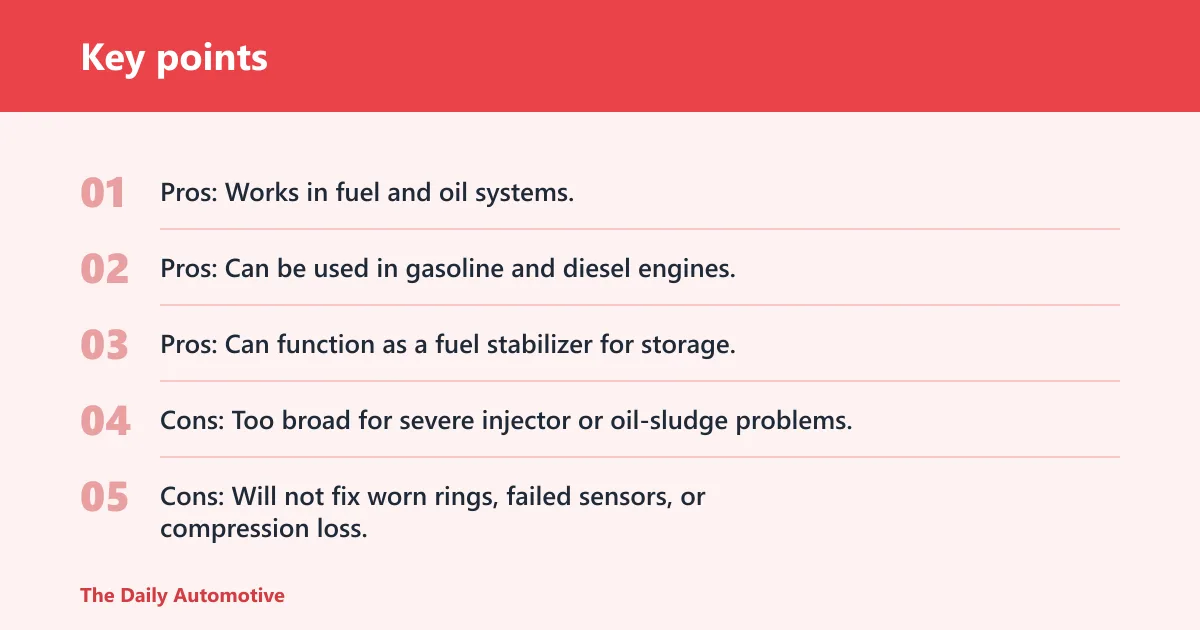
- Pros: Works in fuel and oil systems.
- Pros: Can be used in gasoline and diesel engines.
- Pros: Can function as a fuel stabilizer for storage.
- Cons: Too broad for severe injector or oil-sludge problems.
- Cons: Will not fix worn rings, failed sensors, or compression loss.
- Cons: A dedicated cleaner can be a better buy for one narrow issue.
Who it’s for
This fits DIY owners who want a single maintenance product for mild fuel-system deposits, seasonal storage, or light crankcase cleanup. It also fits high-mileage engines that still run normally but show small issues such as rough idle or harder starts. It does not suit owners expecting a chemical fix for a mechanical fault.
Say your lawn tractor sits for four months with fuel in the tank. Sea Foam’s storage role is a reasonable match because the goal is to slow fuel degradation, not to repair a bad carburetor. Suppose a 180,000-mile pickup has a slight stumble after sitting overnight. Sea Foam may help if deposit buildup is part of the problem, but it will not cure a misfire from a bad coil or injector circuit.
Specs at a glance
| Item | Sea Foam Motor Treatment |
|---|---|
| Product type | Fuel and oil additive |
| Compatibility | Gasoline and diesel engines |
| Main use paths | Fuel tank, crankcase, storage fuel |
| Claimed actions | Cleans, lubricates, stabilizes fuel |
| Fuel-system targets | Injectors, carburetors, intake valves, pistons, chamber areas |
| Oil-system targets | Oil flow, lubrication, deposit removal |
| Related variants | Sea Foam Spray, Sea Foam High Mileage, IC5 Fuel Injector Cleaner |

Who it
Sea Foam Motor Treatment is for owners who want a broad, no-fuss additive for routine maintenance. The product is made from petroleum ingredients, can be poured in directly, and is positioned to work in both fuel and oil systems. That makes it attractive for people who want one bottle to cover several mild problems.
It is less useful when the issue is narrow. A clogged injector set, heavy varnish in a carburetor, thick oil sludge, or a hard-start caused by compression loss needs a more specific product or a repair. Sea Foam can support maintenance. It should not be expected to reverse worn hardware.
Who should pass?
- Owners chasing a severe misfire with no diagnostic work done.
- Engines with obvious oil sludge that need a proper flush approach.
- Drivers who need a dedicated injector cleaner for one fuel-system fault.
- Anyone hoping an additive will restore worn rings or a failing sensor.
What works
Sea Foam’s strongest case is light maintenance, not rescue work. Sea Foam says it works in fuel and oil systems, and the brand says it helps clean critical engine areas by removing deposits from fuel passageways, injectors, carburetors, intake valves, pistons, and chamber areas.
In practical terms, that means it is aimed at deposit control in places fuel can reach. If rough idle, hard starting, or a slight loss of power are tied to light buildup, the additive may be a fair first step. If those symptoms come from a bad sensor, vacuum leak, weak ignition, or compression problem, Sea Foam will not address the root cause.
Fuel-system use
Fuel tank use is the main path for injectors, carburetors, intake valves, pistons, and chamber areas. That is the best fit when the engine still runs and the concern is upkeep rather than a major fault. Sea Foam says it helps remove deposits in these areas and can be used in both gasoline and diesel engines.
That broad compatibility matters, but it also shows the limit. A general additive can help with mild contamination across the fuel path. It is not as targeted as a cleaner built mainly for injector deposits, and it will not reach every cause of a rough idle.
Oil-system use
Sea Foam is also used in the crankcase. The brand says it works in oil systems, helps with oil flow and lubrication, and can help remove deposits. That makes it a maintenance aid for light cleanup rather than a cure for heavy sludge.
Use that distinction carefully. If the oil looks dirty and the engine has modest deposit buildup, the product can be a reasonable maintenance choice. If the engine has thick sludge, blocked oil returns, or oil pressure problems, a flush product and diagnosis come first.
Fuel stabilizer use
Sea Foam is marketed as a fuel stabilizer. The brand says it helps stabilize stored fuel, reduce evaporation, preserve ignition vapors, and help prevent gum and varnish formation in fuel systems. That makes it useful for seasonal storage, lawn equipment, boats, and other engines that sit.
This is where Sea Foam can be a better buy than a cleaning-only product. If storage is the issue, the goal is preservation, not aggressive cleaning. A fuel stabilizer is the right category, and Sea Foam fits that job.
What does not?
Sea Foam does not fix mechanical damage. It is not meant to restore worn rings, seal a burned valve, correct a bad crank sensor, clear a plugged catalytic converter, or recover lost compression. Those are not additive problems.
It also falls short when a symptom points to one narrow fault. A rough idle caused by a failing injector can call for a dedicated injector cleaner. A crankcase with heavy sludge often needs a flush product or mechanical service. Using a general additive in those cases may give only a small or temporary change.
A common first-timer mistake is pouring in a bottle and expecting a dramatic transformation after one tank. If the engine has a check-engine light, misfire codes, or fuel trim issues, start with diagnosis. Additives are for maintenance and mild contamination. They are not a shortcut around testing.
Sea Foam decision table
| Symptom | Likely cause | Sea Foam fit | Better alternative | Risk note |
|---|---|---|---|---|
| Rough idle after long storage | Light fuel varnish or deposit buildup | Good fit in fuel tank | Dedicated injector cleaner if one injector is suspected | May not help if the cause is ignition or vacuum-related |
| Hard starting on a seasonal mower | Stale fuel or gum in the fuel system | Good fit as a stabilizer and cleaner | Fresh fuel plus a stabilizer made for storage | Old fuel that is already badly degraded may need draining |
| Light oil burning | General wear or deposits | Limited fit in crankcase use | Mechanical diagnosis, leak checks, compression test | Will not repair worn rings or seals |
| Loss of power with clean fuel and air filters | Possible deposit buildup or non-additive fault | Possible only if deposits are the issue | Scan for codes; use a targeted cleaner if injectors are dirty | Easy to waste money if the fault is electrical or mechanical |
| Heavy oil sludge | Extended oil neglect or severe contamination | Poor fit | Flush product and service plan | General additives are too mild for severe sludge |
| One known dirty injector | Fuel-system contamination at injector level | Okay, but broad | IC5 Fuel Injector Cleaner | Dedicated cleaner is more focused and often the better buy |
What is sea Foam Motor Treatment?
Sea Foam Motor Treatment is a fuel and oil additive. Sea Foam says it works in fuel and oil systems, can be used in gasoline and diesel engines, and is positioned as something you can pour in directly. It is meant for maintenance jobs, storage support, and light cleanup rather than repairs.
That broad positioning is the main reason shoppers consider it. It can cover more than one maintenance task, but it also means it is not specialized. If your issue is narrow, a dedicated product can be the smarter purchase.
Does Sea Foam motor treatment work?
Sea Foam can work when the problem is light deposit buildup, stale fuel, or general maintenance on a running engine. It is most believable where the symptom matches the product’s reach: fuel-system cleanup, light oil-system cleanup, or storage stabilization. It is much less convincing for heavy contamination or hardware faults.
So the right question is not whether it works in the abstract. The useful question is whether your symptom fits a fuel-additive or oil-additive job. If it does, Sea Foam is reasonable. If it does not, spend the money on diagnosis or a more targeted cleaner.
Is Sea Foam motor treatment safe?
Used as directed and in the right system, Sea Foam is generally treated as a maintenance additive rather than a harsh solvent. The safety issue is mostly about fit, dose, and expectation. It belongs in the fuel tank for fuel cleaning and storage, and in the crankcase only when that use is appropriate for the engine and service goal.
Do not use it as a shortcut for severe engine problems. If the engine has low oil pressure, active misfires, a contaminated catalyst, or fuel system damage, stop and diagnose first. Safety is not only about chemistry. It is also about not masking a bigger fault.
How do you use sea Foam motor treatment?
The basic approach is simple: use it in the fuel tank for fuel-system cleaning and stabilization, or in the crankcase for oil-system cleanup where appropriate. Sea Foam is marketed to be poured in directly, which keeps the process straightforward for DIY owners.
Use the product for the problem in front of you. Fuel tank use is for injectors, carburetors, intake valves, and chamber areas. Crankcase use is for light oil flow and deposit concerns. Storage use is for evaporation control and gum prevention. Do not mix up those goals.
Basic application steps
- Confirm whether the issue is fuel, oil, or storage related.
- Choose the fuel tank or crankcase path, not both by default.
- Use it for mild contamination, not severe sludge or mechanical faults.
- Drive or run the engine long enough for the treated fluid to circulate.
- Recheck the symptom before buying a second bottle.
Can Sea Foam be used in oil and fuel?
Yes. Sea Foam says it works in fuel and oil systems. That dual use is a major part of the product’s appeal, and it is one reason it shows up on so many DIY shopping lists. It can be used as a fuel additive, an oil additive, and a fuel stabilizer.
Still, dual use does not mean universal use. If the fuel side needs injector-specific cleaning, or the oil side needs a flush for sludge, a more targeted product is the better choice. Broad compatibility is useful. It is not a guarantee that the bottle is the best answer.
Does Sea Foam help rough idle and hard starting?
It can help when rough idle and hard starting come from light deposits, stale fuel, or varnish in the fuel path. Sea Foam says it helps reduce rough idle and hard starting, and those are believable maintenance targets when the engine is otherwise healthy. It is less helpful when the issue is ignition, air, or compression.
Picture a sedan that sat for six weeks and now starts, then stumbles for a few seconds at idle. Sea Foam is a reasonable first pass because storage-related fuel quality may be part of the problem. If the idle stays rough after that, move to diagnosis instead of repeating the bottle.
Is Sea Foam good for high-mileage engines?
Sea Foam High Mileage is the variant aimed at older engines and wear-related maintenance needs. That makes sense for engines with light deposit buildup, minor oil consumption, or upkeep concerns that do not yet call for repair. It is not a fix for worn internals.
For a high-mileage engine that still runs well, the appeal is modest cleanup and maintenance. For a high-mileage engine with obvious blue smoke, persistent misfire, or compression loss, the answer is diagnosis and repair, not a stronger additive.
Alternatives

Chevron Techron Concentrate Plus Fuel System Cleaner is the better pick when injector and fuel-system cleaning is the main goal. Compared with Sea Foam, it is more narrowly focused on fuel delivery cleanup. That focus is its advantage, but it is also its limit: it is not the same broad fuel-and-oil maintenance tool, and it is not a storage stabilizer.

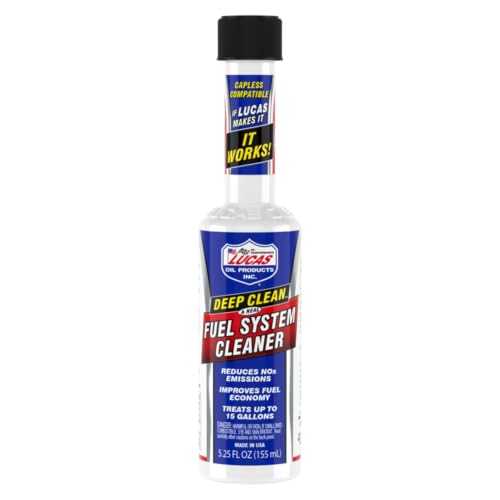
Lucas Oil 10003 Fuel Treatment is a practical alternative if you want a gasoline-and-diesel fuel treatment with injector and carburetor cleaning in mind. It also leans into lubrication. The drawback is the same one that applies to many broad additives: it is still a general fuel treatment, so it may be less useful than a dedicated cleaner for a single stubborn injector problem.
Sea Foam SF-16 Motor Treatment – 16 oz, White (Pack of 2) is the main buy if you want the brand’s own multi-use additive in a two-bottle pack. That package is convenient for repeat maintenance or multiple machines. The drawback is that it remains a general product, so buyers with a narrow injector or sludge issue may get better value from a targeted cleaner or flush.
Should you buy it?
Buy Sea Foam if you want a broad maintenance additive for mild fuel deposits, light oil-system cleanup, or fuel storage. Skip it if you are dealing with a clear one-problem job such as a dirty injector, heavy sludge, or a mechanical fault that needs diagnosis. That is the cleanest way to think about value.
For many DIY owners, the best use is preventive, not dramatic. Use it before an engine gets worse. If you already know the problem is narrow, spend the money on the narrower product.
Frequently asked questions
Is sea foam motor treatment safe: it is generally used?
It is generally used as a maintenance additive when applied in the correct system and for the right job. The key is not to treat it like a universal fix. Use it where the fuel or oil path is the issue, and stop if the engine shows signs of a deeper mechanical or electrical fault.
Products related to this article
Sponsored / affiliate links. As an Amazon Associate I earn from qualifying purchases. I may earn additional commission from eligible campaigns.