What Are the Best Car Care Products?
A common starter set includes a pH-neutral wash soap, microfiber wash mitt, wheel cleaner, interior cleaner, glass cleaner, and a spray sealant; many owners may only need about five products to cover routine cleaning and protection. Buy the wrong products and you waste money on bottles that do the wrong job, leave streaks, or protect paint poorly. This guide ranks top picks by job and shows the smallest effective exterior, interior, and protection kit.
Top pick by use case


The strongest first buy for most owners is a pH-neutral shampoo paired with a microfiber wash mitt, because that combination cleans safely, fits bucket washing, and does not push you into specialty products too early. Add a glass cleaner and a wheel cleaner next. Protection comes after the wash method is sorted.
What belongs in the first cart
Start with about one shampoo, one mitt, one wheel cleaner, one glass cleaner, and one interior cleaner. That set handles the mess you see most often: road film, brake dust, fingerprints, dust on trim, and dirty glass. If the car is driven weekly, a spray sealant or ceramic spray is often a better fit for the second purchase rather than the first.
What to skip for now
Skip duplicate wash soaps, two types of wax, a foam cannon if you only have a bucket, and any trim dressing marketed as a cure-all. If your car is coated, skip harsh wheel acids unless the label clearly says they are safe for coated rims. If your car has matte paint, skip glossy cleaners that leave residue.
Quick picks by job
For routine buying, choose products by the task they solve, not by brand wall space. Match the product to the surface and wash method, and you avoid most streaking, marring, and wasted overlap.
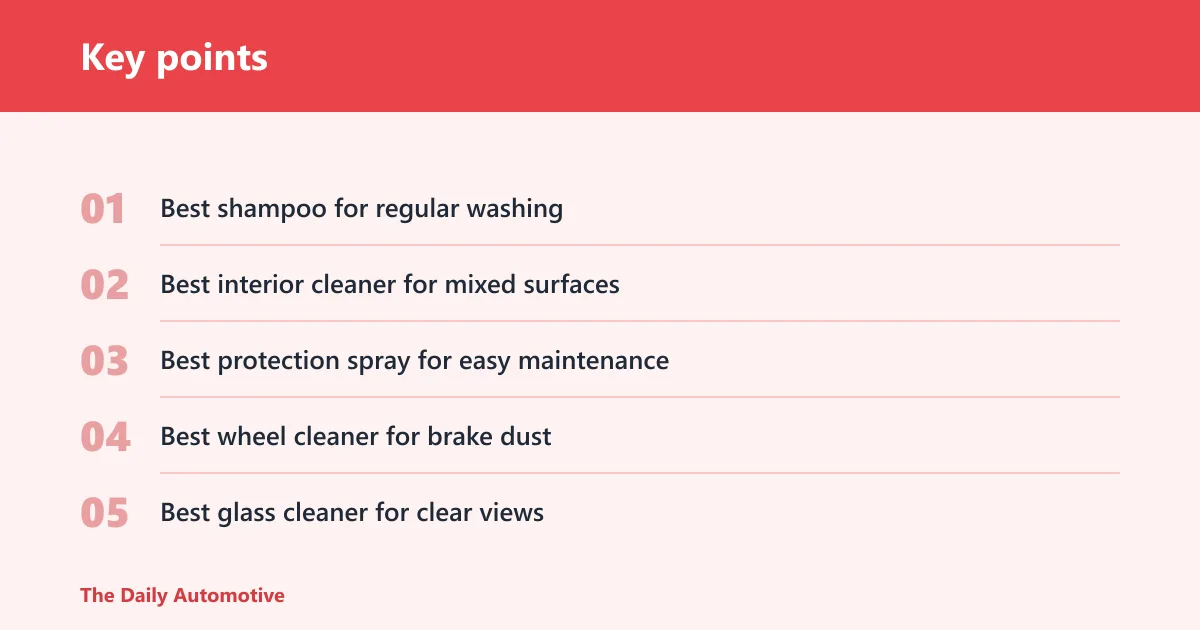
- Best shampoo for regular washing: pH-neutral low-foam shampoo for bucket washing and safe paint cleaning.
- Best interior cleaner for mixed surfaces: multi-surface interior cleaner labeled for dashboard and trim compatibility.
- Best protection spray for easy maintenance: ceramic spray or spray sealant for hydrophobic protection between washes.
- Best wheel cleaner for brake dust: pH-neutral wheel cleaner for routine use on alloy and coated rims.
- Best glass cleaner for clear views: fast-evaporating glass cleaner that leaves windows and mirrors streak-free.
Best shampoo for regular washing
Choose a pH-neutral shampoo unless you need a wash-and-protect formula. Low-foam products suit bucket washing because they rinse clean and are easier to manage on paint. Foam-cannon soaps are different: they are built for pre-wash coverage, not for replacing contact washing.
Best interior cleaner for mixed surfaces
Pick an interior cleaner that works on dashboard, vinyl, and trim, then check whether it is safe for fabric and leather. Sanitizing claims should be treated carefully; the label should name the intended surface and any dwell time. Strong cleaner, wrong surface, and you can haze trim or dry leather.
Best protection spray for easy maintenance
For low-effort protection, a ceramic spray is the better long-life buy. It leaves a hydrophobic layer, works as a spray-on product, and is meant for maintenance washing. A quick detailer is faster and lighter, but it is mainly for light dust removal and gloss boost.
Best wheel cleaner for brake dust
Use a wheel cleaner matched to rim material. pH-neutral is the safer default for alloy, painted, or coated rims. Acidic formulas can help with stubborn grime, but only when the label says they are approved for the wheel finish. Gel and spray formats both work; gel clings longer.
Best glass cleaner for clear views
A good glass cleaner should evaporate fast and leave no film on windows or mirrors. Interior glass usually needs the same product as exterior glass, but less liquid. Over-application causes streaks. Use a clean microfiber towel and a second dry towel if the first pass leaves lint.
Car care buying matrix
This matrix ranks the core products by job-to-be-done, not by shelf popularity. Scores use a 1 to 5 scale, where 5 indicates the strongest rating for that column. Cost per use is shown qualitatively because label size, dilution, and wash frequency change the math quickly.
| Product | Cleaning power | Protection | Ease of use | Streaking or marring risk | Best use case and cost per use |
|---|---|---|---|---|---|
| pH-neutral car wash shampoo | 4 | 2 | 5 | Low | Routine paint washing; low cost per use when diluted correctly |
| Wash-and-protect shampoo | 4 | 3 | 4 | Low to medium | Weekly washing when you want light beading without a separate protectant |
| Microfiber wash mitt | 3 | 1 | 5 | Low | Bucket wash contact step; very low cost per use over many washes |
| Foam cannon | 3 | 1 | 3 | Very low | Pre-wash coverage with pressure washer; best when dirt is heavy |
| Quick detailer | 2 | 2 | 5 | Medium | Light dust removal and gloss between washes; low product use per detail |
| Ceramic spray | 2 | 5 | 4 | Low to medium | Longer-lasting spray protection on maintained paint; moderate cost per use |
| Traditional wax | 1 | 3 | 3 | Low | Gloss-focused protection on garage-kept or enthusiast cars; higher labor per use |
| Glass cleaner | 4 | 1 | 5 | Low | Windows and mirrors; very low cost per use |
| Interior cleaner | 4 | 1 | 4 | Medium | Dashboard, trim, and cabin touch points; moderate cost per use |
| Wheel cleaner | 5 | 1 | 4 | Medium | Brake dust removal on alloy or coated wheels; cost per use varies by contamination |
| Microfiber towels | 2 | 1 | 5 | Low | Drying, glass, interior, and buffing; low cost per use if washed properly |
| Bucket and grit control | 2 | 1 | 4 | Very low | Wash-bucket setup that lowers dirt transfer; one-time buy with long service life |
What should you buy first?
For most owners, the first cart should cover washing, wheel cleaning, glass, and the cabin. The first protection buy can wait until the wash process is consistent. That order keeps you from buying a wax, ceramic spray, and quick detailer before you own a safe wash setup.
Beginner minimal kit
- pH-neutral car wash shampoo
- Microfiber wash mitt
- Two buckets, ideally with a grit guard
- Glass cleaner
- Interior cleaner
- Wheel cleaner
Enthusiast kit
- Everything in the beginner kit
- Quick detailer for light dust and gloss
- Ceramic spray for longer maintenance protection
- Foam cannon if you already own a pressure washer
- Separate drying towels and extra glass towels
Ceramic-coated car kit
- Maintenance shampoo compatible with coatings
- Microfiber wash mitt
- Ceramic spray or coating topper approved for maintenance washing
- pH-neutral wheel cleaner
- Glass cleaner for interior and exterior glass
Redundant buys to avoid
A quick detailer and a ceramic spray are not the same purchase. A foam cannon and a good shampoo are not the same thing either. If your car is lightly used and garaged, a heavy wax stack can be redundant. A separate cleaner for every surface is also overkill unless the surfaces are genuinely different, such as leather, fabric, and soft-touch trim.
Best car wash shampoo and wash tools
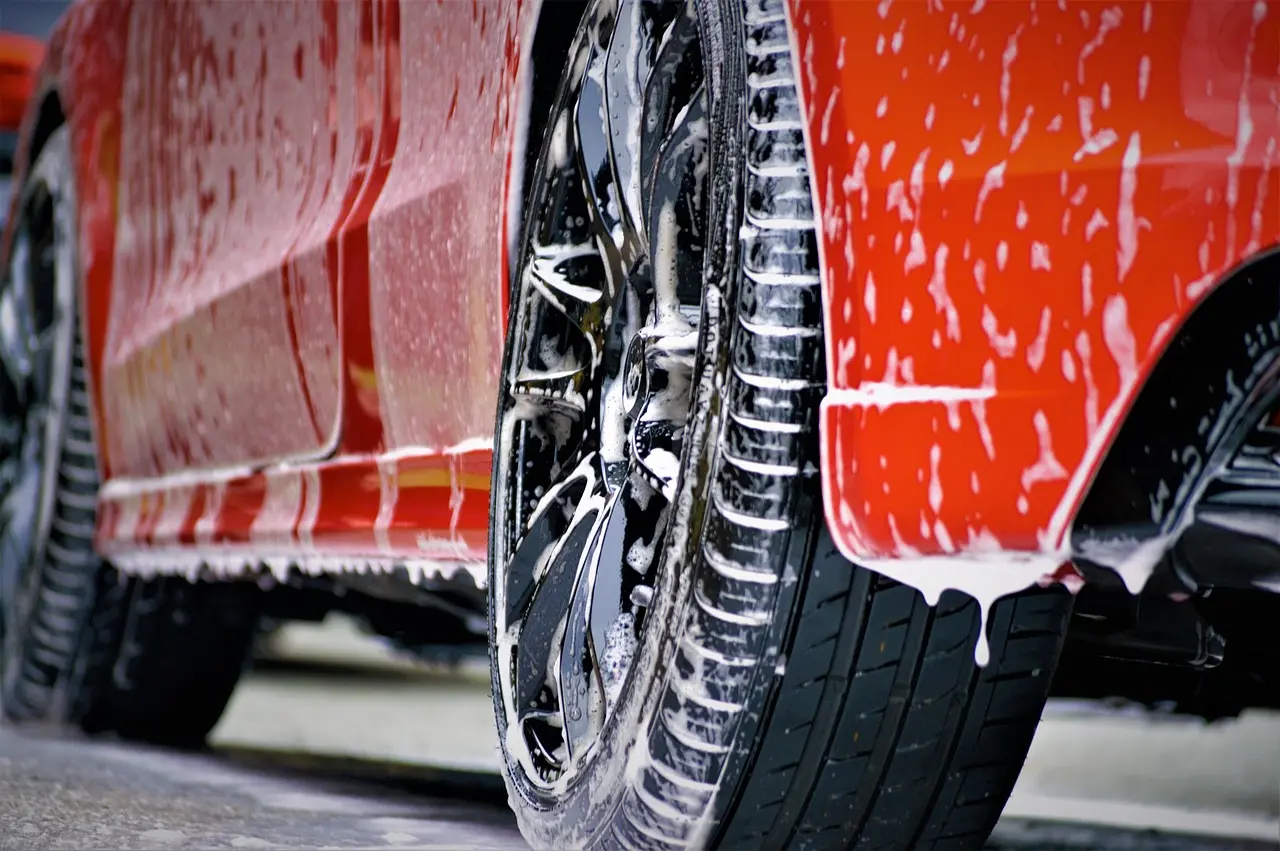
The safest wash setup is still a bucket wash with the right shampoo and mitt. Foam cannons help, but they are pre-wash tools. They reduce contact during the first stage; they do not replace careful hand washing on dirty paint.
Low-foam shampoo vs foam-cannon soap
Low-foam shampoo is the better default for hand washing because it rinses clean and stays manageable in a bucket. Foam-cannon soap is tuned for pressure washer application and longer dwell time. If you only use a hose and bucket, a foam-cannon soap is usually unnecessary.
Autoglym’s Bodywork Shampoo Conditioner is a bestseller for exterior washing, while Autoglym’s Ceramic Wash & Protect is a shampoo with protective benefits. Dirtbusters also sells Car Snow Foam Shampoo With Polymer Wax in 5-litre size and Car Wash & Wax Shampoo with carnauba wax in 5-litre size, which shows how wash-and-protect products split into different jobs.
Microfiber wash mitt and bucket setup
Choose a microfiber wash mitt because its fibers are designed to lift and trap dirt, which helps reduce scratching during the contact step. Pair it with shampoo in a bucket, rinse the mitt often, and avoid dragging grime from one panel to another. That simple method matters more than a flashy label.
Autoglym’s Microfibre Wash Mitt is designed to lift and trap dirt. Autoglym’s Car Wash Bucket is a 20 litre bucket, which is useful because larger wash buckets make rinsing and dilution easier than tiny containers.
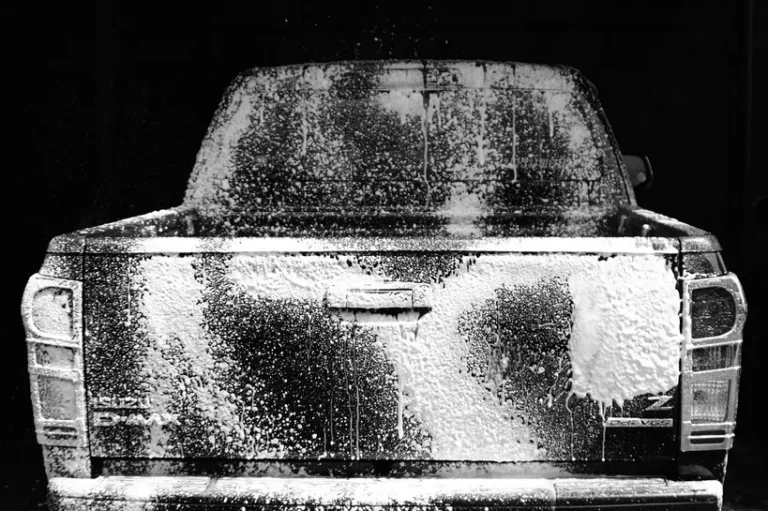
Foam cannon and pre-wash use
A foam cannon makes sense when the car carries a film of road grit, salt, or pollen. Autoglym’s Polar Blaster is a foam cannon for pre-wash, wash, and protect tasks. Use it to soften contamination before the mitt touches paint. That lowers contact pressure and gives soap time to dwell.
Picture a hatchback that spent a week on salted roads. A foam pre-wash can loosen the worst dirt before the mitt sees the panel. On a lightly dusty garage-kept car, the same tool is optional, not mandatory.
When wash-and-protect shampoo makes sense
Wash-and-protect shampoo suits owners who want one step to clean and leave a light water-repellent finish. It is useful on weekly-driven cars, but it does not replace a dedicated ceramic spray for longer protection. Use it when time matters and the paint already has a decent base layer.
A common first-timer mistake is using too much product because the paint looks heavily soiled. That often leaves residue rather than cleaner paint. Start with the label dose, rinse thoroughly, and repeat the wash if needed.
Which protection product fits your car?
Choose protection by how long you want it to last and how much effort you want to spend. Quick detailers are for maintenance. Ceramic sprays last longer. Wax gives a traditional finish and warm gloss, but it asks for more upkeep.
Quick detailer for between-wash care
Quick detailer is the lightest option here. It is sprayed on and buffed off, usually after a wash or for light dust removal. It adds gloss quickly, but it is not the right choice for heavy contamination or long-term protection. Use it when the paint is already clean.
Ceramic spray for longer protection
Ceramic spray is the most practical long-life choice for many drivers. It is hydrophobic, goes on by spray, and leaves a durable coating layer relative to quick detailers. It also fits maintenance washing better than traditional wax in harsh weather, especially when the car sees frequent rain or road salt.
Autoglym’s Rapid Ceramic Spray is sold as a 500ml product, which fits the category’s usual maintenance role. Dirtbusters markets a waterless wash-and-wax cleaner in 5-litre size, but waterless products should be reserved for truly light contamination and clean applicators.
Wax for traditional gloss and warmth
Wax still has a place when the goal is gloss, warmth, and a familiar hand-applied finish. Carnauba-based options remain the classic choice. They can look excellent, but they usually need more frequent reapplication than ceramic spray. Spray waxes are faster; paste and liquid waxes usually ask for more labor.
Wax is useful on vehicles that are stored indoors or washed carefully. It is less efficient than ceramic spray for a commuter car that sees rain, grime, and repeated washes. Do not treat them as interchangeable.
Spray protection versus paste or liquid wax
Spray protection wins on speed and maintenance. Paste and liquid wax can deliver a classic finish, but they take longer to apply and usually do not last as long in daily use. If you want lower effort, buy ceramic spray first. If you want a traditional finish, choose wax second.
Best interior, glass, and wheel cleaners
Cabin, glass, and wheels need different chemistry and different risk tolerance. Interior plastics can haze. Glass shows streaks instantly. Wheels collect hot brake dust. Buying one cleaner for all three usually means compromising on at least one surface.
Interior cleaner for dashboards, trim, fabric, and leather
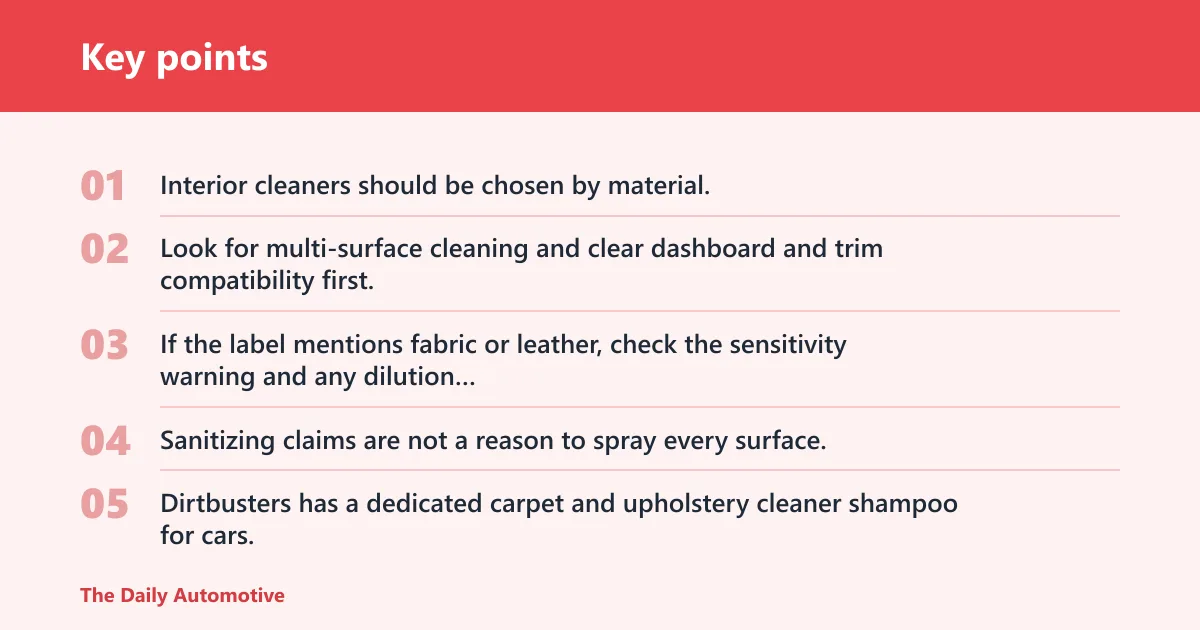
Interior cleaners should be chosen by material. Look for multi-surface cleaning and clear dashboard and trim compatibility first. If the label mentions fabric or leather, check the sensitivity warning and any dilution instructions. Sanitizing claims are not a reason to spray every surface; use the product only where the label allows it.
Dirtbusters has a dedicated carpet and upholstery cleaner shampoo for cars, which is the right type of product when seats or floor materials need more than a general cabin cleaner. Car Care Products Dashboard Polish in 450ml packaging also shows that trim care products are often sold separately from cleaners.
Glass cleaner for windows and mirrors
Choose a glass cleaner that flashes off quickly and leaves a streak-free finish. It should work on interior and exterior glass, plus mirrors, without leaving a greasy film. For tinted windows, use a towel that is clean and lint-free. Too much spray causes streaks faster than a poor cleaner does.
Car Care Products Glass Cleaner in 500ml packaging is one example of the category’s standard size. That size is enough for regular window maintenance without turning glass cleaning into an oversized purchase.
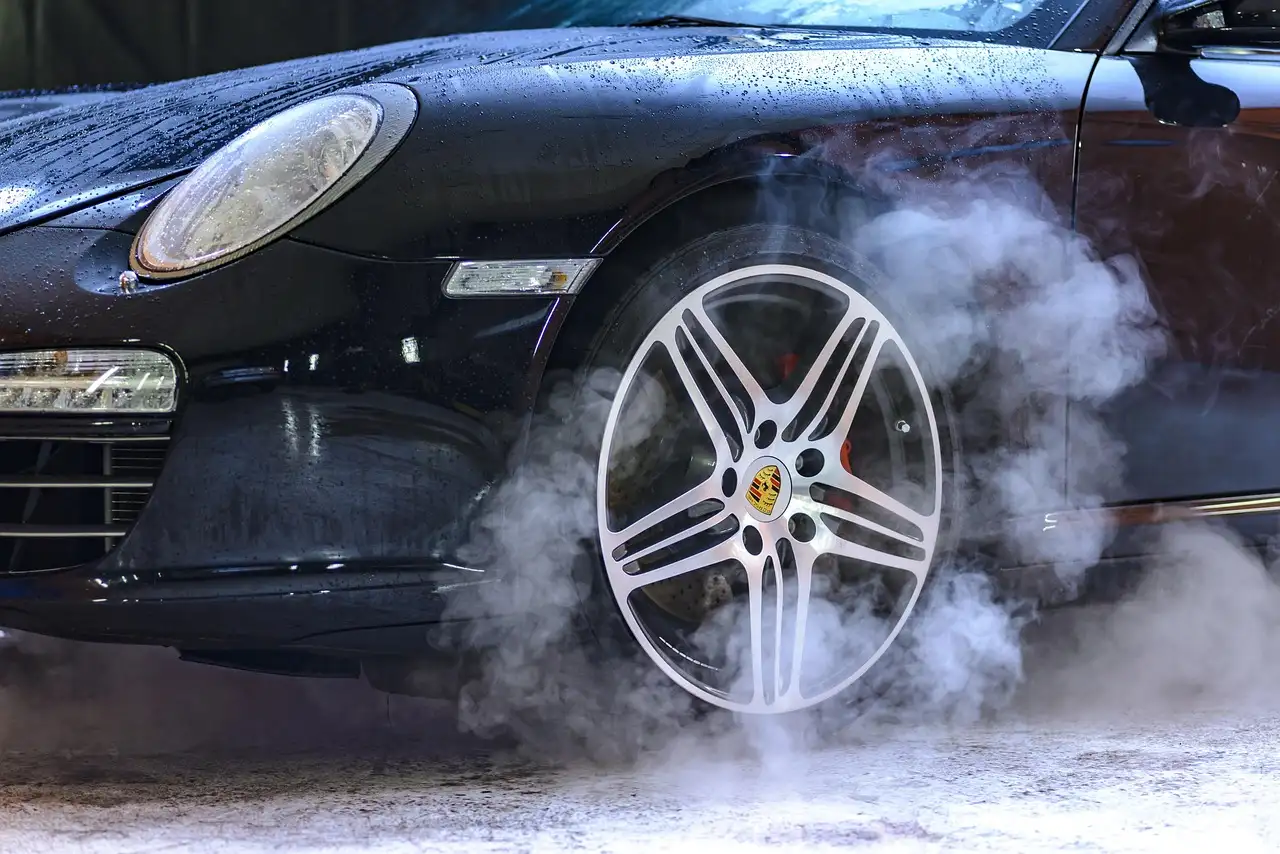
Wheel cleaner for alloy, painted, and coated rims
Wheel cleaners need material matching. Alloy wheels, painted wheels, and coated rims usually do better with a pH-neutral formula. If the wheels are heavily contaminated, a stronger cleaner may be appropriate, but only if the label allows the finish. Spray and gel formats both have a place; gel hangs on vertical faces longer.
Wheel cleaners should remove brake dust without staining the finish or drying out tire sidewalls. If you clean wheels often, a safer pH-neutral bottle is usually the better buy than an aggressive cleaner that gets used rarely.
Acidic versus pH-neutral wheel formulas
Acidic wheel cleaners can break down stubborn mineral and brake dust deposits faster, but they carry more risk on sensitive finishes. pH-neutral formulas are slower on heavy buildup, yet they are easier to live with on everyday maintenance. For most owners, pH-neutral is the starting point.
How do you choose the right products?
Choose products by paint condition, climate, and wash method before you think about brand loyalty. The right kit for a dark daily driver in winter is not the same as the right kit for a garage-kept weekend car. Surface compatibility matters as much as cleaning strength.
Paint type and finish
Gloss paint accepts more product options than matte paint. Matte finishes need cleaners and protectants that do not leave shine or residue. Ceramic-coated paint benefits from maintenance-friendly shampoo and compatible topper sprays. If the vehicle has fresh paint, avoid aggressive cleaners until the finish has fully cured.
Climate and wash frequency
Salt, rain, tree sap, and pollen all change the buying list. In wet or snowy climates, ceramic spray and wheel cleaner move up the list because contamination accumulates faster. In dry climates, glass cleaner and quick detailer may see more use than heavy protection products.
Vehicle age and contamination level
Older vehicles often need more careful cleaning because trim, badges, and clearcoat edges are less forgiving. Heavy contamination calls for a stronger pre-wash routine and a safer contact wash, not a harsher all-purpose bottle. If the car is lightly dirty, a simple shampoo and mitt are enough.
Safety, ventilation, and label directions
Read the label. That matters for trim, leather, coated wheels, and glass. Use ventilation when products carry strong odors or solvent content, and wear gloves if the bottle recommends them. If a label says rinse thoroughly, rinse thoroughly. Residue is cheaper to prevent than to remove.
Suppose a sedan has coated paint, black plastic trim, and factory alloy wheels. A pH-neutral shampoo, microfiber mitt, pH-neutral wheel cleaner, glass cleaner, and ceramic spray fit that car better than a hard wax routine or an acidic wheel cleaner. One variable changed there: the coating, which shifts the protection choice.
Frequently asked questions
What are the best car care products?
The best car care products for most owners are a pH-neutral shampoo, microfiber wash mitt, wheel cleaner, interior cleaner, glass cleaner, and a spray protectant. That combination covers wash, cabin, visibility, and light protection without buying duplicate products that do the same job in different packaging.
What are the best car cleaning products?
The best car cleaning products depend on the surface. For paint, use shampoo and a mitt. For wheels, use a wheel cleaner matched to the rim finish. For interiors, use a dashboard-safe cleaner. For glass, use a fast-evaporating glass cleaner that leaves no film.
What are the best car detailing products?
The best car detailing products are the ones that solve a specific task cleanly and safely. That usually means a wash soap, drying towels, wheel cleaner, interior cleaner, glass cleaner, and either ceramic spray or wax for protection. Foam cannons and detail sprays are useful additions, not foundations.
What is car care kit?
A car care kit is a grouped set of products for washing, cleaning, and protecting a vehicle. A small kit can include shampoo, mitt, wheel cleaner, glass cleaner, and interior cleaner. Larger kits add spray protection, towels, buckets, and a foam cannon for more frequent detailing.
What are the best car interior cleaning products?
The best car interior cleaning products are multi-surface cleaners that are safe for dashboard, trim, fabric, and leather when the label says so. For heavier seat or carpet mess, use a dedicated upholstery or carpet cleaner. Avoid any product that leaves a slick finish on touch surfaces.
What is the best car wash product to use?
The best car wash product to use is usually a pH-neutral shampoo for bucket washing. If you want a pre-wash step, add a foam cannon soap only when you have a pressure washer. For routine maintenance, a wash-and-protect shampoo can add light water repellency.
Products related to this article
Sponsored / affiliate links. As an Amazon Associate I earn from qualifying purchases. I may earn additional commission from eligible campaigns.