Best Car Rental Companies for Road Trips: Enterprise Wins
For long domestic road trips, Enterprise is the best all-around rental company, with National close behind; choose Hertz or Avis only when one-way routing or airport inventory matters most. Bad mileage terms, weak roadside support, and surprise drop-off fees can turn a cheap booking into a costly detour. This ranking compares the best car rental companies for road trips by one-way flexibility, mileage rules, pickup and return ease, and long-haul comfort.
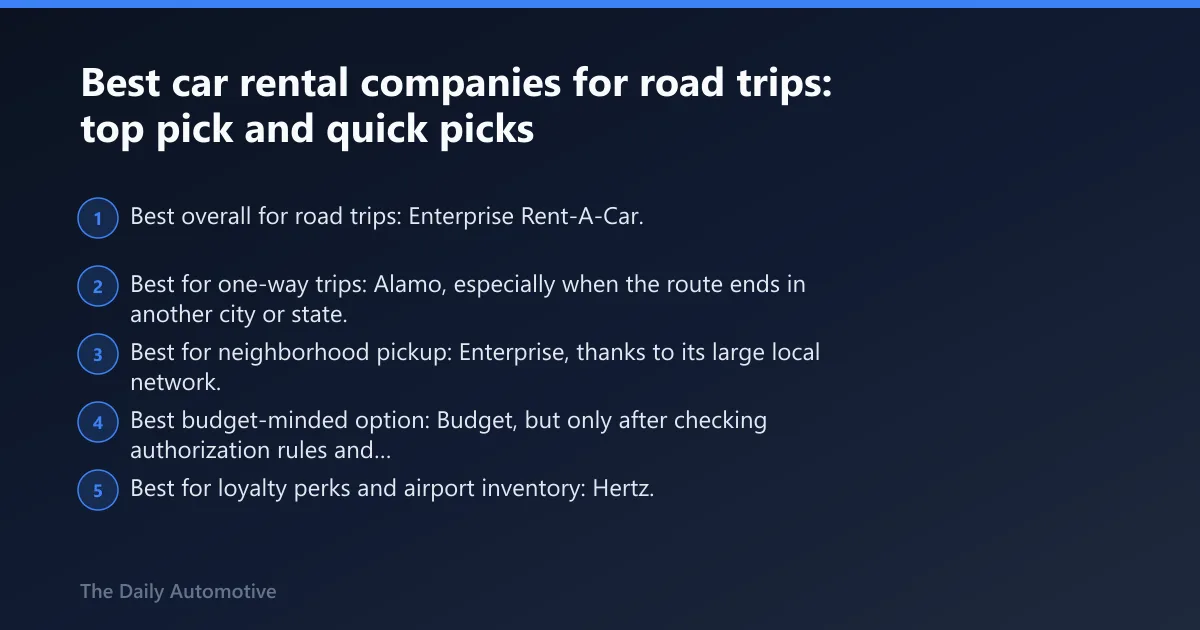
Best car rental companies for road trips: top pick and quick picks


Enterprise is the best overall road-trip choice because it combines strong neighborhood pickup, a lower-fee feel, and broad return flexibility without forcing travelers into airport-only bookings. That matters when a route starts in a suburb, ends in another state, or needs a last-minute change.
Quick picks by trip need
- Best overall for road trips: Enterprise Rent-A-Car.
- Best for one-way trips: Alamo, especially when the route ends in another city or state.
- Best for neighborhood pickup: Enterprise, thanks to its large local network.
- Best budget-minded option: Budget, but only after checking authorization rules and return terms.
- Best for loyalty perks and airport inventory: Hertz.
Enterprise Rent-A-Car
Enterprise is the safest first stop for most road trips because it is strong on pickup flexibility and tends to avoid extra-fee surprises. Enterprise has the most locations throughout the U.S., which helps when the trip starts far from an airport or needs a one-way handoff.
Alamo
Alamo is the most road-trip-friendly for point-to-point driving. Alamo allows renters to drop off the vehicle at a different location or state, and it is known for the smoothest return process. That makes it a strong fit when the route is fixed and the ending city is known.
Hertz
Hertz is best when airport and city coverage matter more than neighborhood convenience. Its wide network helps travelers who need a specific pickup time, a busy urban branch, or loyalty-program benefits. Pricing can swing more than some rivals, so compare the full trip cost, including the return charge, not just the headline rate.
Avis
Avis is worth a look when fleet depth matters, because Avis says unlimited miles are standard. Avis is one of the few car rentals with Jeep Wranglers, which can matter for travelers who want a more rugged vehicle class. Rates can run higher in some markets, so compare the total carefully.
Budget
Budget is a value-oriented option, but the rules may need more reading than the marketing copy suggests. Budget can charge a minimum $45 unauthorized return fee, and its one-way authorization rules deserve attention before booking. It has over 600 rental locations, which helps when price matters more than polish.
According to Top 8 Car Rentals for Road Trips (+The Best Models to Rent) — Budget has over 600 rental locations.
What makes a rental company road-trip friendly?

A road-trip-friendly rental company keeps the total price predictable, lets the traveler choose the right pickup and drop-off pattern, and offers support when the drive moves far from city centers. The best companies reduce friction at booking time, not just at the counter.
Unlimited mileage and where exceptions hide
Unlimited mileage is a common road-trip requirement because it removes overage risk on long drives. But it is not automatic across every car class and location, so the renter has to check vehicle class, branch, and market rules before paying. Avis says unlimited miles are standard, but that still does not remove the need to verify the exact booking terms.
One-way flexibility and drop fees
One-way rentals let the driver pick up in one city and return in another. They are usually the right answer for point-to-point trips, but the drop fee can change the total fast. The best booking is the one where the final bill still makes sense after the return charge is added.
Neighborhood pickup versus airport pickup
Neighborhood pickup is usually easier for road trips because it avoids airport queues, concession fees, and the stress of timed terminals. Airport pickup still helps when inventory is tight or the drive begins right after a flight. Enterprise stands out here because its local network is large, while Hertz and Avis often shine at airports.
Extra drivers, pets, and child seats
Additional-driver rules can add real cost, especially on multi-day drives where the wheel needs to be shared. Pet policy and child seat planning also matter because a good road trip falls apart quickly if the car is too small or the child seat cannot be arranged in advance. Check each policy before paying.
Roadside support outside metro areas
Roadside assistance matters most when the route runs through mountain passes, desert highways, or rural stretches with weak cell coverage. A 24/7 support line sounds basic until the car has a flat tire far from a metro area. Also check geographic limits, because some plans help more near cities than in remote country.

Which car rental company is best for long road trips?

Enterprise can be a strong overall choice for longer road trips, mainly because its pickup network and fee structure may fit real travel patterns better than many airport-first brands. Alamo is the best point-to-point option, Hertz is strong for broad city and airport coverage, Avis is useful when mileage coverage and special vehicles matter, and Budget wins only when the base rate stays clean after rules are checked.
Enterprise Rent-A-Car for pickup flexibility
Enterprise is the practical favorite for long domestic routes that start in a suburb or end in a different metro area. Enterprise can help avoid extra fees, and that tends to matter more on a long road trip than a glossy loyalty pitch. The large local network is its real edge.
Alamo for point-to-point routes
Alamo is the cleanest fit for travelers planning a true one-way road trip. Alamo allows renters to drop off the vehicle at a different location or state, which makes it easier to map a route around the trip rather than around the return lot.
Hertz for broad airport and city coverage
Hertz works well when the trip depends on airport inventory, late flight arrivals, or a city-center pickup before heading out. It is not always the cheapest route, but the coverage is wide enough to solve booking problems that smaller local branches cannot.
Avis for fleet depth and mileage coverage
Avis is useful when the trip needs a specific class, a Wrangler, or a standard unlimited-mile setup. Avis says unlimited miles are standard, which helps on long drives where mileage overage is a concern. Higher pricing in some markets can erase that advantage, so compare carefully.
Budget for lower base rates with rule checks
Budget can look like the cheapest answer until the authorization language and return rules appear. Its broad location count is useful, but the lower sticker price is only meaningful if the one-way approval, fuel policy, and return terms stay favorable.
How do one-way rentals affect road-trip cost?
One-way rentals can be a smart move when the route is point-to-point, the traveler is flying home, or the road trip ends far from where it began. They often save time and backtracking, but the drop fee and route pair can add enough cost to outweigh the convenience.
When one-way makes sense
One-way makes sense when the trip has a clear endpoint, especially for cross-country moves or vacation routes that do not loop back. It also fits travel that starts in one city and ends in another, where driving home would waste days and fuel.
How drop fees change the total
Drop fees are the part most shoppers miss. A low daily rate can become a weak deal after the return charge is added, especially on popular one-way corridors. Always compare the total trip cost, not the rate on the first screen.
Why location pair matters
One city pair may price very differently from another because fleet balance, local demand, and return traffic all affect the quote. An airport-to-airport rental can cost more than a neighborhood-to-neighborhood move, or the reverse. The route matters as much as the brand.
When to book direct versus through an OTA
Book direct when the trip may change, because direct reservations are usually easier to modify if the drop-off city shifts. Use an OTA or metasearch site when comparing many routes quickly, but confirm the final policy with the rental company before paying. That is where hidden one-way limits show up.
What car class is best for a road trip?
The best rental class depends on passenger count, luggage, road surface, and how much fatigue the driver can tolerate. For long highway miles, a car with the right seating position and cargo room can matter more than the brand on the key fob.
SUV for mixed luggage and rougher routes
An SUV helps when the trip includes mountain roads, winter weather, or bulky luggage. The tradeoff is fuel use, which can hurt on very long highway runs. Choose it for stability and cargo space, not because it looks better in the lot.
Minivan for families and gear
A minivan is the best choice for families, groups, or travelers carrying strollers, coolers, and child seats. The cabin space reduces stress on long days, and the seating flexibility beats squeezing bags around passengers. It is often the least tiring option for four or more people.
Sedan for fuel economy on paved highways
A sedan is usually the smart answer for solo travelers or pairs on paved interstate routes. It typically uses less fuel than larger classes and is easier to park in cities. For a cross-country drive with light luggage, it is often the most efficient choice.
Hatchback for lighter loads and urban starts
A hatchback works best for lighter packing and city starts where parking is tight. It gives more cargo flexibility than a sedan without the bulk of an SUV. For two people and carry-on-level luggage, it can be a clean compromise.
Road-trip decision matrix for booking day
This matrix scores the booking questions that change real trip cost and convenience. Use it before paying, because a brand can look cheap until the mileage rule, pickup network, or roadside plan is read closely.
| Company | Unlimited mileage | One-way flexibility | Neighborhood pickup | Extra-driver policy | Remote roadside support |
|---|---|---|---|---|---|
| Enterprise | Medium | High | High | Medium | Medium |
| Alamo | Medium | High | Medium | Medium | Medium |
| Hertz | Medium | Medium | Medium | Medium | Medium |
| Avis | High | Medium | Medium | Medium | Medium |
| Budget | Medium | Medium | Medium | Low | Medium |
How to read the matrix: High means the brand is usually easier to book for that need, but the exact reservation still has to be checked at the counter or in the terms.
How to score mileage rules
Give the highest score to brands and vehicle classes that clearly include unlimited miles for the full route. Lower the score if the vehicle type or location has exceptions. A long drive is no place for surprise overage math.
How to score one-way flexibility
Score higher when the brand permits a different return city or state with straightforward approval. Score lower when the route requires special authorization or a return fee that makes the plan awkward.
How to score pickup network
Neighborhood branches score better for road trips that start away from airports. A dense local network cuts transfer time and usually makes pickup easier if the car needs to be swapped or the reservation changes.
How to score extra-driver policy
Travelers who plan to share driving should rate brands higher when extra-driver terms are clearer and less expensive. A cheap base rate is less useful if adding a second driver blows up the budget.
How to score roadside support
Give more weight to brands with clear 24/7 support and service that still helps outside major metro areas. Remote routes punish weak support. A stranded car on a rural highway is expensive in time, not just money.
How to choose the right rental company for your route
The right company depends on route shape, weather, and how much risk the traveler is willing to carry. Mountain and winter routes need a better vehicle class and clearer roadside terms. Desert and remote routes need the strongest support coverage and a cautious fuel plan.
Mountain and winter routes
Choose an SUV or an all-weather-friendly sedan, then verify roadside coverage and tire-related assistance rules. The booking should also confirm where the car can be returned if weather changes the route.
Desert and remote routes
Remote driving rewards companies with dependable support and straightforward replacement rules. Keep the itinerary simple, avoid tight return timing, and read the roadside language carefully. Distance magnifies every small problem.
Urban start and rural finish
For a city pickup and rural finish, neighborhood access matters more than airport prestige. Enterprise is usually the easiest fit, while Alamo can be better if the trip ends in another state and the return location is already settled.
Cross-country point-to-point trips
Cross-country one-way trips call for the cleanest drop policy, enough miles, and a vehicle class with enough cargo room for the whole journey. Avis, Enterprise, and Hertz are the familiar names to compare first, but the cheapest full quote should still win.
When insurance and roadside add value
Damage waiver and insurance can materially change trip cost, especially if the traveler’s credit card or personal auto policy already overlaps part of the protection. Check that overlap before buying extras. Roadside coverage is worth more on long routes than on short city rentals.
Frequently asked questions
is it cheaper to rent a car for a road trip
Sometimes, yes, but only when mileage, fuel, drop fees, and insurance stay in line. A low daily rate can be misleading if the route is long or one-way. For short highway trips, renting can beat wear on a personal car, but the math changes fast.
is it smart to rent a car for a road trip
It is smart when the personal vehicle is old, fuel-thirsty, or too small for passengers and luggage. Renting is also smart for one-way travel and routes that need more reliability. The key is checking mileage limits, roadside support, and total fees before booking.
can you take rental cars on road trips
Yes, road trips are a normal use case for most rentals, but the booking has to match the route. Check mileage rules, one-way approval, state crossing terms, and roadside coverage before leaving. A rental is fine for a road trip only when the policy fits the drive.
what car is good for road trips
A sedan is best for fuel economy on paved highways, an SUV is better for mixed weather and rougher routes, and a minivan is best for families or gear-heavy travel. Hatchbacks work for light loads and city starts. Pick the class that fits passengers first.
which rental companies offer unlimited mileage
Avis says unlimited miles are standard, and other major brands may offer unlimited mileage depending on vehicle class and location. The catch is that exceptions can hide in the fine print. Always verify the exact branch and car type before assuming the mileage is open-ended.
which car rental companies are best for one-way road trips
Alamo is the clearest one-way choice because it allows renters to drop off the vehicle at a different location or state. Enterprise is also strong for flexible pickup and return plans, while Hertz and Avis can work well when airport inventory or fleet depth is the deciding factor.
what car rental company is best for long road trips
Enterprise is the best all-around company for long road trips because it balances local pickup strength, fee control, and practical route flexibility. Alamo is the best when the trip is purely point-to-point. Avis and Hertz become more attractive when mileage or airport inventory matters most.
Products related to this article
Sponsored / affiliate links. As an Amazon Associate I earn from qualifying purchases. I may earn additional commission from eligible campaigns.