Best Car Wash Mitts for Scratches (2026): We Compared
The best car washing mitts for scratches are plush microfiber or high-quality merino wool mitts with a deep pile, because they trap grit and reduce paint marring; pair them with the two-bucket method and a clean rinse cycle. Pick the wrong mitt, and grit sits in the fibers, then drags across clear coat on the next pass, which can leave fresh swirl marks and add correction work later. This guide compares the safest mitt types, explains what to buy, and shows how technique and paint care affect scratch prevention.
Quick comparison
| Product | Badge | Best for | Price | ||
|---|---|---|---|---|---|
 |
AIDEA Car Wash Mitt Microfiber-2PK, Car Wash Brush, Green,AIDEA | Our pick | 7.12”X10.14” · Green · 2PK | $9.99
Price as of 22 Oct 2026
|
View |
 |
Chemical Guys, Maxi Suds II Soap & Chenille Wash MittChemical Guys | Upgrade pick | 64 oz · Cherry · Bundle | $24.64
Price as of 22 Oct 2026
|
View |
 |
Blackline Microfiber Car Wash Mitt 9"x11" – Scratch &Blackline | Also great | 9"x11" · Plush · 70/30 | $23.99
Price as of 22 Oct 2026
|
View |
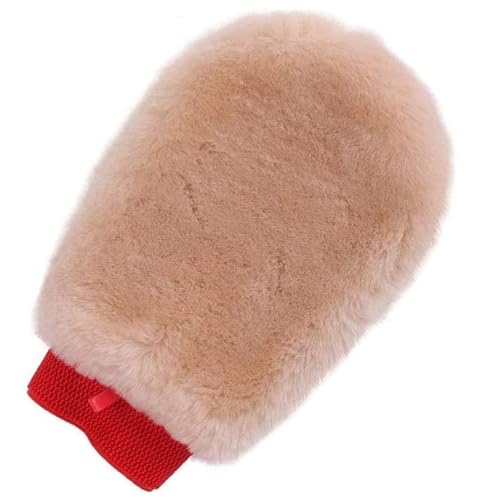 |
Ultra-Soft Lambswool Car Wash Mitt, Extra LargeGracefur | Also great | Extra Large · Lambswool · Paint-Safe | $20.99
Price as of 22 Oct 2026
|
View |
This comparison focuses on scratch control first, then comfort, suds retention, and maintenance. The safest mitt is the one you rinse often, dry fully, and replace before the fibers flatten or the seams start to drag.
How we chose
We compared the listed mitts on scratch risk, absorbency, fit, and maintenance burden. The product details and buyer feedback matter here because a wash mitt only helps if it keeps grit away from paint and stays easy to control when wet.
We also looked at pile depth, cuff design, seam placement, and whether the mitt is practical for regular use. A plush mitt that feels bulky can still be a poor choice if it twists on your hand or becomes hard to rinse clean.
Finally, we separated use cases by paint condition and vehicle size. Freshly decontaminated paint can tolerate a wider range of mitts than dirty, neglected paint that still carries bonded grit.
What makes a mitt scratch-safe?
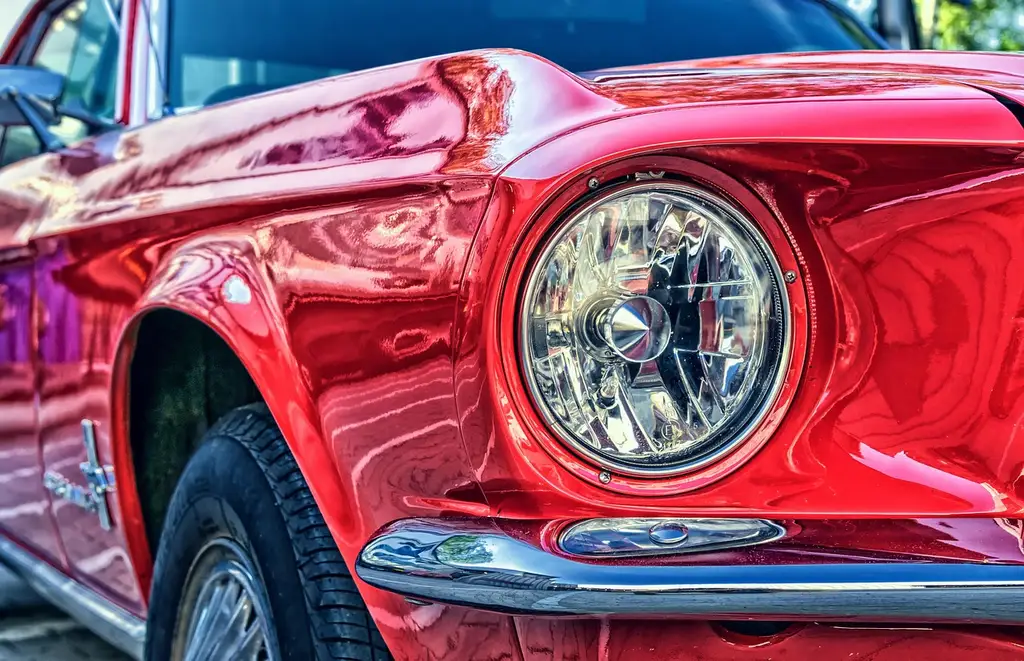
A scratch-safe mitt gives dirt somewhere to go besides the paint surface. Deep pile microfiber or chenille microfiber is usually the safest material for most cars because it traps grit in the fibers instead of dragging it across clear coat, but only if you rinse it often and keep the wash media clean.
Pile depth and fiber structure
Deep pile matters because short fibers can smear grit against the panel instead of suspending it. Chenille microfiber mitts use plush noodle-style strands, while regular microfiber mitts rely on soft loops or plush nap; both can be paint-safe, but the deeper pile usually gives more room for dirt to hide between rinses.
That is why a mitt can be safer than a sponge or plain wash pad on contaminated paint. A sponge holds grime at the surface, while a plush mitt has more fiber volume to trap particles away from contact points.
Seams, cuff design, and hand control
Seam placement matters because hard stitching can create a scratch point when you press too hard or work around badges and trim. A secure elastic cuff also helps control the mitt when it is wet, which reduces slipping and the extra pressure that comes from trying to recover a loose grip.
Hand fit should feel secure without being bulky. If the mitt rotates on your hand, you lose control; if it is oversized and cumbersome, you tire faster and tend to push harder than you should.
Why lubrication matters more than looks
Soap and water are not cosmetic details. High absorbency and strong suds retention help the mitt glide, which lowers friction and gives grit more suspension time before the next pass across the panel.
That is also why a clean rinse cycle matters more than the mitt’s marketing language. Even a plush mitt can scratch paint if it keeps dragging embedded dirt across the surface between bucket rinses.
Wash mitt decision table
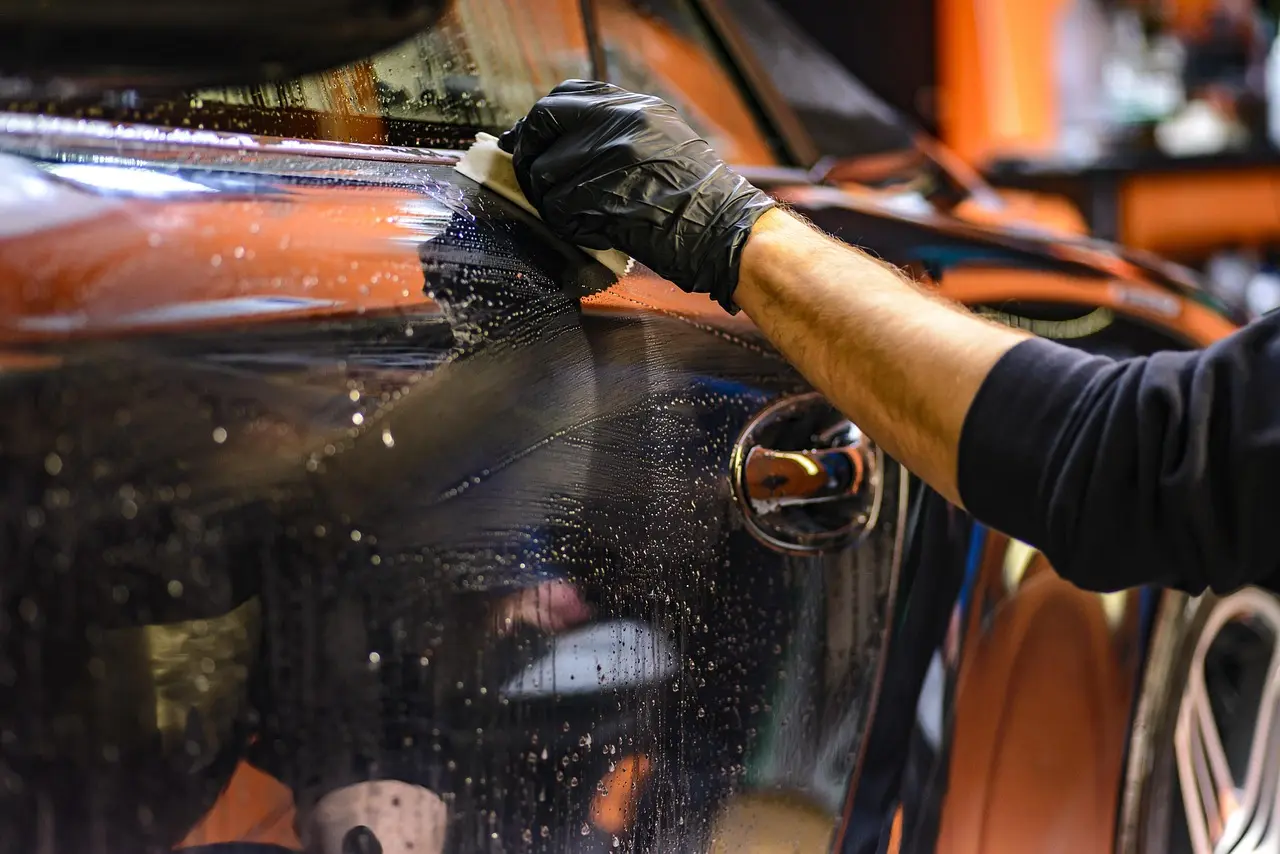
| Mitt type | Scratch risk | Suds retention | Hand fit | Rinse frequency | Maintenance burden | Best-use scenario |
|---|---|---|---|---|---|---|
| Chenille microfiber wash mitt | Low on clean paint; medium if packed with grit | High | Usually secure, especially with an elastic cuff | Every panel or sooner on dirty vehicles | Moderate; machine washable, but needs full drying | Daily drivers, trucks, motorcycles, RVs, boats, and frequent washes |
| Regular microfiber wash mitt | Low to medium, depending on pile depth | Medium to high | Good if the mitt is sized well | Every panel, with extra rinses on neglected paint | Moderate; wash and dry carefully to avoid matting | General paint, glass, chrome, and trim cleaning |
| Merino wool mitt | Low on well-maintained paint | High | Comfortable if the shape matches your hand | Frequent, especially after road grime exposure | Higher; needs gentle cleaning and careful drying | Luxury paint, ceramic-coated vehicles, and careful hand washing |
| 2-pack microfiber or chenille set | Low if one mitt is kept for wash and one for lower panels | Varies by model | Usually consistent across both mitts | Same as above, but backup helps maintain discipline | Moderate; more pieces to clean and store | Budget buyers, separate wash/dry duties, and backup planning |
| Sponge-style wash tool | Higher on dirty paint | Low to medium | Easy to hold, but less secure when wet | Very frequent if used at all | Low, but the scratch risk is the problem | Not the default choice for paint protection |
Can a wash mitt still scratch paint?
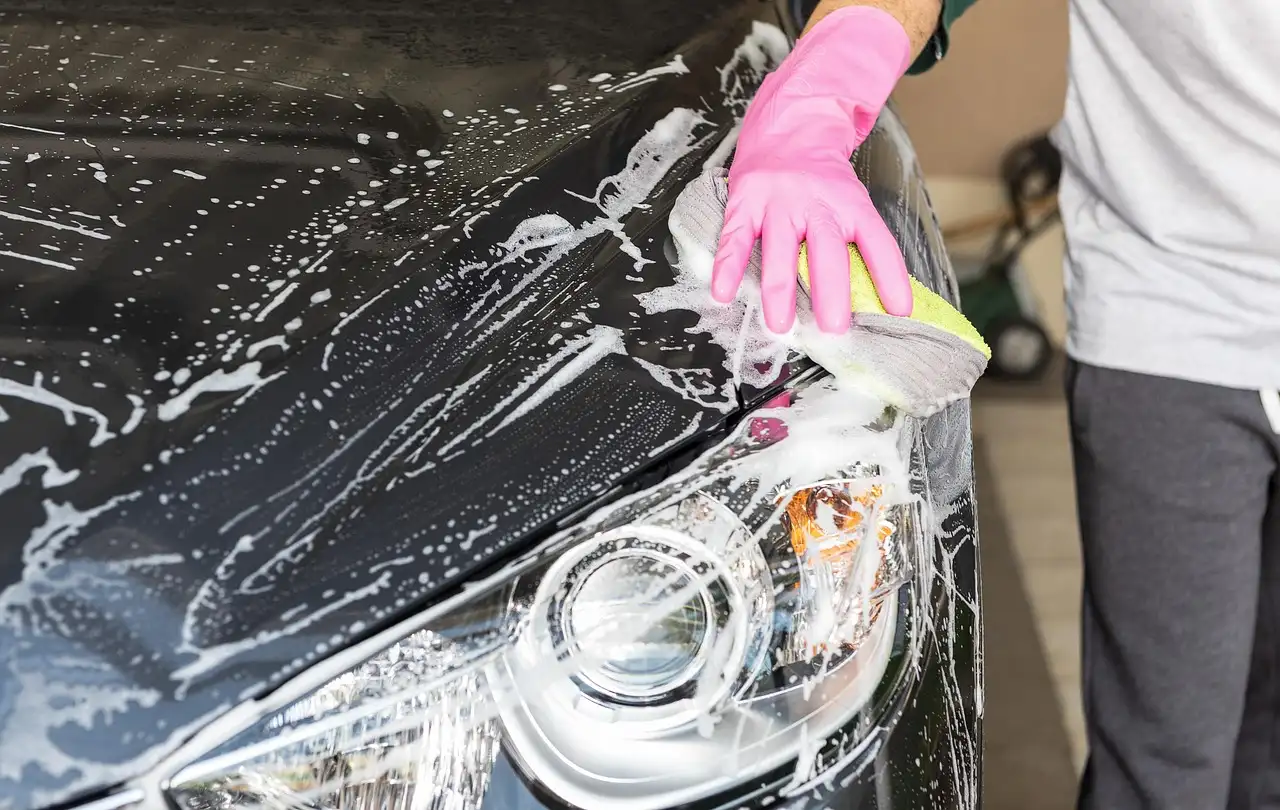
Yes. A wash mitt can still scratch paint when the paint is dirty, the mitt is overloaded with grit, or the fibers are worn and no longer suspend debris well. It can also scratch when you let dirty rinse water and hard seams do the work that the fibers should be doing.
Dirty paint and trapped grit
If the vehicle has not been pre-rinsed, the mitt starts with an disadvantage. Heavy road film, brake dust, and bonded dirt increase the chance that each pass becomes a dragging pass, especially on lower panels, rocker areas, and rear bumpers.
Picture a black SUV that has sat through a week of rain and highway use. If you load the mitt with grime from the first door and keep moving without rinsing, the next panel gets the same particles back in a wider arc.
Using one mitt too long between rinses
The rinse cadence matters as much as the mitt itself. On dirtier vehicles, rinse after every panel or half panel; on cleaner cars, you still need to flush the fibers often enough that they do not become a grit reservoir.
A common mistake is to keep dragging the same mitt across a dusty hood after it has picked up grit, as if the extra suds will prevent new scratches. Foam does not cancel out trapped grit.
Worn fibers, hard seams, and poor drying habits
Worn mitts become flatter, less absorbent, and less able to keep debris away from the paint surface. That is when replacement matters; if the fibers are matted, the cuff is stretched out, or the seams feel sharp, retire the mitt rather than keep using it on finished paint.
Machine washable mitts are easier to maintain, but they are not maintenance-free. Rinse thoroughly after use, air-dry fully, and replace them when the pile no longer springs back or the fibers stop feeling soft.
Quick picks
- Best overall: Chemical Guys chenille microfiber mitt bundle for high foam, secure fit, and a wash-first setup.
- Best value: AIDEA 2-pack for a backup mitt and separate wash or lower-panel duty.
- Best low-lint option: Blackline microfiber mitt for a plush microfiber feel and strong soap retention.
- Best for luxury paint: Gracefur lambswool mitt for very delicate finishes and ceramic-coated vehicles.
Chemical Guys chenille microfiber mitt: best for most cars
This is the safest all-around pick for most paintwork because the chenille microfiber mitt pairs with high-foam soap and a secure, machine-washable design. Chemical Guys describes the mitt as helping reduce swirl marks, and the elastic cuff helps keep control when the mitt is wet.
It is especially sensible for regular maintenance washes, because the plush chenille fibers hold plenty of suds and are easier to move across curved body panels without feeling harsh. The bundle format also helps if you want a mitt matched to a wash-chemistry setup rather than a bare mitt alone.
The drawback is that chenille can still trap grit if you do not rinse often enough, and the bundle costs more than a basic mitt only purchase. It is a strong choice, but not a free pass to skip technique.
Blackline microfiber mitt: best for low-lint cleaning
This mitt suits buyers who want a plush microfiber option with a low-lint profile and strong soap retention. The published details say the 70/30 microfiber blend traps dirt away from paint, and the 9″ x 11″ size gives a large working surface without sounding unwieldy on paper.
It fits well for paint, glass, chrome, and trim when the wash process is controlled. The claimed ability to hold five times its weight in water also points to solid lubrication, which is what you want when scratch prevention matters more than speed.
The main drawback is that a large plush mitt can feel bulky on smaller hands, and any high-capacity mitt still needs frequent rinsing. If the fibers are packed with grime, the low-lint advantage does not stop scratching by itself.
AIDEA microfiber mitt 2-pack: best for value and backups
This 2-pack is a practical choice for buyers who want a backup mitt or a separate mitt for different tasks. AIDEA describes it as scratch-free, with double-sided microfiber, thick caterpillar strands, and a double-stitched elastic cuff that should help with fit and control.
The 7.12” x 10.14” size is close to a regular hand-friendly profile, which matters if you want coverage without a bulky feel. Machine washability also makes it easier to keep one mitt for upper panels and another for dirtier lower sections, which can reduce cross-contamination during a wash.
The drawback is that the 2-pack format encourages convenience, not discipline. If both mitts are rinsed poorly or stored damp, you simply have two dirty mitts instead of one.
Gracefur lambswool mitt: best for delicate paint
This is the most paint-gentle option in the list for buyers who prefer wool over synthetic pile. Gracefur markets it as scratch-free and paint-safe, with absorbent wool fibers that help lift dirt and hold suds for smoother movement across sensitive finishes.
It makes sense for luxury paint, ceramic-coated vehicles, and careful owners who already pre-rinse and decontaminate often. The extra-large shape can also help reduce hand fatigue on larger panels.
The drawback is maintenance. Wool needs more careful cleaning and drying than many synthetic mitts, and it is less forgiving if you let contaminants sit in the fibers after a wash.
Which one should you buy?
For most daily drivers, the Chemical Guys chenille microfiber mitt is the best place to start because it balances deep pile, secure fit, and easy maintenance. If you want a simple backup plan or separate mitts for wash and lower-body work, the AIDEA 2-pack is the clearest value play.
For trucks and SUVs, the bigger question is size and rinse behavior. A plush chenille or microfiber mitt helps on large panels, but the better choice is the one that stays comfortable in your hand while you rinse it often enough to keep road film from building up.
For budget shoppers, a 2-pack is worth it when you truly use the second mitt for a separate role, such as a dedicated lower-panel mitt or a clean backup if one gets dropped. A spare only helps if you keep the two tasks separated.
If the paint is heavily contaminated, no mitt is the whole answer. Pre-rinse first, use lubricant-rich soap, and consider a decontamination wash before you return to any mitt-based routine.
How to choose
- Match the mitt to the paint condition. Clean, well-kept paint gives you more margin. Neglected paint demands deeper pile, more rinsing, and more restraint.
- Prefer microfiber or chenille microfiber for most work. Those materials are the safest default for paint because they trap grit better than a sponge-style tool.
- Check cuff and seam design. An elastic cuff improves control, while exposed or stiff seams raise the chance of a pressure point on delicate panels.
- Look for good absorbency. A mitt that holds soap and water better gives you more lubrication, which helps reduce friction and marring.
- Choose a hand fit you can control when wet. Oversized mitts can feel comfortable at first, but too much bulk often means less precision around mirrors, emblems, and lower trim.
- Plan for maintenance before you buy. Machine washable mitts are easier to keep in service, but they still need a full rinse, air-drying, and occasional replacement.
Say your sedan gets washed every two weeks and spends most of its time garaged. A regular microfiber mitt or a chenille mitt is usually enough, provided you rinse often and keep the paint lubricated. Suppose the vehicle is a work truck that sees dust, mud, and winter grime; then the safer move is a plush chenille mitt with a strict rinse rhythm and a backup mitt for lower panels.
Frequently asked questions
What is the best car wash mitt for not scratching paint?
For most paintwork, a plush chenille microfiber mitt is the safest practical choice because it traps grit well, holds soap, and usually has enough pile depth to reduce drag. High-quality merino wool can also be excellent on delicate finishes, but it asks more of the owner in cleaning and storage.
Are chenille microfiber mitts better than regular microfiber mitts?
Often, yes, if scratch prevention is the main goal. Chenille microfiber usually offers deeper pile and better grit trapping, while regular microfiber can feel a bit flatter and more versatile for glass and trim. The better choice depends on fit, suds retention, and how dirty the vehicle usually is.
How do I clean and maintain a car wash mitt?
Rinse it thoroughly after each wash until the water runs clear, then air-dry it completely before storage. Machine washable mitts are easier to keep in rotation, but they still need to be dried fully to avoid mildew and replaced once the fibers flatten, harden, or start feeling abrasive.
What car wash mitt holds the most soap and water?
Plush chenille microfiber mitts and some high-pile wool mitts typically hold the most suds and rinse water because they have more fiber volume. That higher absorbency improves lubrication, which can lower scratch risk, but only if you keep flushing out dirt instead of letting it accumulate in the pile.
Can a wash mitt cause swirl marks?
Yes. A mitt causes swirl marks when it is used on dirty paint, when grit is not rinsed out often, or when the fibers are worn and flattened. Hard seams, poor cuff control, and dry washing habits can make the problem worse even if the mitt was marketed as scratch-free.
Is a 2-pack car wash mitt worth it?
Yes, if you use the second mitt for a separate job. A 2-pack is useful as a backup, or for dividing wash and lower-panel duty so dirt does not move back onto cleaner sections. It is less useful if both mitts are stored wet or used interchangeably without a plan.
Products related to this article
Sponsored / affiliate links. As an Amazon Associate I earn from qualifying purchases. I may earn additional commission from eligible campaigns.