Best Rubber Car Mat Cleaners (2026): Research Shows
The safest cleaner for rubber car mats is a pH-neutral rubber-safe cleaner for routine dirt; use APC only on oily grime at the label’s dilution, and skip solvent cleaners on TPE or coated mats. Bad chemistry leaves mats slippery, dull, or cracked, and that can shorten their service life. This guide sorts cleaner choice by contamination type and mat material, then gives safe top picks.
Quick comparison
| Product | Badge | Best for | Price | ||
|---|---|---|---|---|---|
 |
Chemical Guys Mat Renew Rubber + Vinyl Floor Mat CleanerChemical Guys | Our pick | 2 x 16 fl oz · rubber mat · cleaner bundle | $22.96
Price as of 26 Oct 2026
|
View |
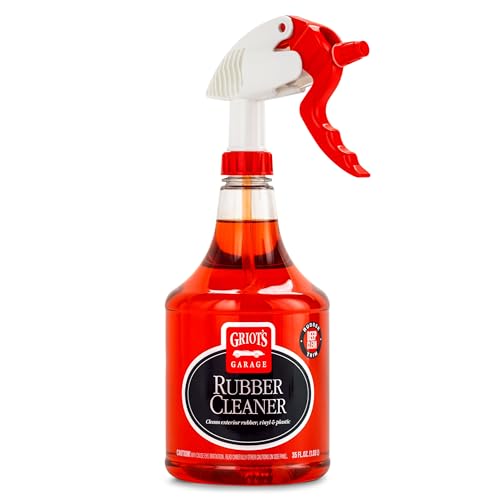 |
Griot’s Garage Rubber Cleaner for Car Cleaning andGriot’s Garage | Pair with it | 35 oz · rubber cleaner · exterior use | $11.45
Price as of 26 Oct 2026
|
View |
Start with the mess, not the bottle. Deep grooves in rubber mats and all-weather liners hold mud and winter salt, while TPE liners need mild, residue-free formulas that do not leave chalking or a slick film near the pedals.
Strong foam is not the goal. You want a cleaner that rinses away fully and dries to a matte surface, especially if the mat is greasy, faded, or packed with road salt.
How we chose
This roundup uses four filters: cleaner type, residue risk, rinse needs, and tool burden. It also favors products and methods that leave a dry, non-slippery finish, since pedal-area safety matters more than shine.
Price per cleaning matters too. A 16 fl oz bottle may suit one car, while a 32 oz size makes more sense for households with trucks, SUVs, or two vehicles that collect winter grit.
We also split quick maintenance from deep restore work. Dust needs less chemistry than road salt, and a mat that has turned chalky needs different care than one with fresh mud in the grooves.
Best cleaner for rubber car mats
Chemical Guys Mat Renew is the best all-around pick for rubber floor mats when you want cleaning plus a dry, matte finish. Based on the manufacturer’s specs and published product details, it is silicone-free, designed for rubber floor mats, and sold here as a 2 x 16 fl oz bundle, with a larger 32 oz value size also listed in competitor pages.
It fits the job best when you want a cleaner that breaks down dirt, oil, grease, and residue without leaving a slick surface. That makes it a strong match for factory rubber mats and all-weather liners that see regular dust, road film, and light winter mess.
The drawback is that it is still a maintenance-focused cleaner, not a heavy restoration degreaser. For packed road salt crust or oxidation, you may need more agitation and a stronger cleaner path before you use a finish product like this.
Why this pick works
Rubber mats need residue-free cleaning because the texture is there to trap grime, not hold shampoo. This formula’s dry-to-the-touch, silicone-free finish lines up with the safety needs of mats near the pedals.
It also fits readers who want one bottle for repeat cleanups. If your mats only need dust, pollen, or light road film removed, this is the simplest low-risk choice in the list.
Where it falls short
It is not the first choice for thick winter salt buildup. It also does not replace a stiff brush, which is still needed to work cleaner through grooves and pores.
If the mat has become oily, stained, or faded from sun exposure, expect to pair it with a separate deep-clean step or a UV-safe dressing that stays matte.
Best use case
Choose this when you want one cleaner for routine rubber mat care and a dry, non-slippery finish. It is also the cleaner to favor when you clean mats inside a sedan, crossover, or work truck and reinstall them the same day.
Best for heavy salt and grime
For road salt, winter crust, greasy film, and oxidation, a citrus-based degreaser is the better chemistry. It foams when agitated, cuts heavier buildup, and often needs a water rinse so no solvent film stays behind on rubber or textured liners.
This is the path for mats that look gray instead of black after winter. The goal is not gloss. It is removing mineral deposits and grime without leaving a residue that can transfer to shoes or pedals.
Foam and agitation
Foam helps loosen grit in grooves, but the brush does the real work. A stiff-bristled detailing brush is the main tool here, and a drill brush can help on severe buildup if you keep the speed controlled and avoid overworking thin areas.
Warm water can help loosen grease and stains, according to FordFast, but hot water is not advised for some rubber mats. That makes lukewarm rinse water the safer middle ground for most cleaning jobs.
Rinse requirements
Most citrus degreasers need a rinse because their job is to lift heavier contamination, not leave a finished coating behind. If you skip the rinse, residue can stay in the grooves and create a slick feel once the mat dries.
That is why this cleaner belongs in deep-clean routines, not every weekly wipe. Use it when the mat needs recovery, not just upkeep.
Odor and safety notes
Citrus cleaners often smell stronger than rubber-safe maintenance sprays. That scent is normal, but it also means you should rinse thoroughly and let the mat dry fully before reinstalling it.
Do not rush the drying step. A damp mat can trap moisture under the liner, which raises the risk of mold, musty odor, and slip near the pedals.
Mat cleaner and protectant: best for maintenance
For regular upkeep, a mat cleaner and protectant is the easiest way to keep rubber mats looking even without a glossy finish. It works best when the mat is already in decent shape and you want a dry-to-the-touch result after a light scrub.
This type of product fits readers who clean mats often and want one step that leaves a matte, non-slip surface. It is less useful when winter salt has hardened or the mat is coated with oily road film.
Dry-to-the-touch finish
KATA says rubber mats need cleaners that preserve a matte finish and warns against slippery residue. That is the key standard to watch for here, because a shiny mat around the pedals is the wrong outcome even if it looks freshly cleaned.
Use a small amount first. Over-application is one of the common ways a protectant turns a safe mat into a slick one.
Non-slip safety
A good protectant should dry without leaving a greasy layer. If the mat feels slick after curing, it is the wrong product for that surface or it was applied too heavily.
That matters most on driver-side mats. The heel rest, throttle area, and dead pedal zone need traction more than shine.
When to choose it over a degreaser
Pick this when the mat has ordinary dust, light soil, or a little road film and you want mild protection with less effort. Skip it if the mat has visible winter crust, thick oil, or chalky buildup from old dressing.
TPE liner cleaner: best for WeatherTech-style mats
TPE floor liners need mild, residue-free formulas that clean without chalking or fading. That makes them different from older rubber mats, even if they look similar at a glance.
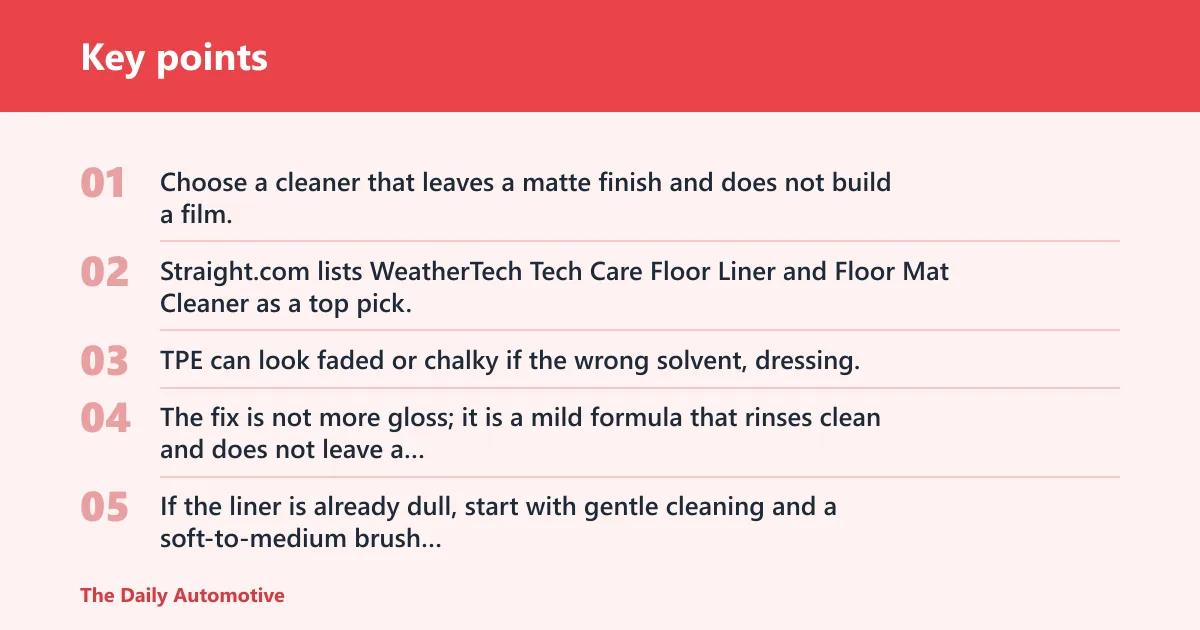
Choose a cleaner that leaves a matte finish and does not build a film. Straight.com lists WeatherTech Tech Care Floor Liner and Floor Mat Cleaner as a top pick, which lines up with the need for a liner-safe product on molded TPE surfaces.
Preventing chalking and fade
TPE can look faded or chalky if the wrong solvent, dressing, or heavy cleaner strips the surface. The fix is not more gloss; it is a mild formula that rinses clean and does not leave a whitish cast.
If the liner is already dull, start with gentle cleaning and a soft-to-medium brush before you reach for a stronger product.
What to avoid
Avoid solvent-heavy cleaners, heavy dressings, and anything that leaves a shiny film. Those products may make the liner look richer for a day, then leave it slick or streaked after the next drive.
That risk is higher on WeatherTech-style liners because the molded channels are designed to manage water and debris. A coating that changes surface feel works against that design.
Drying and reinstalling
TPE liners should be fully dry before they go back in. That keeps water from pooling under the mat and helps prevent musty odor in the cabin.
Use a microfiber towel for the flat areas, then let the channels air-dry before reinstalling. The last few drops matter more than they look.
Rubber mat decision table
This table turns the buying choice into a fast match between contamination, cleaner type, tools, rinse need, and slip risk. Use it before you buy or before you spray the wrong bottle on the wrong mat.
| Mat condition | Right cleaner type | Needed tools | Rinse required | Dry time | Slip-risk level |
|---|---|---|---|---|---|
| Dust and light road film on rubber mats | pH-neutral rubber-safe cleaner | Stiff detailing brush, microfiber towel | No, if label says no-rinse and you used little product | Short; air-dry or towel-dry | Low if fully dry |
| Greasy film or oily spots | Mild APC at label dilution or citrus degreaser | Stiff brush, microfiber towel, water for rinse | Yes, usually | Moderate; longer if grooves hold water | Medium until rinsed and dry |
| Road salt crust and winter grime | Citrus-based degreaser or stronger rubber cleaner | Stiff brush, hose, microfiber towel | Yes | Longer; full dry before reinstalling | Medium to high if residue remains |
| WeatherTech-style TPE liner with fade or chalking | Mild, residue-free TPE-safe cleaner | Soft or medium brush, microfiber towel | Usually recommended | Moderate; dry channels fully | Low if no film is left |
| Mat needs UV help after cleaning | Mat protectant with matte, non-slip finish | Microfiber towel, light applicator use | Only if product label says so | Allow full cure before use | Low to medium if over-applied |
Which one should you buy?
Choose by contamination first. If the mats need routine cleaning and a safe matte finish, Chemical Guys Mat Renew is the better fit. If the job is winter salt, greasy buildup, or oxidation, reach for a citrus degreaser path and expect to rinse.
Choose by mat material second. Rubber mats and factory all-weather mats tolerate stronger cleaning than TPE, but they still need a residue-free result. For WeatherTech-style liners, stay with mild formulas that do not chalk or leave a slick film.
Choose by routine. If you clean mats often, a maintenance cleaner and protectant saves time. If the mats only get deep-cleaned a few times each season, a stronger degreaser may be enough for the worst jobs.
Choose by budget too. A larger bottle makes sense for multiple vehicles or trucks with bigger floor coverage, since mat cleaning can use more product than a quick interior wipe. Chemical Guys Mat Renew has a 32 oz value size listed, while the 16 fl oz format suits smaller, lighter-duty use.
Suppose your driver-side mat has dried winter salt packed into the grooves and the passenger mat only has dust. Use the stronger cleaner on the problem mat, then switch to a milder finish product on the rest. That keeps the cleaning force matched to the contamination.
A common first-timer mistake is treating TPE liners like plain rubber. One heavy degreaser pass can leave them chalky or slick, while a mild, residue-free cleaner keeps the molded channels intact and the surface stable near the pedals.
Frequently asked questions
What is the best cleaner for rubber car mats?
The best cleaner for rubber car mats is a rubber-safe product that dries without residue and does not leave a slick finish. For routine dirt, a pH-neutral cleaner is the safest choice. For heavy winter grime or oil, step up to a citrus-based degreaser and rinse it fully.
How do I clean rubber car mats without making them slippery?
Use the smallest effective amount of cleaner, scrub with a stiff-bristled detailing brush, and rinse if the label calls for it. Then dry the mat completely before reinstalling it. Slippery mats usually come from leftover product, over-application, or reinstalling while the surface is still damp.
Can I use all-purpose cleaner on rubber floor mats?
Yes, but only at the label’s dilution and only when the mat is not coated with heavy grease or salt crust. Strong APC use can leave residue or dull a finish if it is too concentrated. For TPE liners, a mild, residue-free cleaner is the safer call.
What cleaner restores faded WeatherTech or Husky mats?
Use a mild TPE-safe cleaner first, then add a matte protectant if the surface needs UV help. The goal is to clean without chalking or adding shine. Avoid solvent-heavy sprays and glossy dressings, since they can make molded liners feel slick or look streaky.
Do rubber mat cleaners need rinsing?
Many do, especially citrus-based degreasers and stronger cleaners for winter grime. Rinsing removes loosened soil and leftover chemistry that can dry to a film. Some maintenance cleaners are lower-residue, but you still need to check the label and dry the mat fully before reinstalling it.
What tools do I need to scrub rubber mats properly?
At minimum, you need a stiff-bristled detailing brush, a microfiber towel, and water for rinsing. A hose helps flush grooves and winter salt out of deep channels. A drill brush can help on heavy buildup, but use it carefully so you do not overwork the surface.
Are rubber mat protectants safe around pedals?
They can be, but only if they dry to a matte, non-slip finish and are applied sparingly. Avoid anything greasy or shiny near the driver’s footwell. If the mat still feels slick after curing, remove it and clean it again before putting it back in the car.
Products related to this article
Sponsored / affiliate links. As an Amazon Associate I earn from qualifying purchases. I may earn additional commission from eligible campaigns.